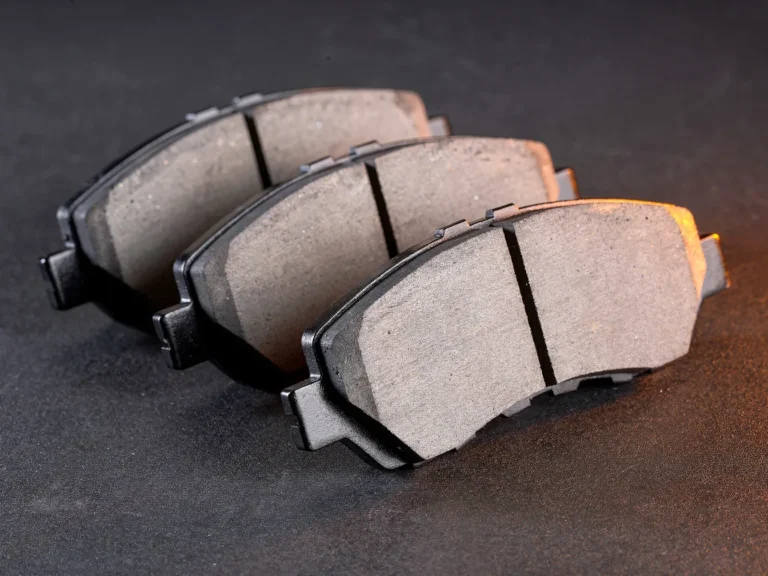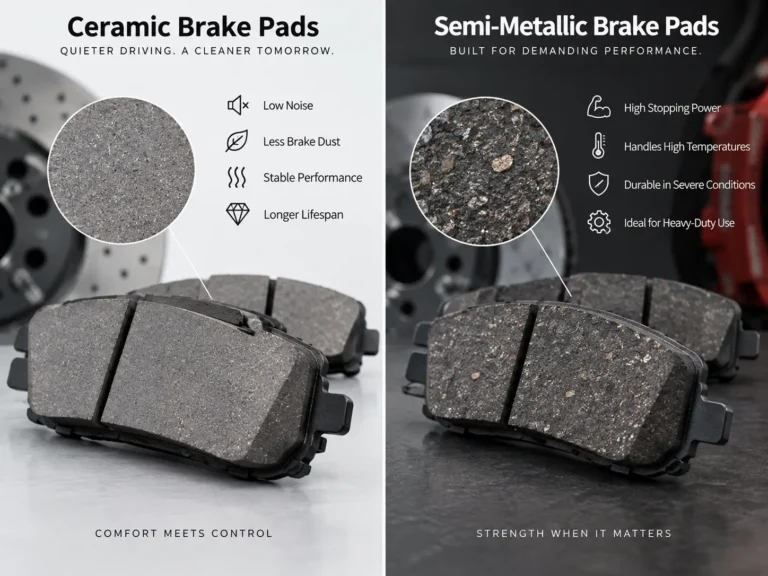
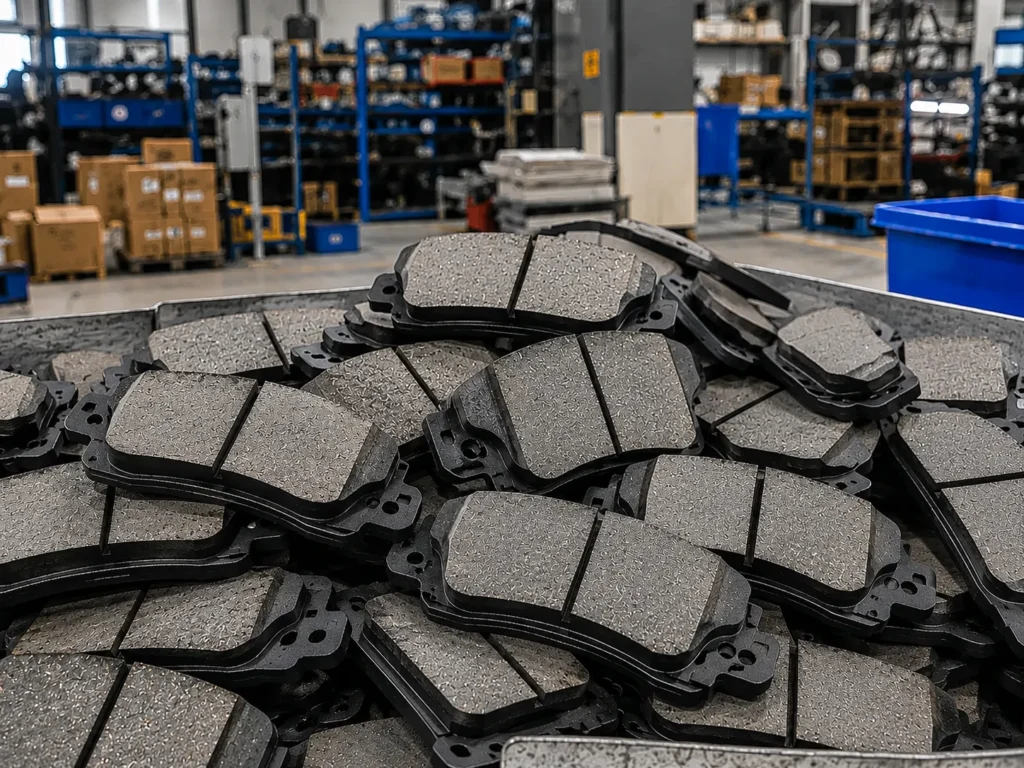

Are ceramic brake pads good? For most passenger cars, crossovers and daily-driven SUVs, yes—they are one of the best all-round choices for quiet, clean and predictable braking. But “good” always depends on the application. A ceramic pad that is perfect for a commuter sedan can be the wrong part for a half-ton pickup that tows a camper every weekend, and two boxes that both say “ceramic” can contain very different friction materials.
This guide is written for repair shops, parts stores and brake buyers who need more than a marketing answer. We cover what ceramic brake pads actually are, the honest pros and cons, where they work best and where they don’t, how they behave on noise, dust and lifespan, and—most importantly for anyone who buys pads by the carton—how to evaluate ceramic pad quality and write it into a purchase order or spec sheet.
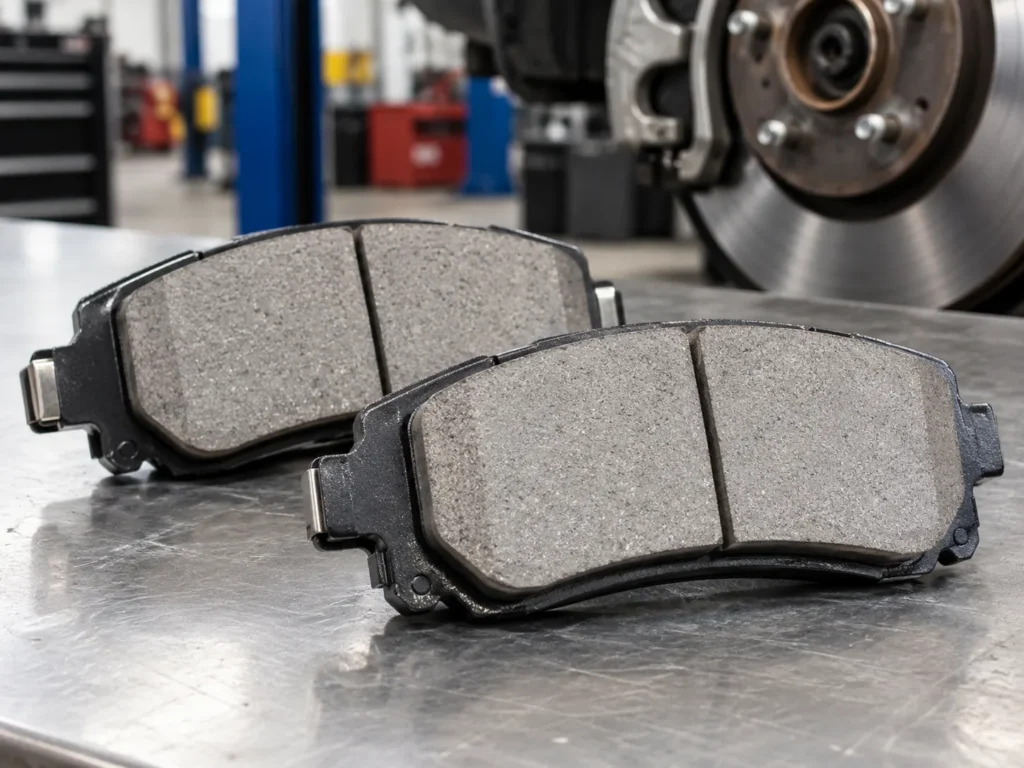
We manufacture ceramic and semi-metallic disc brake pads, so a lot of what follows comes from what we see on our own production floor and test bench, not only from catalog copy.
What’s in This Guide
Are Ceramic Brake Pads Good?
Short answer: Ceramic brake pads are good for the majority of everyday driving. They usually brake quietly, leave less visible dust on the wheels, give a smooth and consistent pedal feel, and wear well on passenger vehicles. They are not automatically the best choice for heavy towing, repeated high-energy braking, heavy-duty vehicles or track use, where heat capacity matters more than comfort.
So are ceramic brake pads better than everything else? No single friction material is “better” across the board. Ceramic is better at comfort and cleanliness; semi-metallic formulations are usually better at handling sustained heat and heavy loads. The right question for a shop or a buyer is: better for which vehicle, which driver and which duty cycle?
Quick Answer Table: Are Ceramic Brake Pads Good for This Use?
When Ceramic Brake Pads Are a Good Choice
Ceramic pads make sense when the vehicle spends most of its life at normal brake temperatures and the customer cares about comfort. In practice that covers commuter cars, family crossovers, ride-share vehicles and most light SUVs that are not used for towing. For a repair shop, these are also the jobs where comebacks for noise and “my wheels are black again” complaints cost the most goodwill—exactly the problems a well-made ceramic pad is designed to reduce.
When Ceramic Brake Pads May Not Be the Best Choice
Ceramic pads may not be the best choice when the brakes are asked to absorb a lot of energy over and over: towing, heavy payloads, long mountain descents, commercial delivery cycles or track sessions. In those conditions the pad’s ability to keep a stable friction level at high temperature matters more than low dust.
If you need a refresher on how pad materials, backing plates and shims work together, our guide What Are Brake Pads? Types, Materials, Parts & How They Work covers the full picture before you choose a friction type.
What Are Ceramic Brake Pads?
Ceramic brake pads are disc brake pads whose friction material is built around ceramic fibers, mineral fillers and non-ferrous materials instead of a high percentage of steel fiber. They were developed as an alternative to semi-metallic pads for drivers who wanted quieter braking and cleaner wheels, and they have become the default aftermarket upgrade for many passenger-car applications.
What Makes a Brake Pad “Ceramic”?
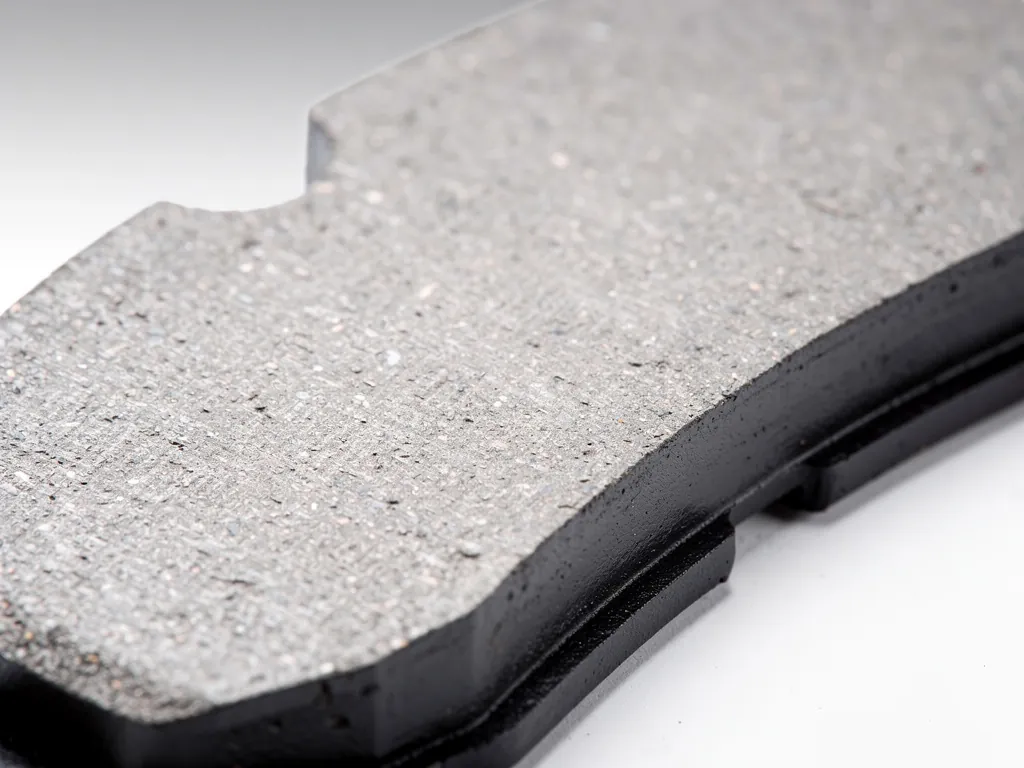
There is no single legal definition of a “ceramic” brake pad. In the industry, the label usually describes a friction formulation with these characteristics:
- Ceramic and mineral fibers for structure and heat resistance
- Non-ferrous fillers (for example, barium sulfate, mica, vermiculite and other mineral fillers)
- Friction modifiers and lubricants such as graphite and metal sulfides to stabilize friction and control noise
- Organic reinforcement such as aramid fiber in many formulas
- Phenolic resin binder that holds everything together after hot pressing and curing
- Low or zero steel fiber, which is the main practical difference from semi-metallic pads
The finished pad is still a composite: friction material bonded to a steel backing plate, often with an underlayer, chamfers, a slot and a noise shim.
Are Ceramic Brake Pads Actually Made of Ceramic?
Not in the way most people imagine. A ceramic brake pad is not a solid block of pottery-like ceramic. Ceramic materials are one ingredient family inside a resin-bonded composite, and the share of true ceramic content varies widely from one manufacturer to another.
It is also important not to confuse ceramic friction pads with carbon-ceramic brake systems used on some supercars. Those are a different technology built around carbon-ceramic rotors and dedicated pads, with a completely different price and duty profile. When a customer asks “are ceramic brakes good,” they almost always mean ordinary ceramic-formulation pads running on cast-iron rotors.
How “Ceramic” Should Appear on a PO or Spec Sheet
Because “ceramic” is a family name rather than a specification, buyers should never let it stand alone on a purchase order. A useful spec line looks more like this:
On the Spec Sheet
Friction material: ceramic formulation, steel-fiber-free, compound code [XXX]; copper content Level N (<0.5% by weight per SAE J2975), LeafMark marked; edge code [e.g., FF] per SAE J866; shim type [e.g., multi-layer rubber-coated steel]; chamfer and slot per OE drawing [part number].
That single line tells the supplier exactly what “ceramic” means for this order and gives your receiving team something they can actually check.
What Are the Main Characteristics of Ceramic Brake Pads?
Before looking at pros and cons, it helps to understand why ceramic pads behave the way they do. Each characteristic comes from the friction material itself.
Low Noise Characteristics
Ceramic friction materials tend to be less stiff and less abrasive than steel-rich formulations, and their vibration response usually sits in a frequency range that is less audible to the human ear. Less steel fiber also means fewer hard particles “scratching” the rotor surface. The result is that, all else being equal, a ceramic pad starts with a lower tendency to squeal.
Low Visible Brake Dust
All pads shed dust as they wear. Ceramic pads tend to produce finer, lighter-colored dust that is less likely to stick to the wheel. Semi-metallic dust contains iron particles from the steel fiber and the rotor, which oxidize and leave the dark, baked-on deposit customers complain about.
Smooth Pedal Feel and Braking Response
A well-made ceramic compound typically has a consistent friction level across normal operating temperatures, so the pedal feels the same on the first stop of the morning as it does after a highway exit. This predictability is one reason ceramic pads are popular on family vehicles.
Stable Performance in Everyday Driving
In daily driving, brake temperatures usually stay well within the range ceramic formulations are designed for. Under those conditions ceramic pads tend to deliver steady friction, moderate rotor wear and a long, even pad wear pattern.
Heat Characteristics of Ceramic Friction Materials
Ceramic materials can tolerate high temperatures, but that is not the same as managing large amounts of heat. Ceramic pads generally conduct less heat into the backing plate and caliper than semi-metallic pads, which helps protect the caliper and brake fluid. The flip side is that more heat stays at the pad–rotor interface. Under repeated hard stops, some ceramic formulations can reach the point where friction drops off (fade) sooner than a semi-metallic pad designed for heavy work.
What Are the Pros and Cons of Ceramic Brake Pads?
Here are the ceramic brake pads pros and cons in one place, with what each one means for a shop or a parts buyer.
Ceramic Brake Pads Pros and Cons at a Glance
Quieter Braking
The most cited of the benefits of ceramic brake pads is quieter braking in normal driving conditions. For a repair shop, quieter pads mean fewer “my new brakes squeal” calls in the first month—one of the most common and least profitable comebacks in brake work.
Less Visible Brake Dust
Another of the clear advantages of ceramic brake pads is cleaner wheels. Customers with alloy or painted wheels notice immediately, and many will pay more for a pad that keeps their wheels presentable between washes.
Smooth Braking Feel
Ceramic pads usually provide a smooth, linear braking response. Customers describe the brakes as “soft” in a good way—easy to modulate in traffic without grabbing at low speed.
Good Everyday Durability
On passenger vehicles, a good ceramic pad commonly wears evenly and treats the rotor gently, which can extend the life of both parts. That durability depends on the formulation and the vehicle, but for normal commuting it is a real advantage.
Higher Cost
Ceramic pads generally cost more to make and to buy than basic organic or many semi-metallic pads. The raw materials are more expensive, and premium ceramic lines usually include multi-layer shims, hardware kits and tighter process controls. For a shop, the price difference has to be justified to the customer; for a distributor, it affects inventory investment and margin.
Limitations Under Heavy Loads and High Heat
Ceramic pads are not the strongest choice where brake energy per stop is very high—heavy towing, maximum payload, steep descents or repeated high-speed stops. In these cases a semi-metallic or heavy-duty formulation often holds its friction level better at high temperature.
Performance Can Vary Between Ceramic Formulations
Two ceramic pads can behave completely differently. One may be quiet and low-dust but fade early; another may be engineered for higher heat with slightly more dust. Fiber blend, resin system, friction modifiers, curing profile and scorching all change the result. This is why we tell buyers to compare compounds, not labels.
“Ceramic” Does Not Automatically Mean Better
The label is not a performance guarantee—and it is not an environmental guarantee either. Washington State’s Department of Ecology showed this clearly.
Industry Compliance Data — Washington Better Brakes Study:
In its Better Brakes Enforcement Study 2017 (published April 2018), regulators laboratory-tested 163 brake friction samples bought from retailers and online, using the SAE J2975 method. Of those samples, 68 (41%) already contained less than 0.5% copper by weight—meeting the later Level N threshold years before it became mandatory—while 71 samples (43%) still contained more than 5% copper. Under Washington law, brake pads manufactured after January 1, 2025 must contain less than 0.5% copper by weight.
For ceramic-pad buyers, the takeaway is simple: “ceramic” and “copper-free / Level N” are not interchangeable claims. The actual formulation, the SAE J2975 test result and the LeafMark marking on the pad still need to be checked.
Who Should Choose Ceramic Brake Pads?
Ceramic brake pads are best used where comfort, cleanliness and consistency matter more than maximum heat capacity. These are the customers and vehicles where we recommend ceramic first.
Daily Commuters
Commuting is the textbook ceramic application: moderate speeds, frequent but not extreme stops, and long periods for the brakes to cool between events. A ceramic pad will usually stay quiet, keep wheels cleaner and wear evenly in this kind of driving.
Passenger Cars
For sedans, hatchbacks and compact cars, ceramic pads are often the OE-style choice in North America. Vehicle weight is moderate, rotors are sized for the job, and the brake system rarely sees sustained high temperatures. For shops, ceramic is a safe default on these vehicles unless the OE friction specification says otherwise.
SUVs and Crossovers
Most compact and mid-size SUVs and crossovers are driven like passenger cars. In those cases, ceramic pads work well. The exceptions are SUVs that tow regularly or carry heavy loads, which we cover below.
Drivers Who Prioritize Low Noise
Some customers simply will not tolerate noise. For those drivers, a premium ceramic pad with a quality multi-layer shim, chamfers and a slot is usually the best starting point.
Drivers Who Want Cleaner Wheels
Owners of vehicles with large, open-spoke alloy wheels—or European models known for heavy OE brake dust—are often the most satisfied ceramic customers. For these drivers, low dust ceramic brake pads are a visible, daily improvement.
Who Should Consider Other Brake Pad Materials?
Ceramic is not the right answer for every job. Here is where we often recommend customers look at semi-metallic or heavy-duty formulations instead.
Frequent Heavy Towing
Towing multiplies the energy the brakes must absorb, especially on downhill grades. Repeated heat cycles can push some ceramic formulations toward fade. A semi-metallic or heavy-duty pad designed for higher temperatures is often a safer choice for customers who tow every week.
Heavy-Duty Applications
Commercial vans, heavy pickups, work trucks and fleet vehicles often run at or near their rated weight, with many stops per day. These duty cycles usually call for heavy-duty semi-metallic formulations that are built for heat and wear resistance rather than comfort.
Repeated High-Energy Braking
Mountain driving, emergency-service duty and aggressive driving styles can all produce repeated high-energy stops. If the customer reports a long or soft pedal after hard use, the pad may be operating outside its ideal temperature window.
Track and Performance Driving
Most street ceramic pads are not designed for track sessions. That said, ceramic is not limited to low-demand commuter cars—some formulations are engineered for performance applications.
Industry Case — Akebono EURO for BMW, November 9, 2021:
Akebono’s EUR1880 front and EUR1656 rear ceramic brake pad kits, developed for 2012–2021 BMW sedans and coupes equipped with the blue-caliper Performance Brake Package, received the 2021 AAPEX Import Vehicle Community “Best Problem-Solver for Import Vehicles” award, as reported by AftermarketNews. The background was a familiar one for European-car owners: OE-style pads on these performance packages are known for heavy, dark dust and noise. Akebono’s ceramic formulation was recognized for braking well across a wide range of brake temperatures while virtually eliminating visible brake dust and noise, and for extending the life of both pads and rotors.
The lesson for buyers is not “ceramic is good for every BMW.” It is that a ceramic formulation can be engineered for a specific performance application—and that the formulation must be matched to the vehicle rather than selected simply because the box says “ceramic.”
When the Vehicle Requires a Different Friction Specification
Some vehicles are designed around a specific friction level, pad compressibility or thermal behavior. Changing material type can alter pedal feel, front-to-rear brake balance and ABS/stability control behavior. Always check the OE friction specification and the supplier’s application list before switching a vehicle from semi-metallic to ceramic, or vice versa.
For a deeper side-by-side look, see Ceramic vs Semi-Metallic Brake Pads: 8 Key Differences.
Are Ceramic Brake Pads Really Quieter?
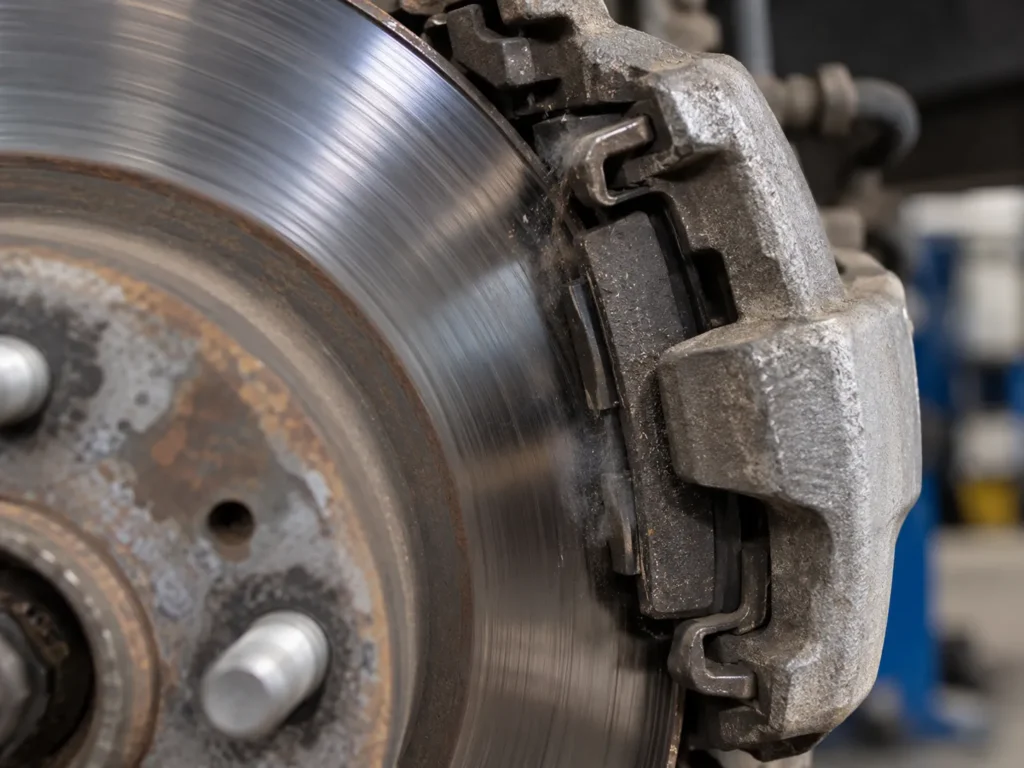
In most cases, yes—but quieter does not mean silent. So, do ceramic brake pads squeak? They can, and the reasons are usually mechanical rather than chemical.
Why Ceramic Pads Often Produce Less Noise
Brake squeal is a vibration problem. The pad, rotor and caliper form a system that can resonate at certain frequencies. Ceramic friction materials typically have damping properties and a stiffness profile that make this resonance less likely, and the absence of steel fiber reduces the harsh, metallic contact that can excite vibration. That is why a well-designed ceramic pad usually starts with a noise advantage.
Why Ceramic Brake Pads Can Still Squeak
If you are asking why do ceramic brakes squeak, the answer is usually one of these
- Glazed or uneven rotor surface – old rotors with a glaze, lip or uneven deposits create vibration.
- Missing or poor-quality shims – the shim is the main noise-damping component.
- No chamfer or slot, or the wrong geometry – these features shift and break up the pad’s resonant frequency.
- Dry or seized hardware – sticking slide pins and abutment clips allow the pad to vibrate.
- Skipped bedding procedure – no stable transfer layer on the rotor.
- Formulation mismatch – the compound is not suited to the vehicle’s caliper and rotor design.
Do ceramic brake pads squeal right after installation? Sometimes, and that is often an installation or bedding issue rather than a pad defect.
For a broader explanation of the causes, read our guide to why brake pads squeak or wear unevenly, which also covers the “new pads, new noise” complaint after replacement.
How Shims, Chamfers and Rotor Condition Affect Noise
Shims add a damping layer between the backing plate and the caliper piston or fingers. Multi-layer shims with rubber or viscoelastic coatings are the most effective. Our guide to the parts of a brake pad and what brake pad shims do explains where the shim sits and how it works.
Chamfers (angled edges on the leading and trailing ends of the friction block) reduce the sharp edge contact that can trigger squeal at the start of a stop.
Slots split the friction surface, changing the pad’s natural frequency and giving dust and gas a path to escape.
Rotor condition decides whether the pad can build an even transfer layer. A new pad on a worn, glazed or out-of-spec rotor is a common source of noise.
Step-by-Step: How a Shop Should Diagnose a Ceramic Pad Squeal Complaint
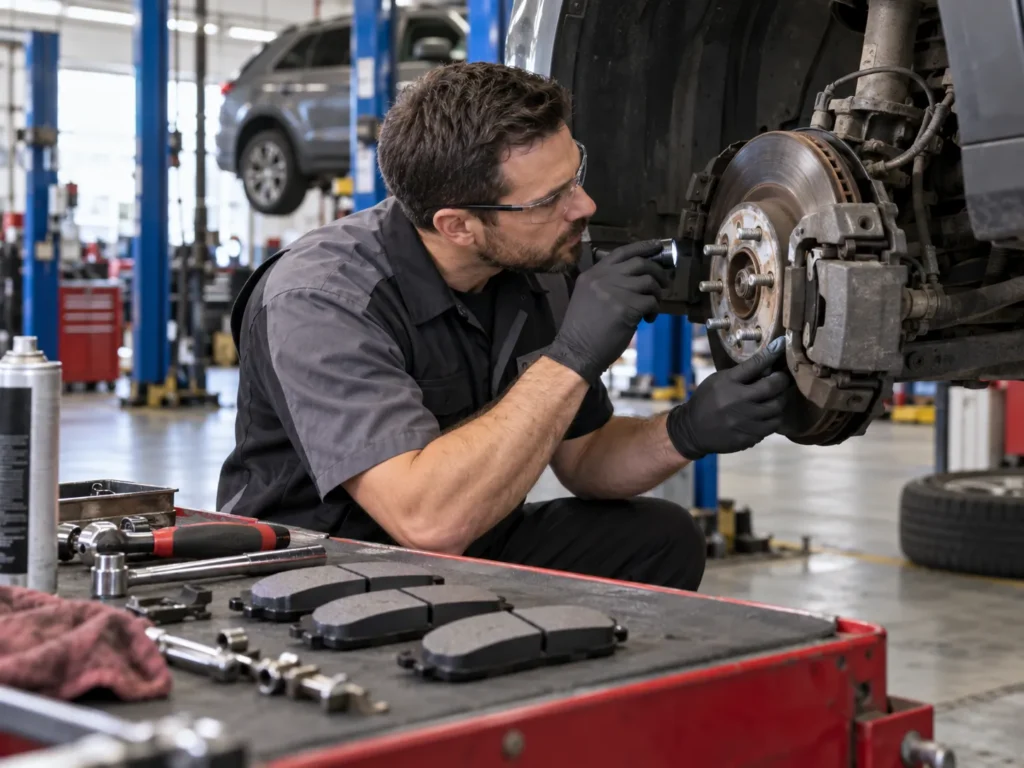
- Confirm when it happens. Light braking, heavy braking, cold only, or while reversing? Write it down on the repair order.
- Inspect the rotor. Measure thickness and runout; look for glazing, lips, scoring or uneven deposits. Resurface or replace if outside spec.
- Check the shim. Confirm it is present, correctly seated and undamaged. Replace if bent or delaminated.
- Check the chamfer and slot. Compare the pad to the OE pad or the catalog drawing.
- Service the hardware. Clean and lubricate slide pins and pad contact points with the correct brake lubricant; replace worn abutment clips.
- Re-bed the pads. Follow the pad manufacturer’s bedding procedure (see the lifespan section below for a typical sequence).
- Road test and record. If the noise remains, document the conditions and contact the supplier with the pad’s batch or date code.
Are Ceramic Brake Pads Low Dust?
Generally, yes. Low dust ceramic brake pads are one of the main reasons drivers switch from semi-metallic pads. But “low dust” is relative—ceramic pads still wear, and wearing material produces dust.
Why Ceramic Brake Dust Is Often Less Visible
Ceramic dust is usually finer and lighter in color. Because ceramic formulations contain little or no steel fiber, there is less iron in the dust to oxidize into the brown-black film that bakes onto wheels. A ceramic pad also tends to cause less rotor wear, and rotor iron is a big part of what you see on a dirty wheel.
What We Saw in Testing — July 9, 2025:
In project CER-DUST-0709, we compared one ceramic formulation with a semi-metallic control using 300 controlled stops from 80 to 20 km/h under the same rotor and test conditions. After the cycle, collected friction dust averaged 0.68 g for the ceramic pads versus 1.91 g for the semi-metallic pads. What mattered to us was not that ceramic pads were “dust-free”—they were not—but that this formulation produced substantially less visible residue under the same test cycle.
Why Ceramic Brake Pads Are Not Dust-Free
Every friction brake works by converting kinetic energy into heat through friction, and that process consumes material. Dust output will vary with driving style, vehicle weight, rotor metallurgy and the specific compound.
Industry Test Data — EBC Super Ceramic, September 2026:
Some manufacturers now treat low dust as a measurable engineering target rather than a slogan. In September 2026, EBC Brakes published details of its SC Super Ceramic development program ahead of its November 2026 SEMA Show launch, as covered by The BRAKE Report. According to EBC’s own release, one cold-performance dyno procedure consisted of 30 street-use stops, starting each cycle with the disc at 30°C (86°F) and releasing brake pressure when the disc reached 70°C (158°F). EBC positioned the compound against at least eight other ceramic brands and reported R90 approval, a GG friction rating and an N rating after SAE J2975 testing.
That program is a useful reminder that “ceramic” describes a formulation family. Real performance differences only become meaningful when a specific compound is tested against defined temperature, friction, wear and environmental criteria.
If you want to understand the mechanics behind brake dust in more detail, see how ceramic and semi-metallic brake dust compare.
How to Specify “Low Dust” When Buying
“Low dust” on a product sheet means nothing unless it is tied to a test.
When you request quotes, ask the supplier to
- Name the dust comparison method (dyno cycle, number of stops, speed range).
- State the reference pad the result is compared against (OE pad or a named semi-metallic control).
- Provide the measured result—collected mass or a wheel-dust rating—from the same cycle.
- Confirm the formulation tested is the exact compound code being quoted.
How Long Do Ceramic Brake Pads Last?
How long do ceramic brake pads last? There is no single number. In normal passenger-car use, a good ceramic pad commonly lasts tens of thousands of miles, and many retail sources quote ranges around 30,000 to 70,000 miles (roughly 50,000 to 110,000 km). Those figures are averages, not guarantees. The same pad can last twice as long on a highway commuter as on a city delivery vehicle.
Do Ceramic Brake Pads Last Longer?
Do ceramic brake pads last longer than other types? Often, yes—compared with organic (NAO) pads, and in many light-duty applications compared with semi-metallic pads too. Ceramic formulations tend to wear slowly at normal temperatures and are gentle on rotors. But in heavy-duty or high-heat use, a semi-metallic pad can outlast a ceramic pad because it is designed for that heat. “Longer” only holds when the pad matches the duty cycle.
How Driving Conditions Affect Pad Life
- City stop-and-go – more stops per mile means faster wear.
- Highway cruising – few stops, long pad life.
- Hilly or mountain routes – repeated heat cycles accelerate wear.
- Driving style – late, hard braking wears pads much faster than early, gradual braking.
- Climate and road salt – corrosion can cause sticking hardware and uneven wear.
So how long do ceramic brakes last for a specific customer? The honest answer starts with how and where they drive.
How Vehicle Weight Affects Pad Life
Brake energy rises with vehicle mass. A heavier vehicle—or the same vehicle with a full load—requires the pads to absorb more energy on every stop, which raises temperatures and wear rates. Electric vehicles are a special case: they are heavy, but regenerative braking reduces friction brake use, so pads may wear slowly while rotors are more prone to corrosion from infrequent use.
How Rotor and Caliper Condition Affect Pad Life
- Worn or warped rotors cause uneven contact and faster, irregular pad wear.
- Sticking caliper pistons or slide pins keep the pad dragging, which overheats and wears it prematurely—often on one side only.
- Corroded abutments stop pads from moving freely.
- Contaminated brake fluid can affect caliper function over time.
For general pad life data beyond ceramic pads, see how long brake pads last. For inspection thresholds and warning signs, read when brake pads should be replaced.
Step-by-Step: Bedding Ceramic Pads to Maximize Life
Proper bedding builds an even transfer layer on the rotor, which improves noise, feel and wear.
Always follow the pad manufacturer’s procedure; a typical sequence looks like this
- Check the installation. Confirm rotors are clean, within spec and free of grease; hardware is lubricated; wheel nuts are torqued correctly.
- Warm up. Drive gently for a few minutes to bring the brakes up to normal temperature.
- Moderate stops. Make 8–10 moderate stops from about 35 mph (55 km/h) to around 5 mph (10 km/h), without coming to a full stop.
- Firmer stops. Make 3–5 firmer stops from about 45 mph (70 km/h) to 5 mph, again without stopping completely.
- Cool down. Drive several minutes with minimal braking. Avoid holding the brakes hard at a standstill while they are hot.
- Inspect. The rotor surface should show an even, light-gray transfer film.
Are Ceramic Brake Pads Good for SUVs and Trucks?
Ceramic pads can be good for SUVs and trucks, but the answer depends more on how the vehicle is used than on its body style.
Ceramic Brake Pads for SUVs and Crossovers
Most crossovers and compact or mid-size SUVs work well with ceramic pads. Their weight and brake sizing are close to passenger cars, and most owners drive them for commuting and family use. For these vehicles, a quality ceramic pad gives the same comfort and cleanliness benefits it gives a sedan.
Ceramic Brake Pads for Light-Duty Trucks
Light-duty pickups that are used like passenger vehicles—commuting, light hauling, occasional trips—can run ceramic pads successfully, provided the formulation is rated for the vehicle’s weight. Many aftermarket lines offer “truck/SUV” ceramic compounds with higher heat tolerance than standard passenger-car ceramics.
How Towing and Payload Change Brake Pad Requirements
Towing and payload change the job completely. A pickup towing a trailer can have to absorb far more brake energy than the same truck empty, especially on downhill grades where the brakes are used for long periods. That heat accumulates in the pads and rotors. When the pad formulation is not designed for it, the result can be fade, glazing, accelerated wear and rotor damage.
Before recommending pads for a truck or SUV, a shop should ask three questions
- Does the vehicle tow, and how often?
- Does it regularly carry close to its maximum payload?
- Does it operate in hilly or mountainous terrain?
If the answer to any of these is “frequently,” move away from standard ceramic pads.
When Semi-Metallic Pads May Be More Suitable
Semi-metallic pads are often more suitable for frequent towing, heavy payloads, fleet duty and severe service. Their steel fibers help conduct heat away from the friction surface and maintain friction at higher temperatures, at the cost of more noise, more dust and more rotor wear.
For the full comparison, see Ceramic vs Semi-Metallic Brake Pads: 8 Key Differences.
Ceramic Brake Pads vs Regular Brake Pads
Customers often ask about ceramic brakes vs regular brakes. “Regular” usually means the standard pad on the vehicle or a basic economy pad—typically semi-metallic or organic (NAO). Here is the short comparison of ceramic brake pads vs regular brake pads.
Noise and Driving Comfort
When comparing ceramic brake pads vs regular pads, ceramic usually wins on noise and comfort, especially against economy semi-metallic pads.
Brake Dust
Ceramic pads generally produce less visible dust. If wheel cleanliness matters, ceramic is the better option.
Heat and Load Requirements
For heavy loads and sustained heat, a regular or heavy-duty semi-metallic pad may outperform a standard ceramic pad. So are ceramic brake pads better than regular pads? For everyday comfort, yes; for heavy work, not necessarily.
Ceramic vs Semi-Metallic Brake Pads: Which Should You Choose?
This decision comes down to priorities. We cover the details in a separate guide, so here is the practical summary.
Choose Ceramic If You Prioritize Comfort and Low Dust
Choose ceramic for commuter cars, crossovers and light SUVs where quiet braking, clean wheels and smooth pedal feel are the main goals, and where the brakes rarely see sustained high temperatures.
Choose Semi-Metallic If Heat and Heavy-Duty Performance Matter More
Choose semi-metallic for towing, heavy payloads, fleet and commercial duty, and severe-service driving, where stable friction at high temperature matters more than dust and noise. For the full breakdown on friction, heat, rotor wear, noise and cost, read Ceramic vs Semi-Metallic Brake Pads: 8 Key Differences.
Are Ceramic Brake Pads Worth the Extra Cost?
For most passenger-car customers, yes—provided you are buying good ceramic brake pads and not just a cheap pad with a ceramic label.
When Paying More for Ceramic Pads Makes Sense
Paying more for premium ceramic brake pads makes sense when:
- The customer cares about noise and wheel appearance. These are the complaints that bring cars back to the shop.
- The vehicle is a commuter or family vehicle. The duty cycle suits ceramic, so the customer gets the full benefit.
- Comebacks are expensive. For a shop, one noise comeback can wipe out the margin on a brake job. A higher quality ceramic pad with proper shims and chamfers reduces that risk.
- Rotor life matters. A gentler pad can extend rotor life, which offsets part of the pad price over time.
A simple way for a shop to judge value is cost per service interval: (pad price + labor) ÷ expected months or miles until replacement, plus the expected cost of comebacks. High quality ceramic brake pads often win on that calculation even when the unit price is higher.
When Ceramic Pads May Be Unnecessary
Ceramic pads may be unnecessary—or the wrong choice—when:
- The vehicle tows or hauls heavily and needs a heat-focused formulation.
- The vehicle is a work truck or fleet vehicle where noise and dust are low priorities.
- The customer plans to sell the vehicle soon and wants the lowest-cost safe repair.
- The OE specification calls for a different friction type.
How to Evaluate the Quality of Ceramic Brake Pads
This is where most buying mistakes happen. Two ceramic pads can carry the same label and the same price range and still differ greatly in safety, noise and life. Here is how we recommend buyers evaluate them.
Friction Stability Matters More Than the “Ceramic” Label
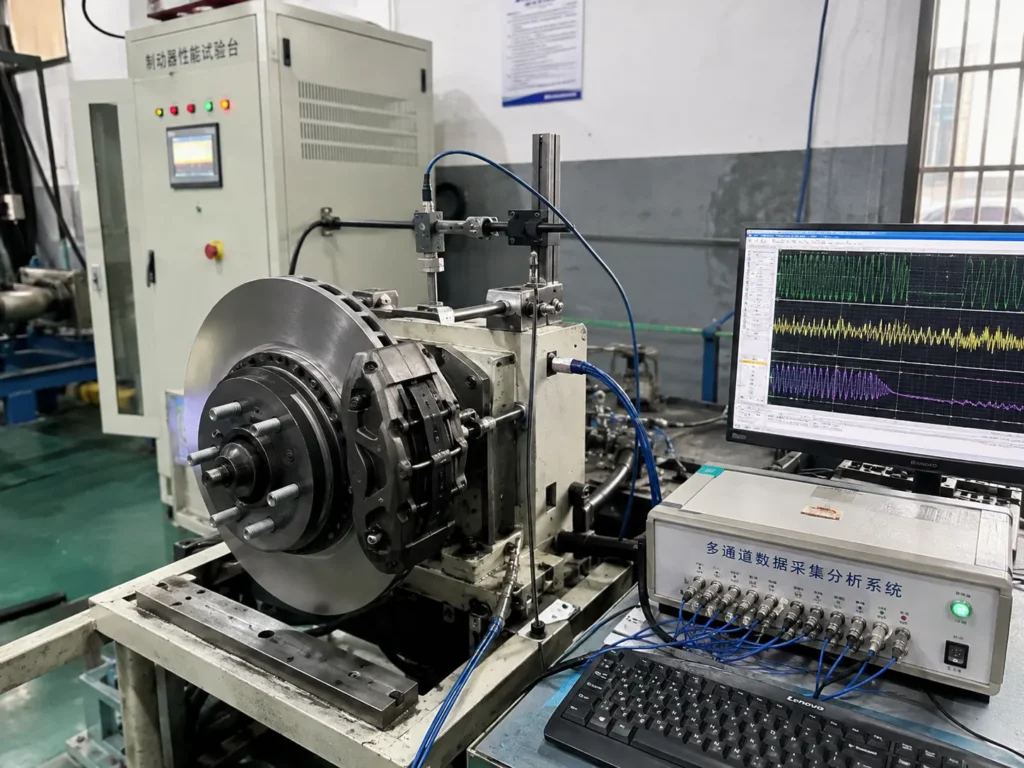
The most important property of any brake pad is a stable, predictable friction coefficient across temperature, pressure and speed.
Industry Standard — ISO 26867:
According to ISO 26867:2009, friction behaviour assessment for automotive brake systems is carried out on a dynamometer to measure how pressure, temperature and linear speed influence the friction coefficient of a given friction material against a specific rotor or drum. The standard is explicitly intended for comparing friction materials under the same conditions and for controlling friction behaviour against a specification—exactly what a buyer needs.
What to ask for:
- A dyno friction report (ISO 26867 or the equivalent SAE J2522 procedure) for the exact compound code.
- The SAE J866 edge code (for example, FF) printed on the pad, which indicates its cold and hot friction ranges.
- Fade and recovery data, not just average friction.
Check Shim, Chamfer and Slot Design
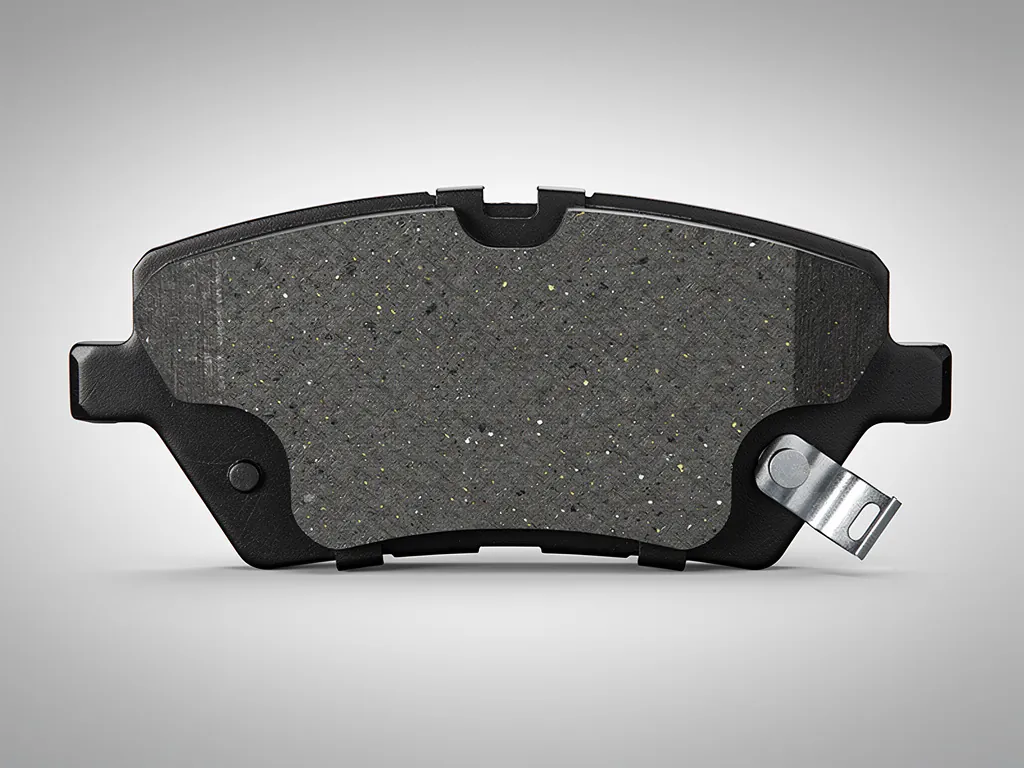
Noise control is designed in, not added later. Check:
- Shim type and fit – multi-layer, rubber-coated or viscoelastic shims; correct shape; secure attachment (clip-on or adhesive).
- Chamfer geometry – angle and size matching the OE design.
- Slot – presence, position and depth as specified.
Compare samples against the OE pad or the approved drawing before placing a volume order.
Check Bonding and Shear Strength
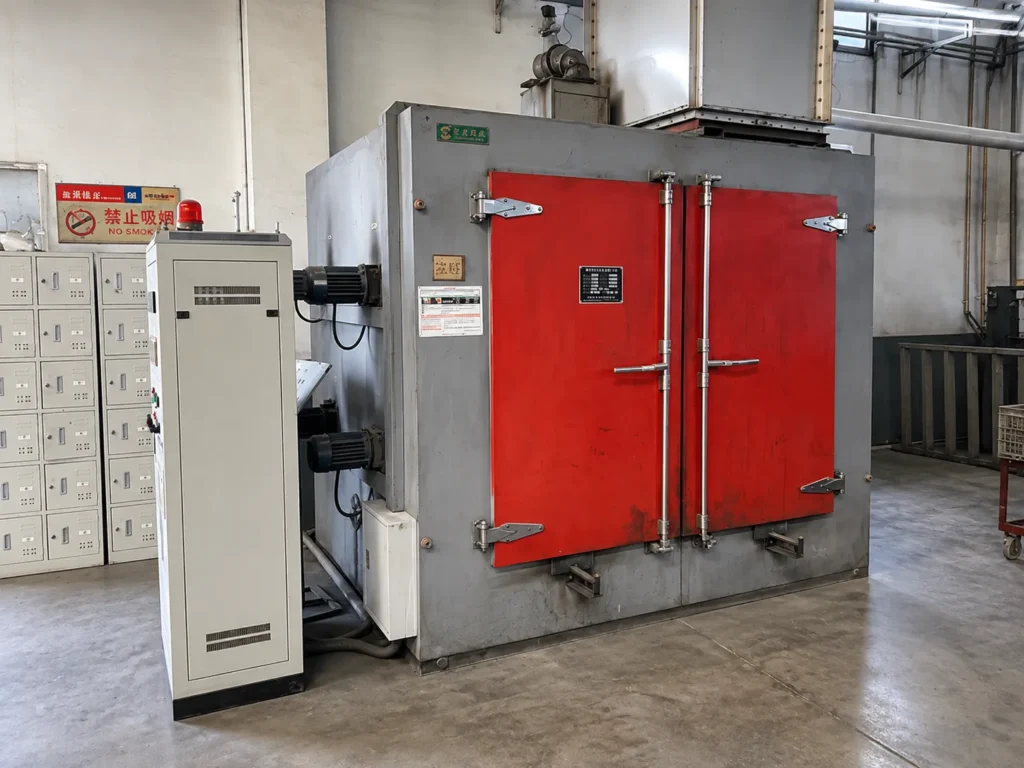
The friction block must stay attached to the backing plate under all conditions.
Industry Standard — ISO 6312:
As defined by ISO 6312:2010, the shear test procedure for disc brake pad and drum brake shoe assemblies measures the strength of the bond between the lining material and its carrier. The standard covers integrally molded, bonded and mechanically retained assemblies, and recommends elevated-temperature testing at around 300°C (±10°C) for disc pads.
What to ask for:
- Shear test results at room temperature and at elevated temperature.
- Failure mode—whether the break occurs inside the friction material (generally preferred) or cleanly at the bond line (a warning sign).
- Sampling frequency (per batch or per shift).
Bond strength is only part of physical integrity. The friction block itself must be free of cracks and chips.
From Our Production Floor — May 22, 2025:
During the pilot run of our CER-US-SUV-0522 front ceramic pad project—a front pad for a North American compact SUV—we inspected 300 pads after curing and scorching and found 11 pads (3.7%) with small friction-block edge chips. After changing the preform handling and mold-release sequence, only 2 of the next 500 pads (0.4%) showed the same defect. For us, ceramic pad quality starts with controlling the physical integrity of the friction block—not simply calling the formulation “ceramic.”
To see how the production steps—mixing, preforming, hot pressing, curing, scorching and finishing—affect quality, read how brake pads are made in our factory.
Check NVH Performance
NVH (noise, vibration and harshness) testing on a dynamometer, commonly using the SAE J2521 squeal procedure, shows how often a pad generates noise across a range of pressures, temperatures and speeds. Ask for:
- The NVH test procedure and the vehicle/caliper fixture used.
- The percentage of noisy stops above a defined sound-pressure level.
- Whether testing was done with the production shim and chamfer.
For an overview of the lab and road tests used across the industry, and how we apply them before shipment, see how brake pads are tested in our quality inspection process.
Check Vehicle Application and Fitment
A great compound in the wrong shape is still the wrong pad. Verify:
- Backing plate dimensions, thickness and flatness against the OE drawing.
- Friction block thickness and position.
- Wear sensor type and location (acoustic or electronic).
- Hardware and abutment clip fit.
- Application data (year, make, model, axle, brake package).
Step-by-Step: Incoming Inspection of a Ceramic Pad Shipment
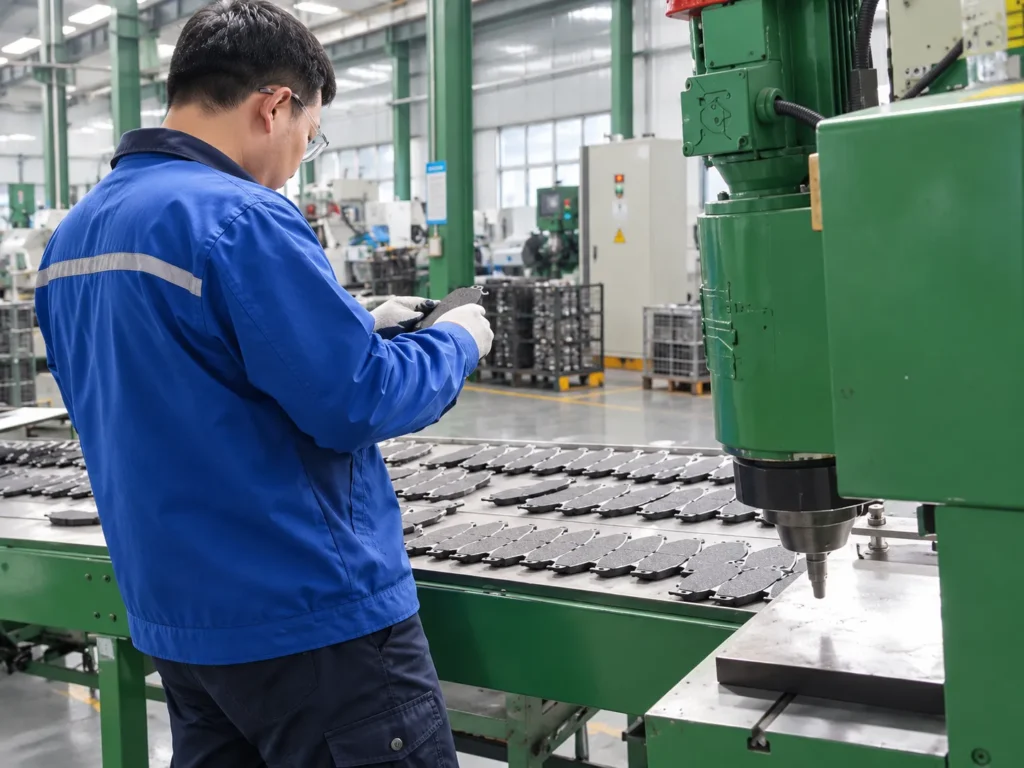
Use this sequence in your warehouse or receiving area
- Match paperwork. Compare part numbers, compound codes, quantities and batch numbers on the packing list, cartons and the PO.
- Check markings. Confirm the edge code, the LeafMark copper level (for example, N) and the batch/date code on sample pads.
- Pull samples. Take a random sample from several cartons, not just the first one opened.
- Visual inspection. Look for edge chips, cracks, blisters, delamination, uneven chamfers and damaged or missing shims.
- Dimension check. Measure backing plate outline, total thickness and friction thickness against the drawing.
- Fit check. Test-fit samples in the correct caliper bracket with new hardware.
- Review test certificates. Confirm shear, friction and copper (SAE J2975) reports refer to the same compound and batch.
- Record and decide. Log results; quarantine the lot if defects exceed your agreed acceptance level.
Ceramic Brake Pad Quality Checklist for PO and Spec Sheets
Leave the bracketed values to be agreed with your supplier based on the application; they should be numbers, not adjectives.
What a Ceramic Pad Supplier Should Be Able to Show You
A competent ceramic pad manufacturer should be able to provide compound-specific test reports, explain its curing and scorching process, show its incoming raw-material checks and present batch traceability. You can review the full range of disc pad formulations we supply on our Brake Pads page, and see the production lines, presses and test equipment behind them on our Factory page.
Frequently Asked Questions About Ceramic Brake Pads
Are Ceramic Brake Pads Worth It?
Yes, for most passenger cars and crossovers. They cost more than basic pads but usually reduce noise, visible dust and comebacks. For heavy towing or severe service, a semi-metallic or heavy-duty formulation may give better value.
Are Ceramic Brake Pads Better Than Regular Brake Pads?
For everyday driving comfort, usually yes: they are quieter, cleaner and gentler on rotors than most economy pads. For heavy loads and sustained heat, regular semi-metallic pads can perform better.
Are Ceramic Brake Pads Quieter?
Usually. Ceramic friction materials have a lower tendency to squeal, but shims, chamfers, slots and rotor condition still decide how quiet the brake actually is.
Do Ceramic Brake Pads Produce Less Dust?
Yes, in most cases. The dust is lighter in color and less likely to stick to wheels. They are not dust-free, and results vary between formulations, so ask for test data rather than relying on a “low dust” claim.
Do Ceramic Brake Pads Last Longer?
Often, in normal driving—especially compared with organic pads. Lifespan depends on driving conditions, vehicle weight and rotor and caliper condition, so there is no fixed mileage.
Are Ceramic Brake Pads Good for SUVs?
Yes for most crossovers and SUVs used like passenger cars. For SUVs that tow or carry heavy loads regularly, choose a heavy-duty or semi-metallic formulation, or a ceramic compound rated for that duty.
Are Ceramic Brake Pads Good for Towing?
Not usually for frequent heavy towing. Repeated high-heat stops can push standard ceramic pads toward fade. Occasional light towing can be fine with a truck-rated ceramic compound.
Can Ceramic Brake Pads Still Squeak?
Yes. Ceramic brake pads squeak or squeal most often because of glazed rotors, missing or poor shims, dry hardware or skipped bedding—not because of the ceramic material itself.
Are Ceramic Brake Pads Copper-Free?
Not automatically. “Ceramic” describes the formulation family, not copper content. Check for SAE J2975 test results and the LeafMark “N” marking, which indicates less than 0.5% copper by weight.
Do Ceramic Brake Pads Need to Be Bedded In?
Yes. Bedding builds an even transfer layer on the rotor, which improves noise, feel and wear. Follow the pad manufacturer’s procedure.
How Can I Tell If Ceramic Brake Pads Are Good Quality?
Look past the label. Ask for compound-specific friction (ISO 26867 / SAE J2522), shear strength (ISO 6312), NVH and copper (SAE J2975) reports, inspect for chips and cracks, and check shims, chamfers and fitment against the OE drawing. If you are sourcing for a shop or store, our Brake Pads range lists formulations by application, and the Ceramic vs Semi-Metallic Brake Pads: 8 Key Differences guide helps you choose between the two main types.