Auto parts stores · Jobbers · Local parts distributors

Brake Parts Solutions for Auto Parts Stores & Jobbers

Stock the Right Parts. Reduce Dead Inventory. Replenish Faster.

A profitable brake parts shelf is not built by stocking every reference in a catalog.

It is built by carrying the right products, keeping fast-moving SKUs available, reducing slow-moving stock and making every item easy for your team to receive, identify, sell and reorder.

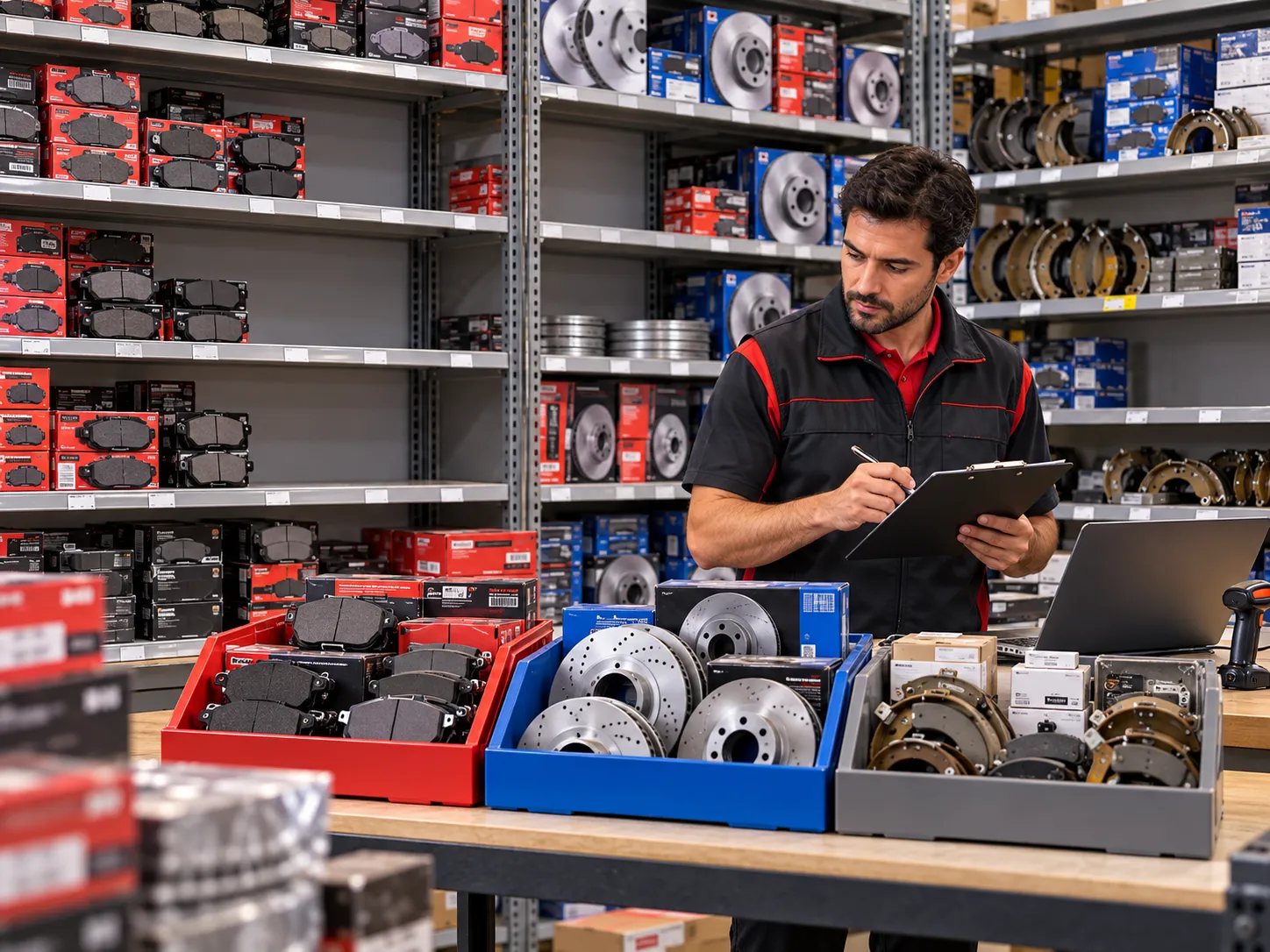
Zhenlong supports auto parts stores, jobbers and local parts distributors with brake pads, brake rotors and brake shoes designed around real B2B purchasing and inventory workflows.

We help stores simplify the parts of brake supply that usually create the most work:

clear SKU identification, mixed-SKU purchasing, private-label packaging, stock replenishment, complaint review and repeat-order management.
  1. 01Clear SKU identification
  2. 02Mixed-SKU purchasing
  3. 03Private-label packaging
  4. 04Stock replenishment
  5. 05Complaint review
  6. 06Repeat-order management

Our goal is not to make your brake catalog bigger.

Our goal is to make it easier to manage.

The real problems behind a brake parts shelf

The Real Problems Auto Parts Stores Face

Brake parts look simple when they are viewed one box at a time.

But when a store manages dozens or hundreds of brake references, the real challenge becomes inventory control.

A store can have too many brake parts and still miss the part customers ask for most.

It can have the correct products but lose time because labels, barcodes and supplier references are inconsistent.

It can also spend too much purchasing time rebuilding orders that have already been successfully purchased before.

The most common problems are usually not about having “too few products.” They are about managing the range better.

BIN A-01
Shelf full of cartons, customer request missing

Too Many SKUs but Still Missing Customer Demand

The shelves are full, but the part requested at the counter is not available.

Problem 01 →
BIN A-02
Shelf with too many slow-moving cartons

Too Much Cash in Slow-Moving Inventory

Low-demand products occupy shelf space and working capital for months.

Problem 02 →
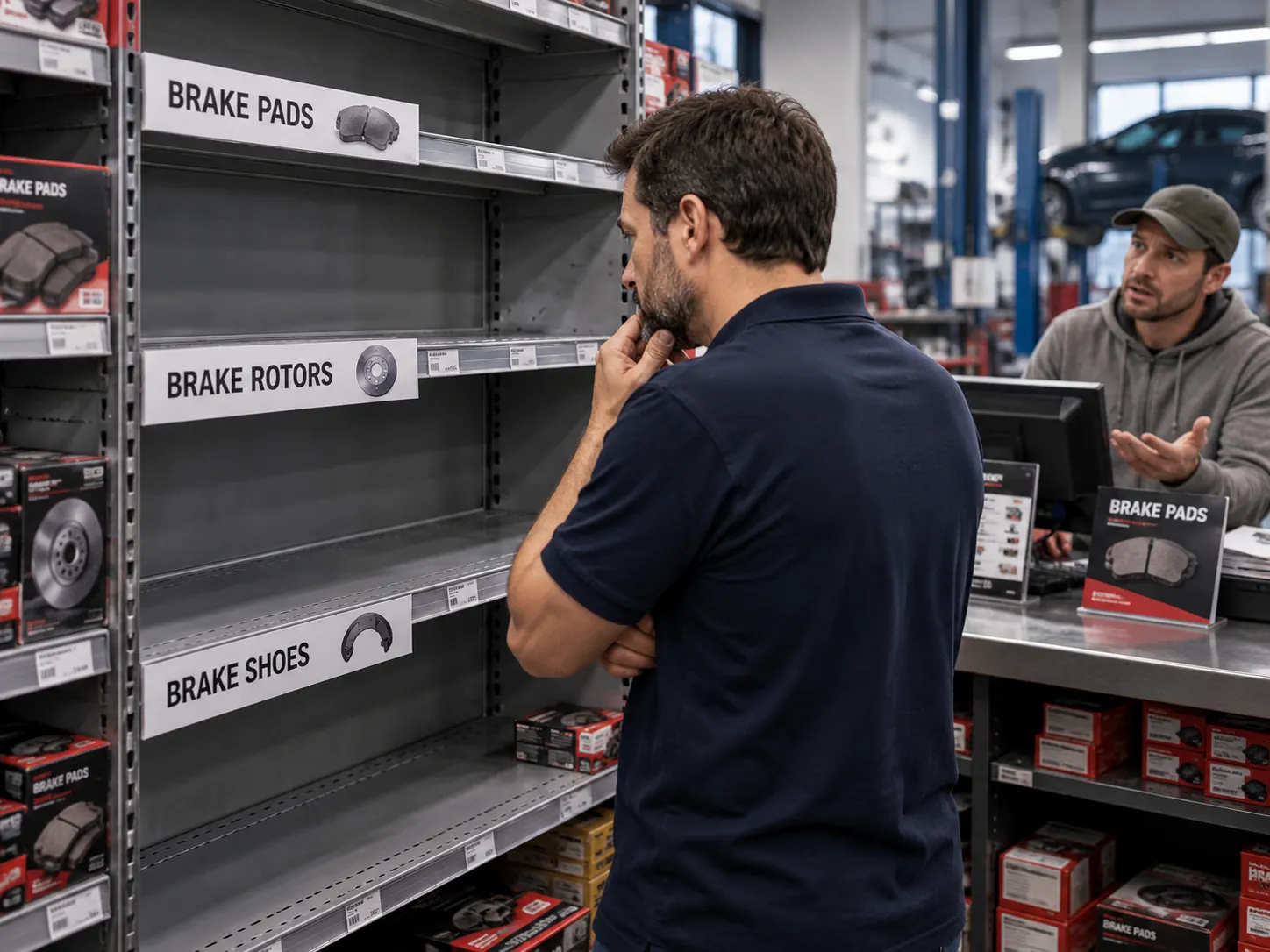
BIN A-03
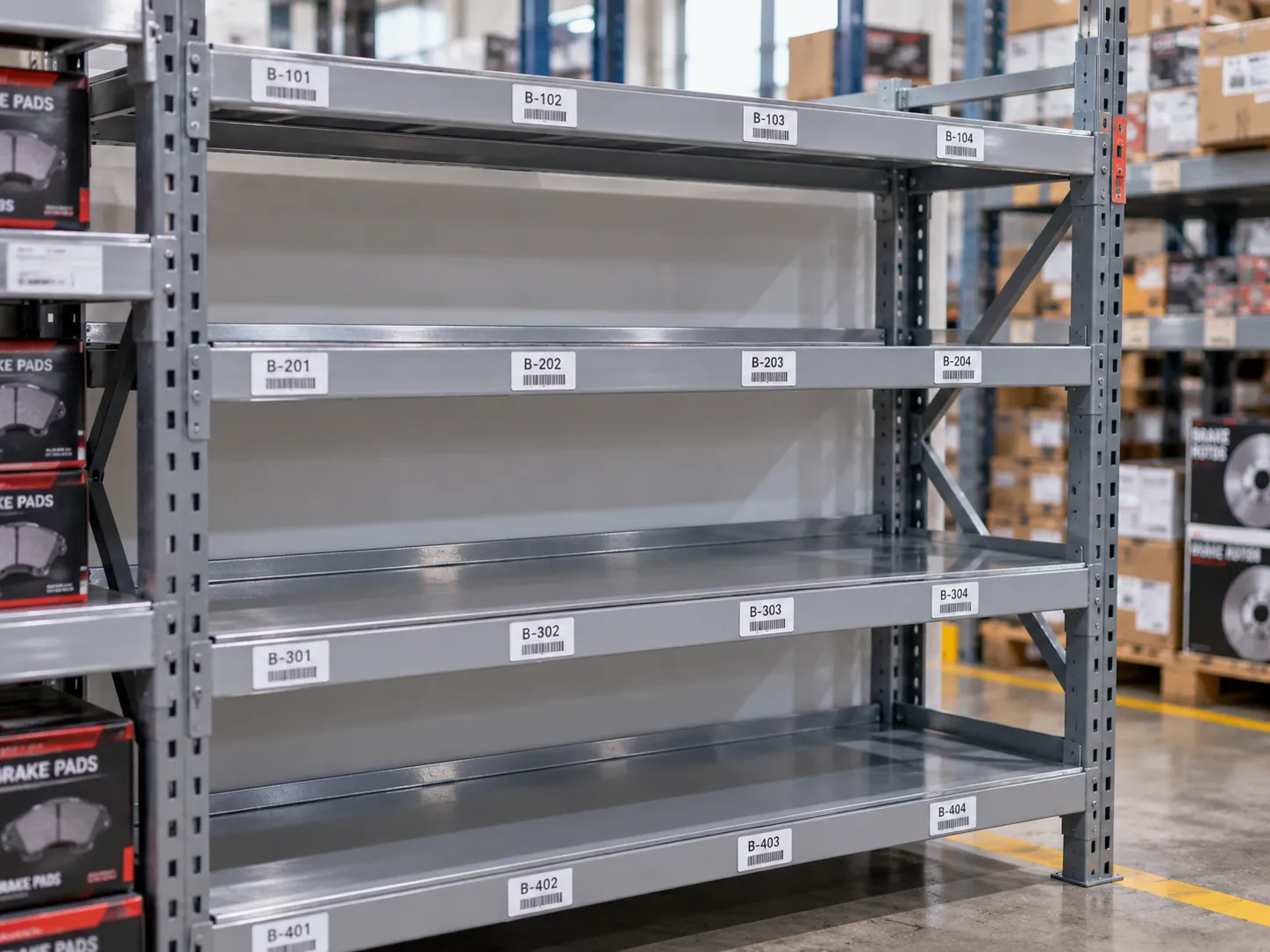
Empty fast-mover shelf

Fast-Moving Parts Go Out of Stock

The references that sell most frequently are often the ones that create lost sales when replenishment is delayed.

Problem 03 →
BIN A-04
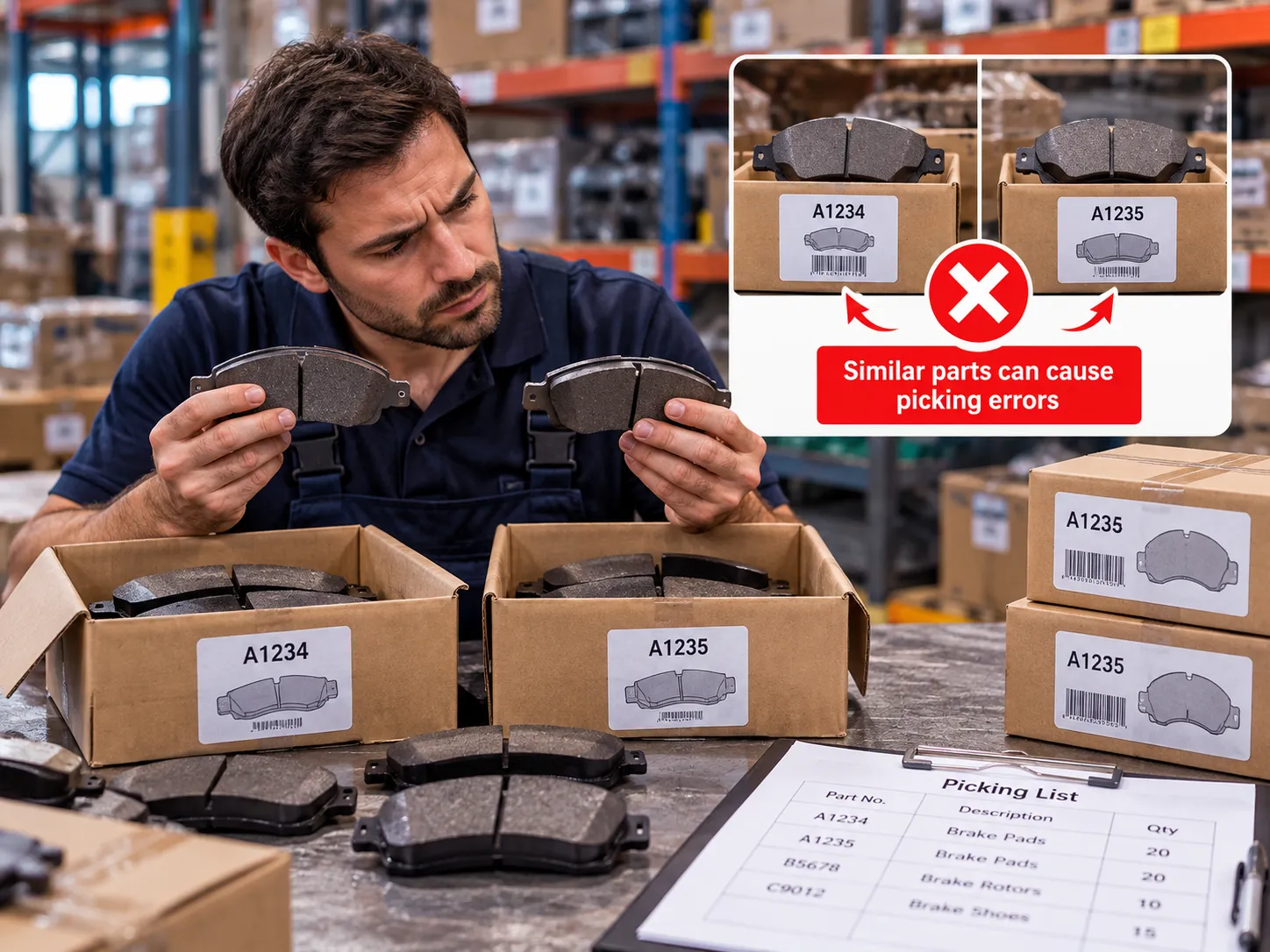
Similar boxes and staff comparing part numbers

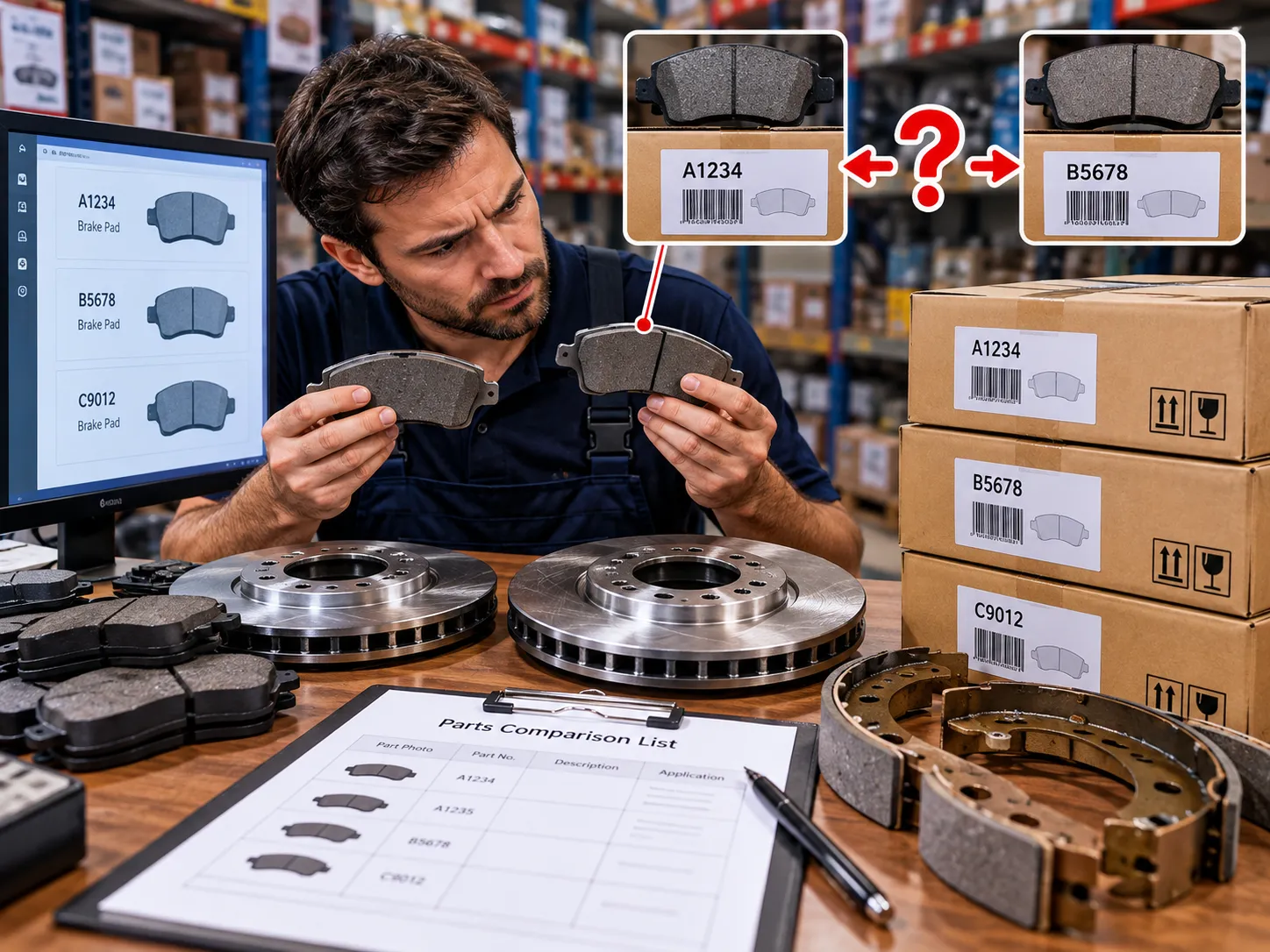
Similar Parts Create Picking Errors

Boxes and components may look nearly identical even when the application is different.

Problem 04 →
BIN B-01
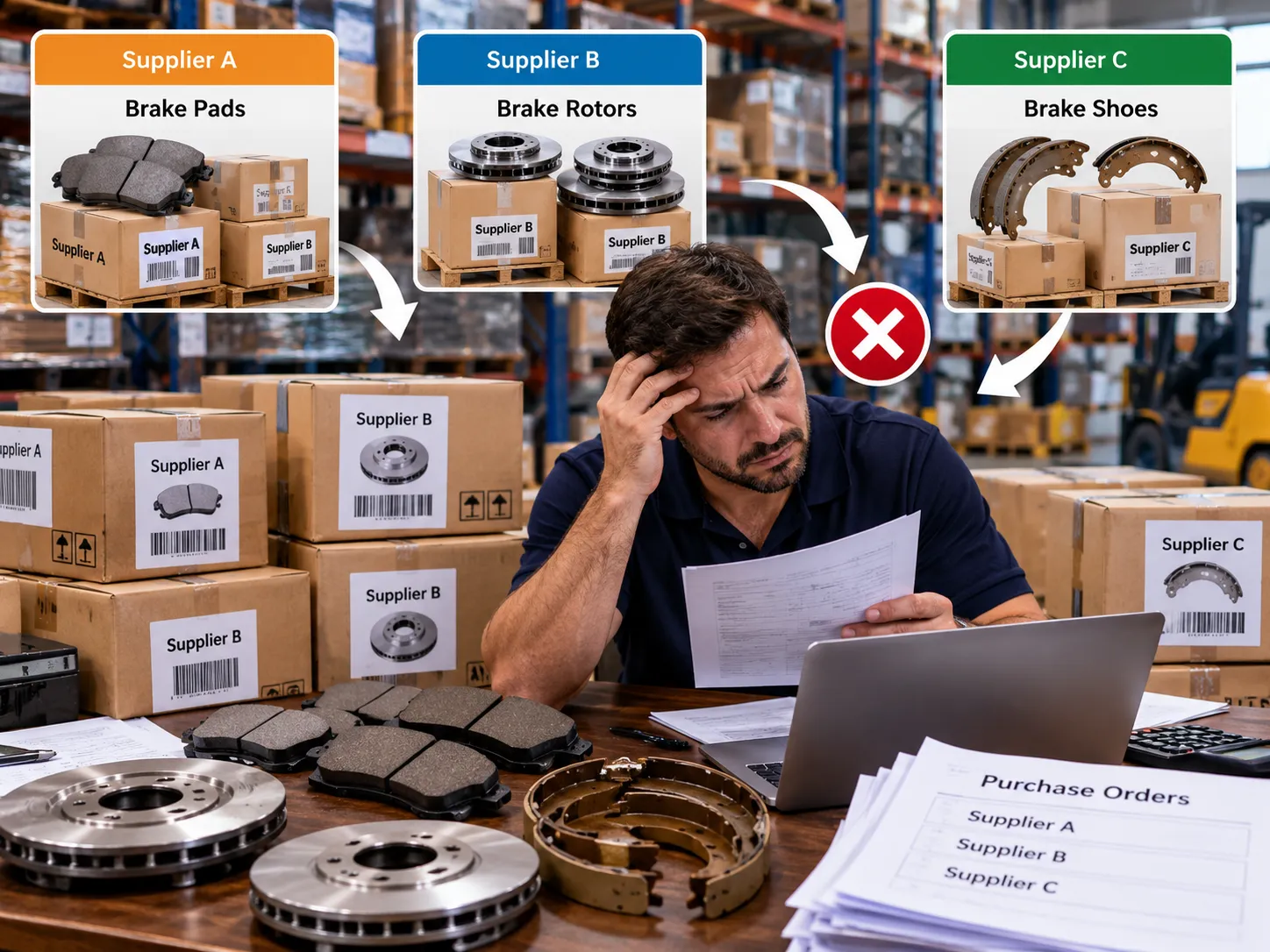
Cartons from multiple suppliers

Too Many Suppliers to Manage

Pads, rotors and shoes may all come from different vendors with separate order rules.

Problem 05 →
BIN B-02
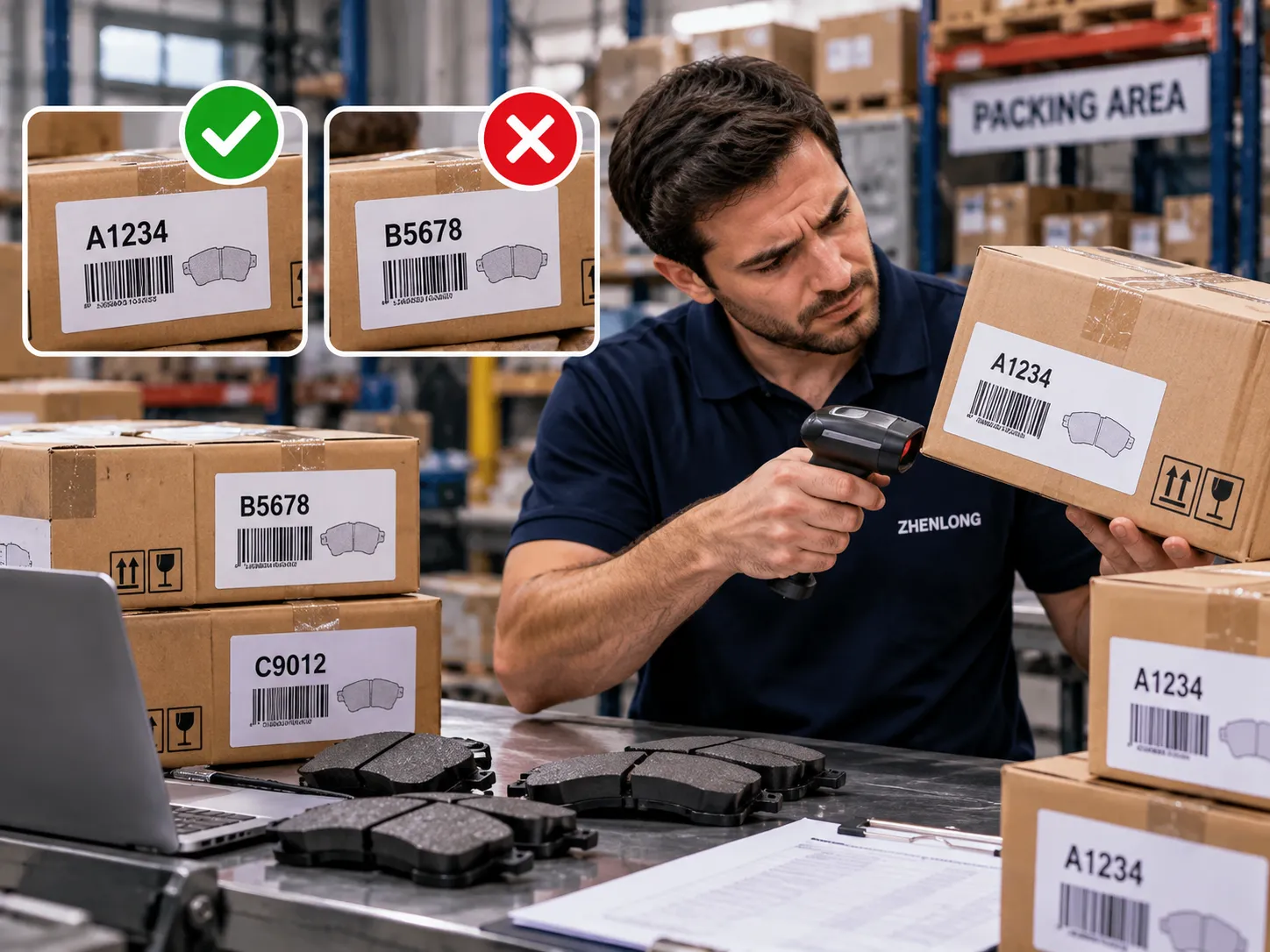
Barcode and label mismatch on a private-label box

Private Label Creates More SKU Complexity

The product may be right, but the box, barcode or customer SKU can still be wrong.

Problem 06 →
BIN B-03
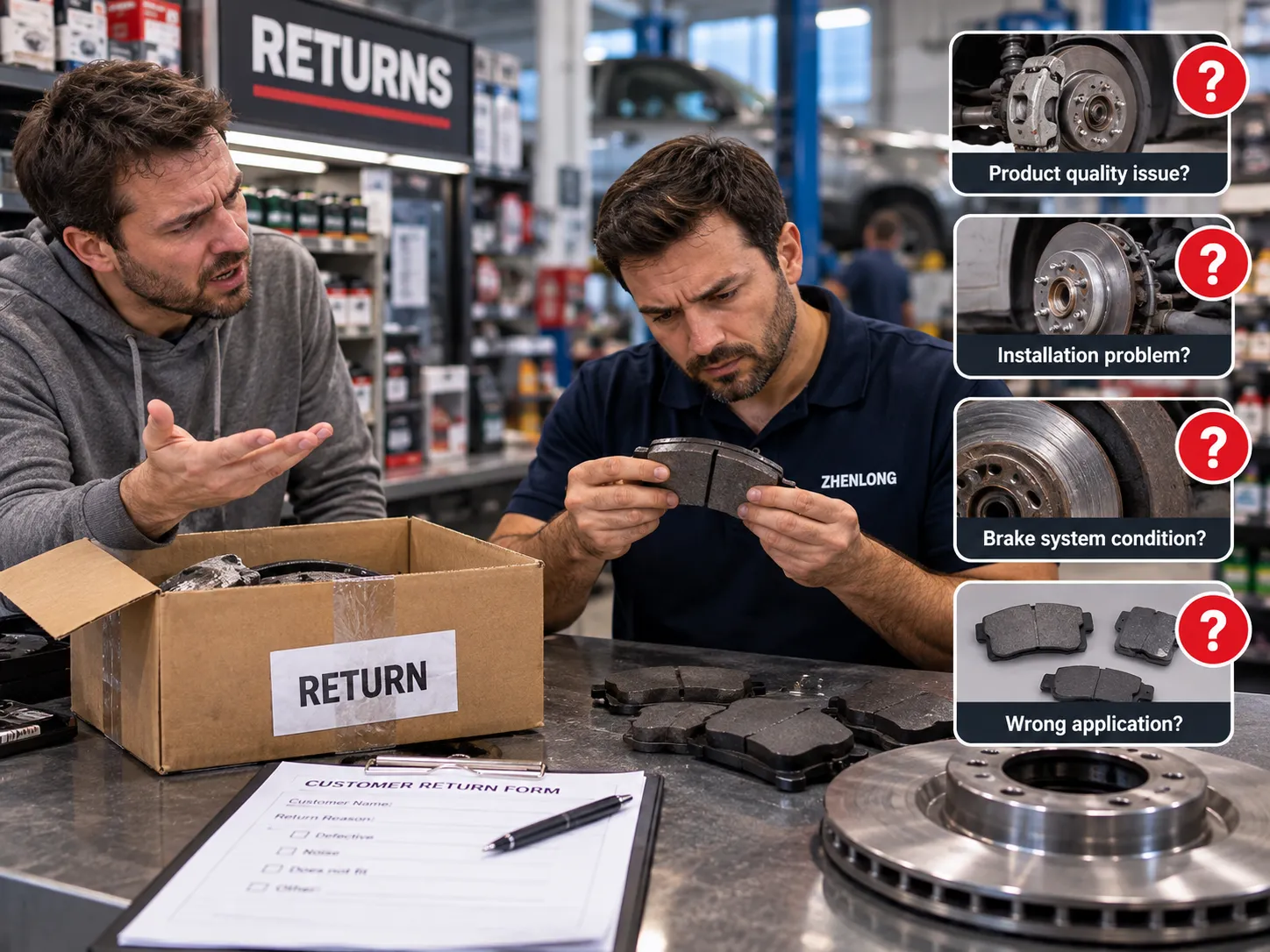
Return counter with a customer complaint

Returned Parts Are Difficult to Evaluate

The customer says the part is defective, but the store often does not know whether the issue is fitment, installation, product quality or another brake-system condition.

Problem 07 →
BIN B-04
Buyer checking old orders and spreadsheets

Every Repeat Order Takes Too Much Manual Work

The buyer searches old emails, boxes and spreadsheets for products that were already confirmed before.

Problem 08 →

Problem 01Too many SKUs, but the wrong range

Problem: You Carry Hundreds of Brake SKUs but Still Miss the Parts Customers Ask For

A wide brake range does not automatically mean a useful brake range.

Many parts stores build inventory by adding products whenever a supplier promotes a new application.

Over time, this can create a large assortment without a clear relationship to actual customer demand.

The result is a shelf full of products that look impressive but do not necessarily improve sales.

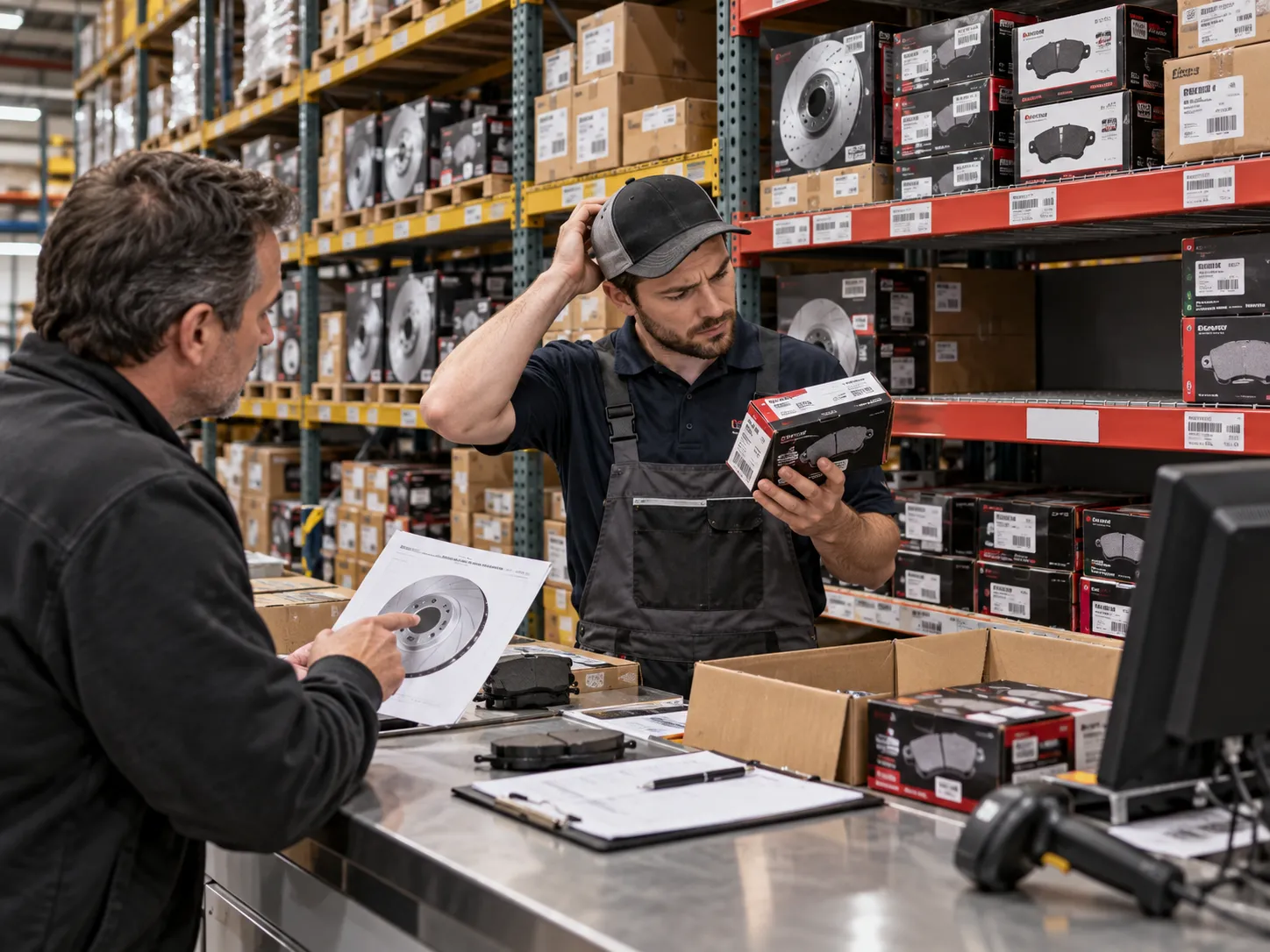
Too many skus make it hard to find products, leading to customer churn.
Large shelf and SKU map

Why the Range Becomes Unbalanced

A brake assortment can become difficult to manage when:

  • Frequently requested references are understocked
  • Low-demand references are overstocked
  • Similar references duplicate each other
  • Old applications remain on the shelf
  • Purchasing decisions are based more on catalog availability than real store sales

The larger the range becomes, the more important prioritization becomes.

How Zhenlong Helps

A

Start With Your Existing SKU List

We do not need to begin by giving your store another giant brake catalog.

The more useful starting point is the range you already sell.

You can provide:

  • Current supplier numbers
  • Internal SKU codes
  • Previous purchasing lists
  • Common applications
  • Frequently reordered references

B

Separate Core Products From Long-Tail Products

A store may divide brake references into three practical groups.

Fast MoversProducts that need regular stock availability.
Regular MoversProducts that sell consistently but at a slower frequency.
Long-Tail ReferencesProducts that should be stocked carefully or purchased according to actual demand.

C

Expand Based on Sales Gaps

Instead of expanding simply because another application exists, new references can be added where the current range is repeatedly missing customer demand.

Result

Build the brake range around what your customers actually buy—not around how many SKUs appear in a catalog.

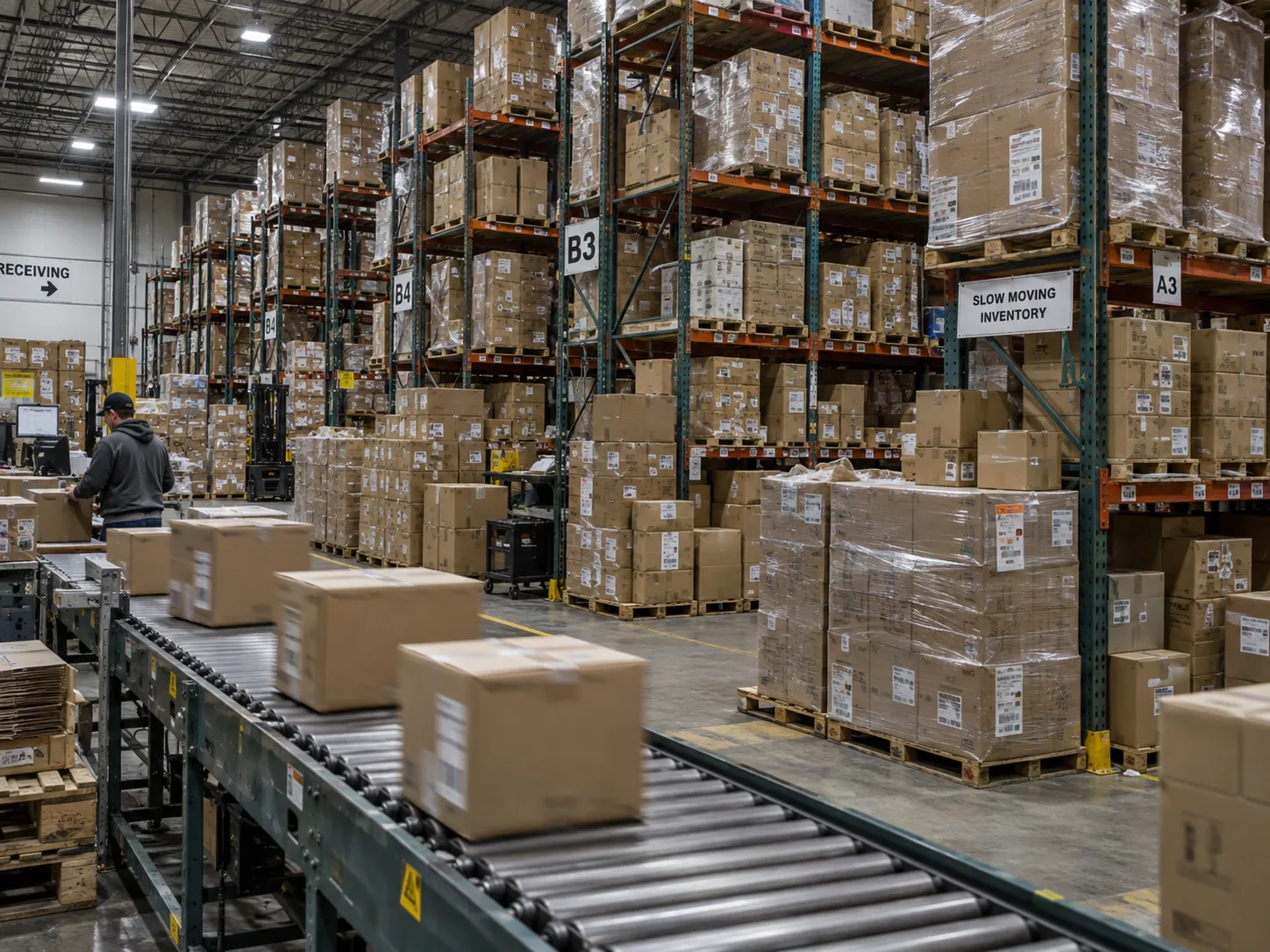
Excess inventory leading to sluggish sales.

Slow-moving cartons on an overstocked shelf

Problem 02Too much slow-moving inventory

Problem: Too Much Cash Is Sitting on the Shelf

Inventory is an investment.

When a brake part sells quickly, that investment returns to the business.

When it remains on the shelf for a long time, it ties up working capital, warehouse space and purchasing capacity.

The goal is not simply to minimize stock.

The goal is to keep stock where it produces useful sales coverage.

Why Brake Parts Become Slow-Moving Stock

Common reasons include:

  • Buying too deeply on the first order
  • Expanding too many references at once
  • Accepting high MOQ requirements
  • Duplicating similar applications
  • Stocking low-demand vehicle references
  • Failing to separate high-frequency from low-frequency products

A large catalog can become expensive when purchasing depth is not connected to actual sales.

How Zhenlong Helps

Build Orders Around Real Demand

Your existing sales and purchasing information can help identify which products deserve more stock and which should remain limited.

Use Mixed-SKU Purchasing

A store often needs breadth across many references, but not deep quantities of every reference.

Mixed-SKU purchasing can help create broader coverage without forcing every item into the same inventory depth.

Prioritize Proven References

Products that have already demonstrated real demand can receive more replenishment attention than untested applications.

Expand in Stages

Instead of building a huge brake category in one purchase:

Core Range→Proven Demand→Wider Coverage

is often easier to manage.

Result

More useful inventory and less money trapped in brake parts that rarely move.

Problem 03Fast-moving parts keep running out

Problem: Your Best-Selling Brake Parts Are the Ones You Keep Running Out Of

Dead inventory is expensive.

But stockouts can be equally costly.

When a customer asks for a common brake pad or rotor and the store does not have it, the sale may move to another supplier immediately.

For frequently requested parts, stock availability directly affects customer retention.

Empty shelf
Empty shelf
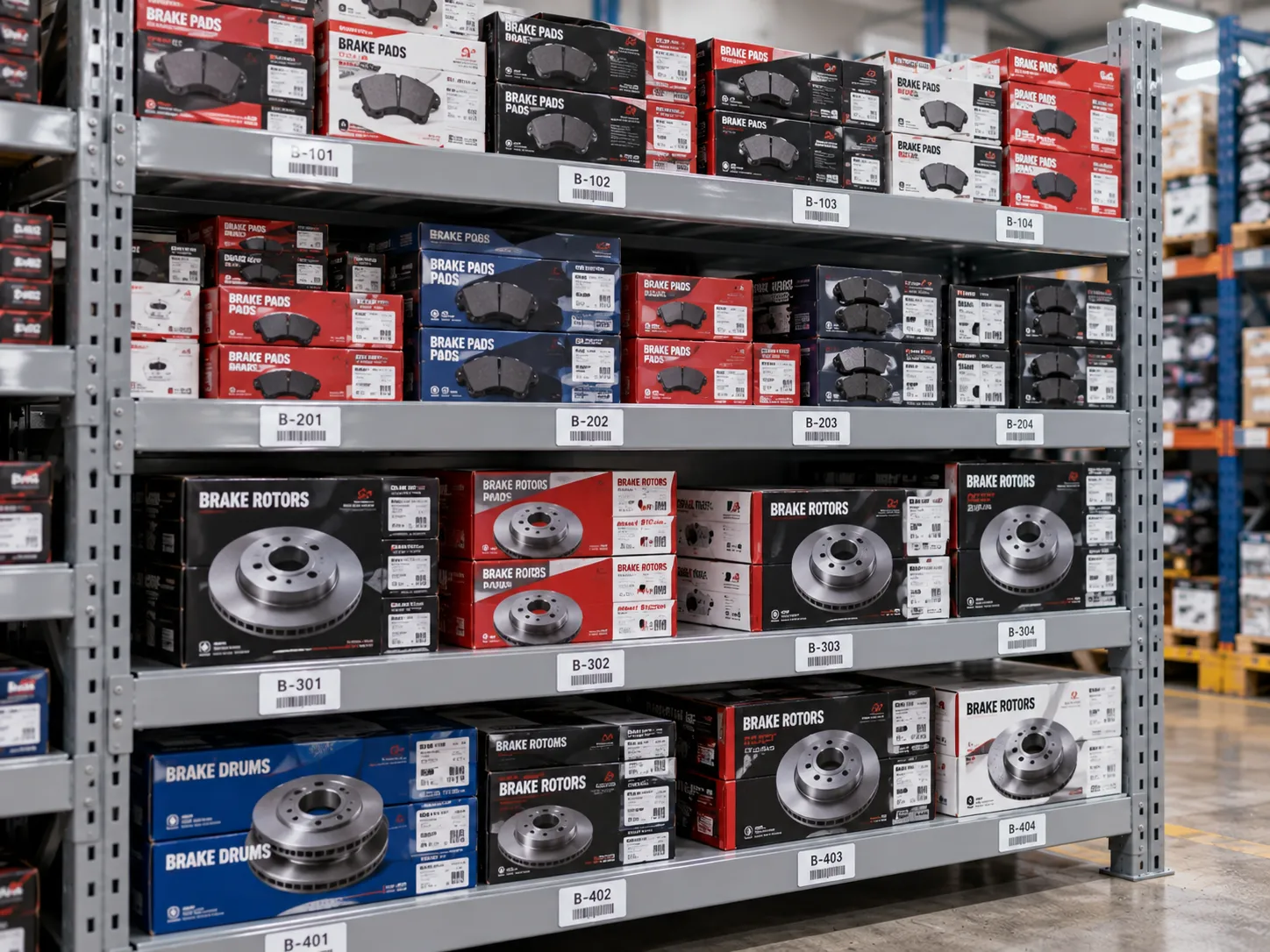
Fully stocked shelves
Replenished shelf

Why Fast Movers Go Out of Stock

Common causes include:

  • Reordering too late
  • Uncertain supplier lead times
  • Poor visibility of fast-moving SKUs
  • Repeated product reconfirmation
  • Inconsistent references between suppliers

How Zhenlong Helps

Identify Repeat-Order SKUs

Once a reference has been successfully confirmed and supplied, it can become part of a repeat purchasing program.

Prioritize Fast-Moving Products

Frequently reordered references can be separated from slower products so the buyer knows where stock availability matters most.

Reorder Before the Shelf Reaches Zero

Stores can organize replenishment around a simple cycle:

ReceiveSellMonitorReorder

instead of waiting until the stock is already exhausted.

Confirm Only What Changed

If the product, packaging and reference have already been confirmed, the next order should focus mainly on changes such as quantity or delivery requirements.

Result

The goal is not maximum stock. It is reliable availability of the brake parts your customers ask for most.

Problem 04SKU confusion & picking errors

Problem: Similar Brake Parts Create Receiving, Picking and Selling Errors

Brake components are particularly vulnerable to identification mistakes.

Two brake pads can have a very similar shape.

Two rotors can share the same outside diameter but use different heights or center bores.

Two brake shoes can look almost identical while using different widths or spring-hole positions.

A warehouse or counter employee may not notice the difference immediately.

That is why clear product identification matters.

Two similar brake parts and a label comparison

Where SKU Errors Can Happen

Receiving

The product enters the store under the wrong reference.

Shelving

A carton is placed in the wrong location.

Picking

Staff select a similar product by mistake.

Counter Sales

The wrong box reaches the customer.

Returns

A returned product is placed back into the wrong stock position.

How Zhenlong Helps

The objective is to keep a clear connection between:

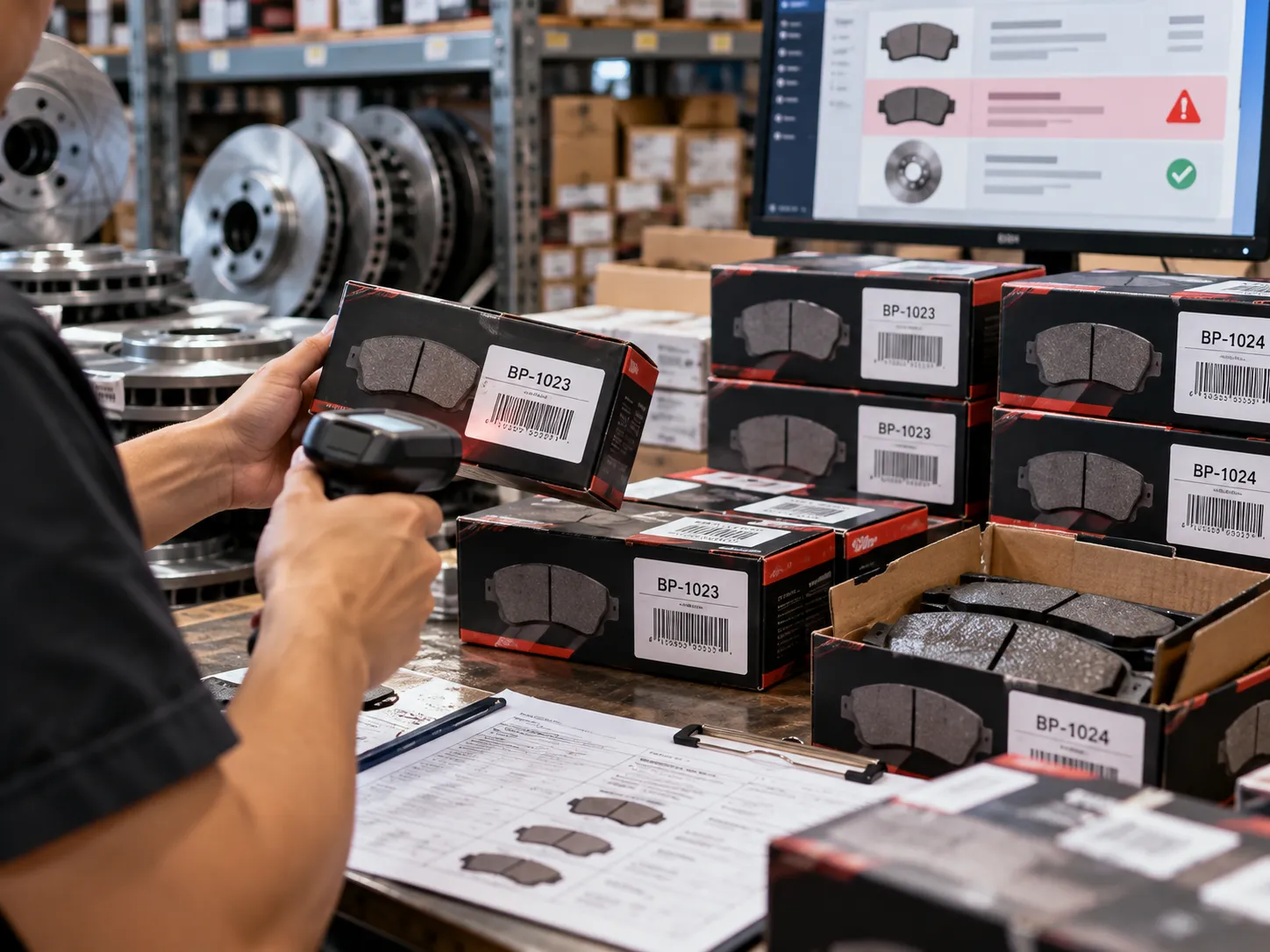
Physical Product→Supplier Reference→Customer SKU→Barcode→Retail Box→Master Carton

Clear SKU Identification

Product references should remain visible and consistent through packaging and order preparation.

Customer Item Numbers

Where required, customer-specific SKU information can be incorporated into the agreed packaging or labeling structure.

Barcode Support

Barcodes can help stores reduce manual identification and support POS or warehouse systems.

Master Carton Identification

Outer-carton labels make mixed-SKU receiving easier.

Result

The easier a brake part is to identify, the easier it is to receive, store, pick, sell and reorder.

Problem 05Too many different suppliers

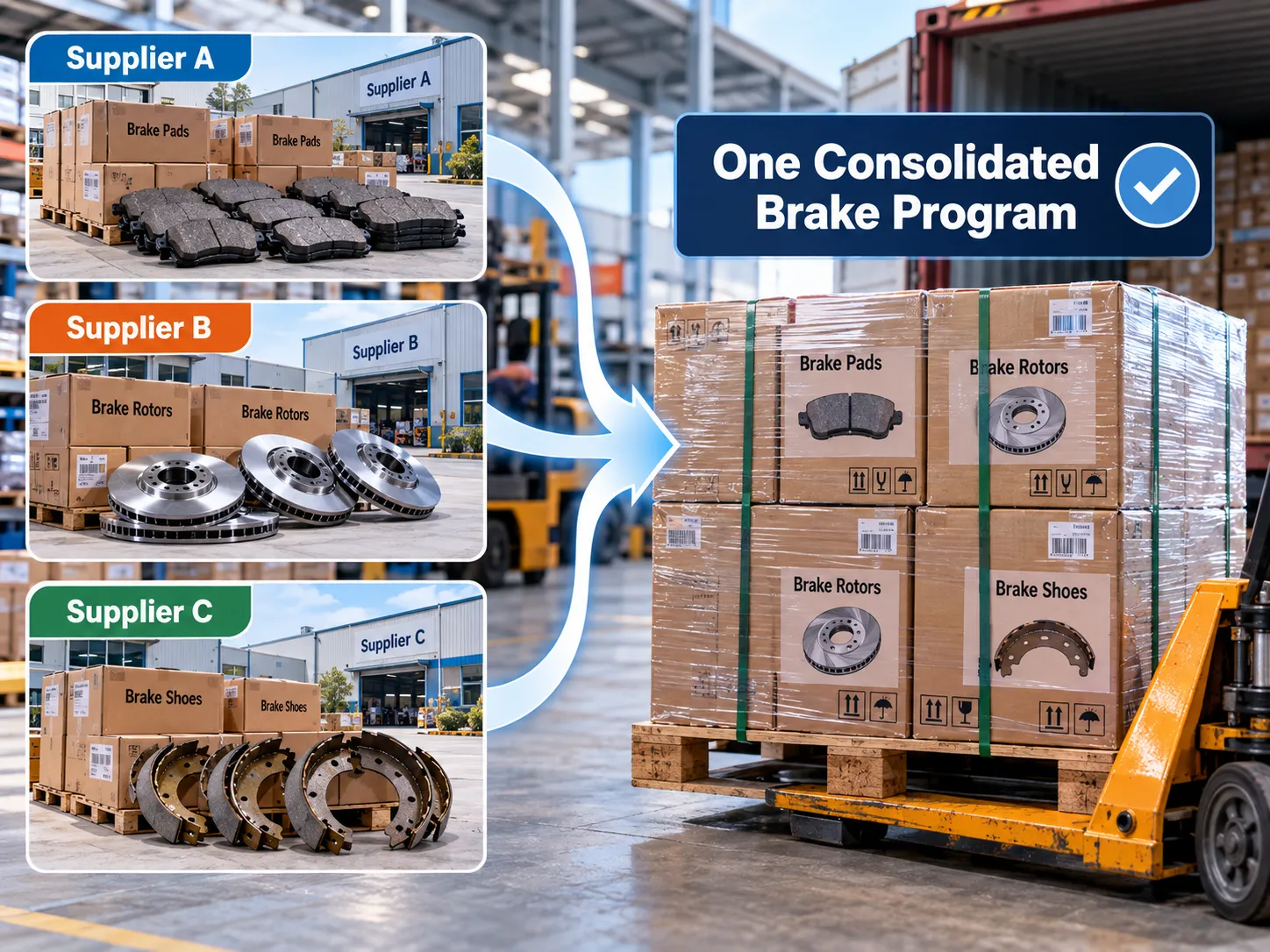
Problem: Pads, Rotors and Shoes Are Managed Through Different Suppliers

Managing many suppliers can make a brake category harder than it needs to be.

Vendor 1One vendor supplies pads.
Vendor 2Another supplies rotors.
Vendor 3Another supplies shoes.

The store then needs to manage different:

  • Quotations
  • MOQs
  • Payment terms
  • Production schedules
  • Packaging rules
  • Shipment schedules
  • After-sales contacts
One brake program
Brake Pads · Brake Rotors · Brake Shoes
Multiple supplier orders into one consolidated brake program

How Zhenlong Helps

Three Core Brake Categories

Our supply program focuses on: Brake Pads, Brake Rotors and Brake Shoes.

One Purchasing List

The customer can send one combined brake parts list instead of separating each product family into completely independent inquiries.

One Product Review Process

Part references can be organized together while still being checked according to each product category.

One Order Coordination Process

Where order conditions allow, the categories can be coordinated together for packaging and shipment planning.

Result

Fewer supplier relationships to manage across your core brake parts category.

Problem 06Private label creates more complexity

Problem: Private Label Works Until the Wrong Product Goes Into the Right Box

Private label helps a parts store build its own brand.

But once private packaging is introduced, the order becomes more complex.

A product now needs to match not only the application, but also the customer’s SKU, barcode, branded box and outer-carton identification.

One mismatch can create problems all the way to the counter.

1Correct Part
2Correct SKU
3Correct Barcode
4Correct Box
5Correct Master Carton

Visual logic · product → SKU label → barcode → box → master carton

How Zhenlong Helps

01

Product-to-Box Matching

The correct physical brake part needs to remain connected to the correct branded package.

02

Customer SKU Labels

Customer item numbers can be incorporated according to the agreed packaging structure.

03

Barcode Integration

Barcode information can support store receiving, inventory management and retail sales.

04

Packaging Records

Confirmed packaging information provides a reference for later replenishment.

05

Repeat Packaging Consistency

A successful private-label program should become easier to reproduce in future orders.

Result

Private label should strengthen your brand—not make inventory management more difficult.

Problem 07Returns & customer complaints

Problem: A Brake Part Comes Back, but the Store Does Not Know What Actually Went Wrong

A parts store is usually not the installer.

That makes customer complaints more complicated.

A customer or repair shop may return a product and say:

“The pad is noisy.”“The rotor vibrates.”“The shoe does not fit.”“It wore too quickly.”“This is the wrong part.”

The store still needs to decide what happens next.

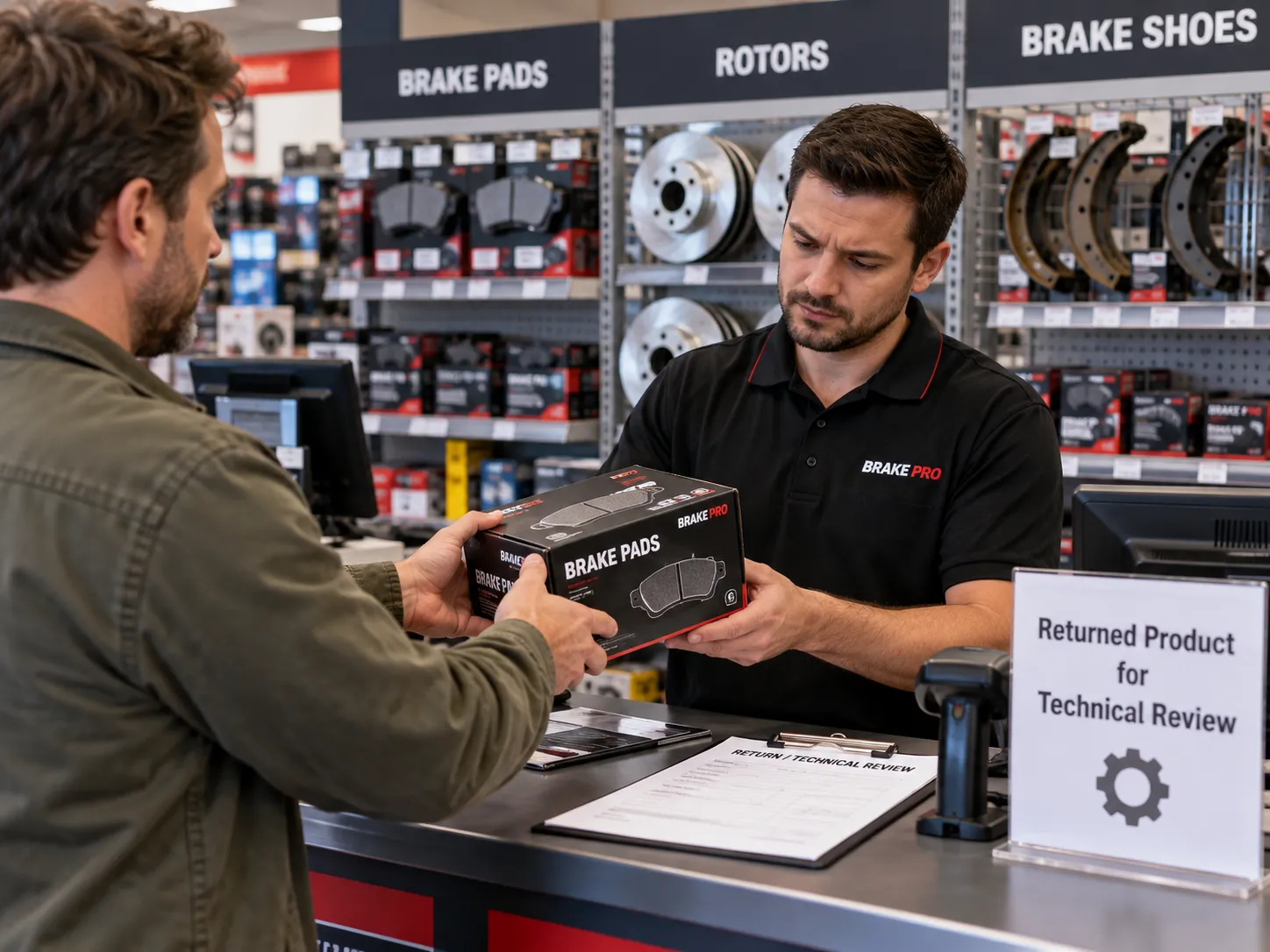
Returned product at the store counter for technical review

Returned product at the store counter for technical review

How Zhenlong Helps

Instead of immediately deciding that the product is defective or that the customer installed it incorrectly, we begin with evidence.

Useful information can include:

  • Product reference
  • Batch information
  • Vehicle application
  • Photos
  • Video
  • Workshop feedback
  • Measurements where available

What the Review May Help Clarify

A

Wrong Reference

Was the wrong part supplied or selected?

B

Fitment Issue

Does the application require a different configuration?

C

Product Issue

Is there evidence of a product or production problem?

D

Installation Issue

Could the symptom be related to installation?

E

Brake-System Issue

Could another component be influencing the complaint?

F

Packaging / Picking Error

Was the correct product placed in the wrong box or selected incorrectly?

Result

Give your counter and purchasing teams a clearer way to handle brake-part complaints instead of treating every return as the same problem.

Problem 08Repeat orders take too much time

Problem: Your Buyer Rebuilds the Same Brake Parts Order Every Time

A store may have already purchased and sold the same 40, 70 or 100 brake references successfully.

But when replenishment time arrives, the buyer still needs to search old messages, compare boxes and rebuild the order.

That is unnecessary purchasing work.

First order / rebuilt every time

Returned product at the store counter for technical review
First order rebuilt from old emails and boxes
→

Repeat order / from confirmed references

Repeat order from confirmed sku mapping

Repeat order from confirmed SKU mapping

Previous Order References

Successful previous orders can provide the starting point.

Confirmed SKU Mapping

The relationship between Zhenlong references and the customer’s internal item numbers can remain available for repeat purchasing.

Packaging Records

Confirmed packaging or private-label information does not need to be recreated from the beginning when nothing has changed.

Change-Based Confirmation

Future orders can focus on what is different.

Confirm the change rather than rebuilding the complete order.

Result

Repeat purchasing should become faster as the supplier relationship becomes longer.

Problem 09Counter staff cannot identify parts quickly

Problem: Your Counter Staff Need to Identify Brake Parts Quickly

Not every employee in an auto parts store has ten years of brake-product experience.

The product-information system therefore needs to work for the whole team, not only the most experienced buyer.

If product identification depends entirely on one person’s memory, the store becomes harder to scale.

What Helps Counter Staff

1

Clear Part Number

The primary reference should be easy to find.

2

Product Category

The box should clearly indicate whether it contains a pad, rotor or shoe.

3

Application Information

Relevant application references can help staff cross-check the part.

4

Barcode

Supports faster identification through the store's system.

5

Product Image Where Useful

Visual reference can help in categories where similar items are easily confused.

✓

How Zhenlong Helps

Our objective is to keep brake part information:

Clear→Repeatable→Easy to Cross-Reference

A well-identified product is easier for new employees to handle correctly.

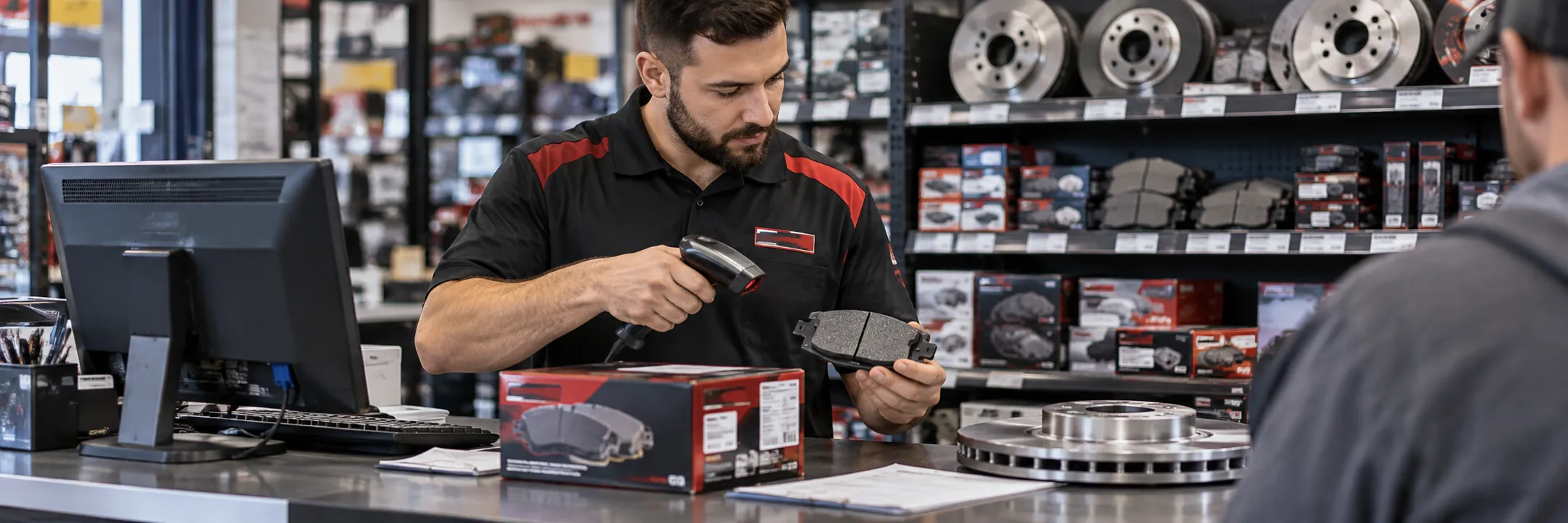
Counter employee scanning and checking a brake part
Result

Make brake product knowledge usable across the entire store—not dependent on one experienced employee.

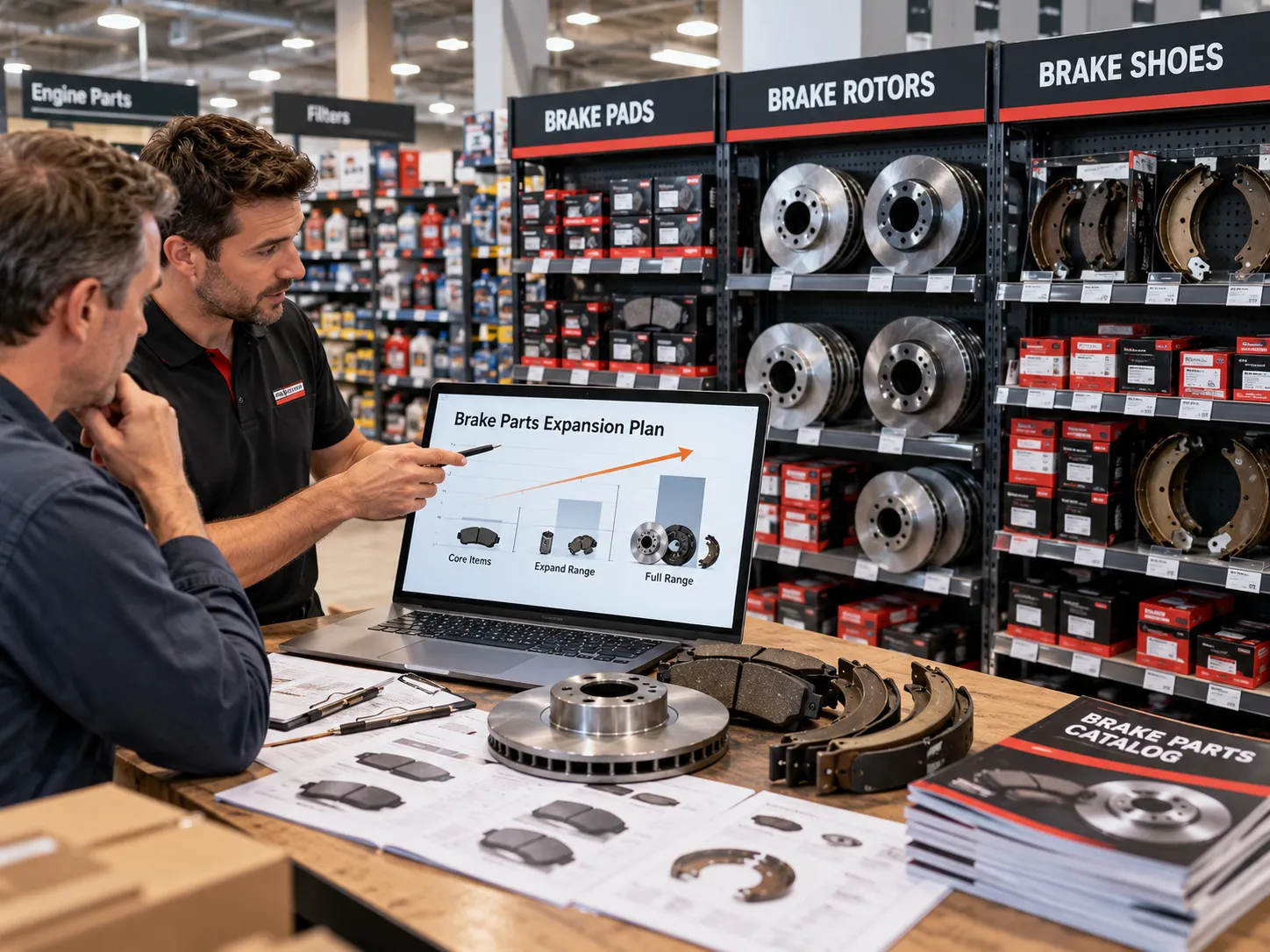
Store category expansion into brake parts

Problem 10Expanding into brake parts

Problem: You Want to Expand Your Brake Parts Range but Do Not Know Where to Start

Some auto parts stores already sell filters, suspension parts, oils, ignition components or other replacement parts and want to expand into braking products.

The challenge is not whether thousands of brake SKUs exist.

The challenge is deciding which ones make sense for the store first.

How Zhenlong Helps

Start With Your Market

A brake range for the United States will not look identical to one built around European vehicle demand.

Start With Your Customer Base

Who purchases from your store?

  • Repair shops?
  • Retail customers?
  • Local fleets?
  • Installer networks?

Your buyer type influences the best starting range.

Start With Common Demand

The first range should focus on useful market coverage rather than catalog completeness.

Expand in Stages

Stage 1

Core Fast Movers

Build practical daily coverage.

Stage 2

Regular Demand

Expand into products requested frequently enough to justify stock.

Stage 3

Long-Tail Coverage

Add more specialized references as actual demand becomes visible.

Result

Build a brake category that can sell before building a brake catalog that is difficult to manage.

The auto parts store solution model

One Brake Parts Supply Model Built Around Store Operations

Store ProblemHow Zhenlong HelpsBusiness Result
01Too many slow SKUsDemand-based product planningLess dead stock
02Fast movers out of stockRepeat replenishment supportBetter product availability
03SKU confusionClear references, labels and barcodesFewer picking errors
04Too many suppliersPads + rotors + shoesSimpler purchasing
05Private label complexityProduct-to-package controlFewer packaging errors
06Customer returnsEvidence-based reviewEasier claim handling
07Slow reorderingPrevious-order referencesFaster replenishment
08New brake categoryStaged range developmentLower inventory risk

Our job is not only to supply brake parts. It is to help make those brake parts easier for your store to purchase, receive, identify, sell and reorder.

Inventory strategy

Build Brake Inventory Around How Parts Actually Sell

Not every brake SKU deserves the same amount of shelf space.

A practical store inventory strategy can separate products according to actual movement.

A

A — Fast-Moving Brake Parts

These references generate frequent demand.

Store Strategy

  • Higher stock priority
  • More frequent review
  • Shorter reorder cycle
  • Lower tolerance for stockouts

These products should be the most visible in the replenishment process.

B

B — Regular-Moving Brake Parts

These references sell consistently but less frequently than the core fast movers.

Store Strategy

Maintain appropriate stock while monitoring actual movement.

The objective is sufficient coverage without excessive inventory depth.

C

C — Long-Tail Brake Parts

These references may only be requested occasionally.

Store Strategy

  • Lower stock depth
  • More selective purchasing
  • Demand-based replenishment
  • Avoid unnecessary overstock

Not every brake SKU deserves the same amount of shelf space, cash or reorder priority.

From receiving to reordering

Brake Parts Should Stay Clear From Receiving to Reordering

A good brake parts program needs to work through the entire store operation.

The order does not end when the cartons arrive.

  1. 1

    Purchase

    The buyer sends the required SKUs and quantities.

  2. 2

    Receive

    Warehouse or store staff identify the incoming cartons.

  3. 3

    Identify

    Part numbers, customer SKUs and labels make each product clear.

  4. 4

    Store

    Products are placed in the correct shelf position.

  5. 5

    Pick

    Staff can locate the correct item quickly.

  6. 6

    Sell

    The customer receives the intended reference.

  7. 7

    Handle Returns

    Returned products remain traceable to the original reference.

  8. 8

    Reorder

    Successful SKUs are purchased again without rebuilding the entire sourcing process.

A brake part should remain identifiable from the supplier’s warehouse to your shelf—and back into the next purchase order.

Different stores need different solutions

Different Auto Parts Stores Need Different Brake Parts Strategies

A store entering the brake category for the first time has different needs from an established aftermarket brake specialist.

Our supply approach can be adjusted to the stage of the customer’s business.

Stage · Start

Starting a Brake Parts Category

Your Main Questions

  • Which SKUs should we start with?
  • How much should we stock?
  • Which product categories matter first?

What You Need

  • Manageable first order
  • Core applications
  • Controlled inventory depth
  • Easy-to-understand product references
Zhenlong Support

Start with a focused range and expand as demand becomes clearer.

Stage · Grow

Growing an Existing Brake Parts Range

Your Main Questions

  • Where are we losing sales?
  • Which products need deeper inventory?
  • Which low-demand products should we reduce?

What You Need

  • Better vehicle coverage
  • Faster replenishment
  • More accurate SKU planning
  • Less dead inventory
Zhenlong Support

Use current sales and purchasing history to improve the existing assortment.

Stage · Established

Established Brake Parts Business

Your Main Questions

  • How can purchasing become more efficient?
  • How can we reduce supplier complexity?
  • Can we build our own private-label program?

What You Need

  • Multi-SKU order efficiency
  • Stable repeat supply
  • Private label
  • Better SKU mapping
  • Supplier consolidation
Zhenlong Support

Build a structured long-term brake parts purchasing program.

Common store scenarios

Common Auto Parts Store Scenarios We Can Support

STORE SCENARIO01

Large brake range with frequent stockouts

Scenario 01 — Too Much Inventory but Too Many Stockouts

Situation

The store carries a large brake range but still frequently misses popular references.

Problem

Inventory depth does not match actual sales frequency.

Zhenlong Approach

Separate fast movers, regular movers and long-tail products before planning future orders.

Intended Result

Move working capital toward products that generate more regular demand.

STORE SCENARIO02

Similar labels and boxes in a mixed sku order
Similar labels and boxes in a mixed-SKU order

Scenario 02 — Mixed-SKU Packaging Errors

Situation

The correct brake parts are supplied, but some products are difficult to distinguish because labels and boxes are too similar.

Problem

SKU identification breaks between product, box and store system.

Zhenlong Approach

Create a clearer mapping:

Part→Customer SKU→Barcode→Box→Carton

Intended Result

Simpler receiving and fewer picking mistakes.

STORE SCENARIO03

Auto parts store adding a brake category

Scenario 03 — A Store Wants to Add Brake Parts

Situation

An established auto parts business wants to add brake pads, rotors and shoes.

Problem

Starting with a complete catalog would create too much inventory risk.

Zhenlong Approach

Begin with core demand, monitor movement and expand the range in stages.

Intended Result

Build a sellable brake category without immediately investing in hundreds of low-confidence SKUs.

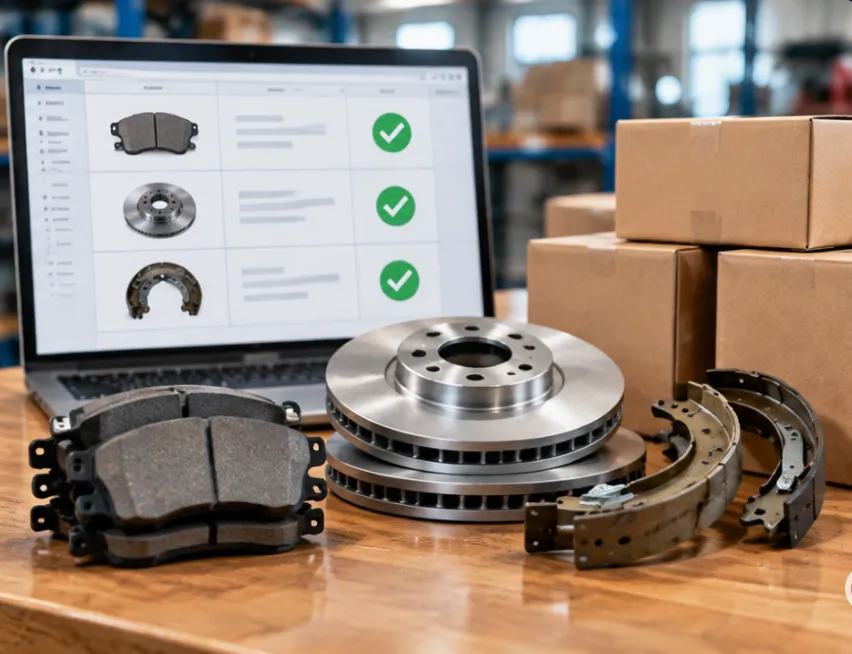
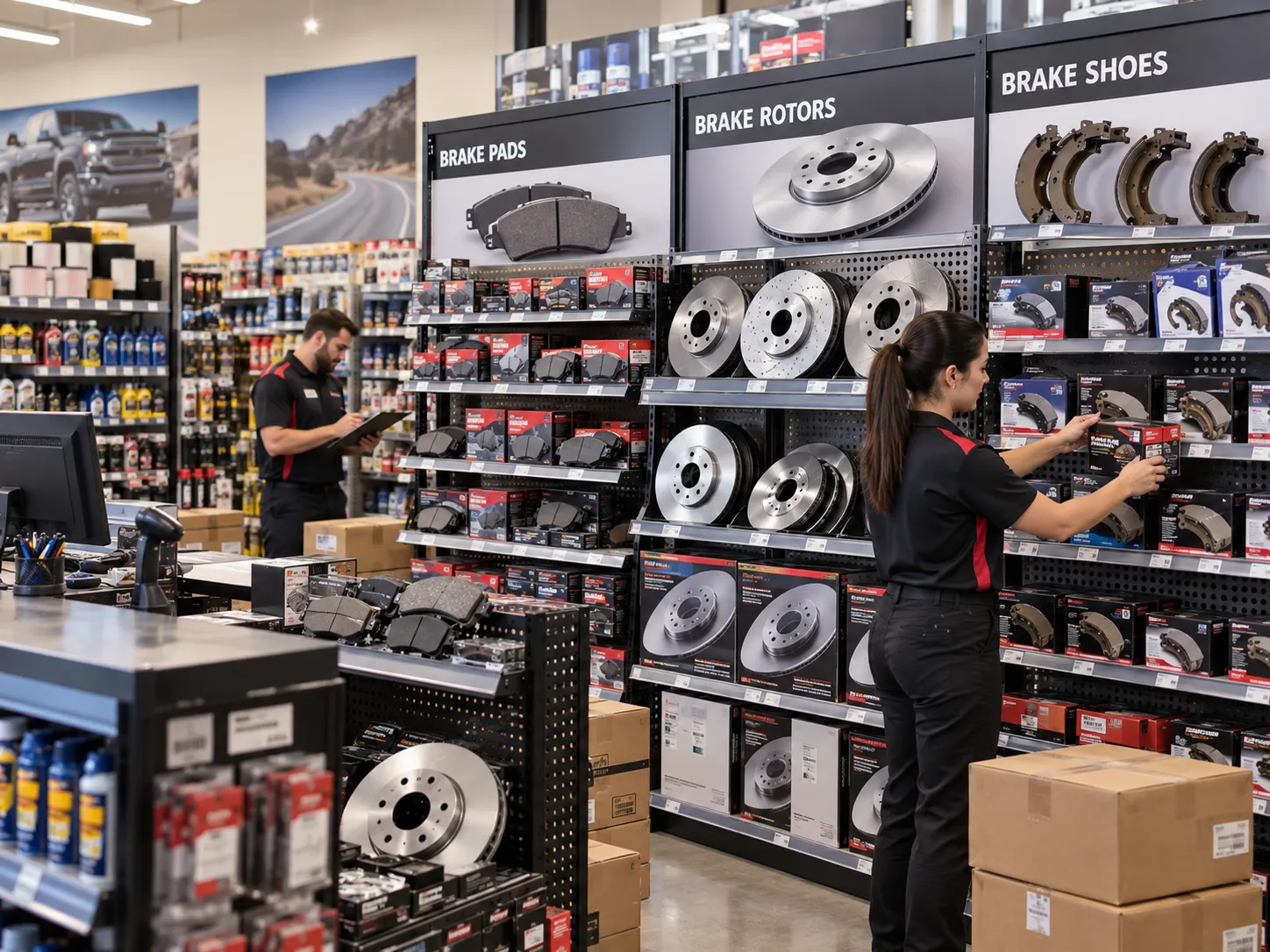
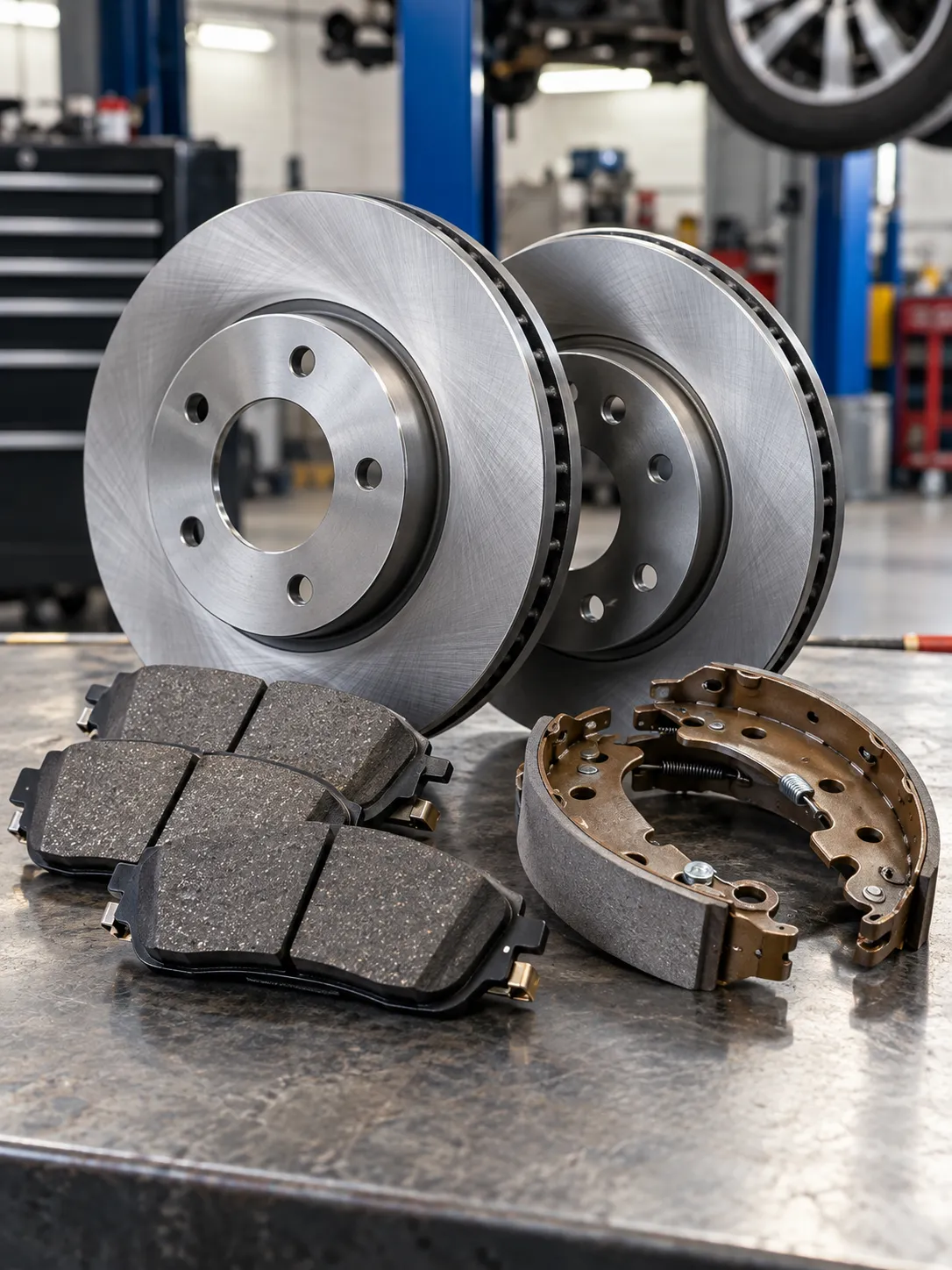
Brake pads, rotors and shoes
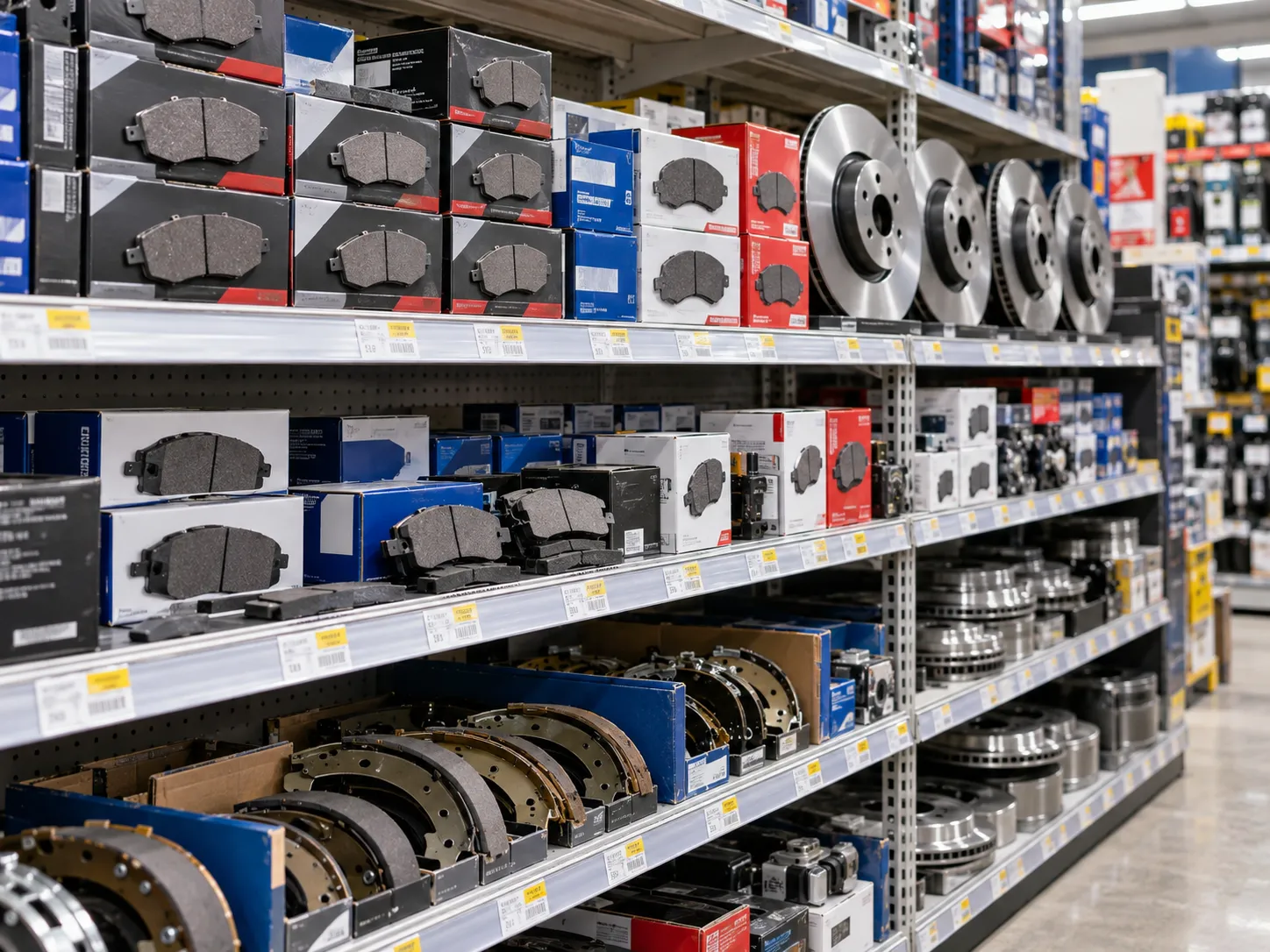
Brake parts store shelf
Brake pads, rotors and shoes
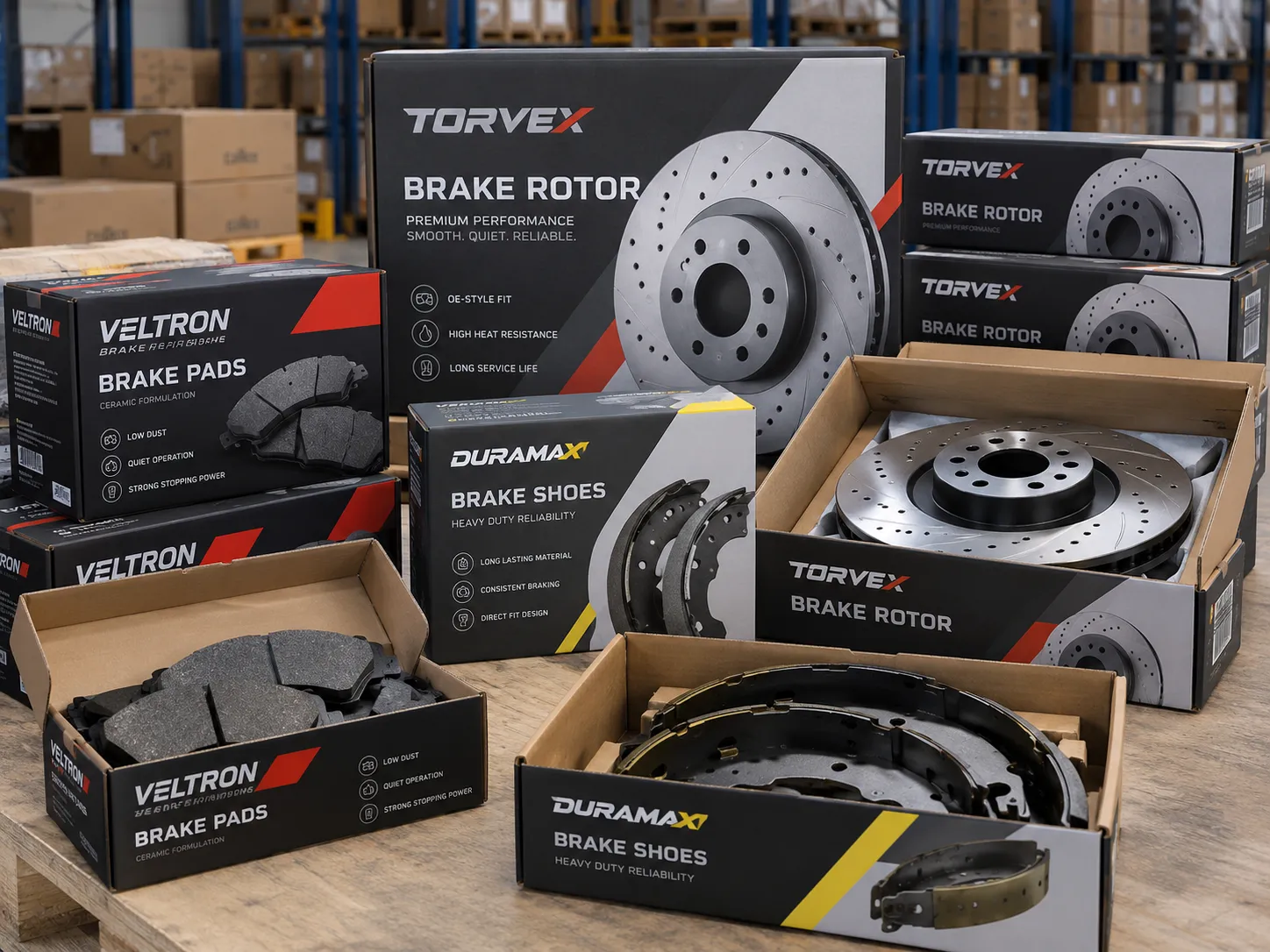
Private label packaging
Private-label packaging

Why auto parts stores work with Zhenlong

Why Auto Parts Stores Work With Zhenlong

By this point in the page, the value should already be clear.

This section simply summarizes the supply model.

Focused Brake Parts Range

We concentrate on:

This makes it easier to build deeper purchasing and product support around a focused category.

Multi-SKU Purchasing

Our B2B process is designed around purchasing lists rather than one-product-at-a-time retail ordering.

Inventory-Oriented Supply

We understand that a store needs products that can move through its stock system, not simply more products on a supplier catalog.

Private Label Support

Product references, labels, barcodes, branded packaging and master cartons can be managed as one connected system.

Repeat Replenishment

Once the product and packaging structure are established, later purchasing should become simpler.

FAQ

Brake Parts FAQ for Auto Parts Stores

Still have a question? Contact our brake parts team.

Yes.

Existing supplier references can be used as the starting point for product review. You can also provide your internal SKU numbers, OE references, purchasing lists or product photos.

No.

For most parts stores, it is more practical to build purchasing around actual demand rather than trying to stock every possible reference.

Yes.

Brake pads, brake rotors and brake shoes can be organized within the same purchasing inquiry, with different references and quantities according to your requirements.

Yes.

Our brake parts supply model is designed to support mixed-category B2B orders.

Customer item numbers can be incorporated into the agreed order, labeling or packaging structure where required.

Private-label projects can include agreed product boxes, SKU labels, barcodes and outer-carton identification.

The exact packaging structure should be confirmed before production.

Yes.

Previously confirmed product references and packaging information can be used as a starting point for later replenishment when the requirements have not changed.

Start with the vehicle applications and repair demand that already appear in your local market.

Build a focused fast-moving range first, then expand as actual sales data becomes available.

We can review available product information, photos, application details, workshop feedback and measurements where relevant.

The objective is to understand whether the issue relates to product identification, product condition, installation or another brake-system factor.

Start with your current range

Want to Build a Better Brake Parts Range for Your Store?

You do not need to rebuild your existing purchasing system before talking to Zhenlong.

Send us the brake parts information your store already uses.

We can start with your current range and review what you are trying to improve.

You Can Send Us

  • Current supplier part numbers
  • Internal SKU numbers
  • Existing brake parts list
  • Frequently reordered references
  • Current purchasing sheet
  • Target vehicle applications
  • Private-label requirements
  • Estimated quantities

What We Can Discuss

  • Your current brake range
  • Fast-moving products
  • Slow-moving inventory
  • Missing applications
  • Mixed-SKU purchasing
  • Private-label packaging
  • Repeat replenishment

Better SKU Mix. Clearer Inventory. Easier Replenishment.

Zhenlong helps auto parts stores manage brake pads, brake rotors and brake shoes as a working inventory program—not simply as a larger product catalog.

Stock what sells. Keep every SKU clear. Reorder what works.

Drag & Drop Files, Choose Files to Upload You can upload up to 10 files.