Wholesale Brake Pads Manufacturer for Distributors & Repair Shops
Source brake pads for passenger cars, SUVs and light trucks directly from a China-based brake pad manufacturer.
We supply ceramic, semi-metallic and low-metallic brake pads for auto parts distributors, importers, parts stores, repair shops and aftermarket brake programs.
You do not need to search through a complicated online catalog before contacting us.
Send us your:
- OE numbers
- FMSI numbers
- Existing supplier numbers
- Vehicle applications
- VIN information
- Excel purchasing list
- Product photos or samples
Our team will review the applications, cross-reference the numbers and prepare a quotation based on your required friction material, quantity and packaging.
OE 04465-02220OE numberCeramicFMSI D1210FMSI numberSemi-metallic2019 SUV · FrontVehicle + VINCeramicSupplier #BP-218Sample / photoLow-metallicVehicle applications
Front & Rear Brake Pads for Passenger Cars, SUVs and Light Trucks
Build Your Brake Pad Order Around the Vehicles You Actually Sell
Brake pad purchasing is rarely about finding one universal product.
Distributors and repair businesses normally need multiple references covering different vehicle platforms, model years, front and rear axles, caliper systems and friction-material requirements.
Our brake pad supply is organized around actual aftermarket applications rather than one fixed brake pad design. Front brake pads and rear brake pads are quoted as separate references, because the two axles rarely share the same pad.
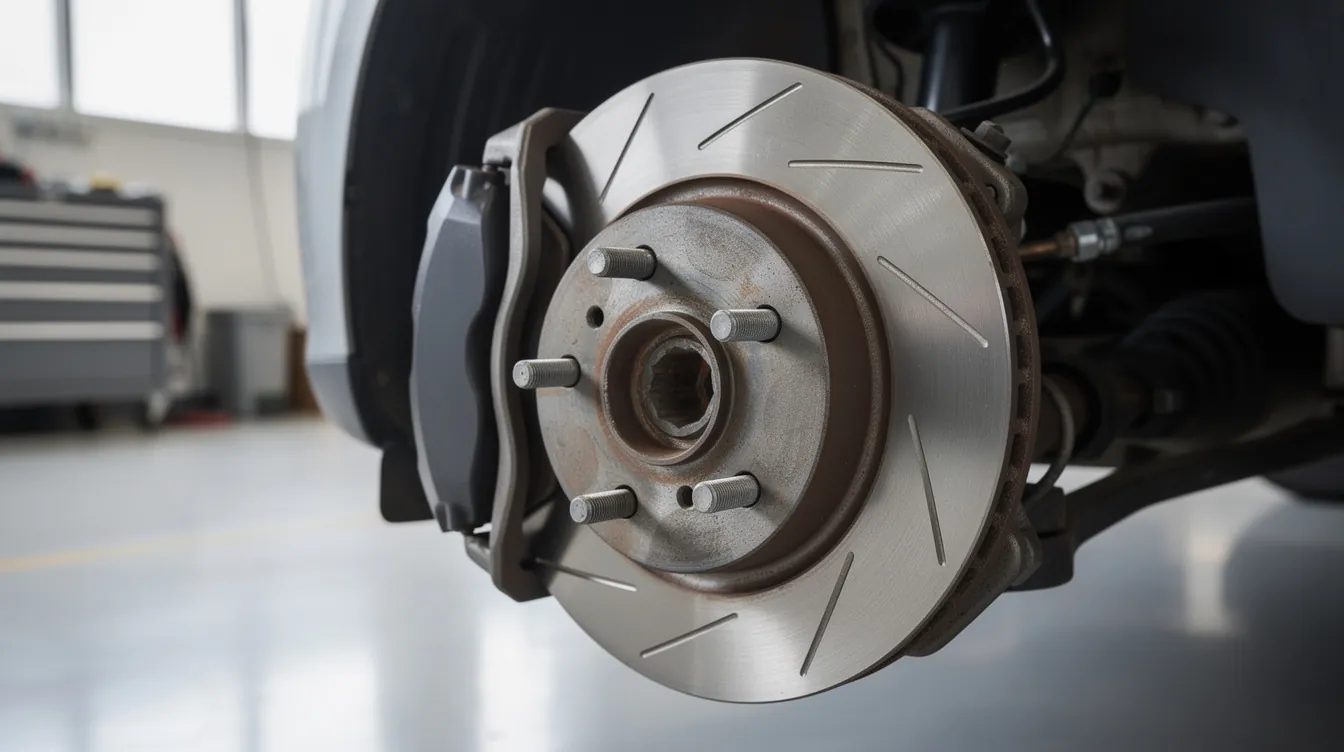
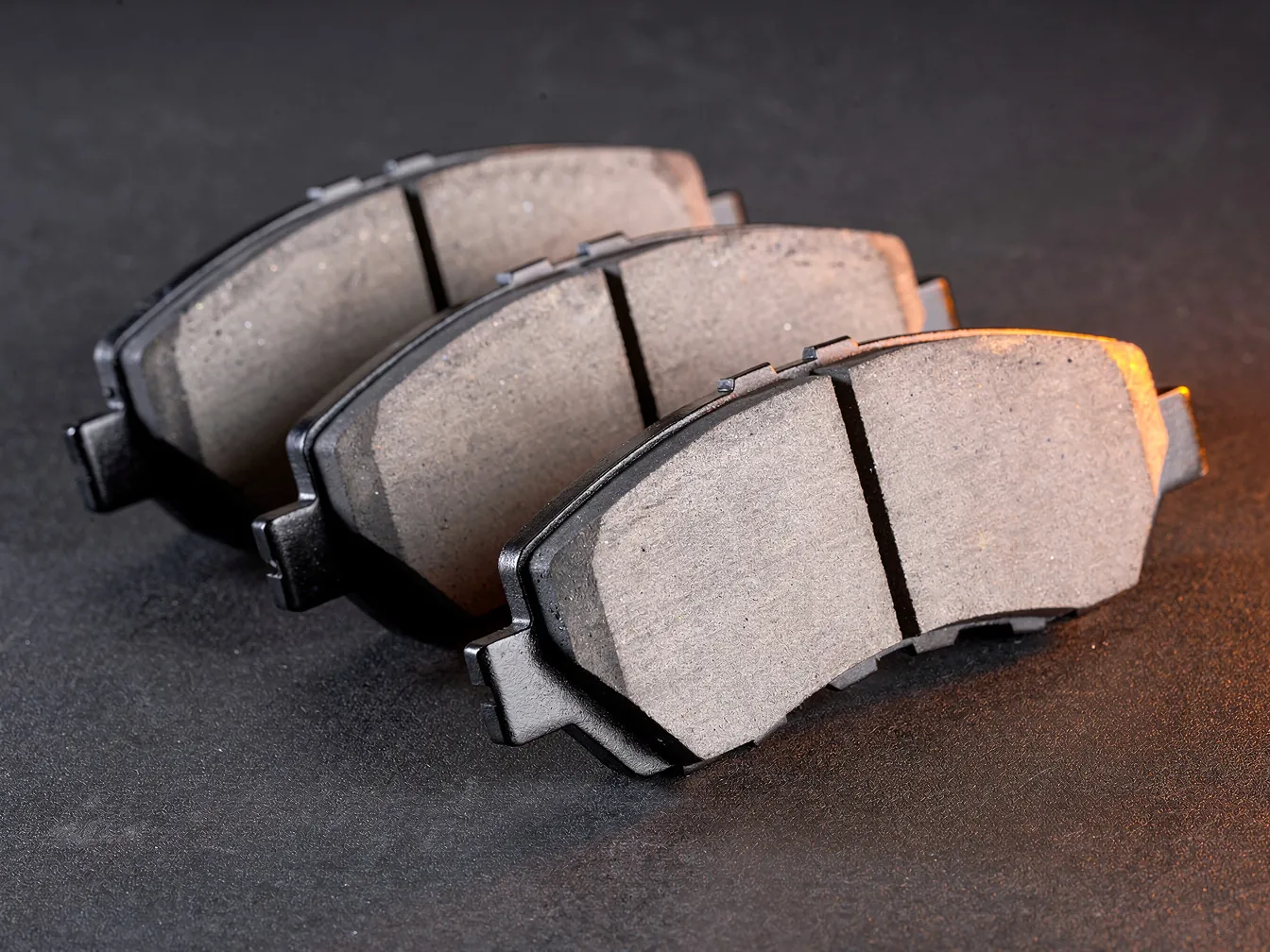
Organized around actual aftermarket applications — not one fixed pad design.
Passenger Car Brake Pads
We supply brake pads for a wide range of passenger vehicle applications, including compact cars, sedans, hatchbacks, wagons and other daily-use vehicles.
For these applications, buyers often focus on balancing:
- braking response
- noise control
- brake dust
- pad life
- rotor friendliness
- replacement cost
Ceramic and semi-metallic formulations are commonly considered depending on the vehicle and target market.
SUV Brake Pads
SUV braking systems may place higher thermal and load demands on the friction material compared with many lighter passenger vehicles.
Suitable pad selection therefore depends on more than pad shape.
Vehicle weight, rotor size, caliper design, expected driving conditions and braking characteristics should all be considered.
- Vehicle weight
- Rotor size
- Caliper design
- Expected driving conditions
- Braking characteristics
Light Truck Brake Pads
For light trucks and commercial-style vehicle applications, buyers may place greater emphasis on:
- high-temperature stability
- friction consistency
- load-carrying conditions
- durability
- repeat braking performance
We can review the requested applications before recommending an appropriate friction-material direction.
Front and Rear Brake Pads
Front and rear brake pads are not automatically interchangeable.
Even on the same vehicle, front and rear axles can use different:
- pad shapes
- friction areas
- backing plates
- sensors
- hardware
- friction formulations
This is why fitment should always be confirmed by the correct reference information rather than visual similarity alone.
Have a purchasing list already? Send it to us instead of checking every SKU manually.
Friction materials
Ceramic vs Semi-Metallic vs Low-Metallic Brake Pads
Choose the Friction Material Around the Vehicle and Market
A brake pad cannot be judged only by whether it is called “ceramic” or “semi-metallic.” Our guide to the 8 key differences between ceramic and semi-metallic pads explains the trade-offs in more detail.
The final behavior of the pad depends on the complete friction formulation, manufacturing process, pad geometry, shim design, rotor condition and brake system. Every brake pad material we supply is asbestos free.
However, the three main types of brake pads — ceramic, semi-metallic and low-metallic — still provide a useful starting point for B2B buyers.
| Feature | Ceramic | Semi-Metallic | Low-Metallic |
|---|---|---|---|
| Noise tendency | Generally lower | Moderate | Moderate |
| Visible dust | Generally lower | Moderate | Often higher |
| Heat capability | Good | Very good | Very good |
| Pedal response | Smooth | Strong/direct | Strong/direct |
| Rotor interaction | Usually milder | Can be more aggressive | Moderate to aggressive |
| Typical use | Passenger cars / SUVs | SUVs / trucks / demanding use | Many European applications |
| Price level | Often higher | Medium | Medium |
Ceramic Brake Pads
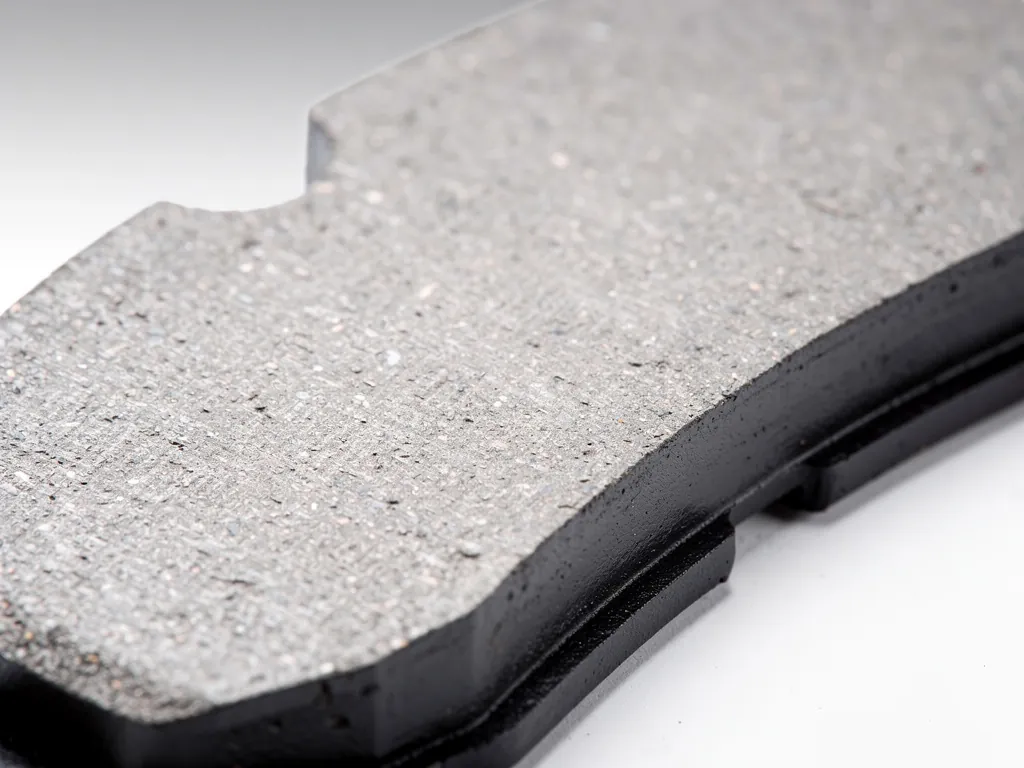
Ceramic brake pads are often selected where buyers want a balance of braking comfort, lower visible dust and quieter operation. That is why they are widely stocked as quiet brake pads and low dust brake pads for daily-driven vehicles.
They are commonly used in passenger cars and SUVs where everyday drivability and NVH performance are important.
A ceramic formulation, however, does not automatically guarantee a quiet brake system.
Noise can also be affected by:
- shim configuration
- pad chamfers
- slots
- rotor condition
- caliper condition
- mounting hardware
- installation
- vehicle-specific resonance
For this reason, we treat ceramic material as one part of the complete brake pad design rather than using the word “ceramic” as the only quality indicator.
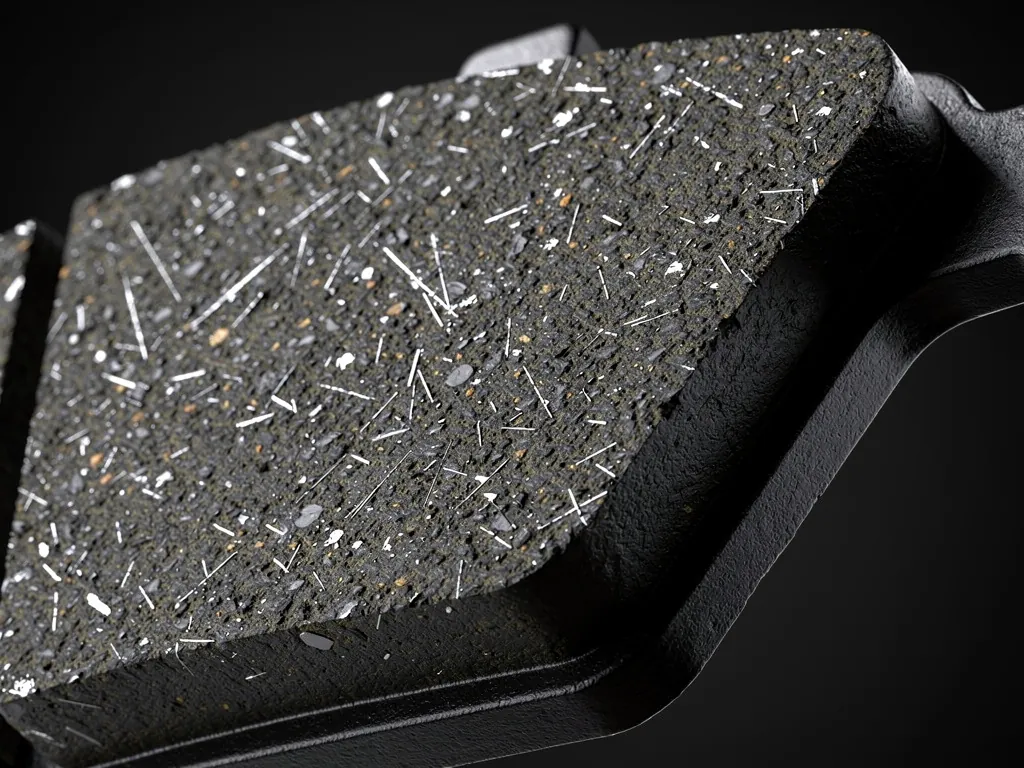
Semi-Metallic Brake Pads
Semi-metallic brake pads contain a higher proportion of metallic ingredients and are commonly considered for applications requiring strong braking response and good thermal performance, including heavy duty brake pads for SUVs, pickups and light trucks.
They can be suitable for:
- SUVs
- light trucks
- heavier vehicles
- demanding driving conditions
- applications with higher brake temperatures
Compared with some ceramic formulations, semi-metallic pads may produce more visible brake dust or different NVH characteristics.
The correct choice depends on the performance balance required by the buyer.
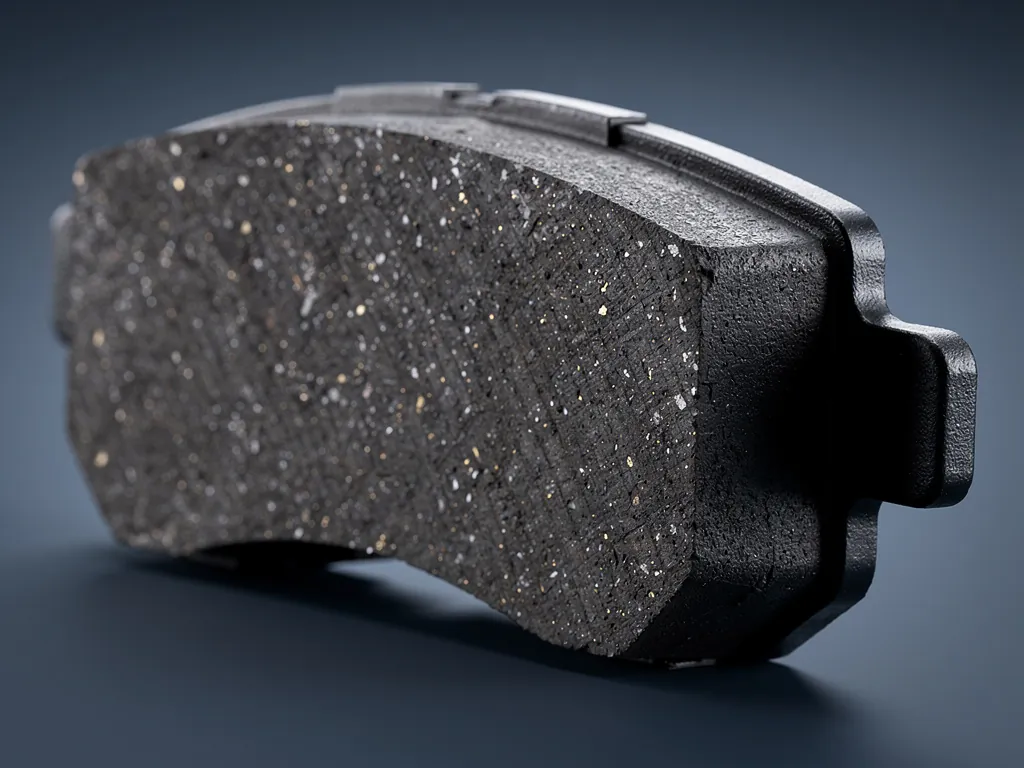
Low-Metallic Brake Pads
Low-metallic formulations are commonly used in various European-style brake applications and can provide strong friction response and good heat resistance.
They can be considered when the brake system requires a more aggressive friction characteristic while maintaining controlled high-temperature behavior.
The specific formulation should still be matched to the vehicle and target market.
Not Sure Which Formula to Choose?
You do not need to specify the exact friction recipe before contacting us. Tell us:
and we can review the suitable friction-material direction.
U.S. aftermarket coverage
Brake Pad Coverage for the U.S. Aftermarket
Build a Product Range Around the Vehicles in Your Market
For U.S. distributors, having thousands of possible part numbers is less important than building a product range that matches the vehicles their customers actually service.
We can help buyers organize brake pad requirements around major vehicle groups.
European applications also include Porsche and other European platforms where applicable. Brand names identify vehicle applications only.
Instead of simply asking“How many brake pads do you have?”
A more useful question for a wholesale program“Which applications should we stock first for our customer base?”
If you already have historical sales data or an existing supplier list, send it to us. We can work from those numbers rather than rebuilding your range from zero.
Fitment verification
How We Verify Brake Pad Fitment
Correct Fitment Starts Before Production
Two brake pads can look almost identical and still have different application requirements.
For wholesale orders, we therefore verify brake pad applications before preparing the final product list.
Small differences in these details can make one pad unsuitable for another vehicle:
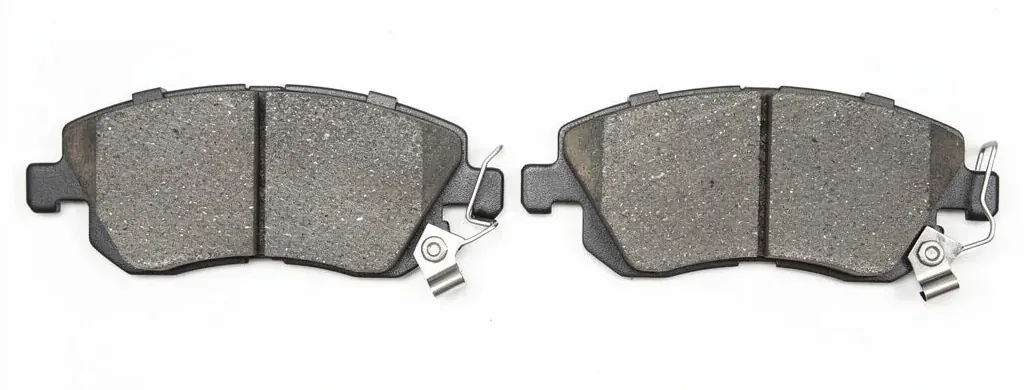
OE / OEM Part Number Matching
If you already purchase brake parts using OE numbers, send us the number list directly.
Our team can use the reference information to identify the corresponding brake pad applications.
FMSI Number Matching
For U.S. aftermarket buyers, FMSI references can provide another useful way to organize brake pad shapes and applications.
If your purchasing system is based around FMSI numbers, include them in your RFQ.
Vehicle Application Matching
You can also provide:
Make + Model + Year + Engine / Trim where relevant
This is useful when a customer knows the vehicle but does not have an OE reference.
VIN-Based Verification
For specific vehicles where application differences are unclear, VIN information can provide additional fitment information.
VIN verification is particularly useful when multiple brake systems may exist within the same vehicle generation.
Existing Sample Matching
Already buying the brake pad from another supplier? You can send:
- physical sample
- pad photo
- dimensions
- packaging label
- supplier number
- OE number
We can use the available information to identify the closest application before quotation.
Our Fitment Workflow
- 1Receive Your Part Number List
- 2Cross-Reference OE / FMSI / Vehicle Information
- 3Check Pad Shape and Application
- 4Confirm Material and Hardware Requirements
- 5Prepare Quotation
- 6Sample Verification When Required
- 7Bulk Production
This process reduces the risk of ordering the correct-looking brake pad for the wrong brake system.
Brake pad construction
A Brake Pad Is More Than Friction Material
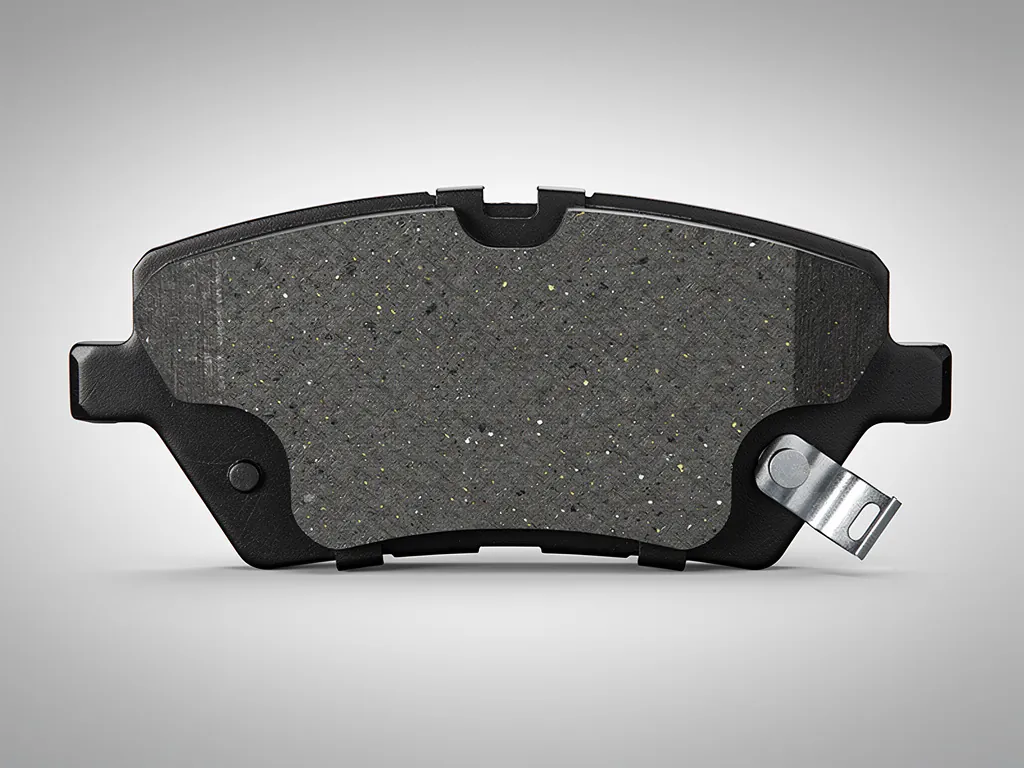
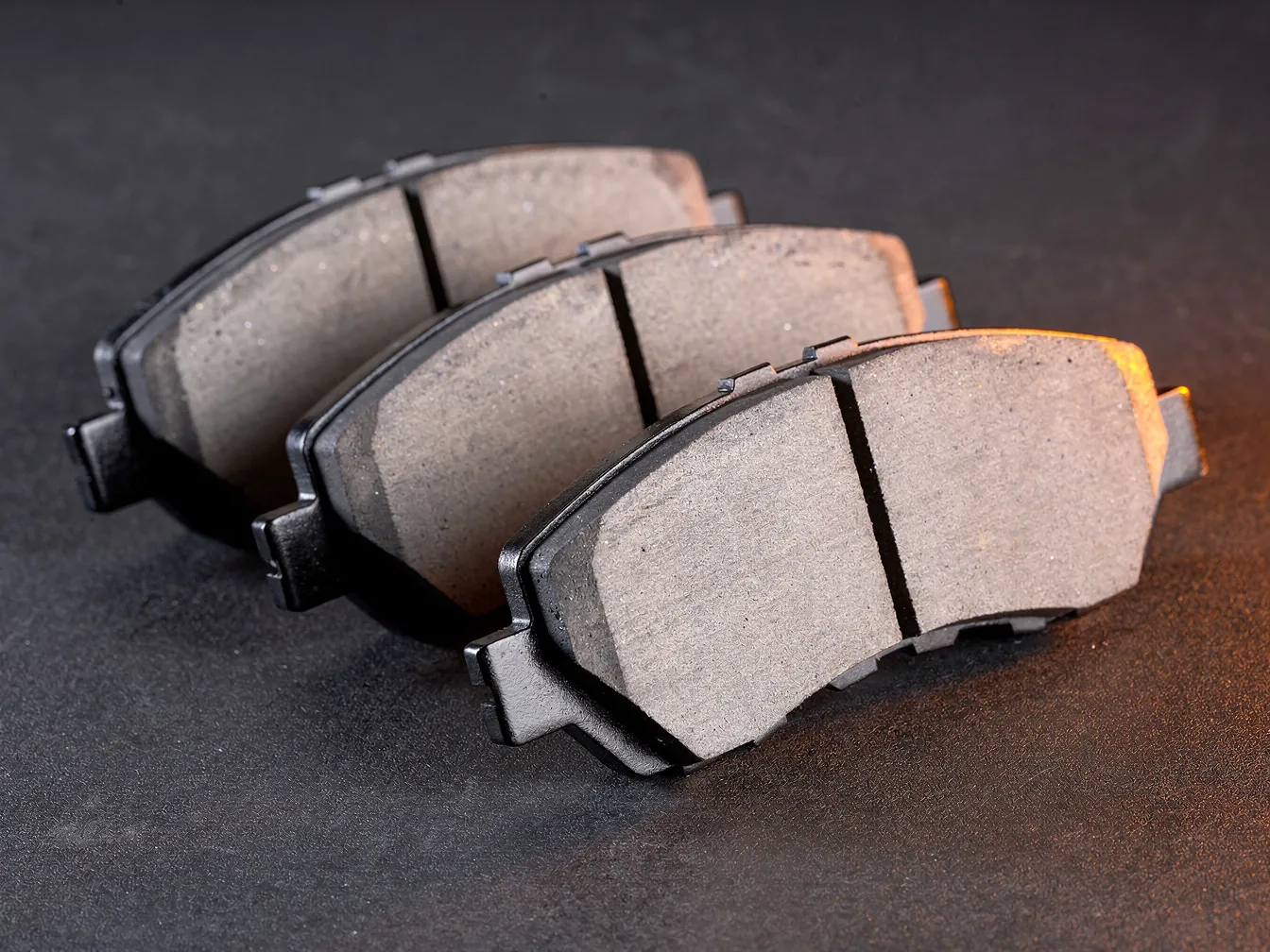
The visible friction block is only one part of a complete disc brake pad assembly.
Backing plate design, brake pad shim quality, pad geometry — including brake pad chamfers and brake pad slots — and wear indicators can all affect the final product. See our shim and chamfer production at the factory.
Tap a layer or a component to highlight it
7 components · tap one to highlight it in the diagram
The friction material creates the controlled friction needed to convert vehicle motion into heat.
Its formulation influences characteristics such as:
- friction response
- temperature stability
- wear
- dust
- NVH
- rotor interaction
Different vehicles may require different performance balances.
The backing plate supports the friction material and interfaces with the caliper. Important factors include:
- dimensional accuracy
- flatness
- coating
- attachment features
- bonding preparation
A brake pad with good friction material but poor backing plate control can still create fitment or durability problems.
Depending on pad design, an underlayer may be used between the backing plate and main friction material.
It can contribute to bonding, thermal behavior and vibration control.
The shim is positioned on the back of the pad and is part of the overall NVH system. Different applications may use:
- single-layer shims
- multi-layer shims
- rubber-coated shims
- other vehicle-specific constructions
The shim should not be treated as a decorative accessory. Its fit and damping characteristics can influence brake noise.
Chamfers modify the edges of the friction block. Their shape and size may influence:
- initial contact
- pad vibration
- noise behavior
- bedding characteristics
Chamfer design should therefore follow the intended pad application rather than being applied identically to every brake pad.
Slots can divide the friction surface and may help manage:
- debris
- gas
- pad vibration
- thermal expansion behavior
Different brake pad shapes use different slot configurations.
Depending on the vehicle, brake pads may use:
- mechanical wear indicators
- electronic wear sensors
- separate sensor accessories
- no wear sensor
The correct hardware should be confirmed during fitment verification.
Manufacturing
How Our Brake Pads Are Manufactured
Production Control Matters From Raw Material to Final Packaging
Two brake pads can have the same external shape and still perform differently. One reason is manufacturing consistency.
The friction formulation must be produced repeatedly under controlled conditions, while the backing plate, molding, heat treatment, grinding and finishing processes must remain dimensionally stable.
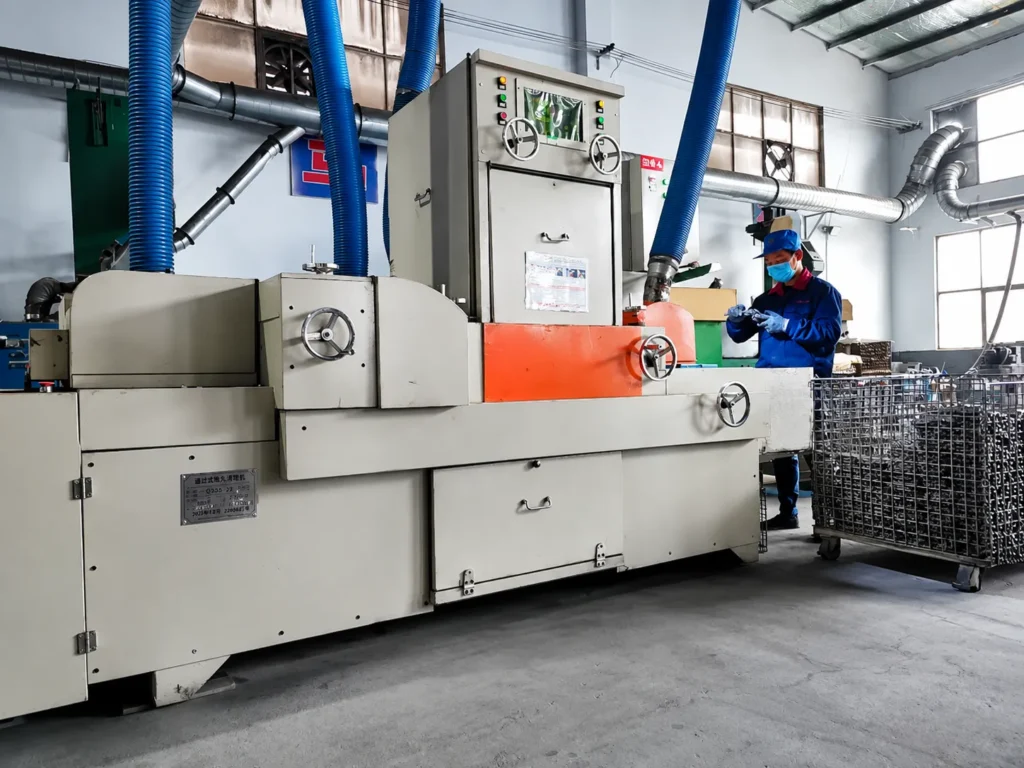
Our production workflow includes the following main stages. Our factory page shows how brake pads are made on each line in Qingyuan.
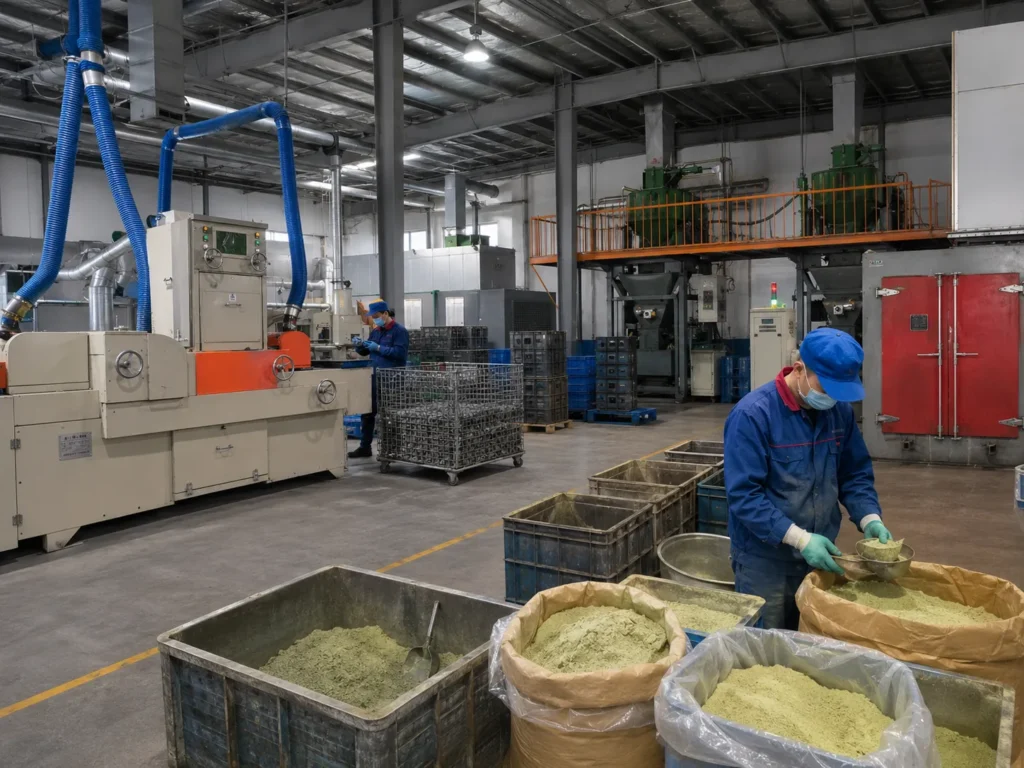
Raw Material Preparation
Brake pad friction material contains multiple ingredients that perform different functions within the formulation.
Raw materials are prepared according to the required friction recipe before mixing.
Accurate material control is important because changes in ingredient proportions can affect final friction behavior and consistency.
Mixing
The prepared ingredients are mixed to achieve a consistent material distribution.
Poor mixing can result in uneven material distribution within the friction block.
For repeat wholesale orders, batch-to-batch consistency is especially important because the buyer expects the same reference to behave consistently across shipments.
Backing Plate Preparation
Steel backing plates are inspected and prepared before molding.
Depending on the pad design, preparation can include surface treatment and processes intended to improve adhesion between the steel plate and friction material.
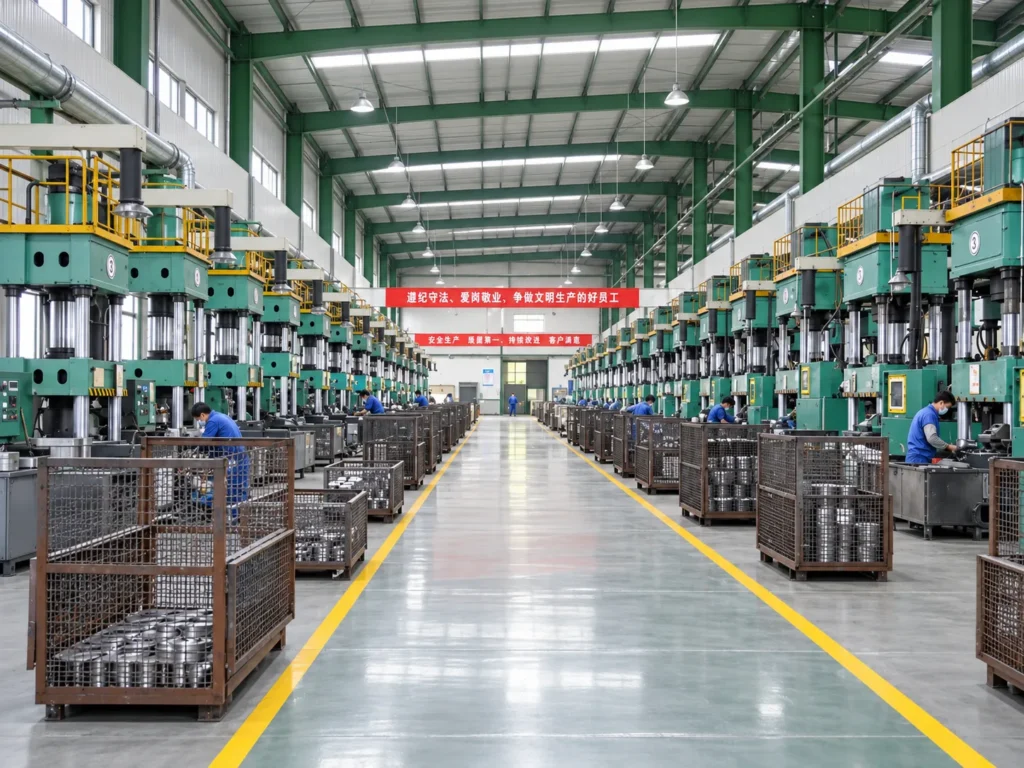
Hot Pressing and Molding
The friction material is formed onto the backing plate under controlled pressure and temperature.
This stage determines the basic shape and density of the brake pad.
Production parameters must be controlled because molding conditions can influence material structure and consistency.
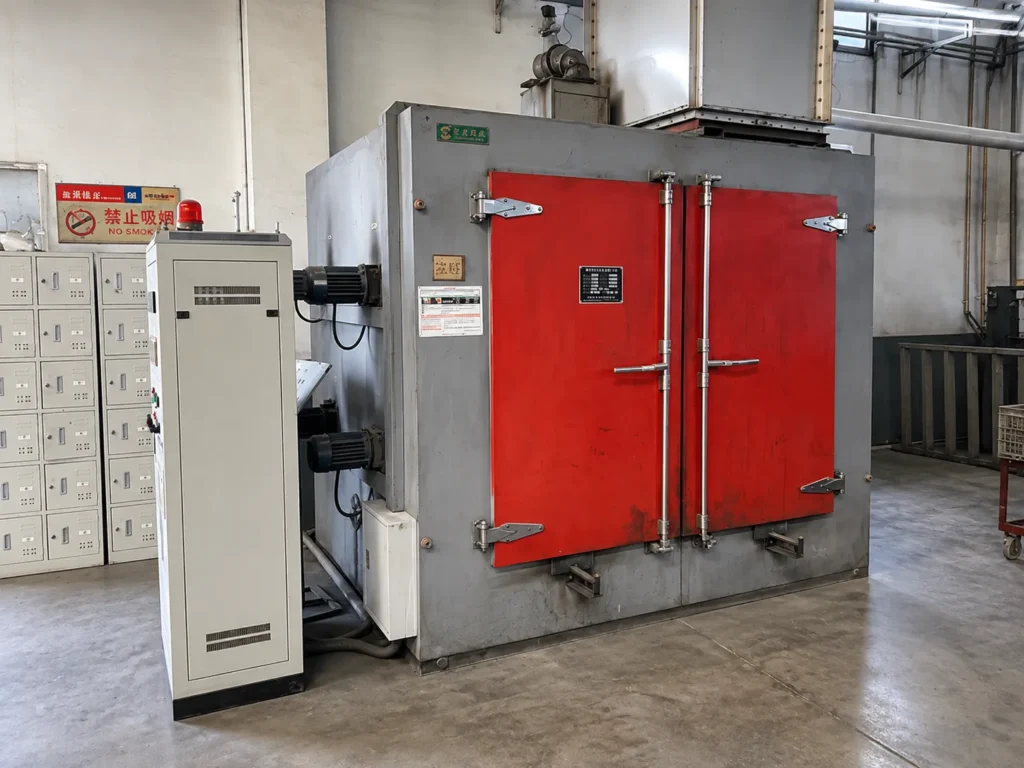
Heat Treatment
After molding, pads undergo controlled heat treatment.
This stage helps stabilize the friction material and complete the curing process.
Temperature and time should follow the intended formulation and production process.
Grinding
Grinding brings the brake pad to the required final dimensions and surface condition.
Thickness accuracy is especially important because incorrect dimensions can lead to fitment problems.
Scorching
Where required by the product specification, the friction surface may undergo a scorching process.
The process is used to condition the surface layer before the pad enters service.
Coating and Finishing
Backing plates and other exposed areas can receive protective surface treatments depending on the product specification.
Finishing also includes cleaning and visual inspection.
Marking
Product information can be marked according to order and application requirements. This may include:
- product code
- batch information
- customer reference
- brand information
- other required identification
Packaging
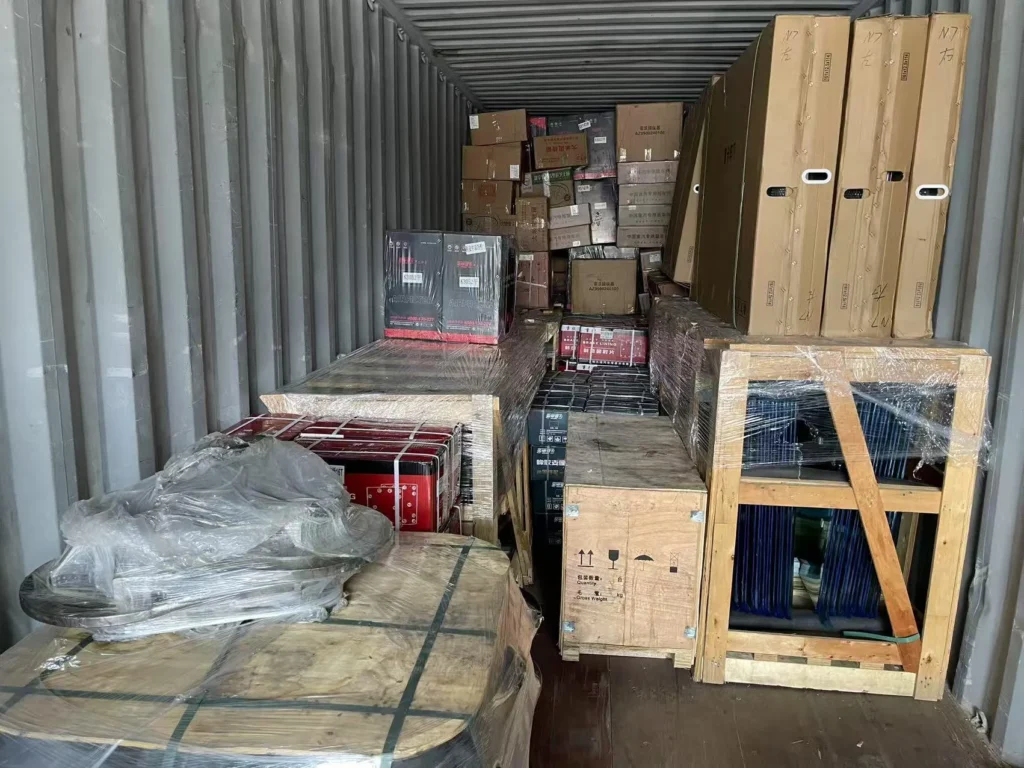
Brake pads are packed according to the selected program: plain box, custom box, private label packaging or other agreed specifications.
Batch identification and SKU accuracy are checked before shipment.
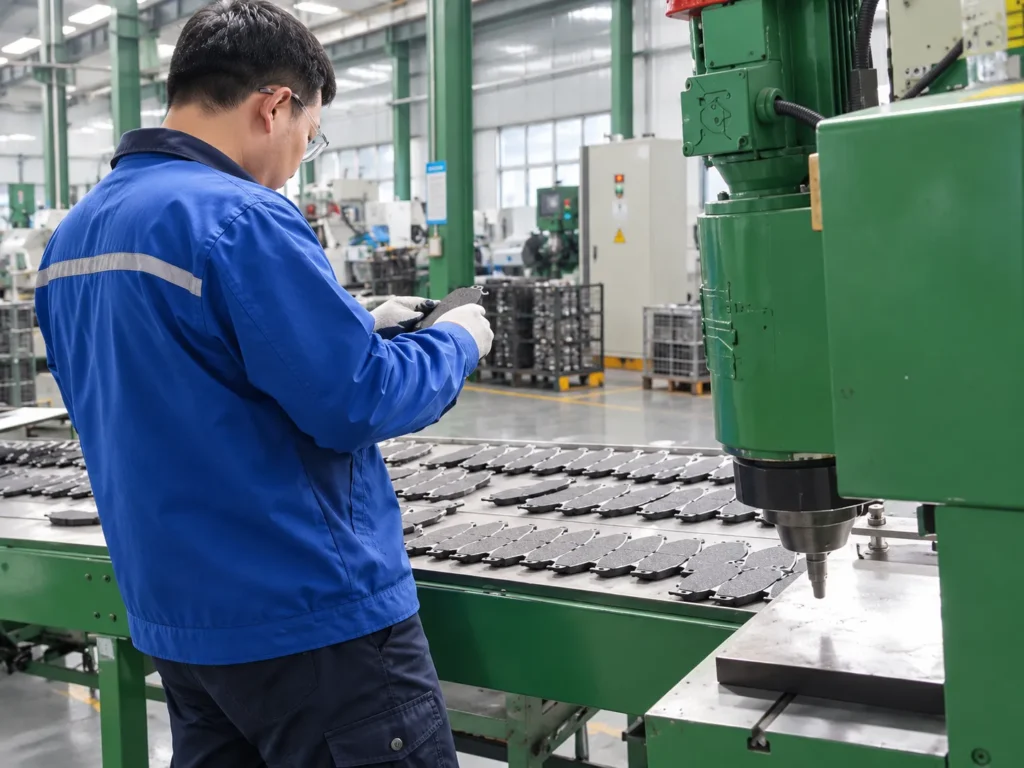
Inside Our Brake Pad Factory
Real photos from each production stage. These are the images wholesale buyers look for before trusting a new supplier.


Testing & quality control
Brake Pad Testing and Quality Control
Quality Should Be Measured, Not Judged Only by Appearance
A finished brake pad may look clean and well finished while still having differences in material, dimensions or bonding.
For this reason, brake pad quality control should include measurable checks throughout production.
Dimensional Inspection
Dimensions are checked against the required product specification. Inspection may include:
- overall pad length
- width
- thickness
- backing plate dimensions
- mounting features
- slot and chamfer geometry
This is important for both fitment and consistent caliper operation.
Shear Strength Testing
Shear testing is used to evaluate the bond between the friction material and backing plate.
The objective is to confirm that the pad assembly can withstand the required mechanical load without abnormal separation.
Compressibility Testing
Compressibility affects how the friction material responds under braking pressure.
Excessive or inconsistent compression can affect pedal feel and system behavior.
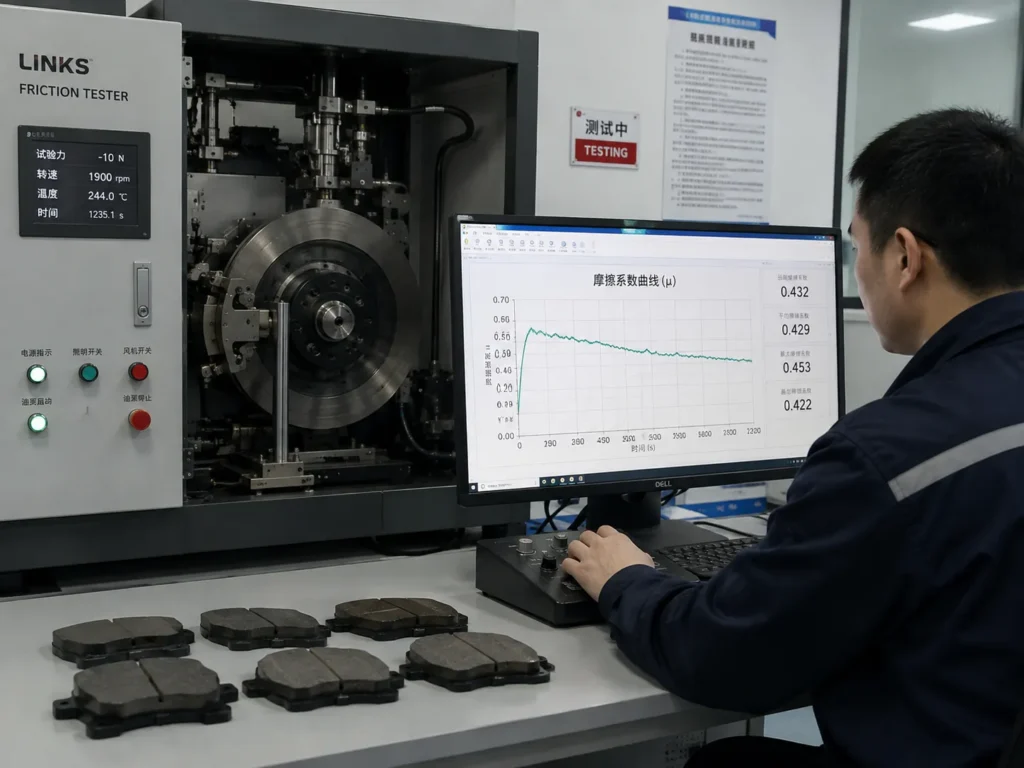
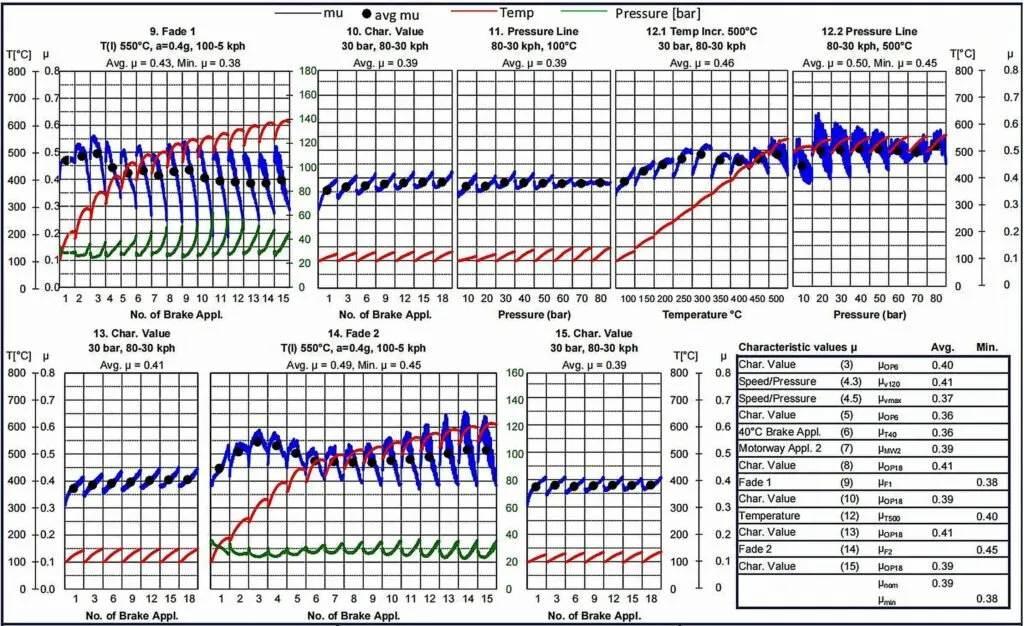
Friction and Wear Evaluation
Friction-material performance can be evaluated under defined operating conditions to review parameters such as:
- friction behavior
- temperature response
- wear
- fade
- recovery
The required testing program depends on product specification and target market. Our quality page describes the friction coefficient test and the other checks behind each batch.
Noise and Vibration Evaluation
Brake noise is not caused by one component alone.
The friction material, shim, pad geometry, rotor, caliper, installation condition and vehicle system can all affect NVH.
When a noise issue occurs, we therefore review the complete pad configuration rather than assuming that changing only the friction compound will solve every case.
Heat Fade and Recovery
Brake pads operate across changing temperatures.
A controlled test can be used to study how friction behavior changes as temperature increases and whether braking characteristics recover after the system cools.
Final Inspection
Before packing, finished pads can be checked for:
- correct part number
- dimensions
- surface condition
- backing plate finish
- shim installation
- sensor or hardware configuration
- marking
- packaging
- quantity
For wholesale buyers, this final SKU verification is important because even a good brake pad creates problems if the wrong part number is packed into the wrong box.
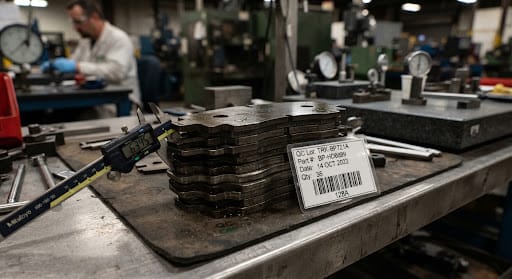
Quality Records We Can Share
Evidence from our quality process — photos of the equipment and a sample of the records behind each shipment.
Shear tester, compressibility tester, hardness tester
U.S. market
Brake Pads for the U.S. Market
Compliance, Identification and Documentation Should Match the Destination Market
Selling brake pads in the United States involves more than selecting a friction material.
Depending on the product, destination and distribution program, buyers may need to consider requirements related to friction-material identification, environmental rules, product labeling and supporting documentation.
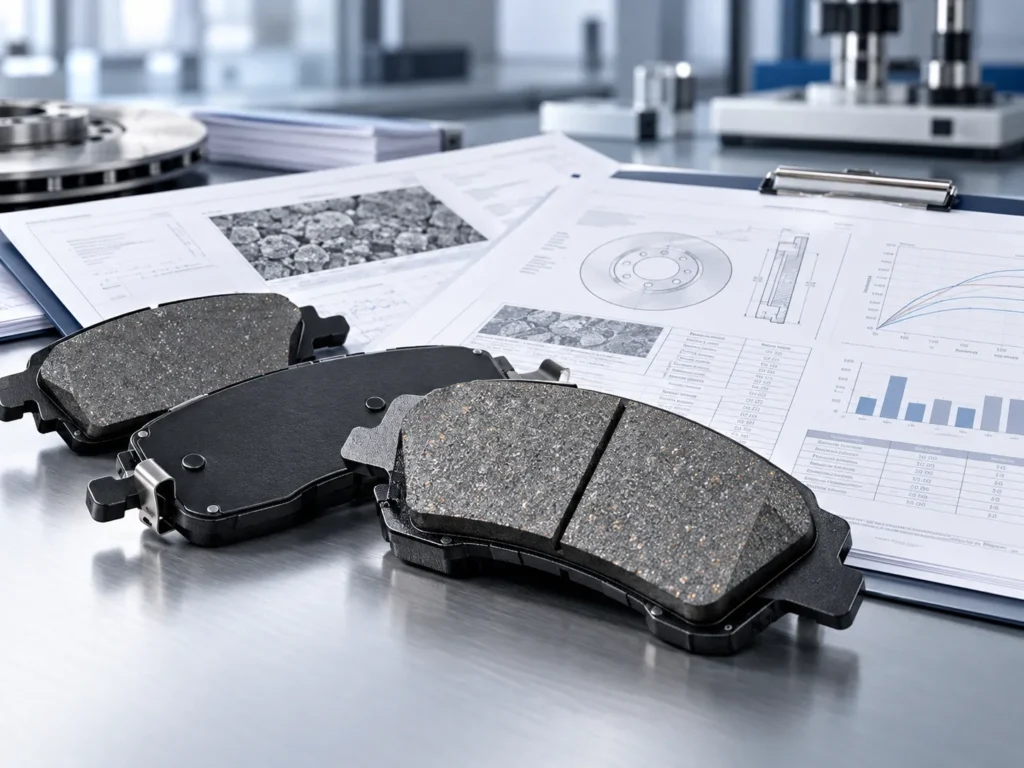
For U.S.-market programs where relevant friction-material identification or registration requirements apply, the required information should be reviewed before production.
Buyers should not assume that every marking printed on a brake pad represents the same type of approval or certification.
Documentation should be checked against the actual product and market requirement.
Some U.S. brake-friction programs involve copper and other regulated constituents.
Where your destination market requires specific friction-material levels or marking, tell us the target state and product requirement during development.
We can then review the requested specification with the corresponding brake pad program.
The United States is not always one single regulatory specification for every aftermarket brake product.
Certain environmental or labeling requirements can vary by jurisdiction and product category.
If your distribution program has a specific compliance requirement, include it in the RFQ rather than assuming it will automatically apply to every product.
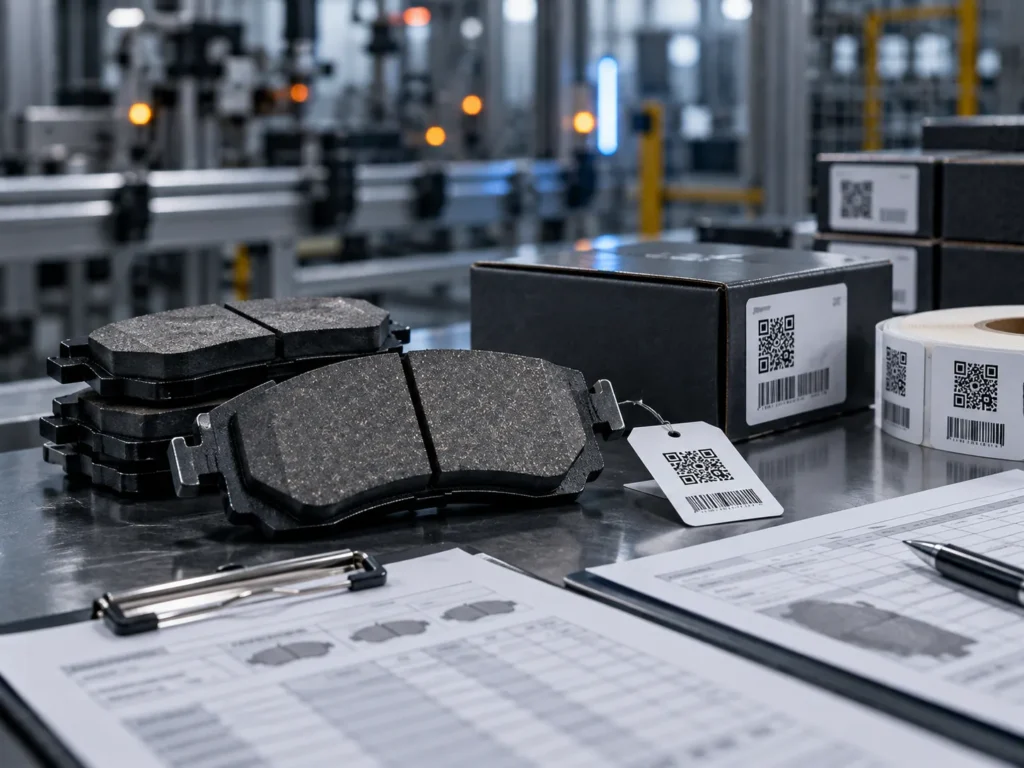
For B2B buyers, traceability can be as important as packaging appearance. Useful information can include:
- production batch
- product code
- manufacturing record
- packaging reference
- inspection information
This makes it easier to investigate a specific batch if a distributor later reports a product issue.
Private label
Private Label Brake Pads
Build Your Own Brake Pad Brand
We support private-label brake pad programs for distributors, wholesalers and brands selling aftermarket brake pads.
A private-label program can start with simple packaging and develop into a more complete branded product range as order volume grows. We also produce OEM brake pads to OE-equivalent specifications and custom brake pads built to the drawings or samples you provide.
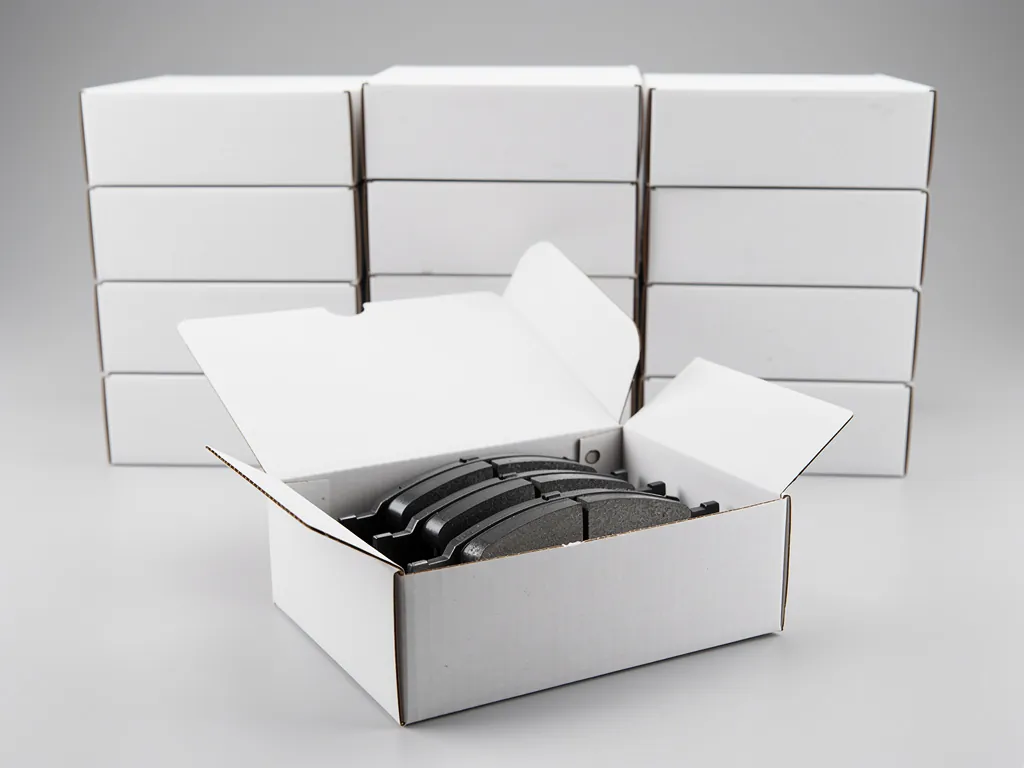
Plain White Box
For buyers who want a simple wholesale solution, standard white-box packaging can reduce packaging complexity. It can be suitable for:
- repair shop supply
- regional wholesale
- new product testing
- smaller initial programs
Custom Color Box
For established distributors or brands, custom printed boxes can be developed according to the agreed order quantity. Your packaging can include:
- brand name
- logo
- product series
- part number
- vehicle application
- barcode
- company information
- country-specific labeling
Barcode and SKU Labels
If your warehouse operates with a barcode inventory system, labels can be prepared according to the agreed SKU structure.
This makes receiving and warehouse management easier after arrival.
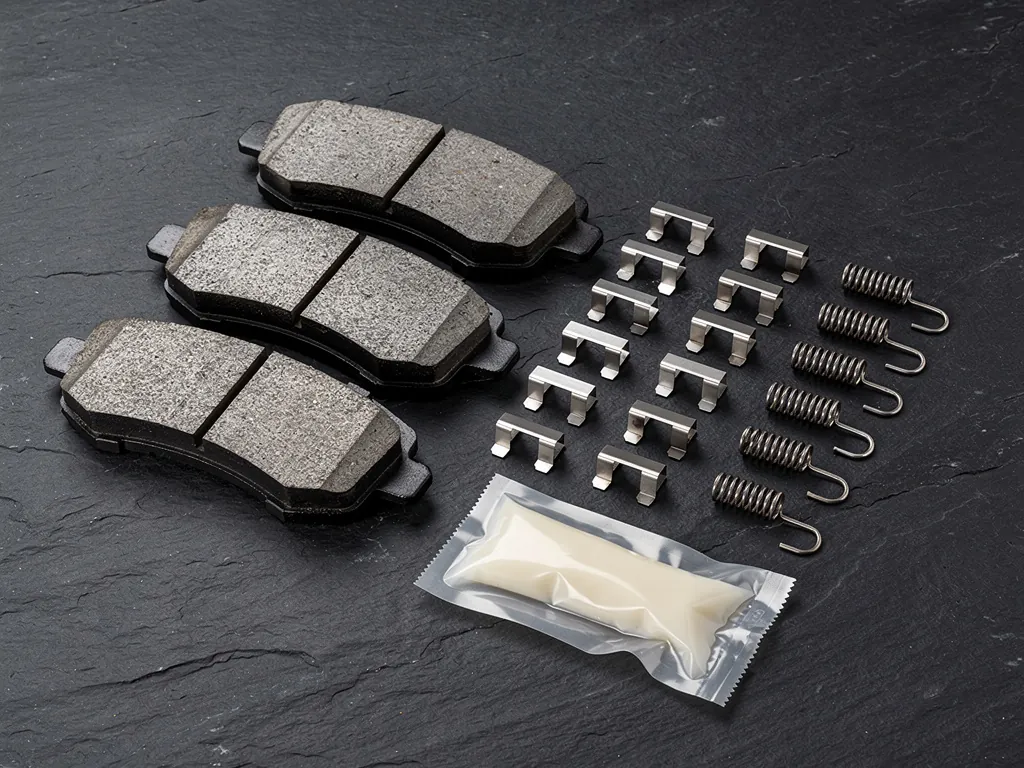
Hardware Kits
Where required by the application, brake pad sets can be supplied with corresponding hardware arrangements depending on the product specification.
Always confirm whether hardware should be:
- included
- packaged separately
- omitted
before bulk production.
Own Brand Development
If you are building a new aftermarket brake brand, you can begin with the applications that matter most to your market instead of launching hundreds of SKUs at once. A practical approach is:
This reduces the risk of buying too much slow-moving inventory during the first order.
Wholesale ordering
Wholesale Brake Pads From a Direct Brake Pad Supplier
Flexible Ordering for Distributors and Parts Businesses
Wholesale brake pad programs often contain many different references.
For this reason, we support mixed-SKU purchasing rather than requiring buyers to order a large quantity of every single brake pad reference. Because we are also a brake disc manufacturer, rotors and drum brake shoes can be added to the same shipment.
Mixed Orders From 100 Sets
Multiple brake pad models can be combined in the same wholesale order. This is particularly useful for:
- new distributors
- auto parts stores
- regional wholesalers
- market testing
- expanding an existing product line
Final quantities per reference should still be reviewed according to stock availability, production requirements and packaging.
Production Lead Time
A typical production target can be approximately 30 days, depending on:
- number of SKUs
- total quantity
- friction formulation
- packaging
- hardware
- production schedule
For standard products already available in stock, shipment may be faster. The final lead time will be confirmed with the quotation or purchase order.
Samples
Samples can be arranged before bulk purchasing. Depending on the project, sample orders can be used to verify:
- fitment
- appearance
- packaging
- dimensions
- friction-material direction
- customer acceptance
Sample availability and freight arrangements should be confirmed before shipment.
Payment Terms
Payment conditions are confirmed according to the order, customer relationship and production arrangement. For a new project, the quotation should clearly state:
- deposit requirement
- balance timing
- payment method
- currency
- shipping term
so both sides understand the commercial conditions before production starts.
Shipping
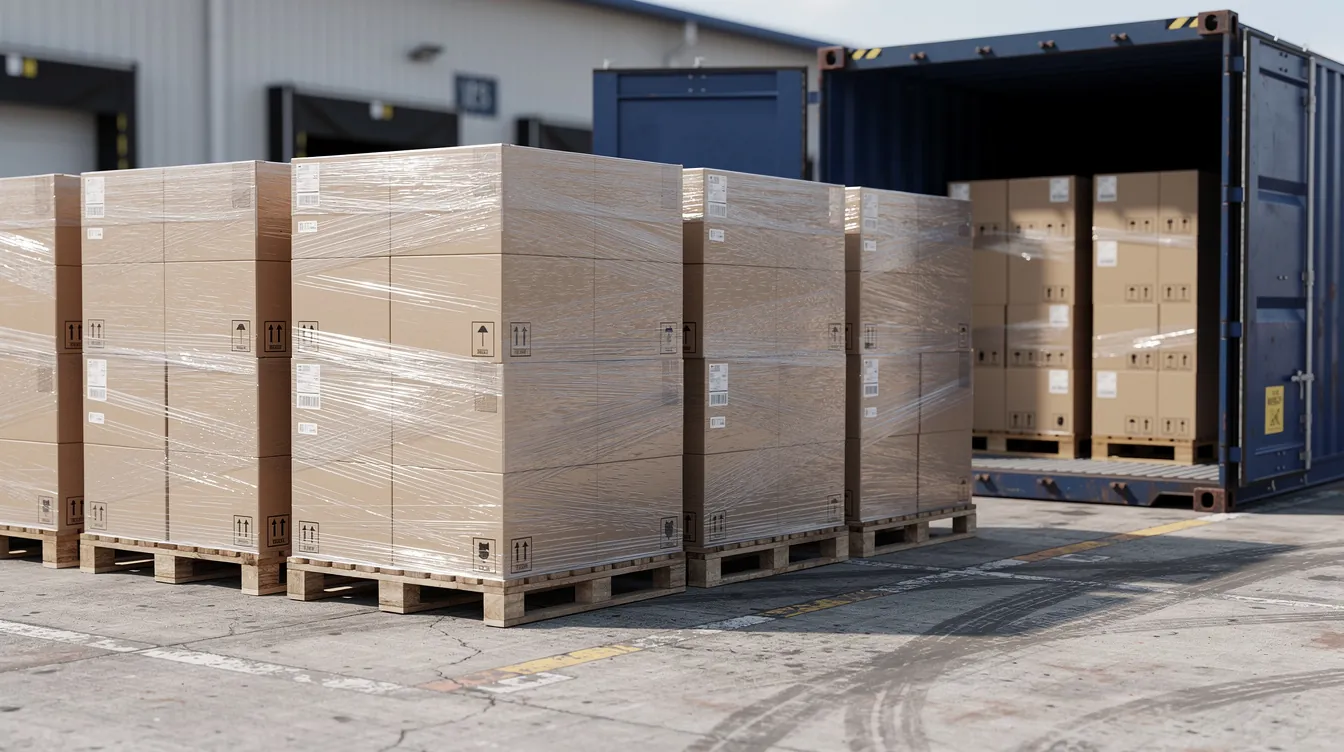
Brake pad orders can be shipped using different methods depending on weight, volume, urgency and destination. Options may include:
For commercial orders, we can prepare the shipment according to the agreed trade terms and destination.
After-sales support
After-Sales Support for Brake Pad Distributors
A Quality Claim Should Be Investigated, Not Guessed
When a brake pad customer reports a problem, simply replacing the product without understanding the cause does not help either the distributor or factory.
Brake issues can involve multiple vehicle and installation factors. We therefore recommend reviewing the evidence first.
Brake Squeal
Brake squeal can be influenced by:
A noise complaint does not automatically prove that the friction compound is defective.
Good claim analysis should look at the brake system as a whole.
Brake Judder or Vibration
Brake vibration may involve the rotor, hub, mounting surface, caliper, wheel bearing or other system conditions.
If a customer reports vibration after replacing brake pads, we recommend checking the rotor and installation condition before concluding that the pad is the direct cause.
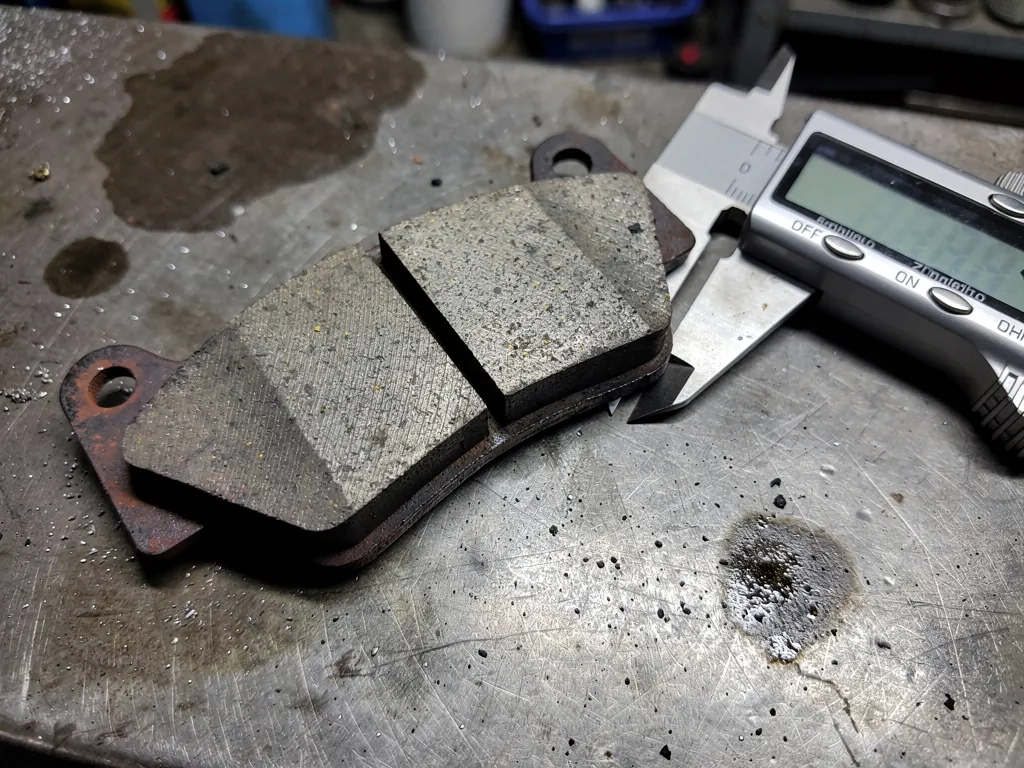
Uneven Brake Pad Wear
Uneven wear can be related to:
Photos of the inner and outer pads can provide useful diagnostic information.
Excessive Brake Dust
Brake dust levels can vary between friction-material types and operating conditions.
If low visible dust is an important selling point for your market, tell us during product selection so the friction-material direction can be discussed before ordering.
Premature Pad Wear
Short pad life should be investigated together with:
One wear result from one vehicle should not automatically be treated as representative of an entire production batch.
Our Claim Review Process
When reporting a possible product problem, buyers should provide as much information as possible. Useful evidence includes:
- part number
- production batch
- vehicle make/model/year
- mileage
- installation date
- photos
- video
- inner and outer pad wear
- rotor condition
- description of the symptom
We can then review the case against production and product information.
The objective is not simply to decide “factory problem or customer problem.”The objective is to identify the most likely cause and prevent the same problem from repeating.
Sourcing from China
Common Problems When Sourcing Brake Pads From China
What Buyers Should Check Before Placing a Bulk Order
Price is important, but an extremely low unit price can become expensive if the supplier creates fitment errors, inconsistent quality or slow-moving inventory.
Here are several areas worth checking before confirming a brake pad supplier.
Incorrect Vehicle Applications
One of the biggest risks in aftermarket brake purchasing is not necessarily bad friction material. It is ordering the wrong reference.
Before mass production, confirm whenever the information is available:
Same Shape, Different Specification
Brake pads that look similar are not always interchangeable. Small differences in thickness, clip, sensor, backing plate, friction area and hardware can change the application.
Do not approve a product only from a general product photo.
Inconsistent Friction Material
A supplier should not change the friction formulation between orders simply to reduce cost without informing the buyer.
For repeat wholesale programs, consistency is often more important than achieving the absolute lowest first-order price.
Low-Quality Shim Configuration
A good friction block does not guarantee good NVH performance if the pad uses an unsuitable shim or poor shim fit.
Ask what shim configuration is used for the requested applications.
Poor Backing Plate Preparation
The connection between friction material and backing plate is an important part of pad construction.
Buyers should consider bonding quality and backing plate control rather than judging a brake pad only by surface appearance.
Incorrect Packaging
A distributor can receive good brake pads and still have a serious problem if:
- the wrong number is printed
- left/right sets are mixed
- hardware is missing
- barcode information is incorrect
- one SKU is packed into another box
Packaging inspection should therefore be part of product QC.
No Batch Traceability
If every brake pad in the warehouse looks the same but production batches cannot be identified, investigating later problems becomes much more difficult.
Batch control is especially useful for distributors carrying many SKUs.
FAQ
Frequently Asked Questions About Wholesale Brake Pads
Still deciding? Send your list — we will answer with a quotation built around your references.
Mixed wholesale brake pad orders can start from approximately 100 sets, depending on the selected products, stock availability, packaging and production requirements.
Send us your part-number list and quantities to get a brake pad quote, and we will review the most suitable order arrangement.
Yes.
Mixed-SKU purchasing is useful for distributors that need many vehicle applications but do not want a large quantity of every reference.
Send us your required numbers and quantities so we can confirm which models can be combined.
Yes.
Ceramic is one of the main friction-material directions we supply for passenger-car and SUV applications.
We also supply semi-metallic and low-metallic brake pad options.
There is no single material that is best for every vehicle.
Ceramic formulations are commonly selected for comfort, lower visible dust and NVH characteristics, while semi-metallic formulations can provide strong thermal and braking performance.
The better option depends on the vehicle, market and required performance balance.
Yes.
Send the OE numbers with your purchasing list.
We can use OE references together with other application information to identify suitable brake pad references.
FMSI references are particularly useful for U.S. aftermarket brake programs.
Include the FMSI numbers in your RFQ when available.
VIN information can be used as additional vehicle-fitment information where required.
This is particularly helpful when one vehicle platform may use more than one braking configuration.
Yes.
Private-label options can include custom boxes, logos, labels, barcodes and other packaging elements depending on quantity and project requirements.
Samples can be arranged for product evaluation.
Tell us the brake pad reference and destination so sample availability and shipping can be confirmed.
A typical production target is around 30 days, although actual lead time depends on the number of SKUs, quantity, packaging and production schedule.
Stock products may be available sooner.
Request a quotation
Send Your Brake Pad List for Quotation
You Do Not Need to Build the Entire Order Yourself
If you already know what you need, send your part-number list directly.
If you do not know the exact brake pad number, send the vehicle information.
Our team can review the request before quotation.
Information You Can Send
Need 20, 50 or 100 Different Brake Pad References?
That is normal for a wholesale brake pad order.
You do not need to send one inquiry for every product.
Upload your complete Excel purchasing list and let us check the applications together.
Upload Your Brake Pad List & Get a Quote
Send us the numbers. We help with the matching.