Wholesale Brake Pads Manufacturer for Auto Parts Stores & Repair Shops
Top Brake Parts is a brake pad manufacturer and supplier in Qingyuan, Guangdong, China, making ceramic, semi-metallic and low-metallic brake pads in-house for auto parts stores, repair shops, distributors and importers.
Mixed orders start from 100 sets across different references, mixed-SKU production takes 25–35 days, and every reference is matched by OE number, FMSI number, vehicle or VIN before we quote.
Send us your:
- OE numbers
- FMSI numbers
- Current supplier numbers
- Vehicle applications
- VIN information
- Excel purchasing list
- Photos or samples
OE 0446X-XXXXXOE numberCeramicFMSI D1XXXFMSI numberSemi-metallic2019 SUV · FrontVehicle + VINCeramicSupplier #BP-XXXSample / photoLow-metallicWho we supply
Which Brake Pads Do Auto Parts Stores and Repair Shops Order From Us?
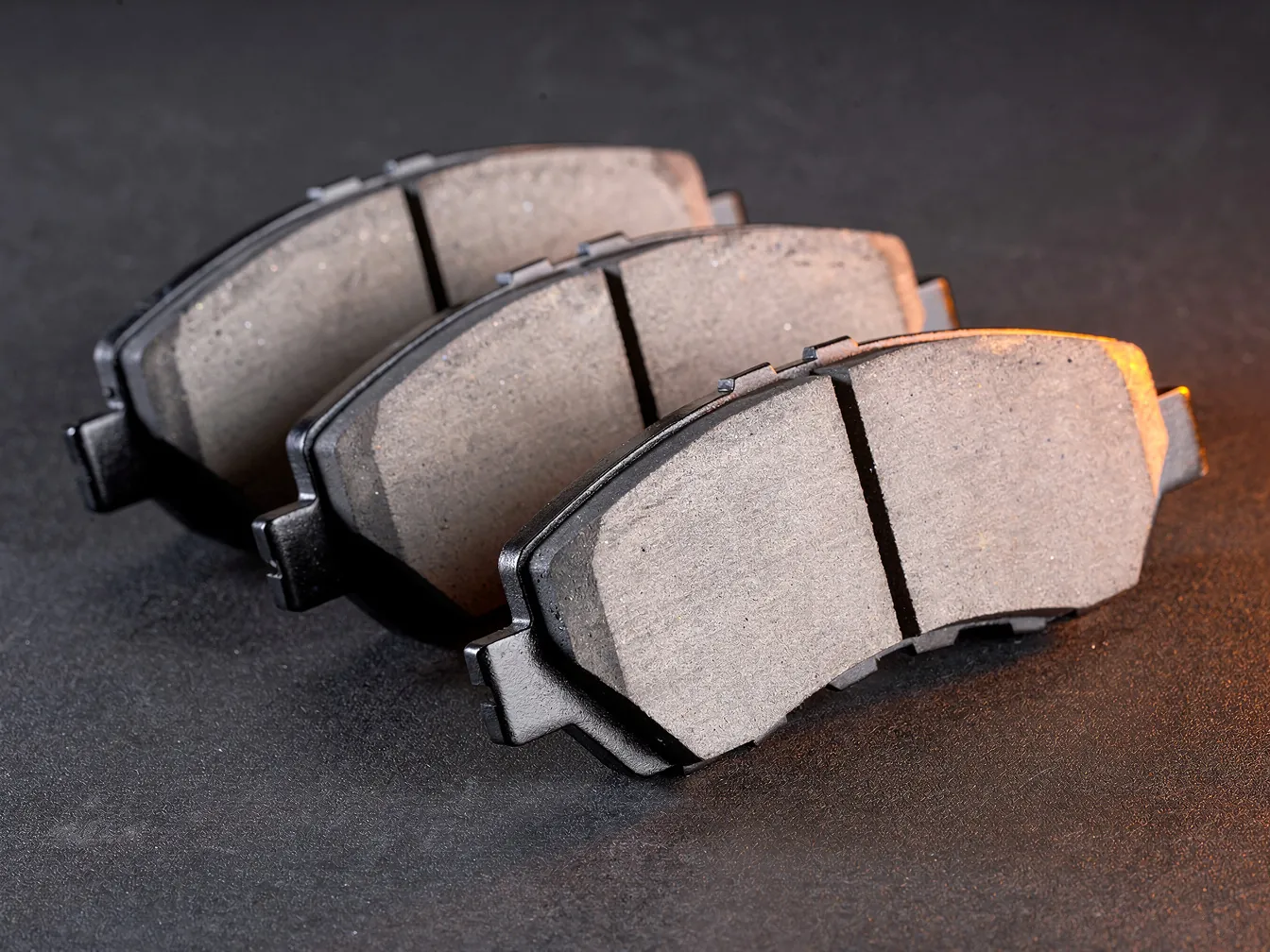
Auto parts stores order the front and rear brake pad references that sell fastest in their area. Repair shops order pads for the vehicles they service most, complete with the shims, clips and sensors needed to finish the job in one visit. We quote both by reference — OE number, FMSI number or vehicle — not by catalog page.
Distributors and importers use the same process to build or extend a full brake pad program.
Quoted per reference — front and rear axles are never assumed to share a pad.
Brake Pads for Auto Parts Stores
A parts store needs the right reference on the shelf before the customer walks in. We help you build a mixed order around the vehicles in your area instead of buying deep on a few part numbers.
- Mixed orders from 100 sets
- Front and rear sets as separate SKUs
- Barcode and SKU labels for your system
- White box or your own brand
- Ceramic and semi-metallic lines side by side
- Batch number on every box
Brake Pads for Repair Shops
A repair shop loses money when a pad does not fit on the first try or comes back for noise. We confirm the application, shim, clips and wear sensor for each reference so the technician receives a complete set.
- Fitment checked by OE, VIN or sample
- Shim and hardware confirmed per reference
- Wear sensor supplied where the vehicle needs it
- Ceramic for quiet daily drivers
- Semi-metallic for SUVs, pickups and fleets
- Claim review with photos and batch number
Brake Pads for Distributors and Importers
Distributors supply stores and shops, so they need the same quality in every shipment. We keep the friction formulation fixed for each reference and can combine pads, rotors and drum brake shoes in one container.
- Pads, rotors and shoes in one shipment
- Fixed formulation per reference
- Private label packaging
- FOB, EXW, CIF and DDP terms
Front and Rear Brake Pads
Front and rear brake pads are quoted as separate references. Even on the same vehicle, the two axles usually differ in:
- pad shape
- friction area
- backing plate
- wear sensor
- hardware
- friction formulation
Have a purchasing list already? Send it to us instead of checking every SKU manually.
Friction materials
Which Brake Pad Material Should a Parts Store Stock: Ceramic, Semi-Metallic or Low-Metallic?
Stock ceramic brake pads for passenger cars and crossovers, semi-metallic brake pads for SUVs, pickups, light trucks and fleet vehicles, and low-metallic brake pads for European applications that need a strong initial bite. All three formulations we supply are asbestos-free.
Final braking behavior also depends on pad geometry, shim, rotor and installation, so we recommend a material for each vehicle application rather than for a whole brand. Our guide to the 8 key differences between ceramic and semi-metallic pads explains the trade-offs.
| Feature | Ceramic | Semi-Metallic | Low-Metallic |
|---|---|---|---|
| Typical vehicles | Passenger cars, crossovers | SUVs, pickups, light trucks, fleets | European passenger cars |
| What the customer asks for | Quiet, clean wheels | Towing, load, repeated braking | OE-like pedal feel |
| Noise tendency | Generally lower | Moderate | Moderate |
| Visible dust | Generally lower | Moderate | Often higher |
| Heat capability | Good | Very good | Very good |
| Rotor wear | Usually milder | Can be more aggressive | Moderate to aggressive |
| Price level | Often higher | Medium | Medium |
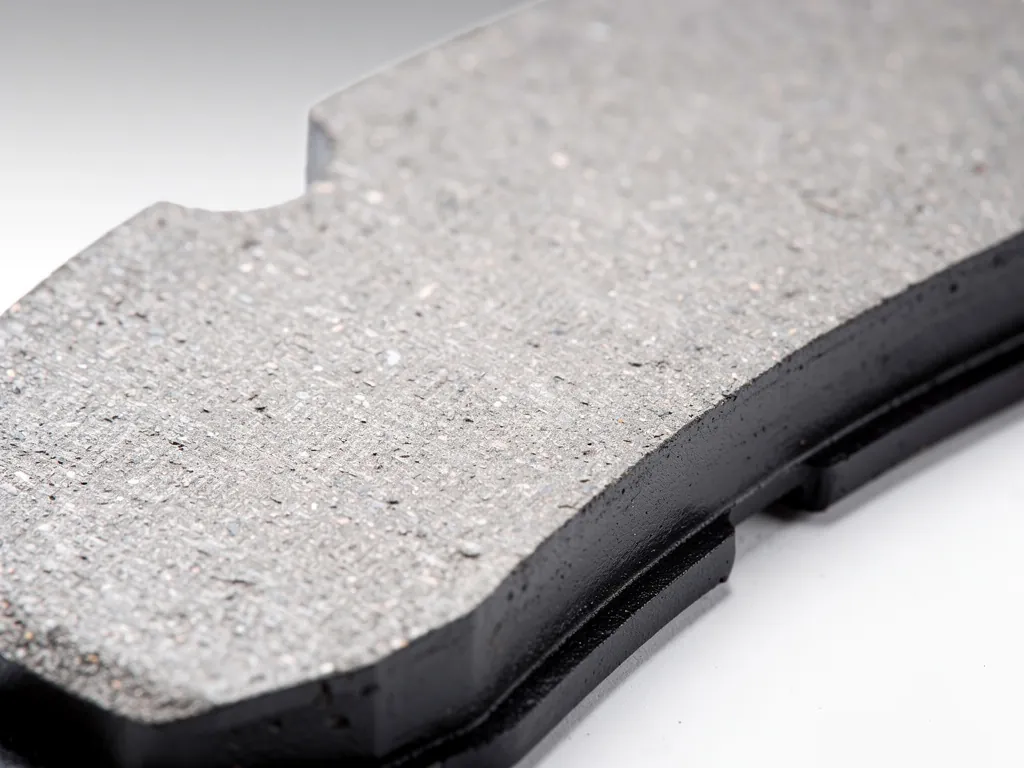
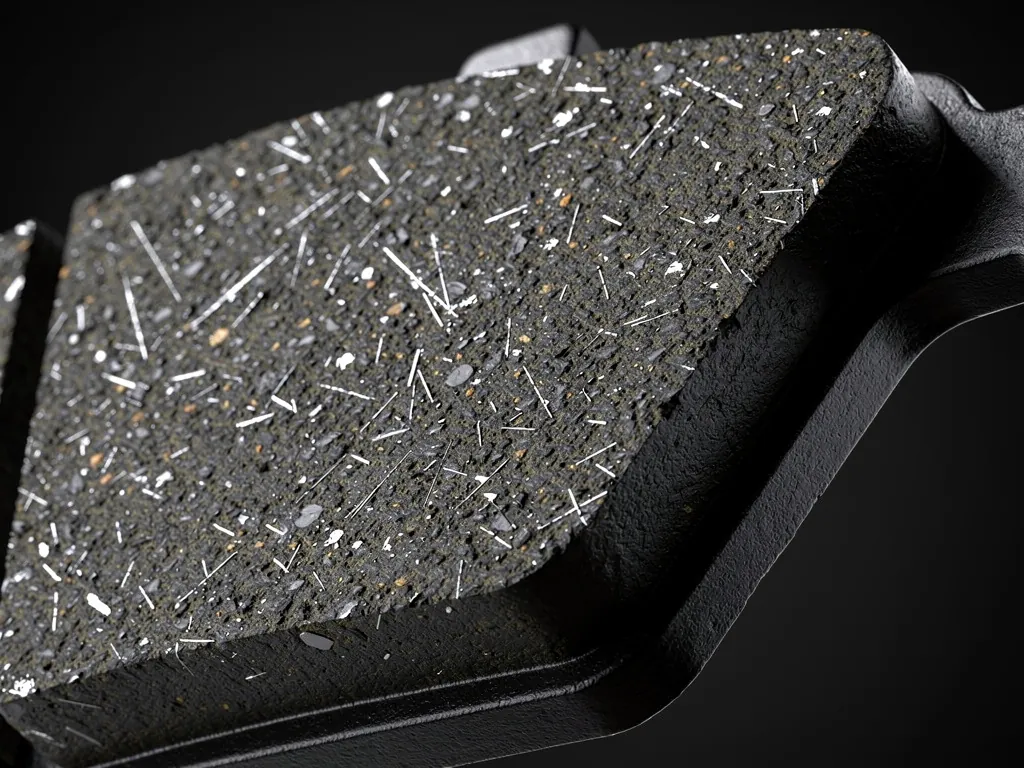
Ceramic Brake Pads
Stock them for: passenger cars, crossovers and daily-driven SUVs whose owners complain about noise and wheel dust.
Ceramic is the usual choice when low noise and clean wheels are the selling point.
Noise also depends on the shim, chamfers, slots, rotor and caliper condition, and installation. We specify the ceramic formula together with the shim and pad geometry for each reference.
Semi-Metallic Brake Pads
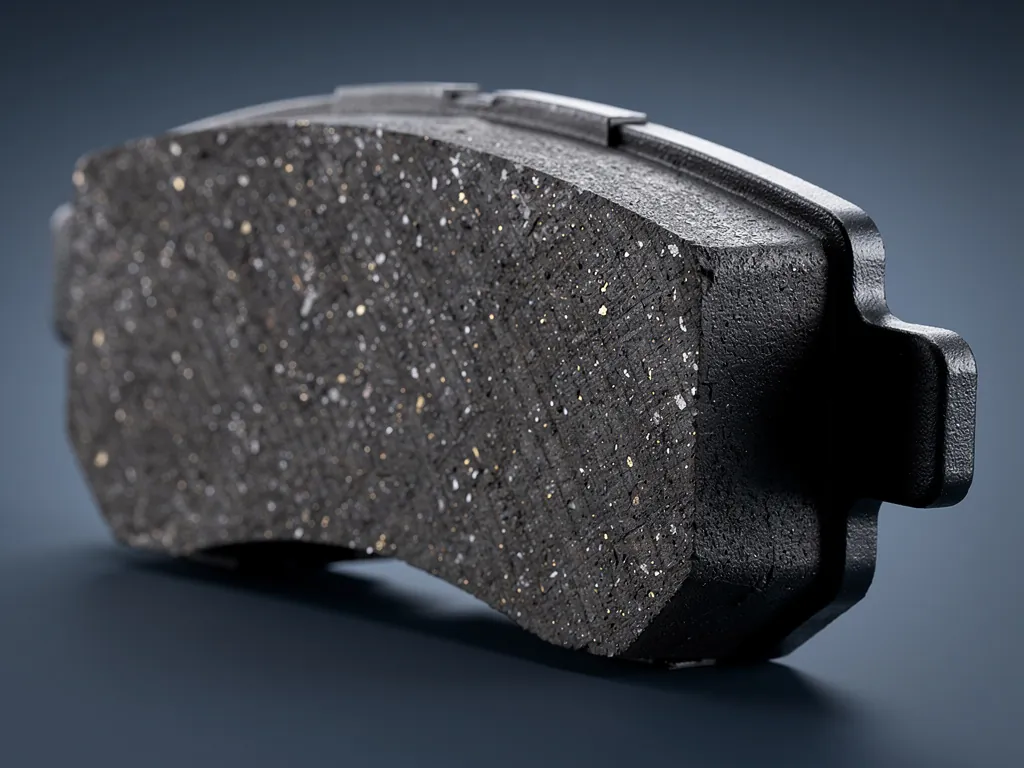
Stock them for: SUVs, pickups, light trucks, vans and fleet vehicles that carry load, tow or brake repeatedly.
Semi-metallic gives strong braking response and good thermal performance under heavy use.
Compared with many ceramic formulas, semi-metallic pads can produce more visible dust, a firmer pedal and more rotor wear.
Low-Metallic Brake Pads
Stock them for: European passenger cars and applications where the original pad has a strong initial bite.
Low-metallic pads offer strong friction response and good heat resistance.
Visible dust is often higher than with ceramic, so match the formula to the vehicle and to what your customers expect.
Not Sure Which Material to Stock?
You do not need to specify the friction recipe. Tell us:
and we will recommend a friction material for each reference on your list.
Vehicle coverage
Which Vehicle Makes Do Your Brake Pads Cover?
We supply brake pads for Japanese, Korean, American and European passenger cars, SUVs and light trucks — including Toyota, Honda, Nissan, Hyundai, Kia, Ford, Chevrolet, Jeep, BMW, Mercedes-Benz and Volkswagen applications. Send your list and we confirm coverage reference by reference.
For a parts store or repair shop, the useful question is not how many part numbers a supplier has, but which applications to stock first for your customers.
European applications also include other European platforms where applicable. Brand names identify vehicle applications only.
Instead of simply asking“How many brake pads do you have?”
A more useful question for a wholesale program“Which applications should we stock first for our customer base?”
Send your sales history or current supplier list and we work from those numbers instead of rebuilding your range from zero.
Fitment verification
How Do You Make Sure Each Brake Pad Fits the Right Vehicle?
We check every reference against the OE number, FMSI number, vehicle application, VIN or an existing sample before quoting, then confirm pad shape, wear sensor, shim and hardware. When an application is unclear, a sample is approved before bulk production.
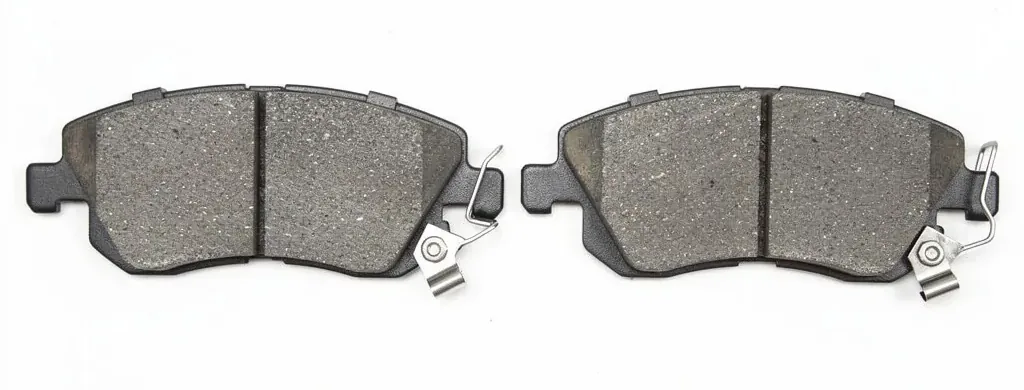
Two pads can look almost identical and still differ in backing plate ears, sensor clips or thickness — one of the most common causes of returns at a parts counter.
Small differences that make one pad wrong for another vehicle:
Matching by OE Number
Send the OE numbers you already buy against. We identify the brake pad reference, axle and hardware for each one.
Repair shops that order from OE catalogs can send those numbers exactly as they appear.
Matching by FMSI Number
FMSI numbers group brake pads by shape and are widely used in U.S. aftermarket purchasing systems.
If your store system is organized by FMSI number, include it in the RFQ.
Matching by Vehicle Application
Make + Model + Year + Engine / Trim
Useful when a counter customer knows the vehicle but not the part number.
Matching by VIN
VIN information confirms which brake system a vehicle uses when one model generation has more than one option.
Send the VIN with the axle (front or rear) you need.
Matching an Existing Sample
Already buying the pad from another supplier? Send any of these:
- physical sample
- pad photo
- dimensions
- box label
- supplier number
- OE number
We identify the closest application and confirm it before quotation.
Our Fitment Workflow
- 1Receive Your Part Number List
- 2Cross-Reference OE / FMSI / Vehicle
- 3Check Pad Shape and Axle
- 4Confirm Sensor, Shim and Hardware
- 5Prepare Quotation
- 6Sample Approval When Required
- 7Bulk Production
This process prevents ordering the correct-looking brake pad for the wrong brake system.
Brake pad construction
What Is a Disc Brake Pad Made Of?
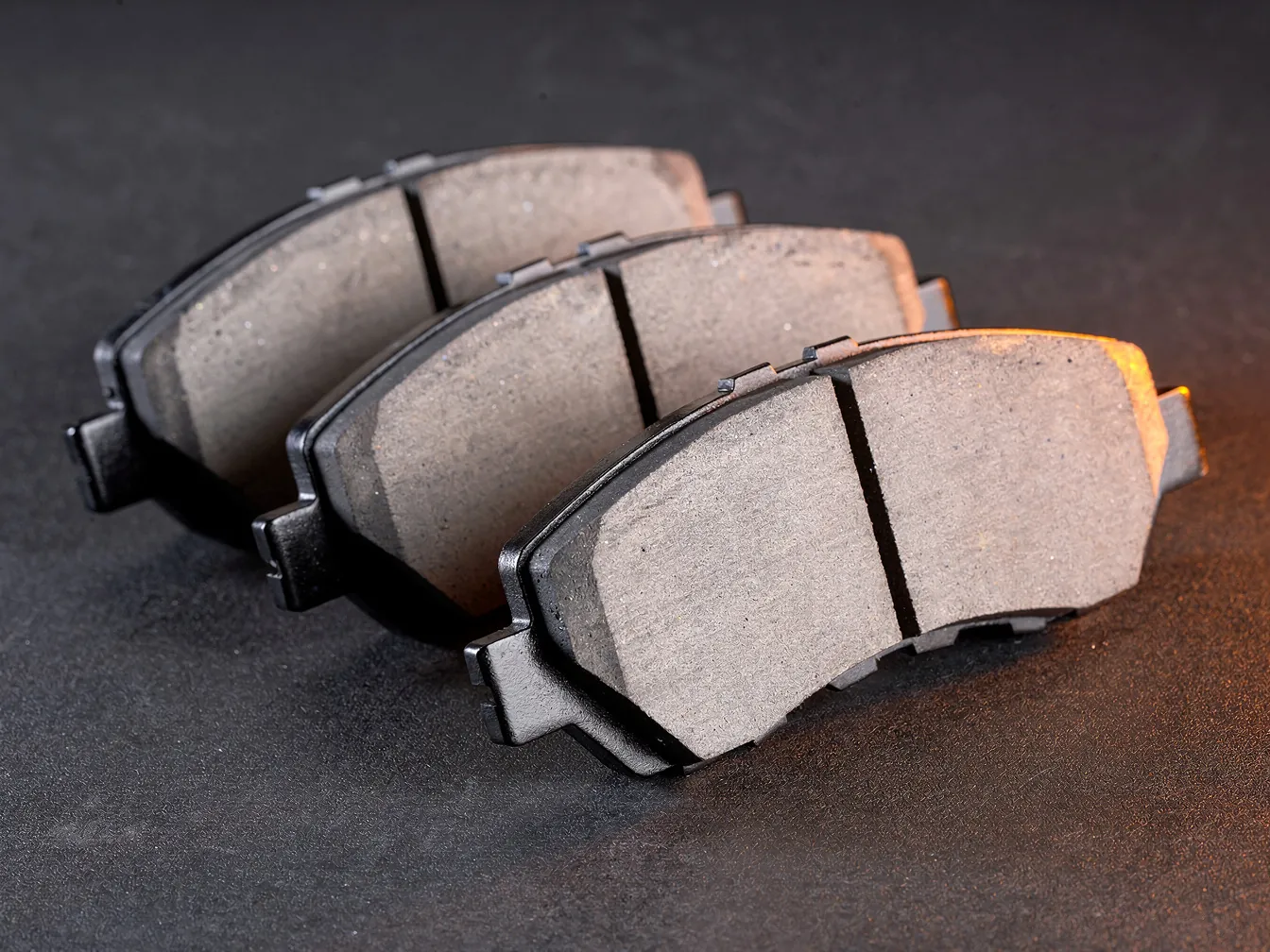
A disc brake pad has seven parts: friction material, an underlayer, a steel backing plate, a noise-damping shim, chamfers, slots and a wear indicator or electronic sensor. For a repair shop, the shim, chamfers and sensor decide whether the pad installs quietly and triggers the correct wear warning.
See our shim and chamfer production at the factory.
Tap a layer or a component to highlight it
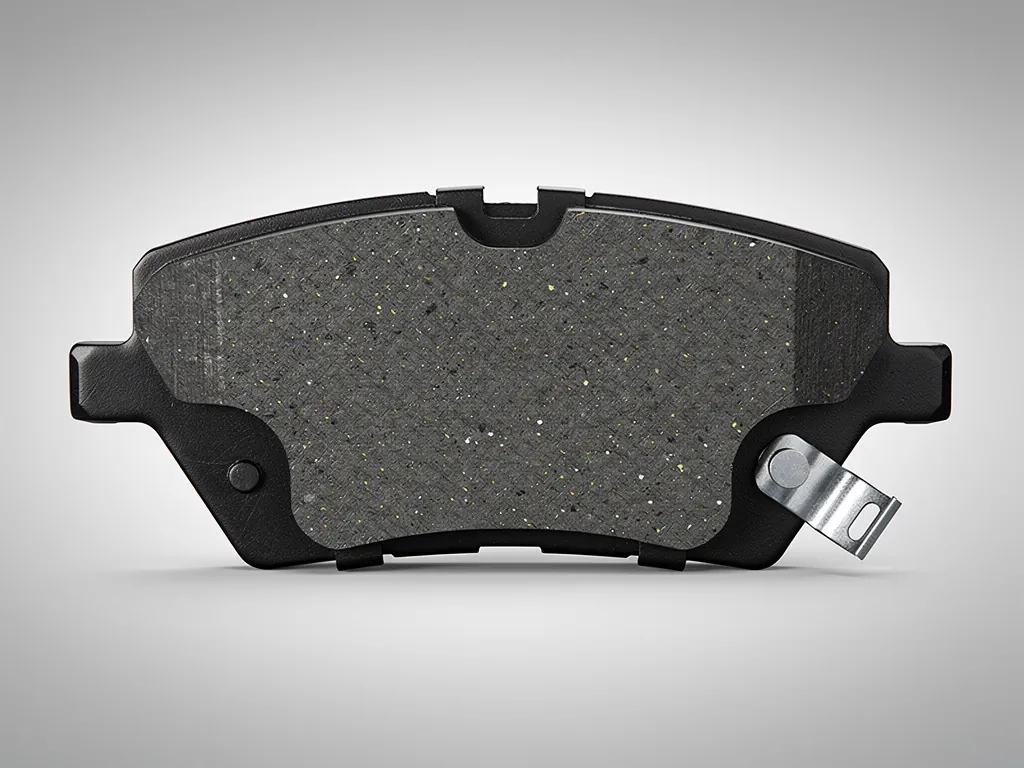
7 components · tap one to highlight it in the diagram
Creates the friction that turns vehicle motion into heat. Its formula sets friction response, temperature stability, wear, dust, noise and rotor wear.
A layer between the backing plate and friction material that supports bonding, heat insulation and vibration control.
Carries the friction material and locates the pad in the caliper. Flatness, ear dimensions and coating decide fit and corrosion resistance.
Fitted to the back of the pad to damp vibration. Single-layer, multi-layer or rubber-coated shims are chosen per application.
Angled edges on the friction block that soften initial contact and reduce squeal during bedding.
Grooves that release dust and gas and reduce cracking from heat expansion. Each pad shape uses its own slot layout.
A mechanical tab or an electronic sensor warns the driver when the pad is worn. We confirm which one each vehicle needs during fitment checks.
Manufacturing
How Are Our Brake Pads Manufactured?
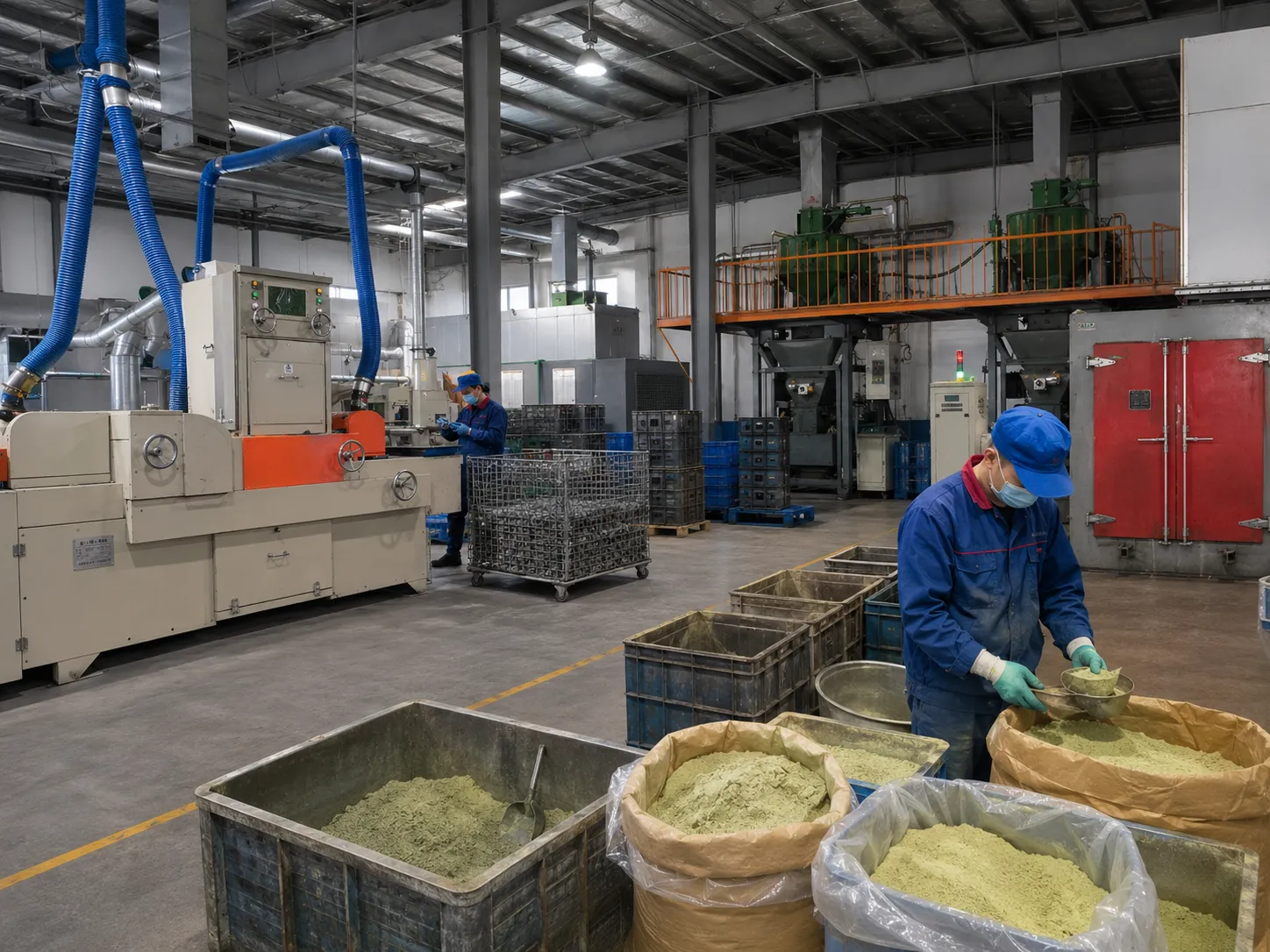
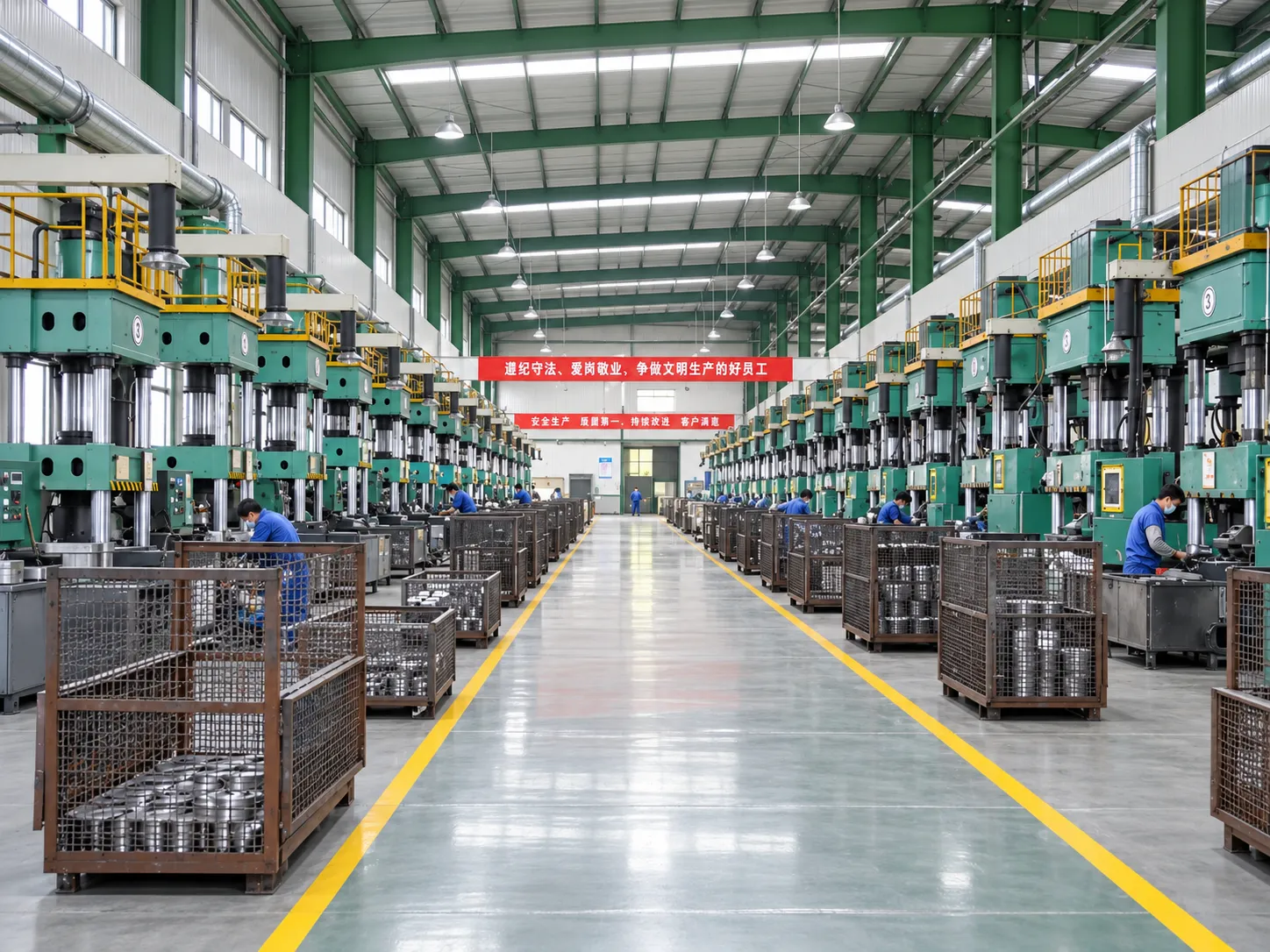
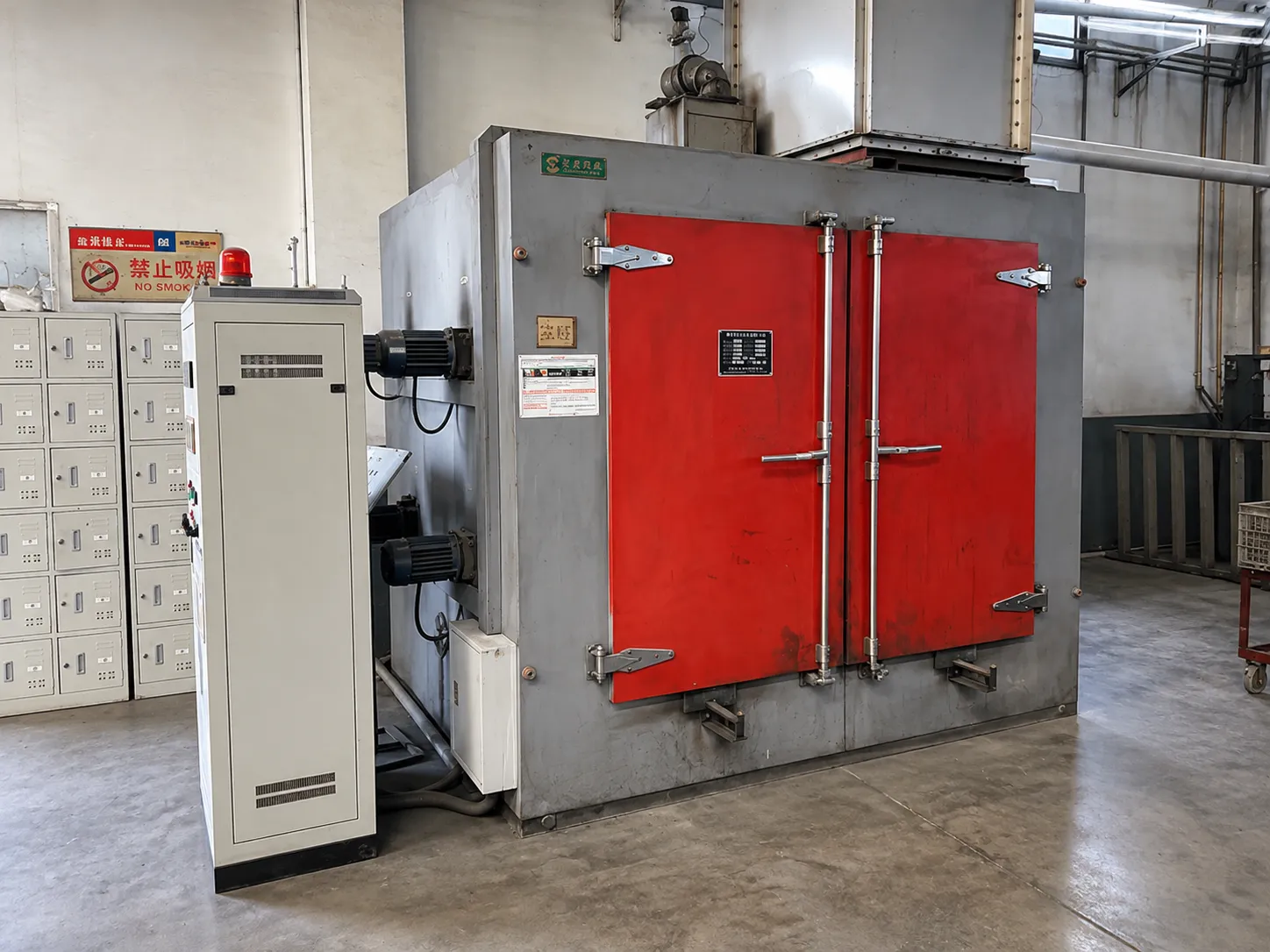
Our brake pads are produced in-house at our factory in Qingyuan, Guangdong, in 10 stages: raw material preparation, mixing, backing plate preparation, hot pressing, heat treatment, grinding, scorching, coating, marking and packaging. Each reference keeps the same formulation and process from one order to the next.
10 production stages, from raw material to packed box — see how brake pads are made on each line.
Raw Material Preparation
Ingredients are weighed to the friction recipe of each reference. Accurate proportions keep friction behavior the same across batches.
Mixing
Ingredients are mixed for an even distribution through the friction block, so a repeat order brakes like the first one.
Backing Plate Preparation
Steel plates are inspected and surface-treated to improve bonding with the friction material.
Hot Pressing
Friction material is pressed onto the backing plate under controlled pressure and temperature, setting shape and density.
Heat Treatment
Controlled curing stabilizes the friction material before machining.
Grinding
Pads are ground to final thickness, then slotted and chamfered. Thickness accuracy decides fit in the caliper.
Scorching
Where specified, the friction surface is heat-conditioned to shorten bedding-in.
Coating and Finishing
Backing plates receive a protective coating, then pads are cleaned and visually inspected.
Marking
Product code, batch number and, where required, your brand and reference are marked on each pad.
Packaging
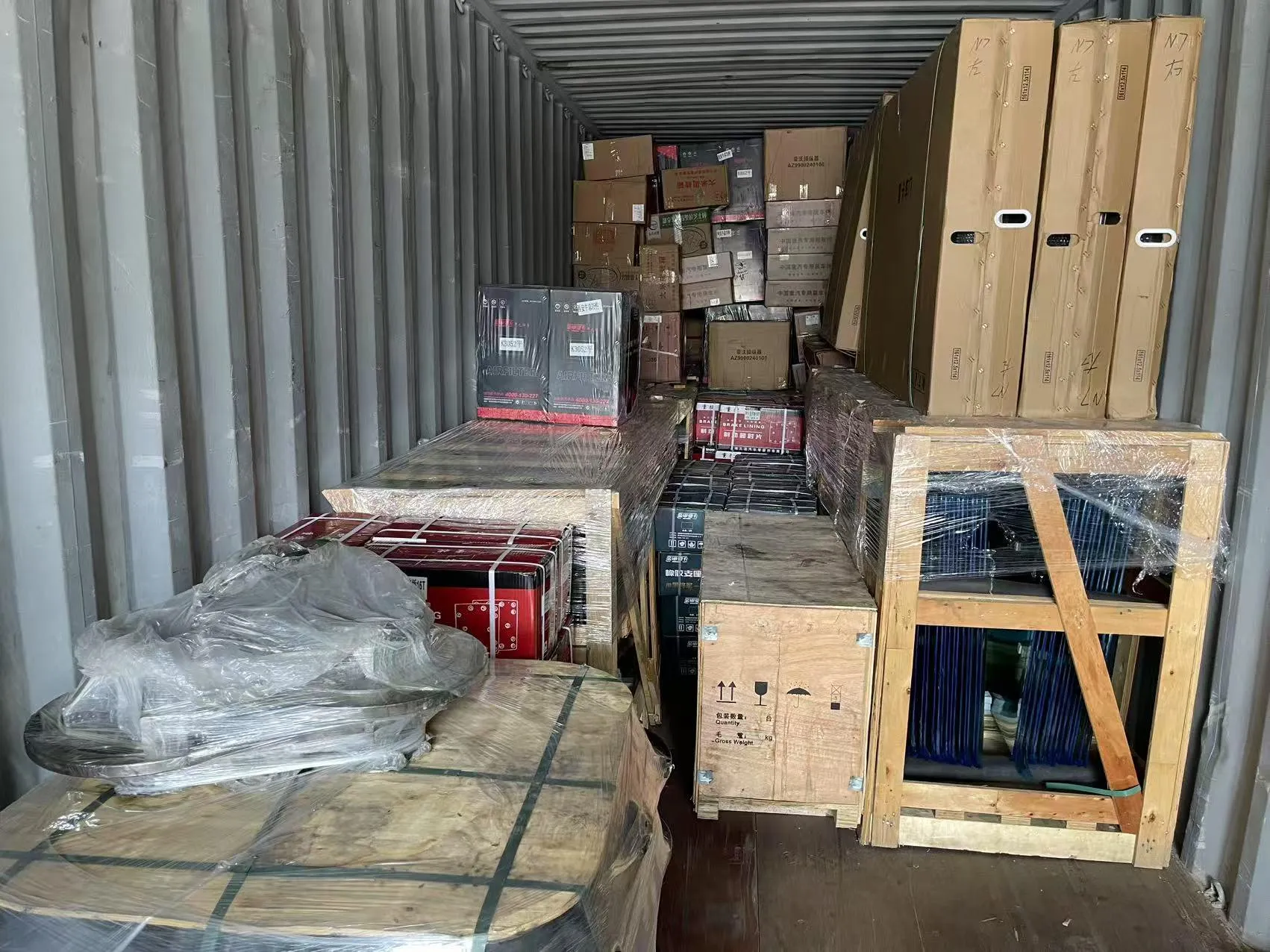
Pads are packed in white boxes, custom boxes or private label packaging, with SKU and batch checked before shipment.
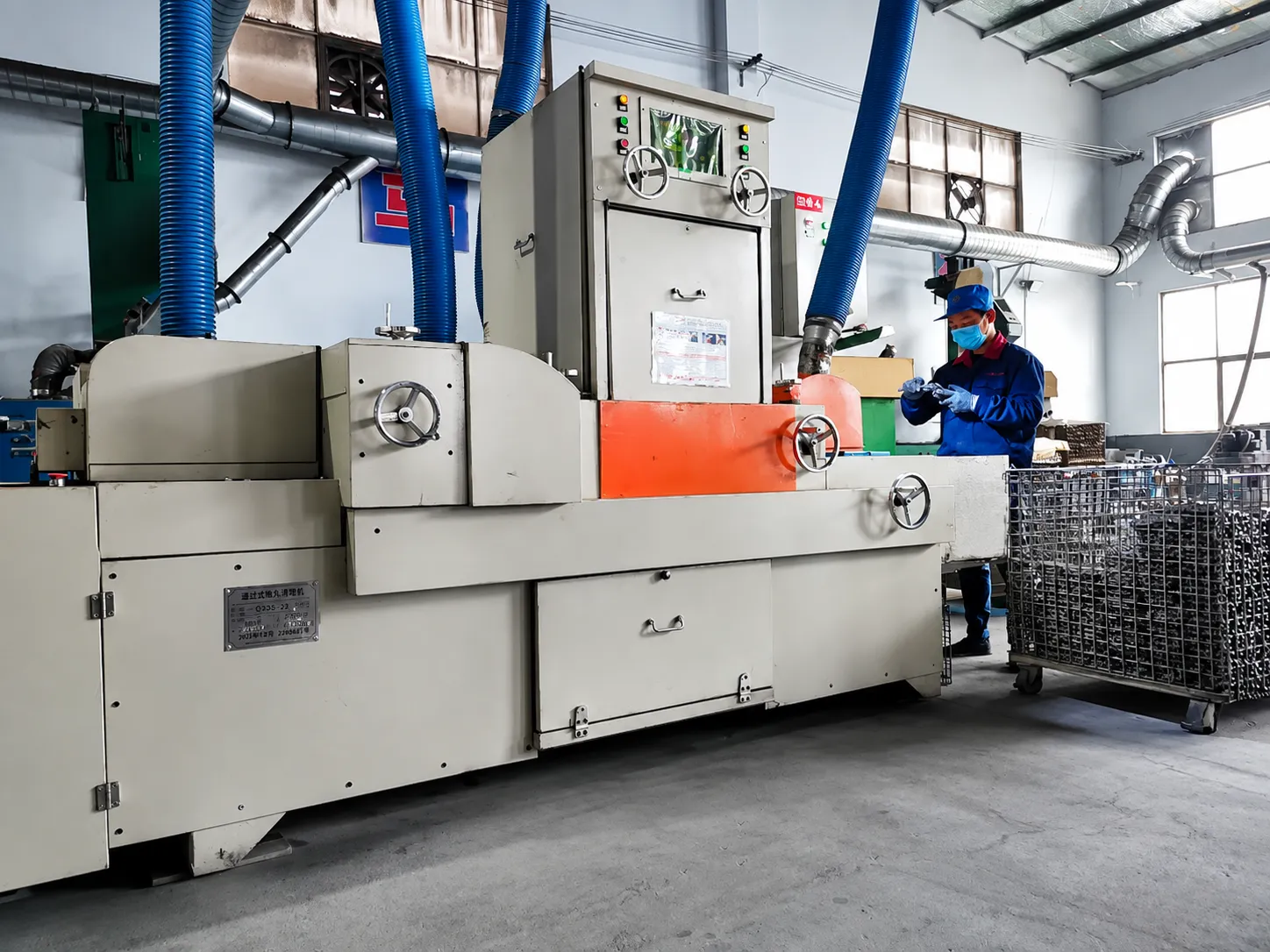
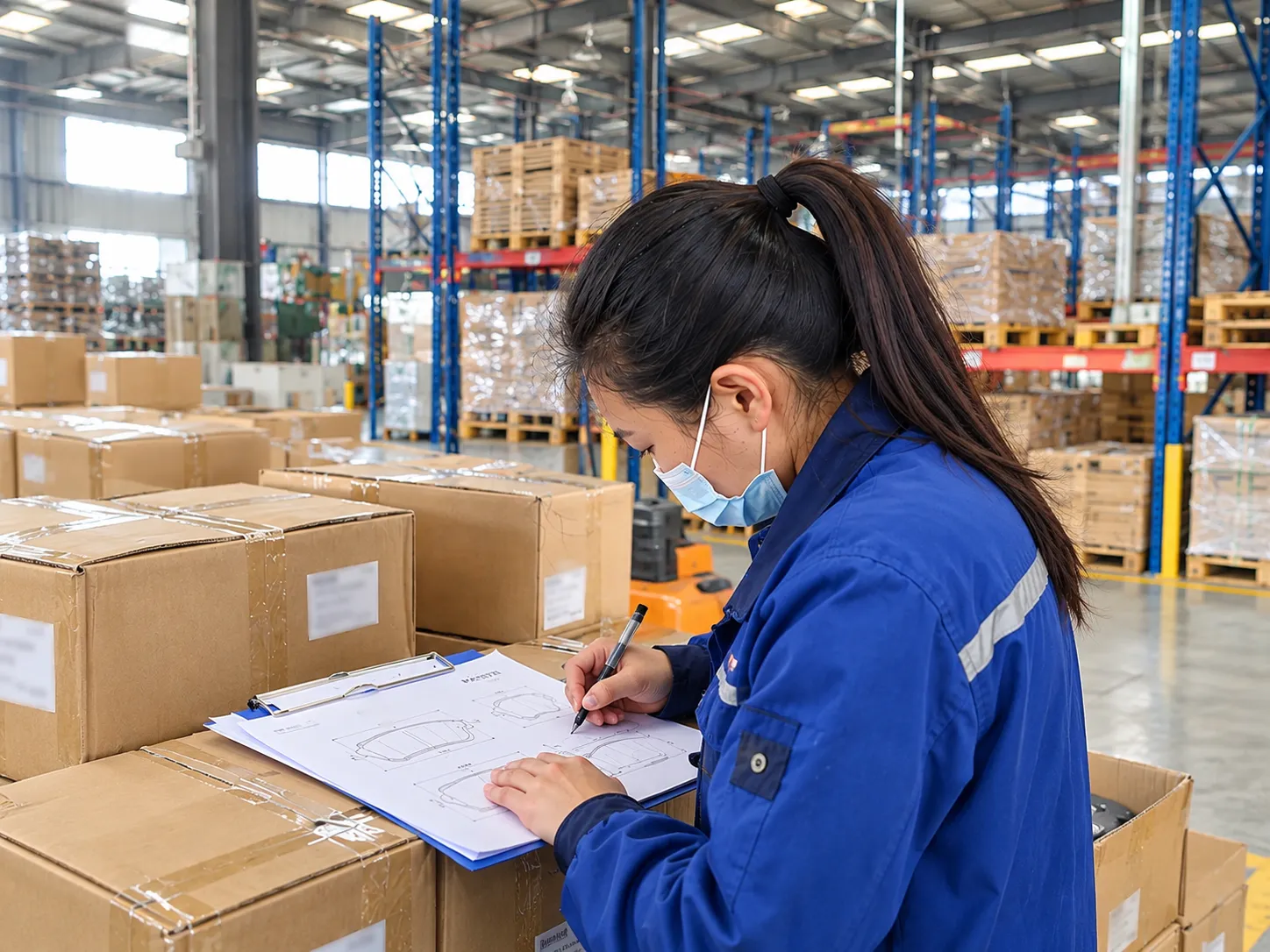
Inside Our Brake Pad Factory
Real photos from our production line in Qingyuan.
Testing & quality control
What Quality Checks Does Every Brake Pad Batch Pass?
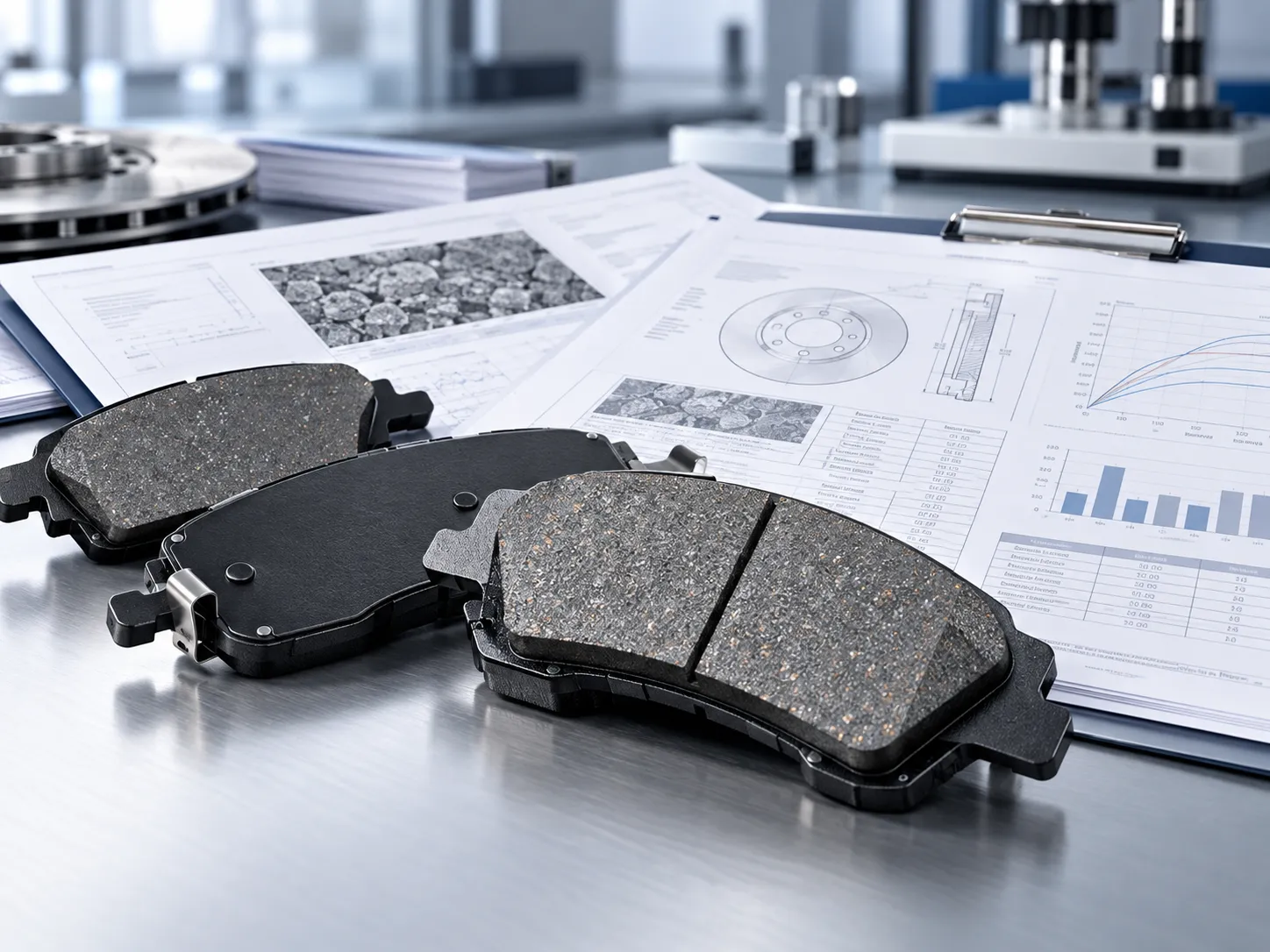
Every batch is checked for dimensions, shear strength between the friction material and backing plate, compressibility, friction and wear, and a final part-number and packaging inspection before shipment. Our quality system is certified to IATF 16949, and our Qingyuan production site holds ISO 9001.
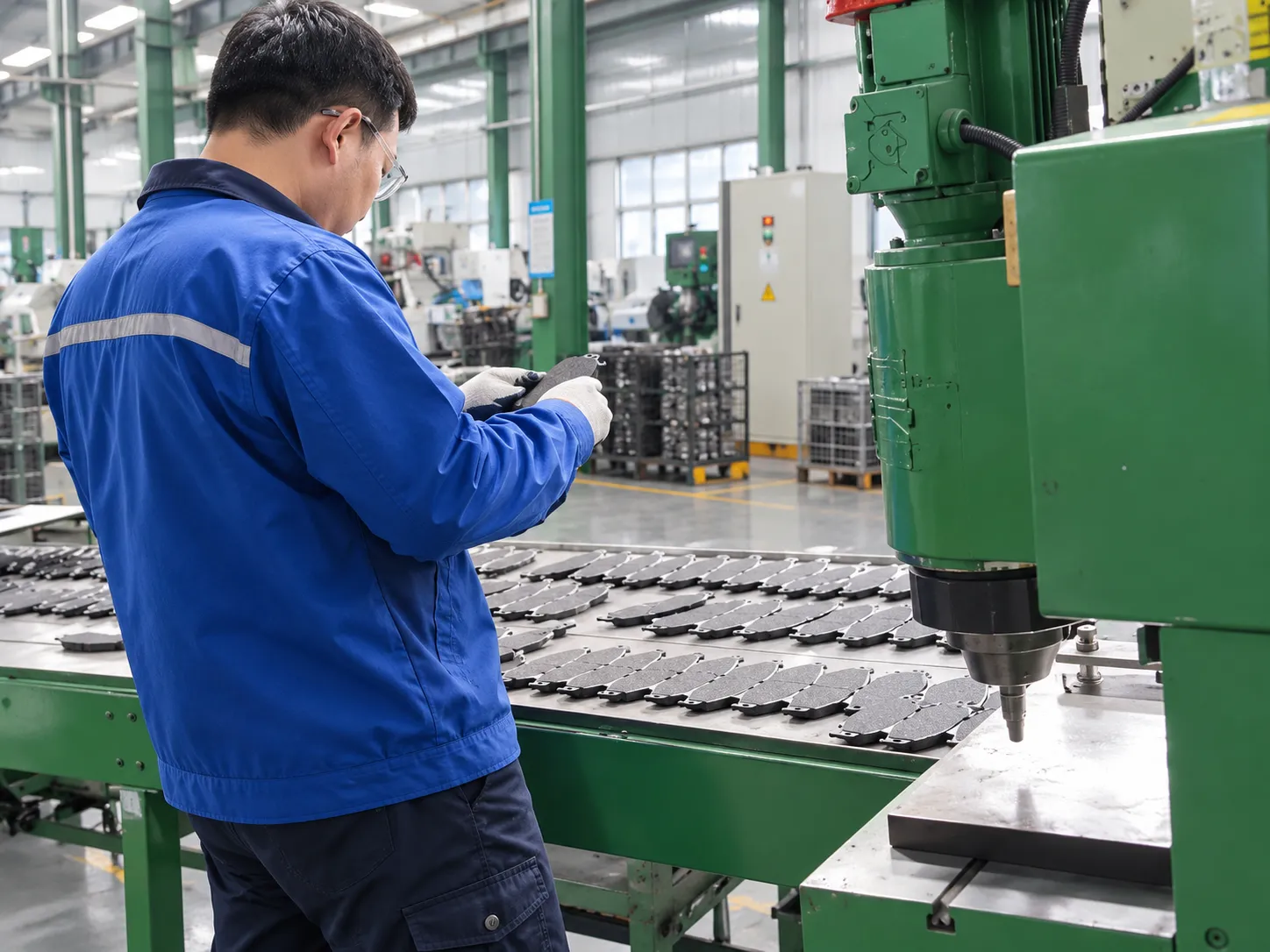
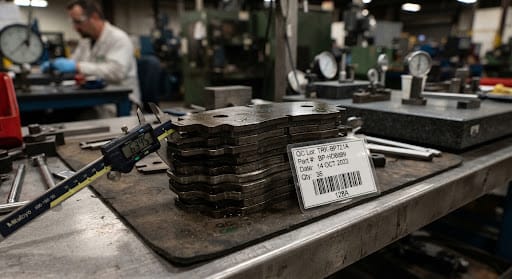
Dimensional Inspection
Measured against the drawing for each reference:
- pad length and width
- thickness
- backing plate dimensions
- mounting features
- slot and chamfer geometry
- sensor position
Shear Strength Testing
Confirms the bond between friction material and backing plate holds under braking load without separation.
Compressibility Testing
Checks how much the friction material compresses under pressure, which affects pedal feel.
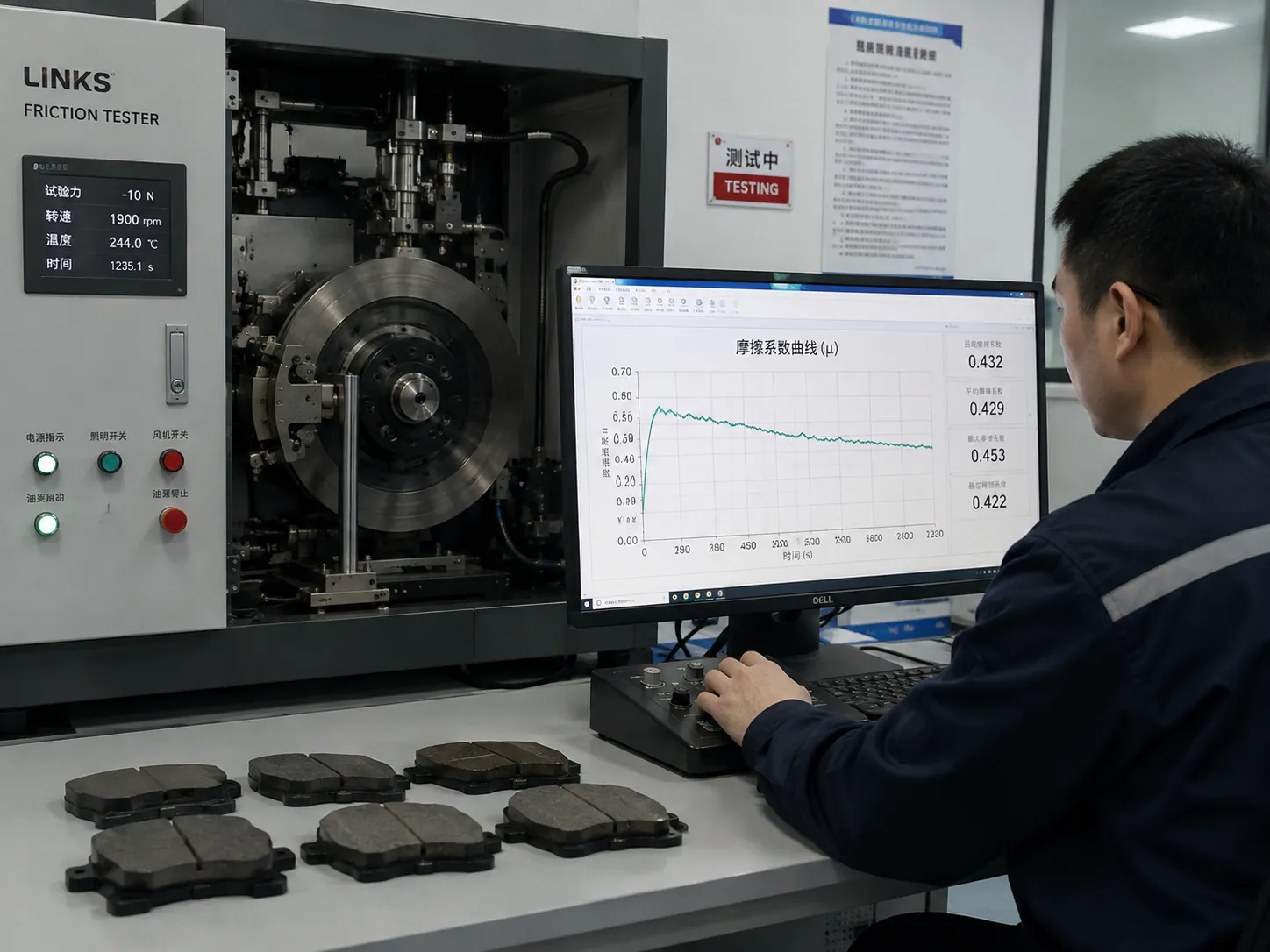
Friction and Wear Evaluation
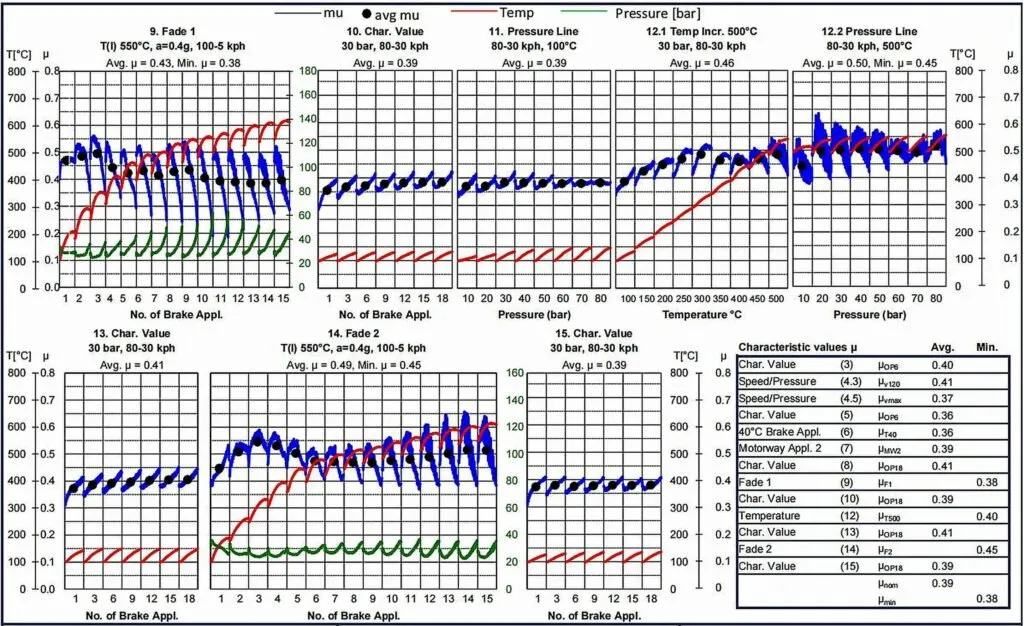
Friction level, temperature response, wear, fade and recovery are evaluated for each formulation. Our quality page describes the friction coefficient test behind each batch.
- friction behavior
- temperature response
- wear rate
- fade and recovery
Noise and Vibration Review
When a noise issue is reported, we review the whole pad configuration — friction material, shim, chamfer and slot — not only the compound.
Heat Fade and Recovery
Shows how friction changes as brake temperature rises and whether it recovers after cooling.
Final Inspection Before Packing
Each order is checked for:
- correct part number
- dimensions
- surface condition
- backing plate finish
- shim installed
- sensor and hardware
- marking
- box and label
- quantity
A good pad in the wrong box still becomes a return at the parts counter, so SKU checks are part of QC.
Quality Records We Can Share
Equipment photos and a sample of the records behind each shipment.
Certifications & compliance
Which Certifications and Compliance Documents Can You Provide?
Our quality management system is certified to IATF 16949 and ISO 9001. ECE R90 approvals apply to specific part numbers, not to every pad, and our friction materials are asbestos-free and REACH-compliant. For U.S. programs we review AMECA friction-material identification and state copper-content rules for each reference before production.
IATF 16949 covers our automotive quality management system; ISO 9001 is issued to our production site in Qingyuan. Scope and validity are listed on our certifications page, and certificate copies are available on request.
ECE R90 is an approval for replacement brake pads sold in Europe and other markets that follow UN regulations. It is granted per part number, so ask us which references on your list carry it.
Washington and California limit the copper content of brake friction material sold in those states, and AMECA runs the brake friction material environmental certification used to show compliance. Tell us your target state and we will review each reference before production.
Every brake pad material we supply is asbestos-free. Friction materials comply with REACH requirements for the European market.
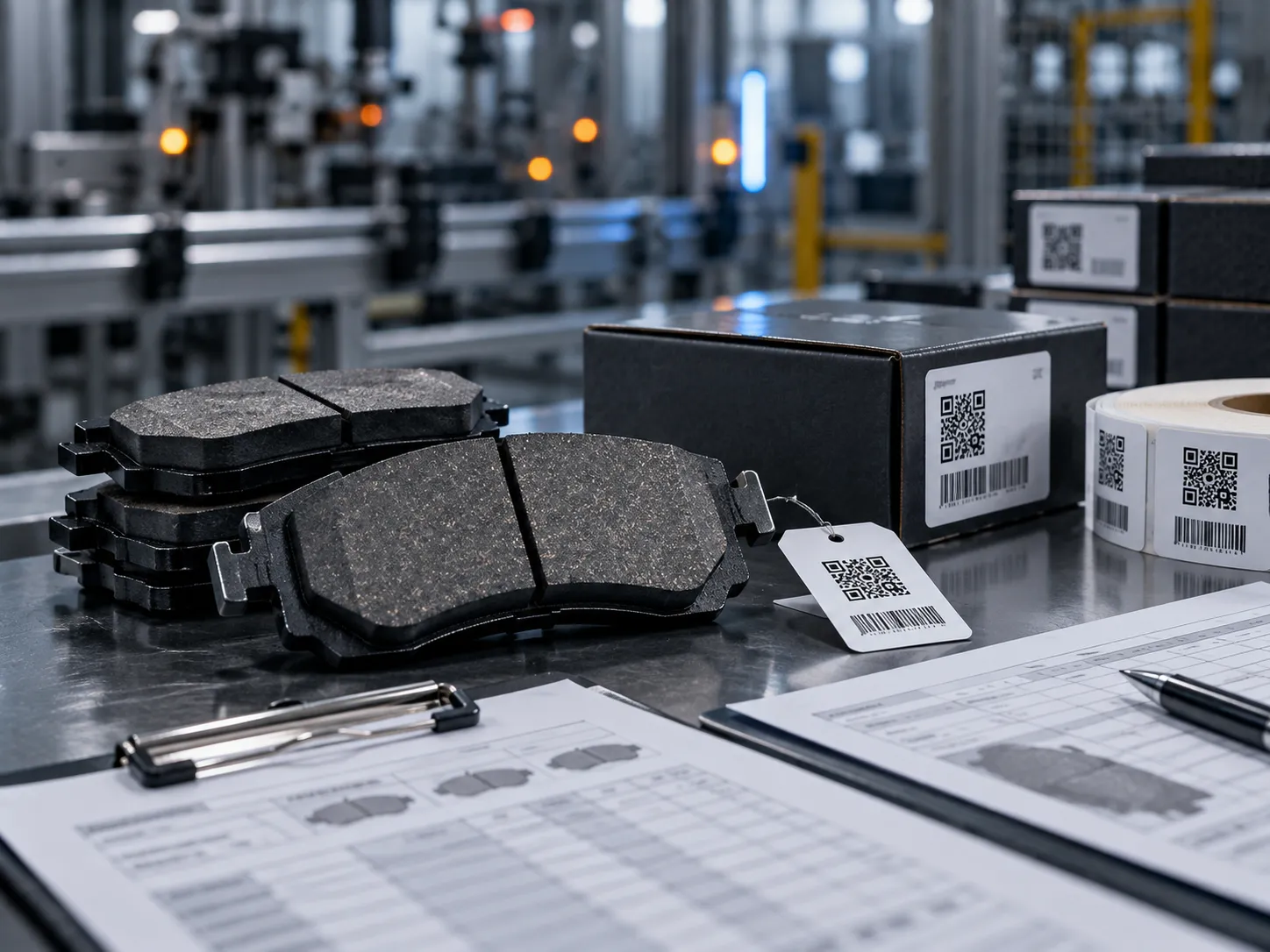
Each box carries a batch number linked to the production and inspection record, so a claim from one store or shop can be traced to a single batch.
- production batch
- product code
- manufacturing record
- inspection record
Private label
Can You Supply Private Label Brake Pads for a Store Brand?
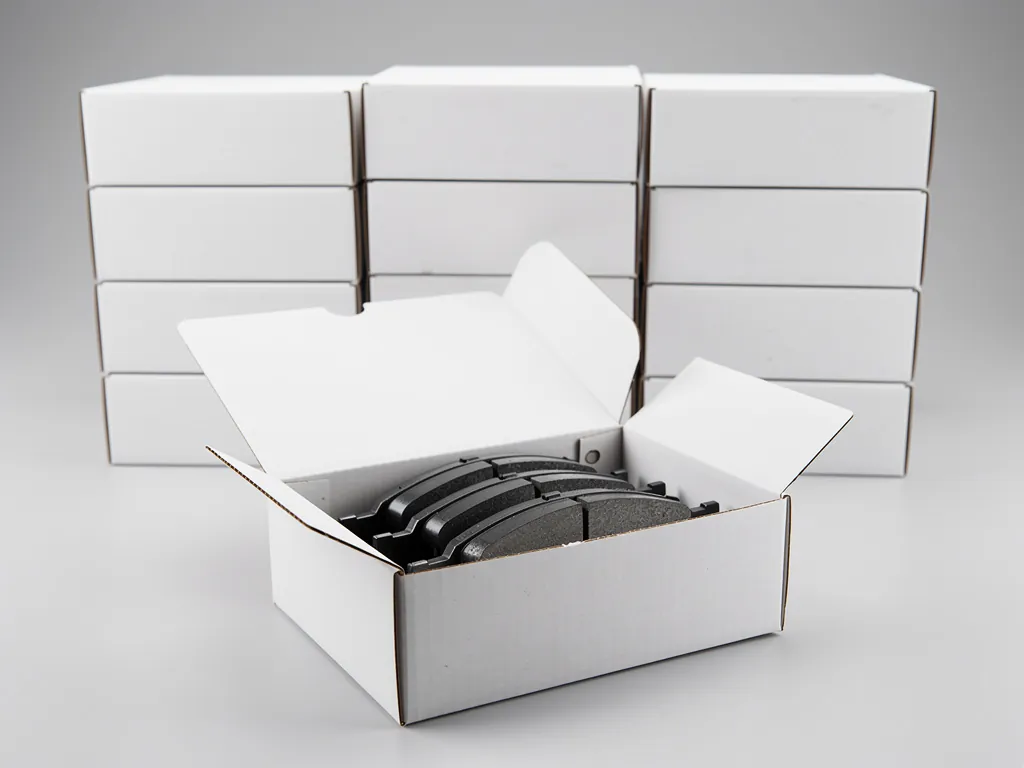
Yes. A private label program can start with plain white boxes and move to your own printed box showing brand, logo, part number, vehicle application and barcode. Hardware can be packed in the box, packed separately or left out, and SKU labels can follow your warehouse system.
Plain White Box
The simplest option for shops supplying their own bays, regional wholesale and first trial orders.
- repair shop supply
- regional wholesale
- new line testing
- smaller first programs
Custom Color Box
Your own printed box for a store brand or distributor brand. It can show:
- brand name and logo
- product series
- part number
- vehicle application
- barcode
- country-specific labeling
Barcode and SKU Labels
Labels follow your SKU structure and barcode format, so pads can be received and scanned straight into store inventory.
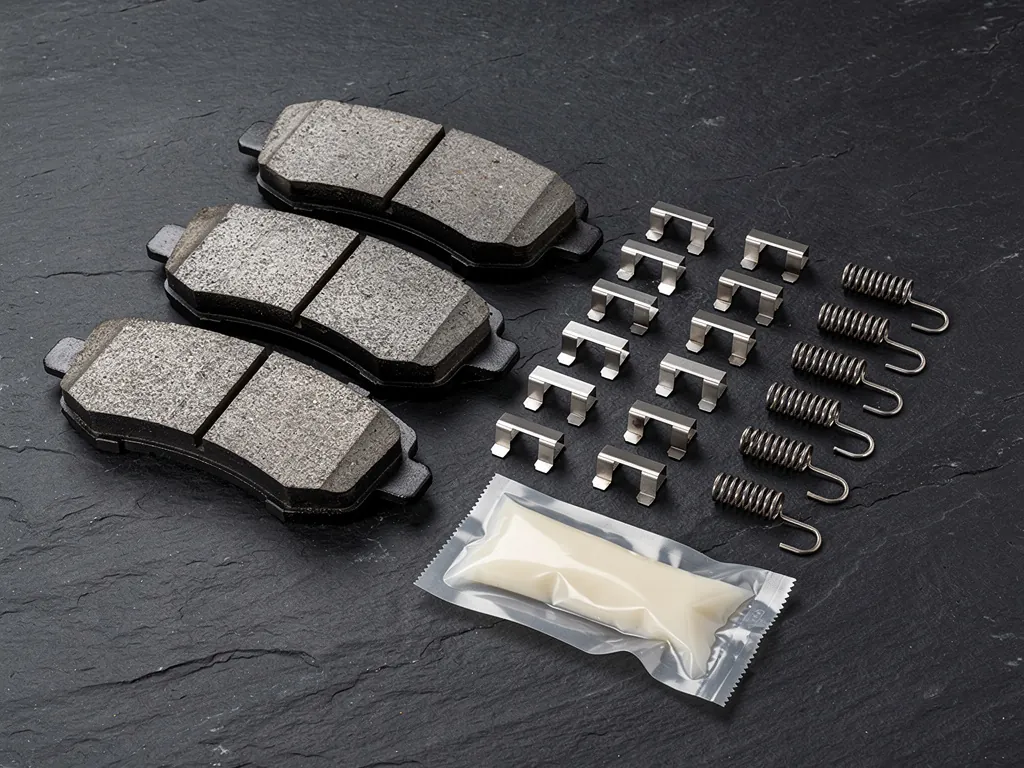
Hardware Kits
Where the application needs it, hardware is supplied with the pads. Confirm before production whether it should be:
- in the box
- packed separately
- omitted
Launching a Store Brand Step by Step
Start with the applications that sell most in your area instead of launching hundreds of SKUs at once:
This keeps slow-moving stock out of your first order.
Order terms
What Are Your MOQ, Lead Time, Sample, Payment and Shipping Terms?
Mixed orders start from 100 sets across different references. Standard production takes 20–30 days and mixed-SKU orders 25–35 days. Samples are paid and ready in 3–5 days for existing references or 7–15 days for custom ones. Payment is 30% deposit and 70% before shipment by T/T, PayPal or XTransfer in USD, under FOB, EXW, CIF or DDP terms.
MOQ: Mixed Orders From 100 Sets
Different brake pad references can be combined in one order. This suits:
- auto parts stores building a first range
- repair shops supplying their own bays
- regional wholesalers
- testing a new product line
Quantities per reference are confirmed with the quotation.
Production Lead Time
20–30 days for standard orders and 25–35 days for mixed-SKU orders. Lead time depends on:
- number of SKUs
- total quantity
- friction formulation
- packaging
- hardware
- production schedule
The final date is confirmed on the order confirmation.
Samples
Samples are charged. Preparation takes:
- 3–5 days for existing references
- 7–15 days for custom samples
Use samples to check fitment, dimensions, packaging and friction direction before bulk production. Sample price and delivery charges are confirmed before the sample order proceeds.
The buyer pays international sample shipping.
Payment Terms
30% deposit to schedule production, 70% balance before shipment.
- Order confirmation
- 30% deposit
- Production and final inspection
- 70% balance
- Shipment
- T/T bank transfer
- PayPal
- XTransfer
- Currency: USD
Example: on a USD 10,000 order, the deposit is USD 3,000.
Shipping and Trade Terms
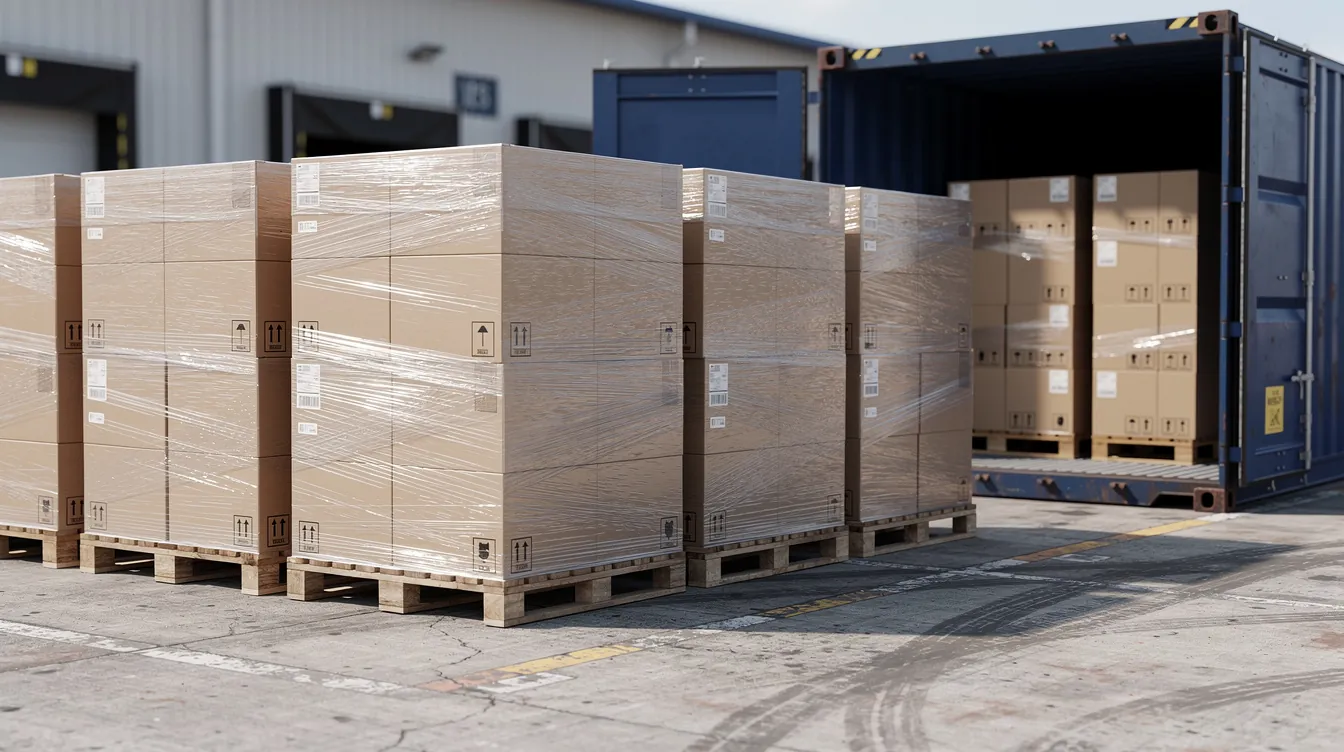
FOB, EXW, CIF or DDP. Shipping method depends on weight, volume and urgency:
As a brake disc manufacturer we can add rotors and drum brake shoes to the same container.
How Is a Wholesale Brake Pad Price Calculated?
Each reference is priced separately, based on:
Send the full list once and we quote every line after matching it.
After-sales support
What Happens If a Repair Shop Reports Noise, Vibration or Early Wear?
Send us the part number, batch number, vehicle, mileage, photos of the inner and outer pads and the rotor condition. We review the case against the production record of that batch and reply with the most likely cause — friction material, installation, rotor or caliper — so the same complaint does not repeat.
Brake Squeal
Squeal can come from the friction material, shim, chamfer, slot design, rotor surface, caliper or installation hardware.
A noise complaint does not prove the compound is defective; we review the system as a whole.
Judder or Vibration
Vibration after a pad change usually involves the rotor, hub, mounting surface, caliper or wheel bearing.
Check rotor and installation condition before concluding the pad is the cause.
Uneven Pad Wear
Uneven wear is usually linked to caliper slides, piston movement, rotor condition or pad movement in the bracket.
Photos of both inner and outer pads show the pattern quickly.
Premature Pad Wear
Short pad life is reviewed together with driving conditions, vehicle load, brake temperature, rotor condition and caliper function.
One worn set is not treated as proof that a whole batch is faulty; the batch record is checked first.
Our Claim Review Process
Include as much of the following as possible:
- part number
- batch number
- vehicle make/model/year
- mileage
- installation date
- photos and video
- inner and outer pad wear
- rotor condition
- description of the symptom
We compare the case with the production and inspection record of that batch.
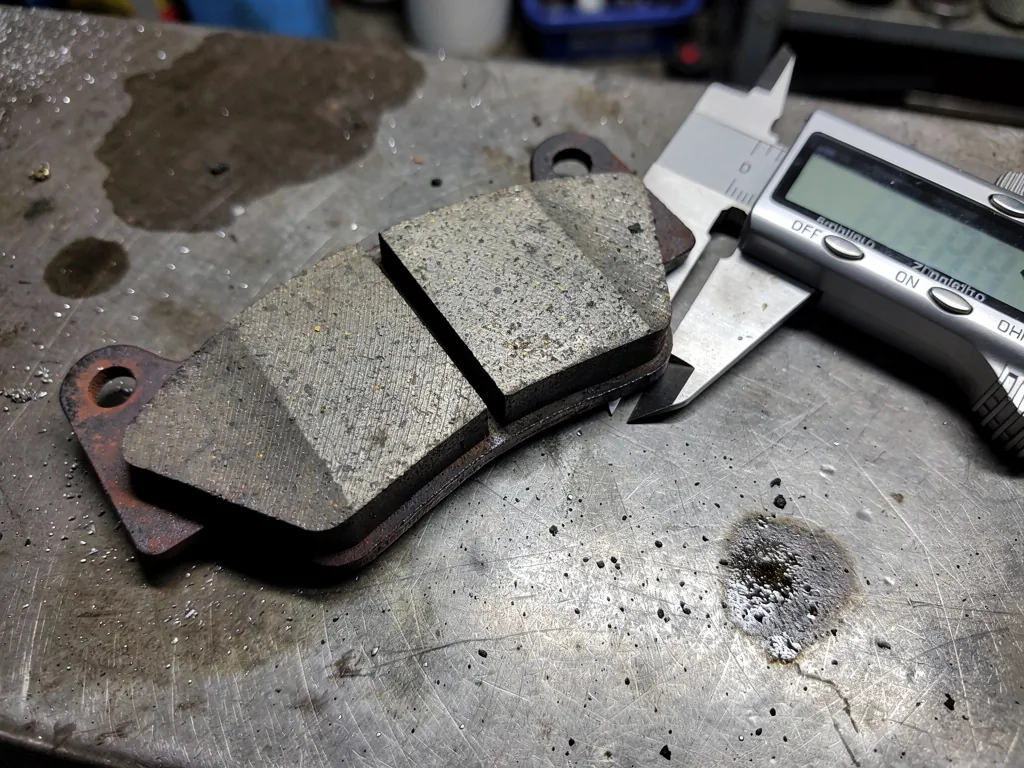
The goal is not to decide “factory problem or customer problem.”The goal is to find the most likely cause and stop the same complaint from coming back to your counter.
Supplier check
How Should a Parts Store Choose a Brake Pad Manufacturer in China?
Compare each brake pad supplier on fitment accuracy, formulation consistency between orders, shim and backing plate quality, packaging accuracy and batch traceability — not on unit price alone. Ask each supplier to quote the same reference list and to show how they verify OE and FMSI numbers.
Our guide on how to verify a Chinese brake pad manufacturer lists the official registries to check, and our overview of top brake pad manufacturers in China compares suppliers by buyer type.
Fitment Accuracy
The biggest purchasing risk is not bad friction material but the wrong reference. Before mass production, confirm:
Same Shape, Different Specification
Similar-looking pads can differ in thickness, clip, sensor or backing plate. Never approve from a catalog photo alone.
Formulation Consistency
Ask whether the friction formulation stays fixed between orders. Repeat customers notice a change before you do.
Shim Quality
A good friction block still squeals with an unsuitable or poorly fitted shim. Ask which shim each reference uses.
Backing Plate Bonding
Ask how plates are prepared and how shear strength is tested, not only how the pad looks.
Packaging Accuracy
Good pads still become returns when:
- the wrong number is printed
- sets are mixed between boxes
- hardware is missing
- the barcode is wrong
Batch Traceability
Without a batch number on every box, one complaint cannot be traced to a production run.
FAQ
Wholesale Brake Pad FAQs for Parts Stores and Repair Shops
Still deciding? Send your list — we will answer with a quotation built around your references.
Mixed orders start from 100 sets across different brake pad references, so an auto parts store or repair shop can combine many vehicle applications in one order.
We are a brake pad manufacturer. Friction material mixing, hot pressing, heat treatment, grinding, marking and packing are done in our own factory in Qingyuan, Guangdong, which also produces brake rotors and drum brake shoes.
Yes. Front pads, rear pads and different vehicle applications can be combined in the same order, together with brake rotors and drum brake shoes.
Standard orders take 20–30 days and mixed-SKU orders 25–35 days after the deposit and sample approval. The final date is confirmed on the order confirmation.
Yes. Samples are paid. Existing references are ready in 3–5 days and custom samples in 7–15 days; the buyer pays international sample shipping.
30% deposit and 70% balance before shipment, by T/T bank transfer, PayPal or XTransfer in USD. We ship under FOB, EXW, CIF or DDP terms.
Yes. Send OE numbers, FMSI numbers, vehicle applications, VINs, current supplier numbers or samples, and we confirm each reference before quoting.
Japanese, Korean, American and European passenger cars, SUVs and light trucks. Send your list and we confirm coverage reference by reference.
Semi-metallic brake pads are usually chosen for SUVs, pickups, light trucks and fleet vehicles that carry load or brake repeatedly; ceramic suits passenger cars and crossovers.
Yes. Every ceramic, semi-metallic and low-metallic brake pad material we supply is asbestos-free.
ECE R90 approvals apply to specific part numbers, not to every pad. Send your list and we confirm which references carry R90 approval.
Yes. Options range from plain white boxes to your own printed box with brand, logo, part number, vehicle application, barcode and SKU labels.
A part-number list (OE, FMSI or current supplier numbers) or vehicle applications, the quantity per reference, the destination market and your packaging choice.
Request a quotation
Send Your Brake Pad List for Quotation
If you know the part numbers, send the list. If you only know the vehicles, send those — we do the matching before we quote.
Information You Can Send
Need 20, 50 or 100 Different Brake Pad References?
That is a normal order for a parts store or repair shop.
You do not need one inquiry per product. Upload the complete list and we check every application together.
Upload Your Brake Pad List & Get a Quote
Send us the numbers. We help with the matching.