Brake parts factory · Since 2014
Inside Zhenlong’s Brake Parts Factory in Qingyuan
Zhenlong is a brake parts manufacturer focused on aftermarket brake pads, brake rotors and brake shoes for professional B2B buyers. Our brake pad factory in Qingyuan, Guangdong, also runs dedicated brake rotor and brake shoe lines.
Our factory supports auto parts stores, distributors, importers and repair-shop supply businesses that need more than a one-time product purchase. They need consistent specifications, organized multi-SKU production, measurable quality control and reliable repeat supply.
From raw-material preparation and machining to inspection, packaging and shipment preparation, every stage of the production process is designed around the requirements of wholesale brake parts orders.
For buyers evaluating a new brake parts factory, this page shows what happens behind the finished product: the production process, equipment, inspection points, warehouse management and people responsible for every order.
Brake Pads
Friction-material preparation, pressing, heat treatment, grinding, finishing and inspection.
Brake Rotors
Machining, dimensional control, surface finishing, runout and DTV inspection.
Brake Shoes
Steel shoe preparation, lining processing, geometry control and final product inspection.
Factory Snapshot
Focused on brake parts manufacturing and aftermarket supply.
Supporting auto parts stores, repair shops, distributors and importers.
A focused brake product range for repeat wholesale purchasing.
One supply chain from manufacturing to shipment preparation.
Factory overview
A Brake Parts Factory Focused on Three Core Product Categories
Zhenlong is not a general auto parts factory and does not try to manufacture every automotive component.
Our factory and product knowledge are concentrated around three brake-part categories that are frequently purchased by aftermarket distributors, parts stores and repair businesses: brake pads, brake rotors and brake shoes.
This focused approach allows our production and quality teams to pay closer attention to the characteristics that matter to each product.
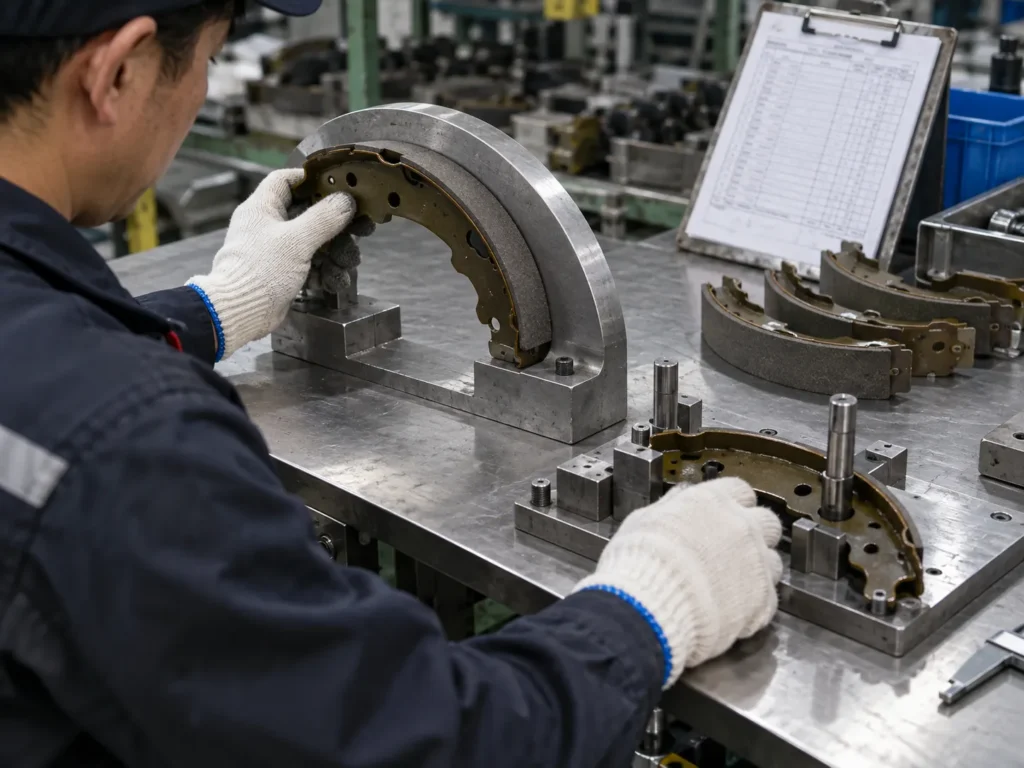
Brake Pad Manufacturing Capability
Our brake pad production process covers the critical stages required to transform friction materials and steel backing plates into finished aftermarket brake pads.
Production control focuses on material consistency, molding conditions, curing, final dimensions and product finishing.
A brake pad requires control of friction material, pressing, curing, thickness and backing-plate details.
Brake Rotor Manufacturing Capability
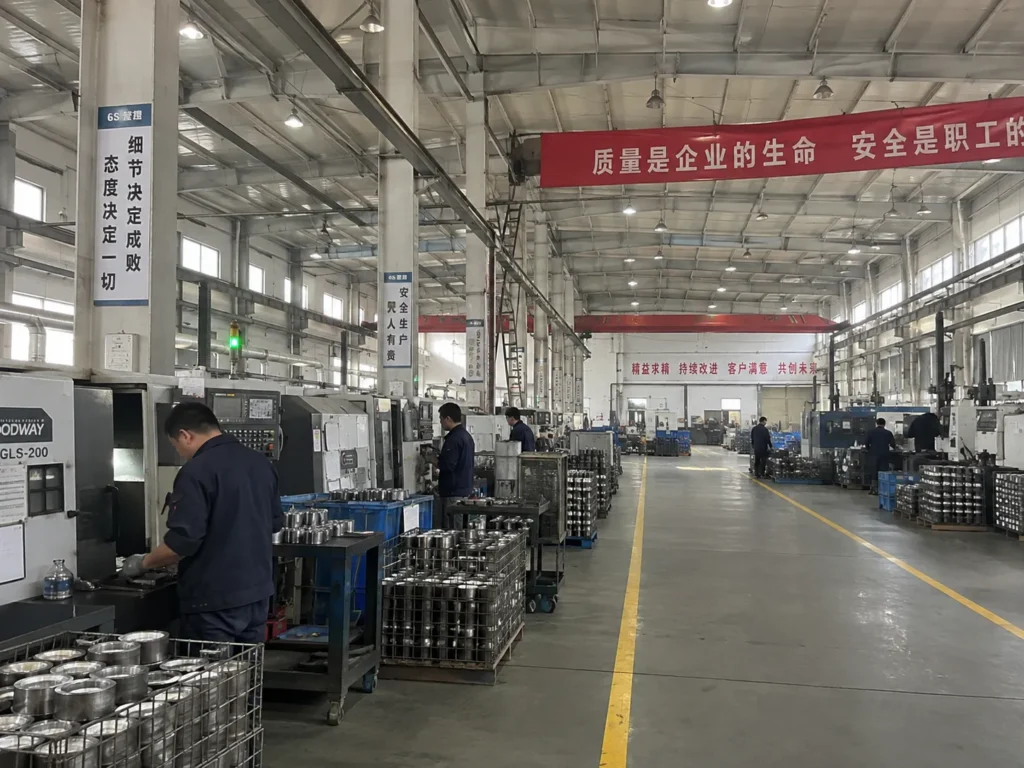
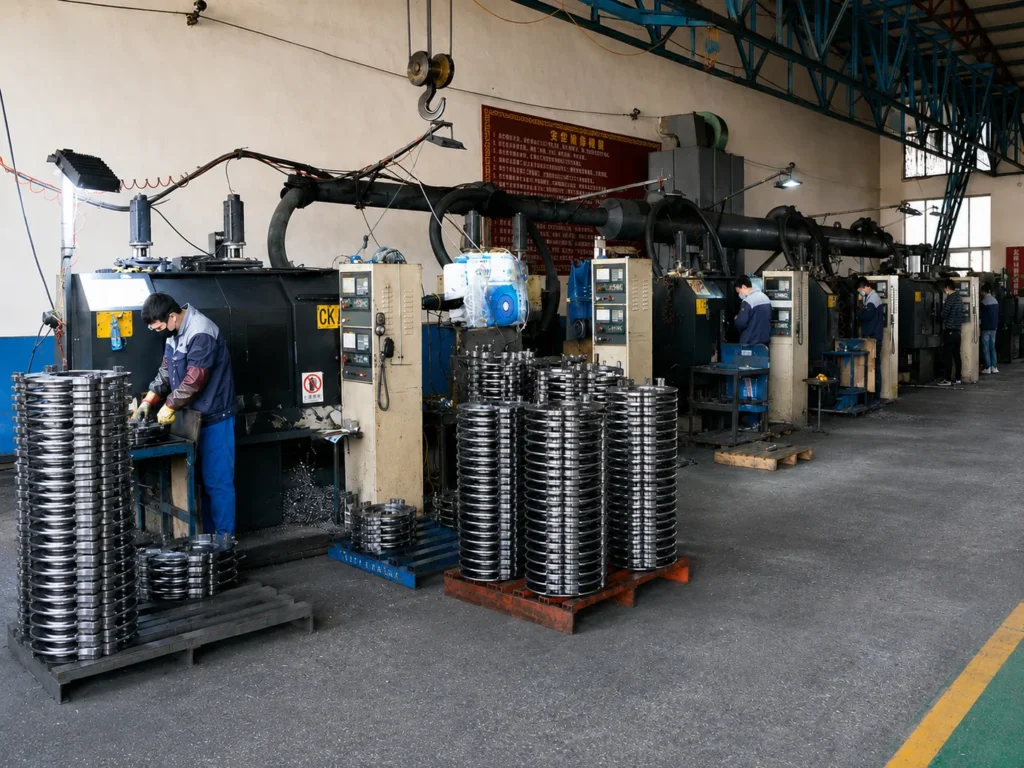
Brake rotor production combines cast components with precision machining.
The manufacturing process focuses on friction surfaces, hub mounting areas, center bore, thickness, overall geometry and surface finishing.
A brake rotor depends heavily on casting quality, machining accuracy, surface condition and geometric tolerances.
Brake Shoe Manufacturing Capability
Brake shoes require accurate steel shoe geometry and consistent friction-lining placement.
Production and inspection focus on shoe width, curvature, lining dimensions, attachment quality and fitment-related features.
A brake shoe requires consistent shoe geometry, friction-lining placement and hardware-related dimensions.
The products may all belong to the braking system, but they should not be manufactured or inspected using the same process.
Factory production areas
How Our Brake Parts Factory Is Organized
A brake parts order does not move directly from a machine into a shipping carton.
Different stages of production, inspection, storage and packaging require separate working areas so products can be controlled throughout the order.
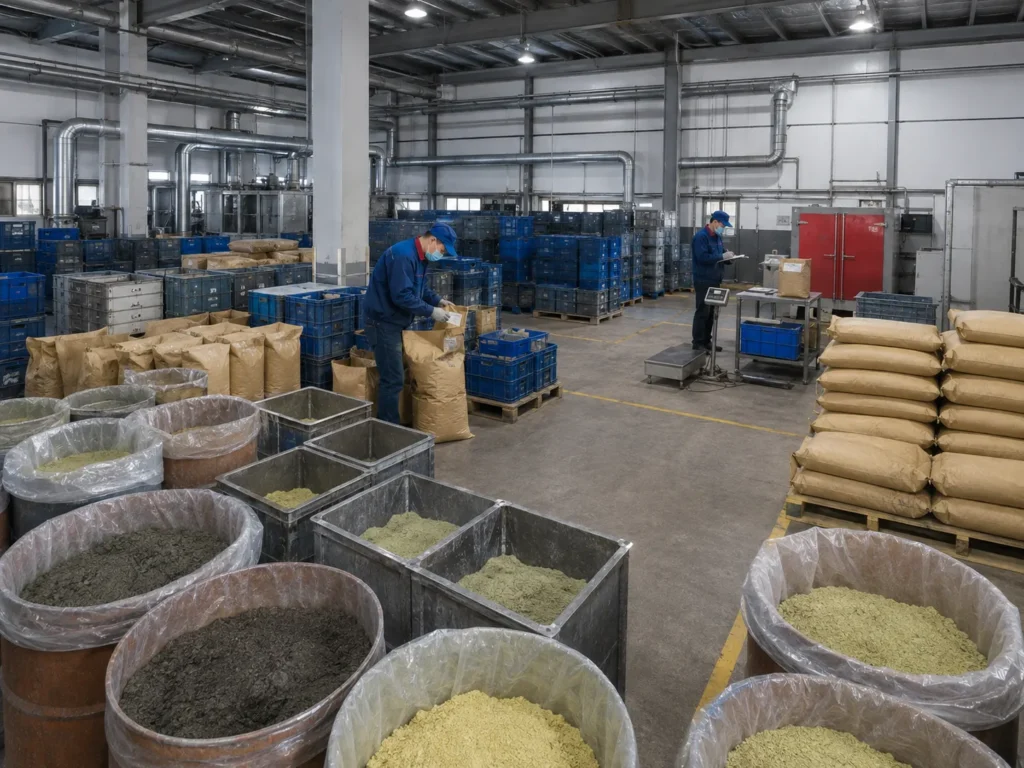
ZONE 01
Raw Material & Production Material Area
Materials and production components are organized before entering the relevant manufacturing process.
Clear material identification helps reduce the risk of incorrect materials entering a production batch.
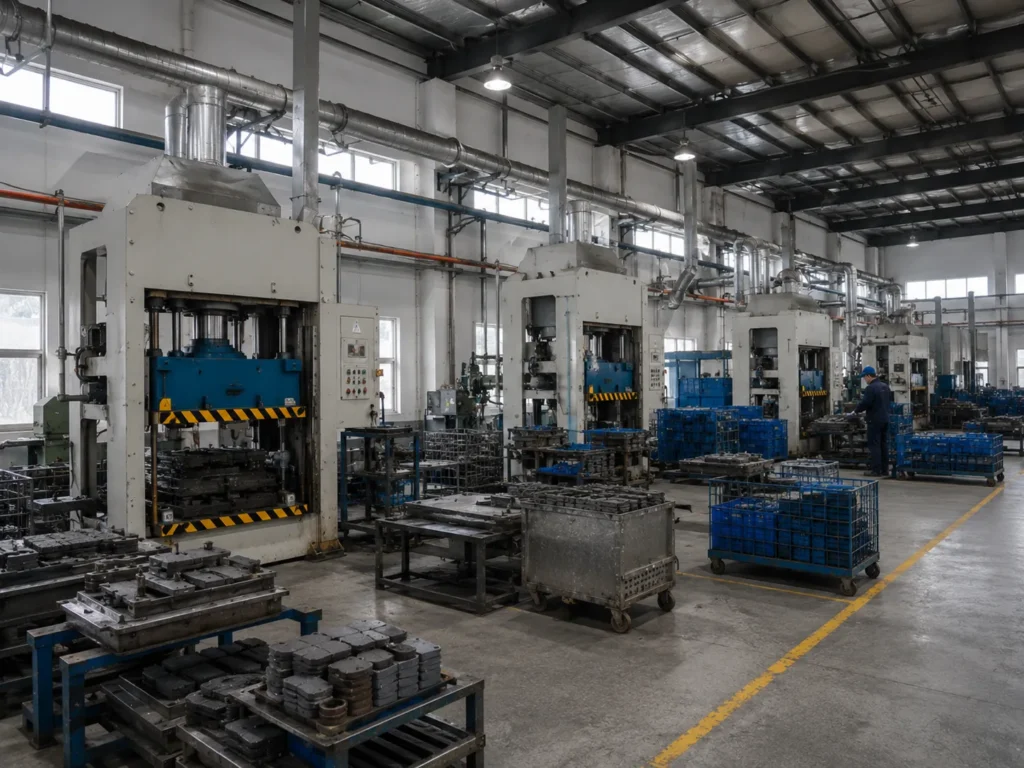
ZONE 02
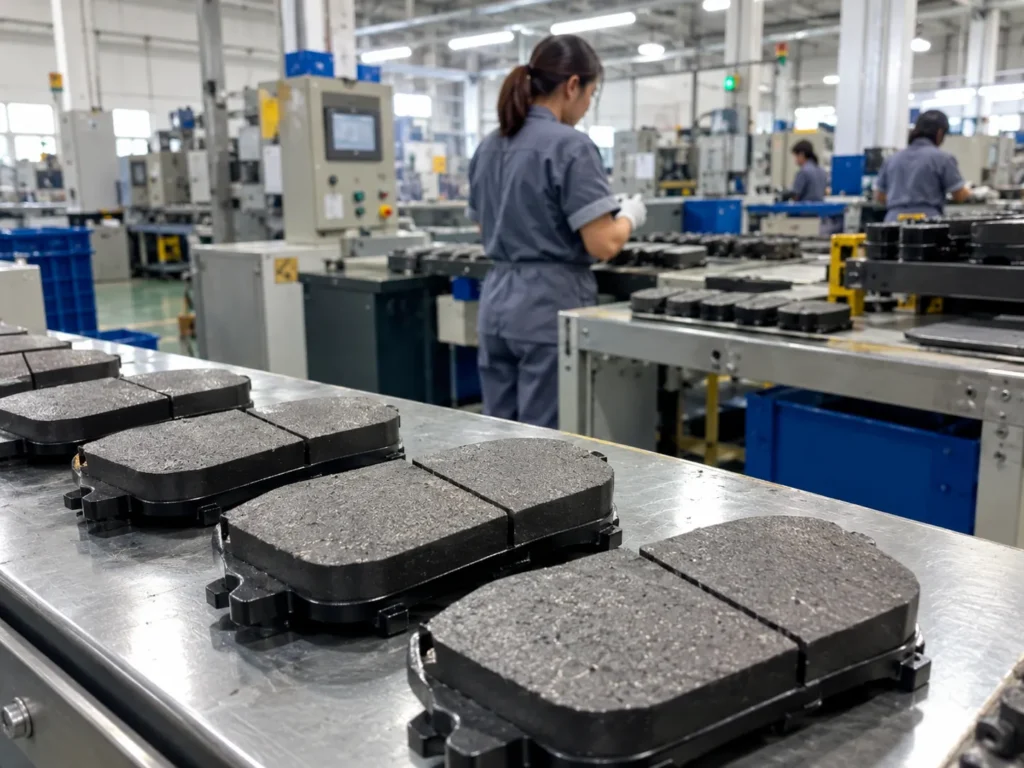
Brake Pad Production Area
This area handles the major stages involved in friction-material processing, pressing, curing and final brake pad finishing.
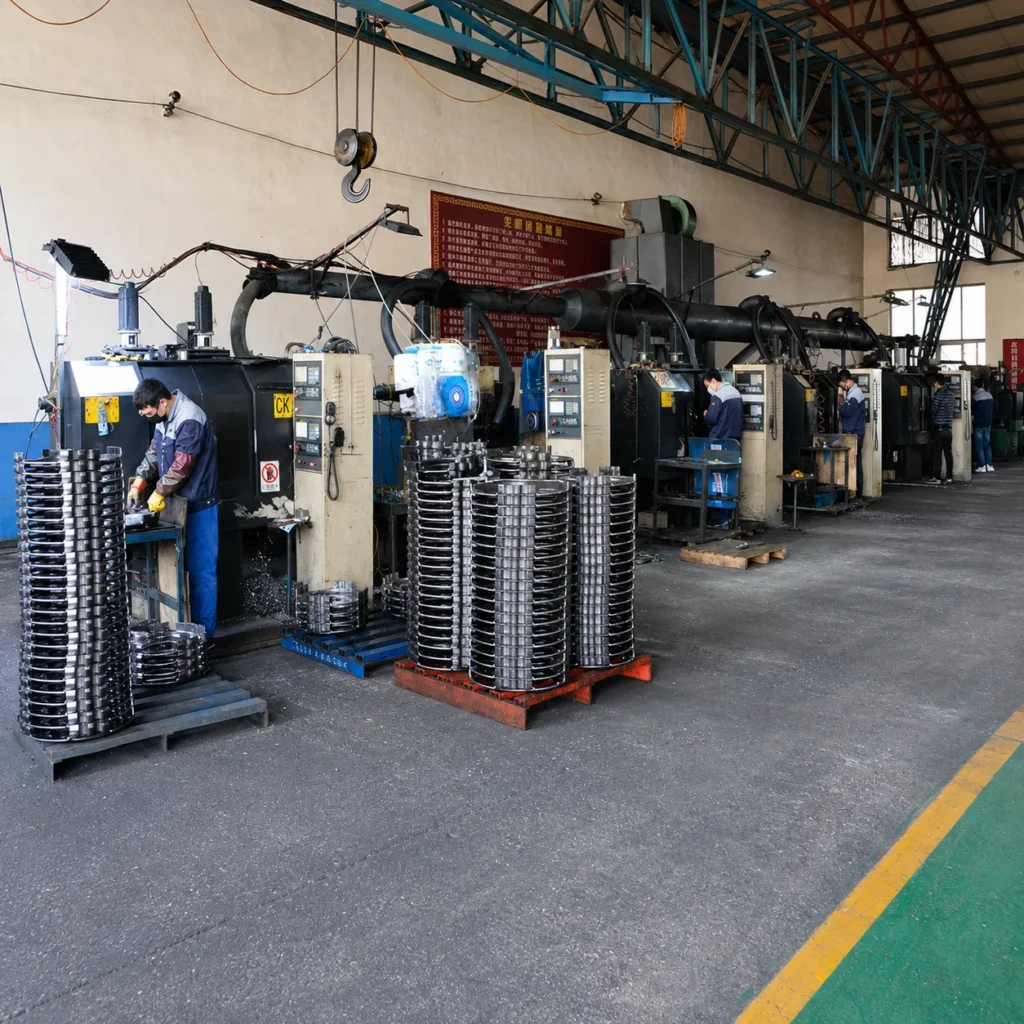
ZONE 03
Brake Rotor Machining Area
Brake rotor production requires machining equipment capable of controlling critical surfaces and dimensions.
This area includes rotor processing, machining and related production operations.
ZONE 04
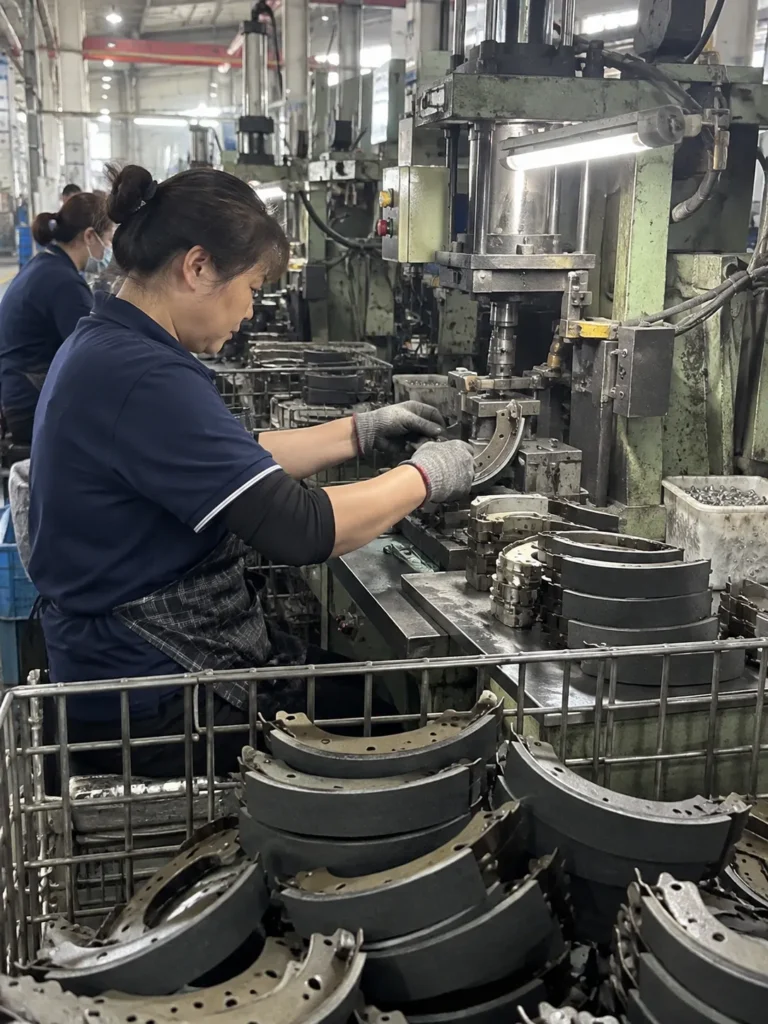
Brake Shoe Production & Finishing Area
The brake shoe area focuses on steel shoe preparation, lining processing, finishing and dimensional consistency.
ZONE 05
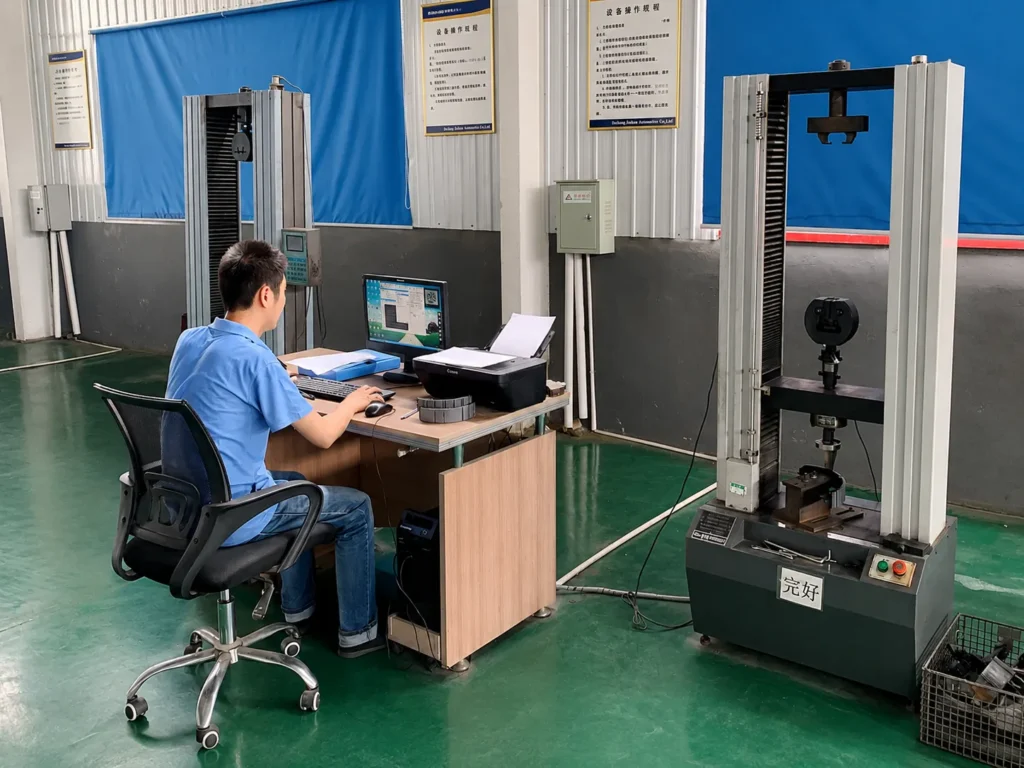
Quality Inspection Area
Products move through relevant inspections before final packing.
Inspection requirements vary according to the product category.
ZONE 06
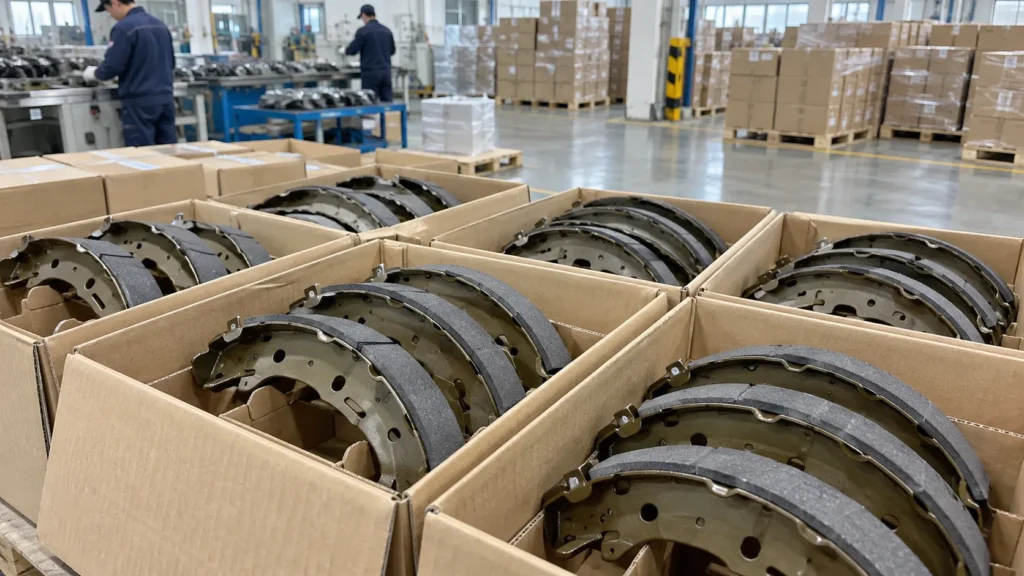
Packaging & Order Preparation Area
Finished brake parts are matched with the confirmed SKU, label and packaging requirements.
ZONE 07
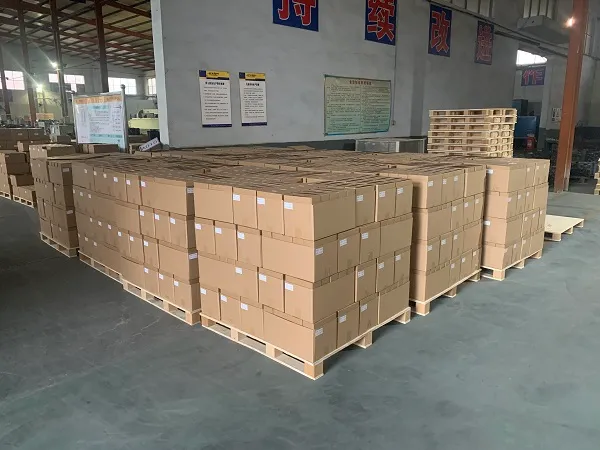
Finished Product Warehouse
Products are organized before final order consolidation and shipment.
Multi-SKU orders require clear identification so different part numbers remain separated.
Brake pad production line
How Are Brake Pads Made? Our Brake Pad Manufacturing Process
Brake pad performance begins long before the product reaches final inspection.
The friction formulation, material distribution, molding conditions, heat treatment and final dimensions all affect product consistency.
Our brake pad manufacturing process is controlled in stages so potential problems can be identified before the finished products are packed.
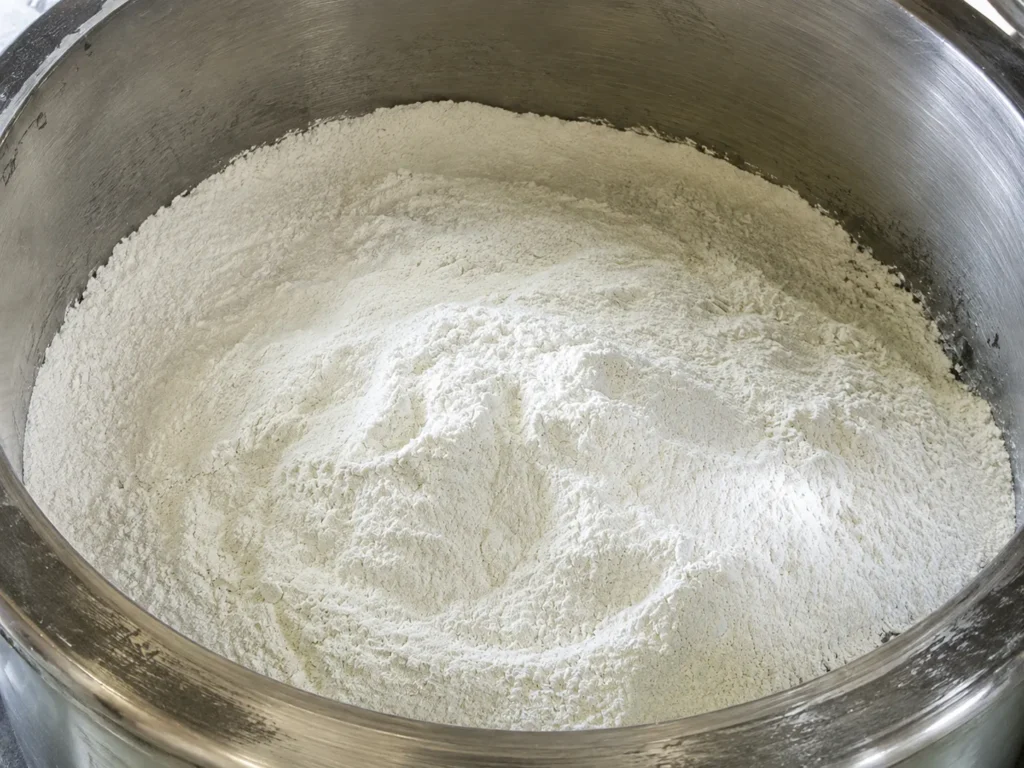
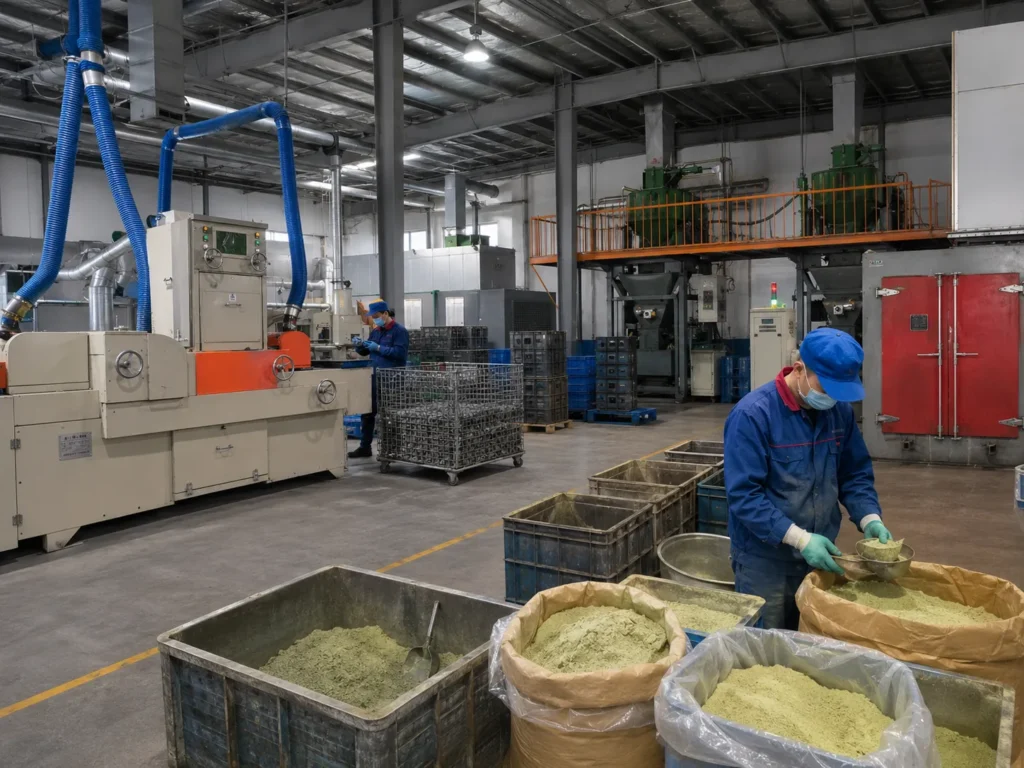
1. Raw Material Preparation
Brake pad friction materials contain multiple ingredients that perform different functions during braking.
Materials are prepared according to the required friction formulation before entering the mixing process.
Accurate material preparation helps maintain better consistency between production batches.
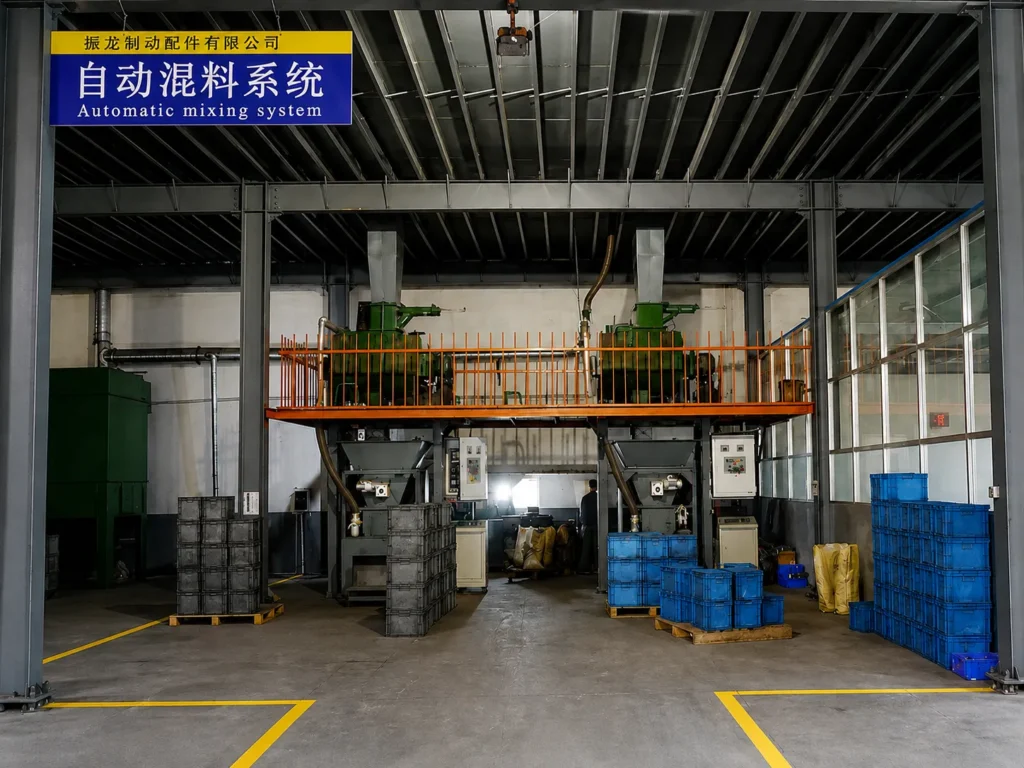
2. Friction Material Mixing
The prepared materials are mixed into a brake pad compound with a more uniform distribution of ingredients.
Mixing consistency matters because uneven material distribution can later influence friction behavior, wear and product stability.
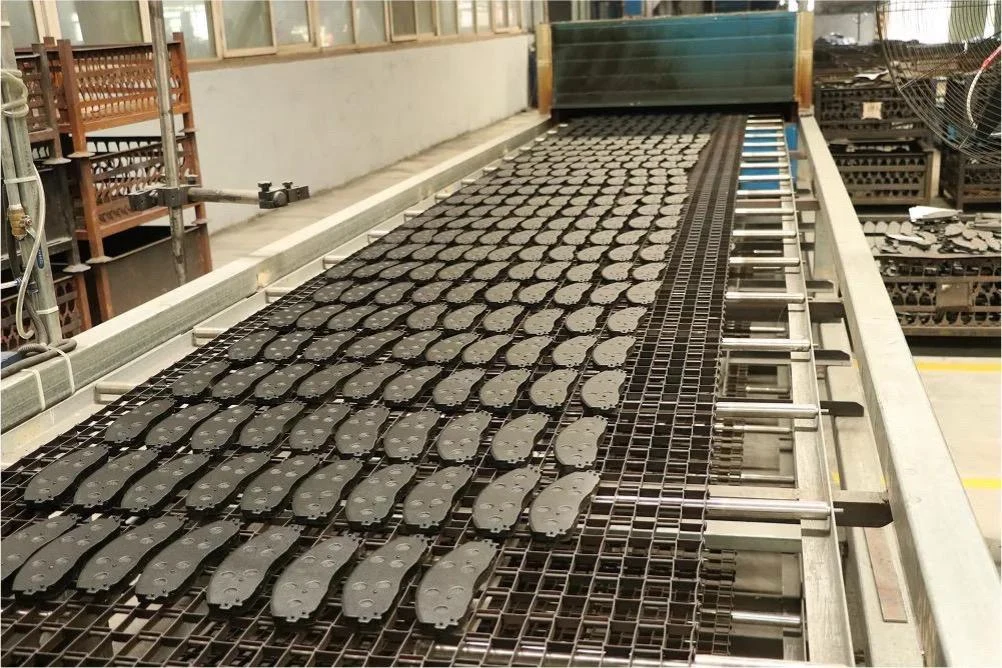
3. Backing Plate Preparation
The steel brake pad backing plate provides the structural support for the friction block.
Before pressing, backing plates are prepared and checked according to the required product design.
Key areas can include
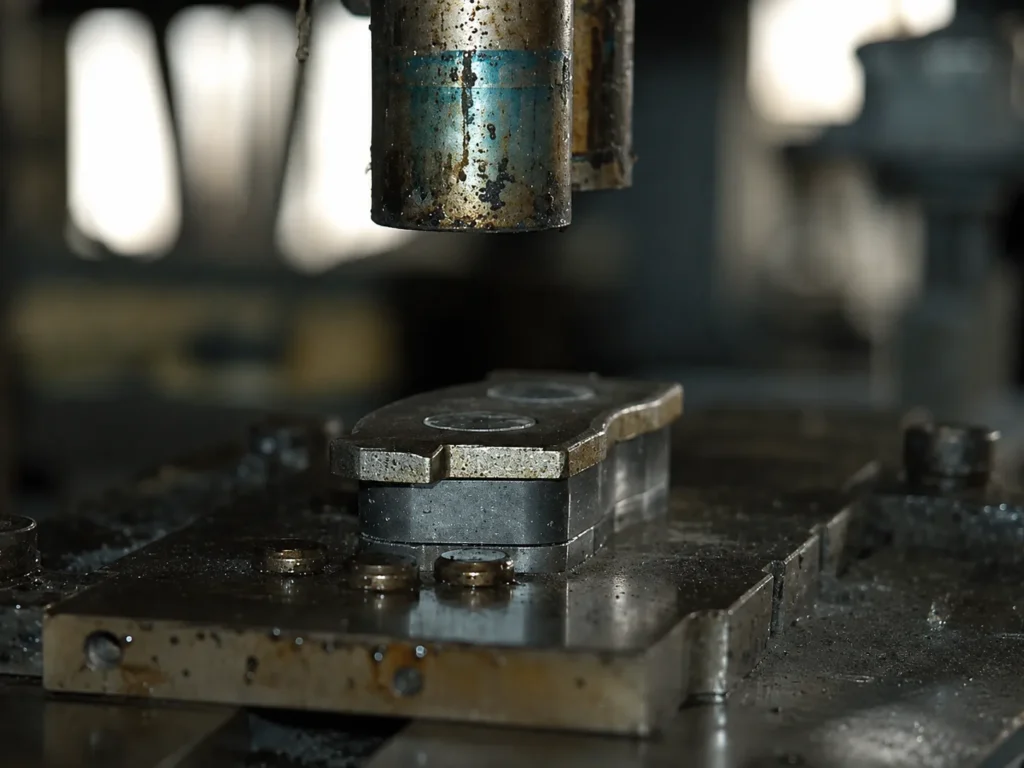
4. Hot Pressing
The friction material is formed together with the backing plate under controlled temperature, pressure and time.
This is one of the critical production stages because molding conditions influence the structure and density of the finished friction block.
5. Heat Treatment
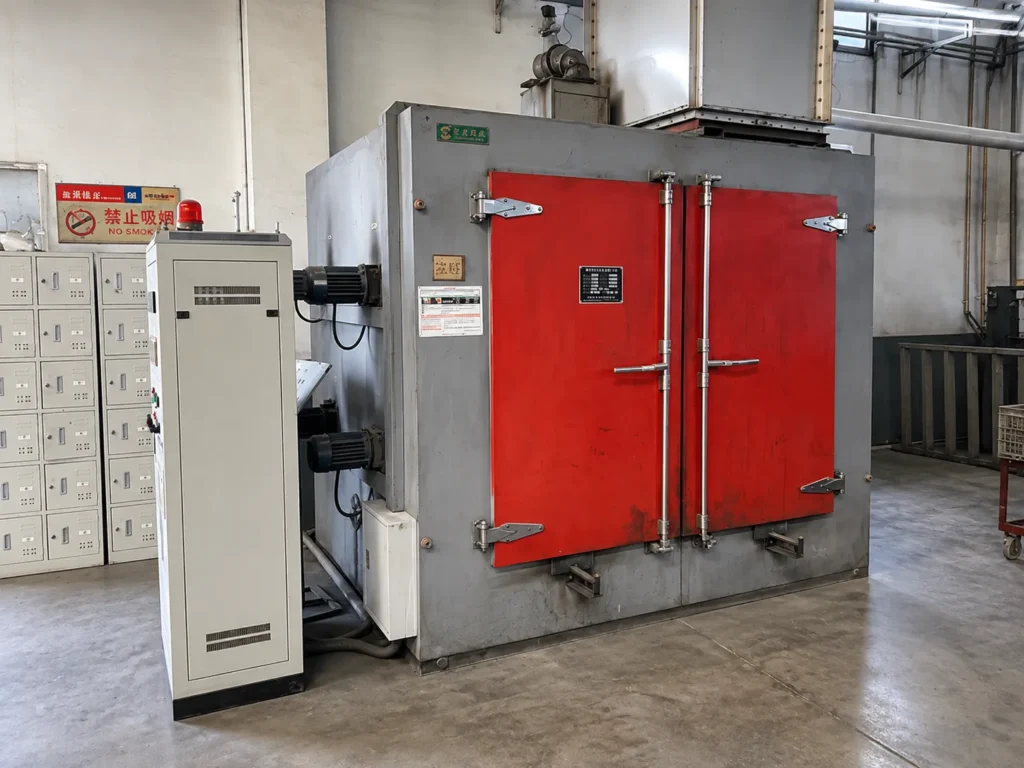
After pressing, brake pads undergo controlled heat treatment according to the required process.
Heat treatment helps complete curing and stabilize the friction material before later finishing operations.
6. Grinding
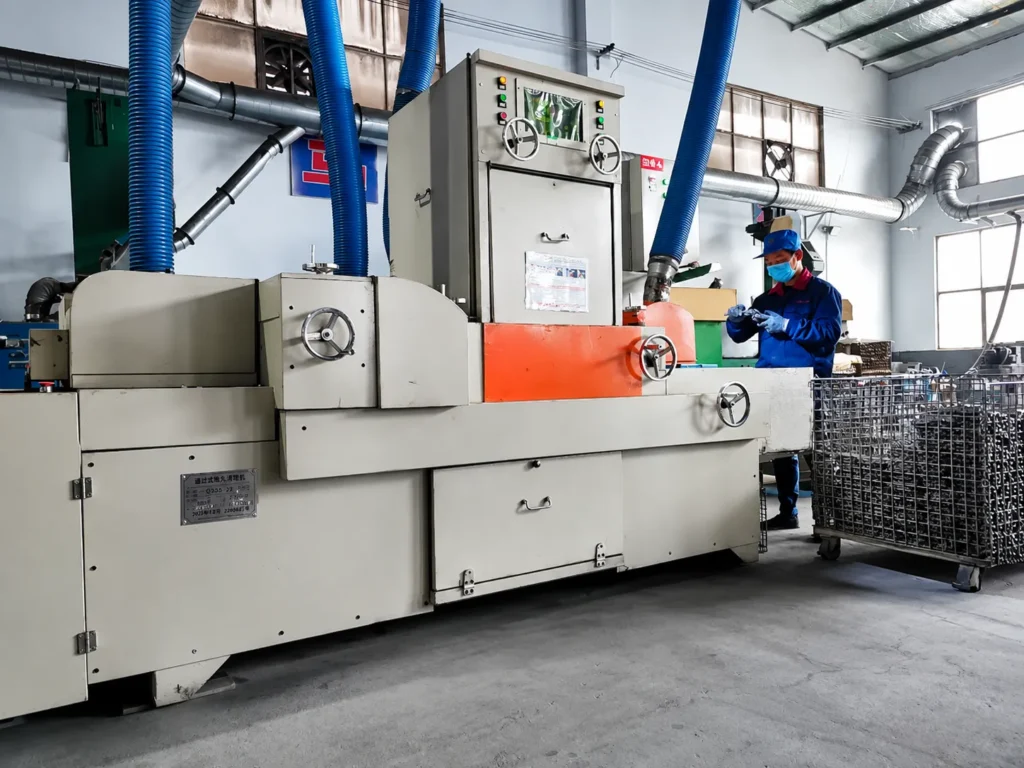
Brake pads are ground to the required final thickness and surface condition.
Thickness consistency is important for fitment and for maintaining a predictable relationship between the brake pad and caliper.
7. Chamfers & Slots
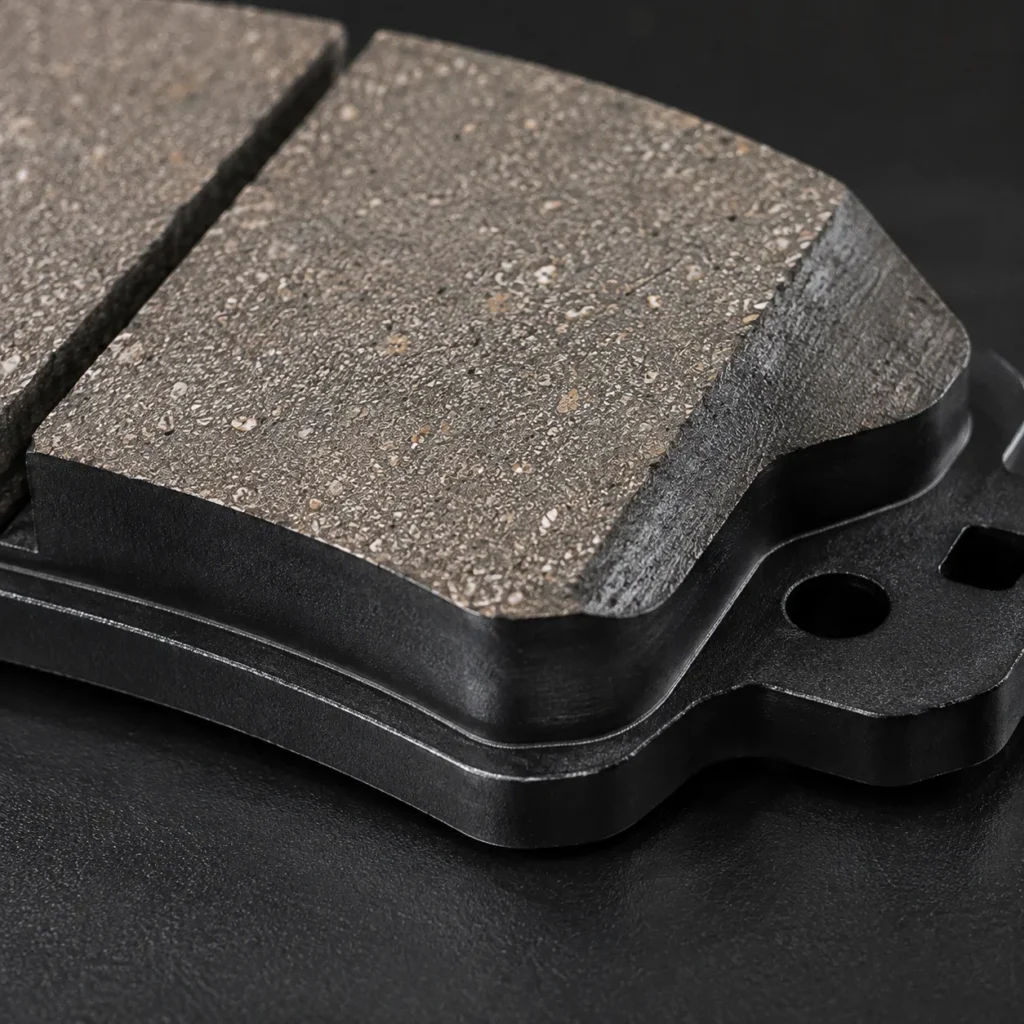
Where required by the product design, chamfers and slots are processed according to the application.
These features are part of the complete brake pad design rather than decorative details.
8. Shim & Product Finishing
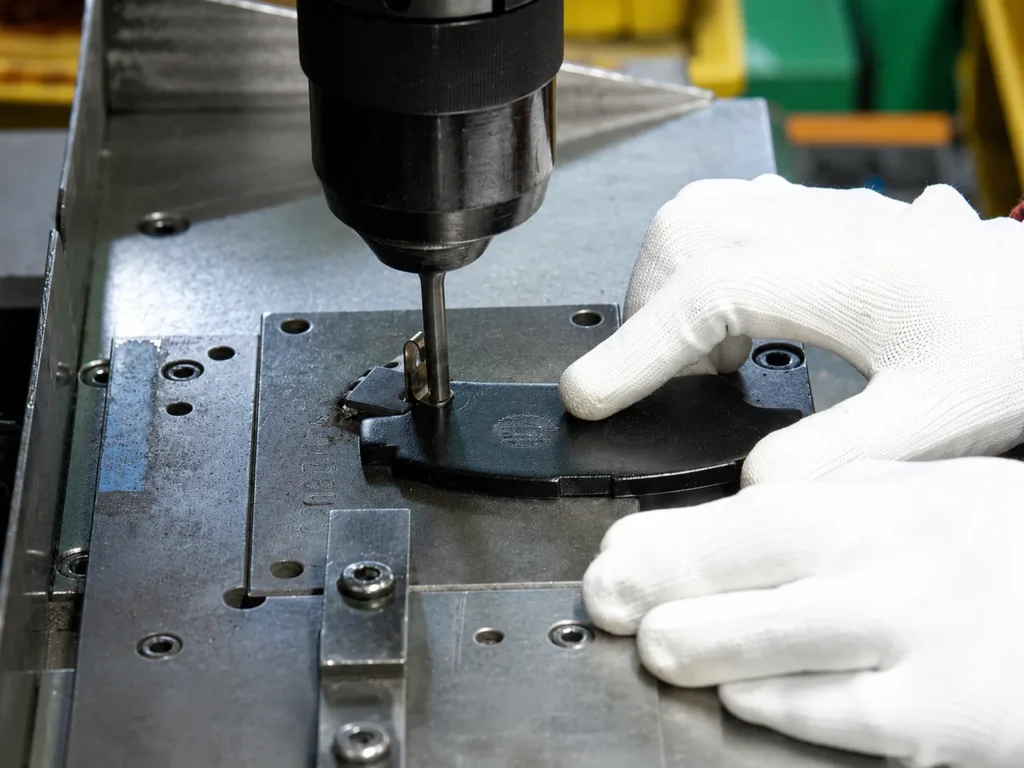
Shims, markings and other required product features are added according to the brake pad specification.
The finished product is then prepared for inspection.
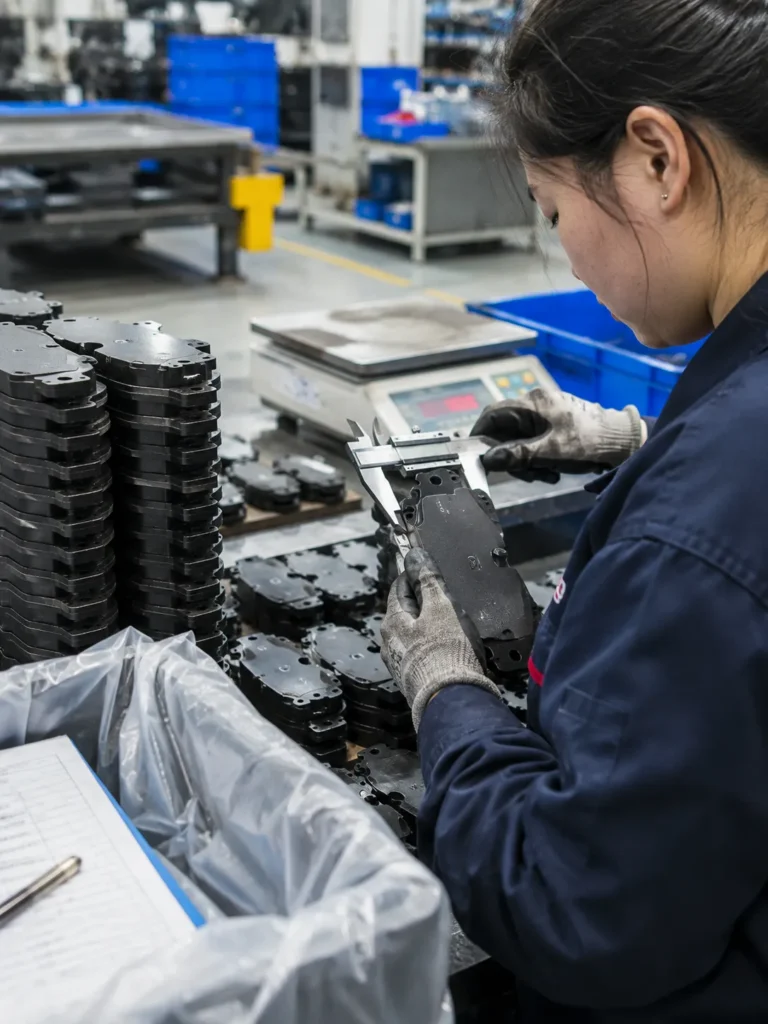
9. Final Brake Pad Inspection
Before packaging, brake pads are checked for the relevant product and order requirements. The finished range is shown on our brake pads page.
Typical inspection points can include
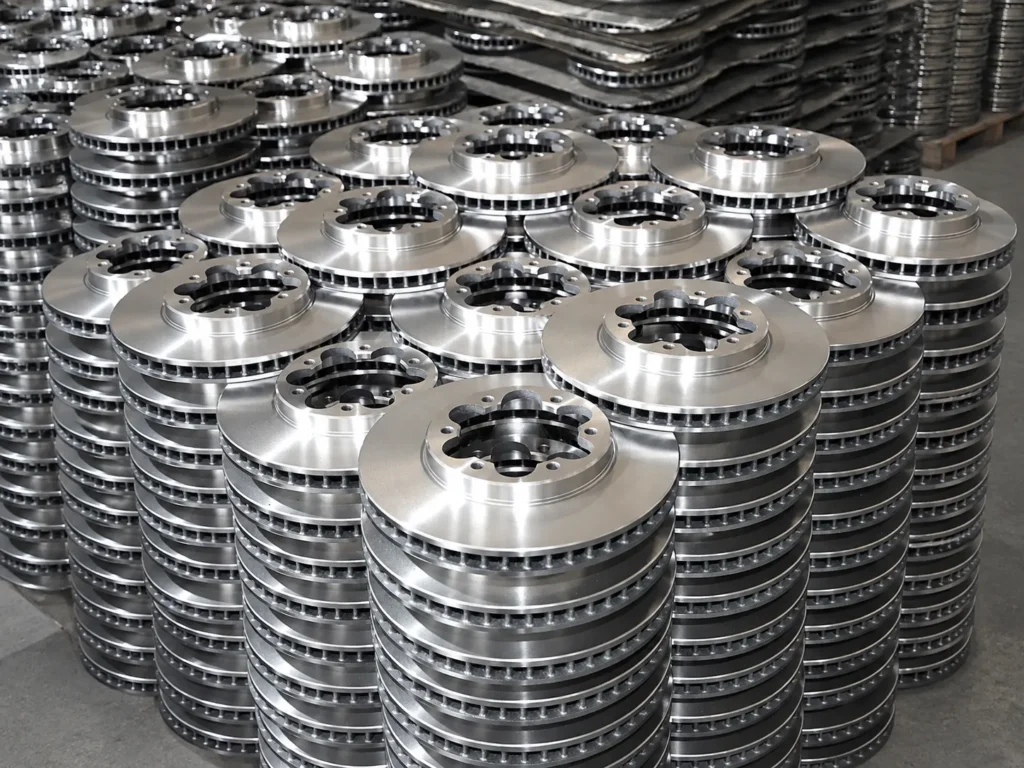
Brake rotor production
How Are Brake Rotors Made? Precision Machining for Brake Rotors
A brake rotor may appear simple, but several geometric characteristics can directly affect fitment and braking behavior.
For this reason, our brake rotor manufacturing process depends heavily on machining accuracy and dimensional control. You can compare the finished solid and vented brake rotors on the product page.
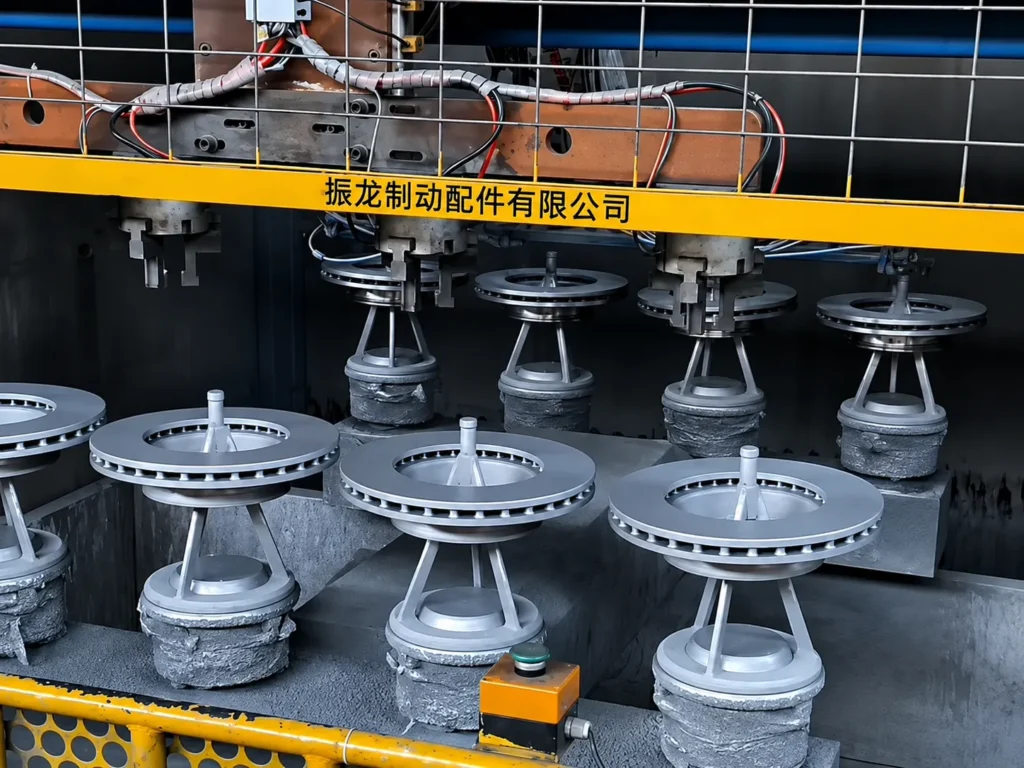
The objective is not only to make the rotor look correct.
The friction surfaces, mounting face, center bore and overall geometry must remain within the required product specification.
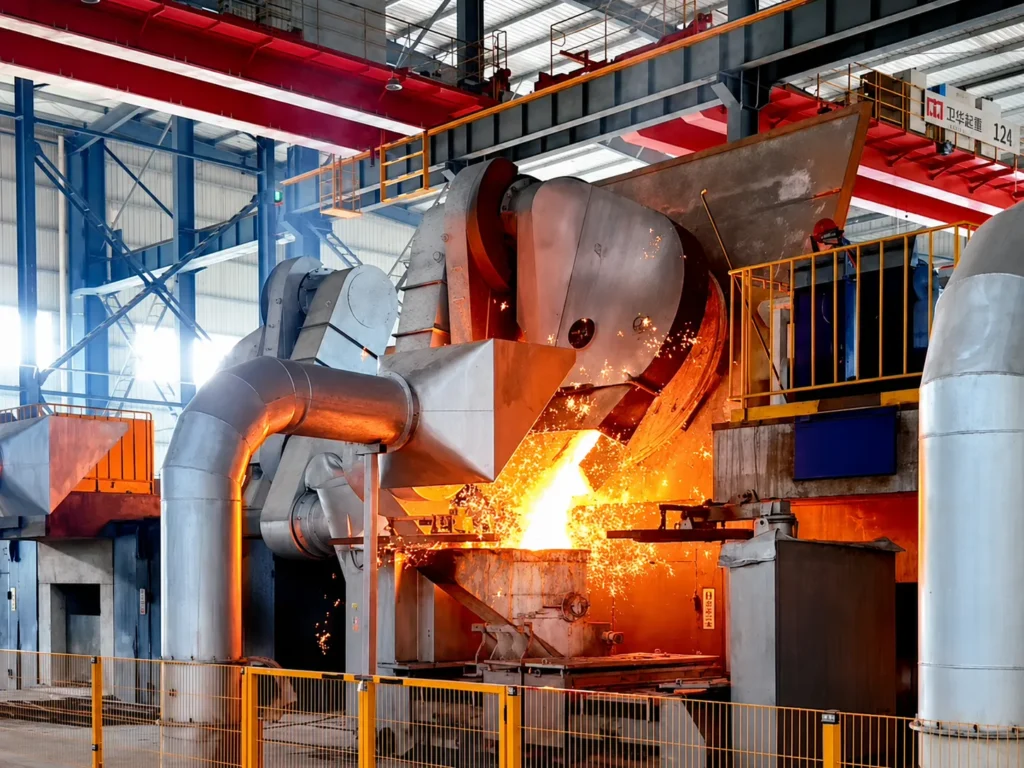
Rotor Blank Inspection
Before precision machining, the rotor blank is reviewed for obvious casting and structural issues.
The quality of the starting component provides the foundation for later machining.
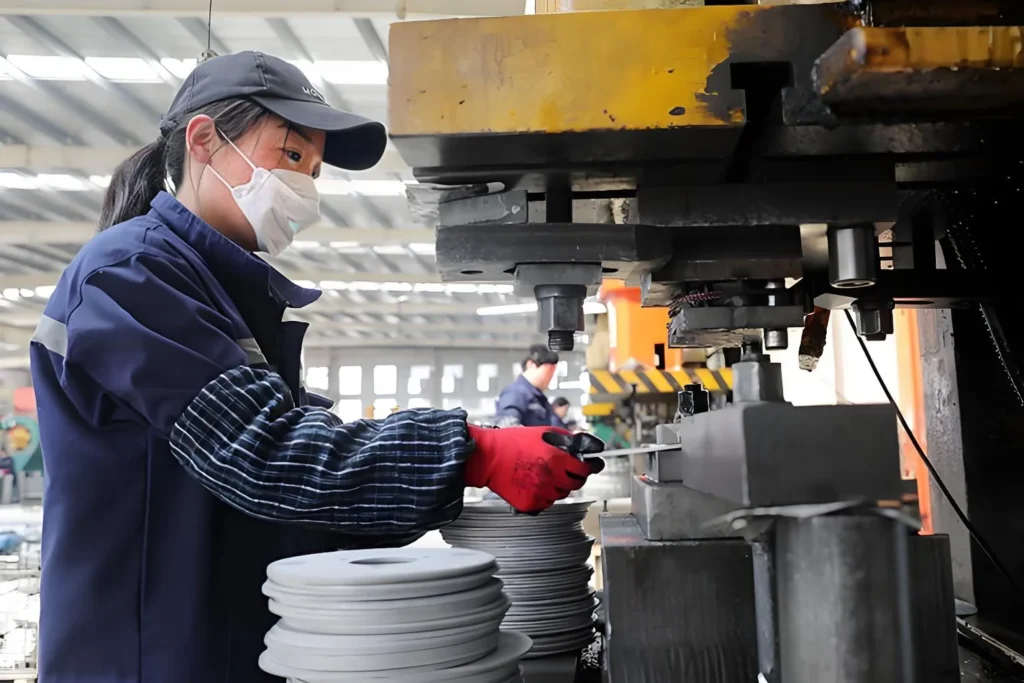
Rough Machining
Initial machining establishes the main geometry of the brake rotor and prepares the component for more precise finishing.
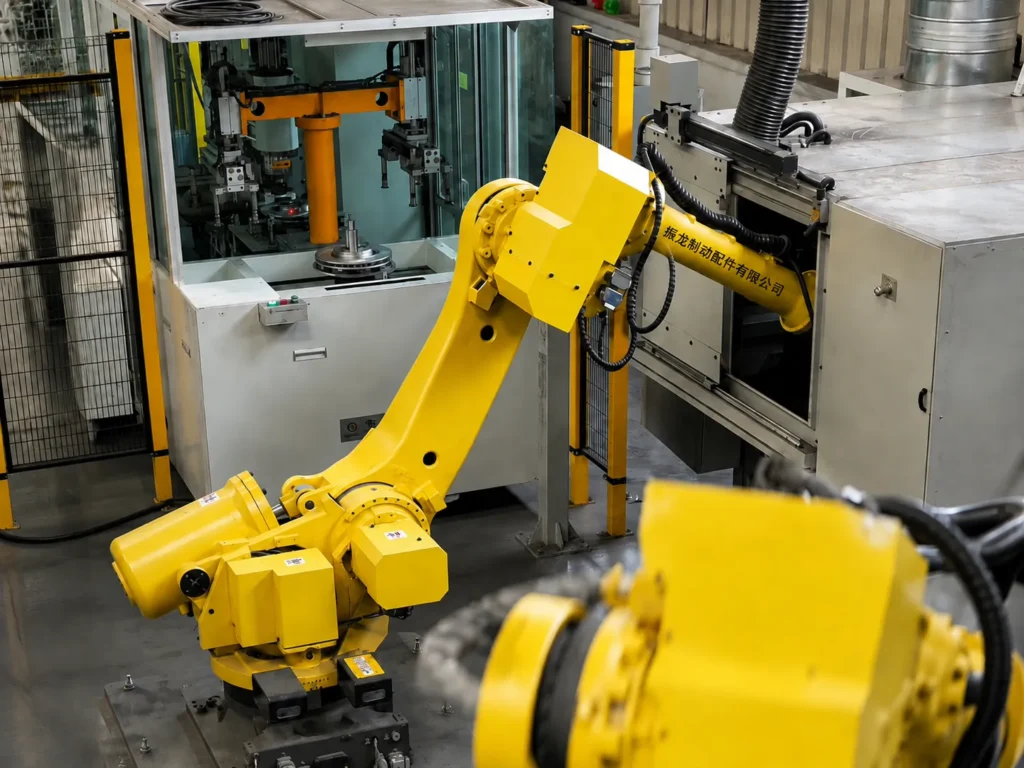
Precision CNC Machining
Critical brake rotor areas are machined to the required dimensions. These can include:
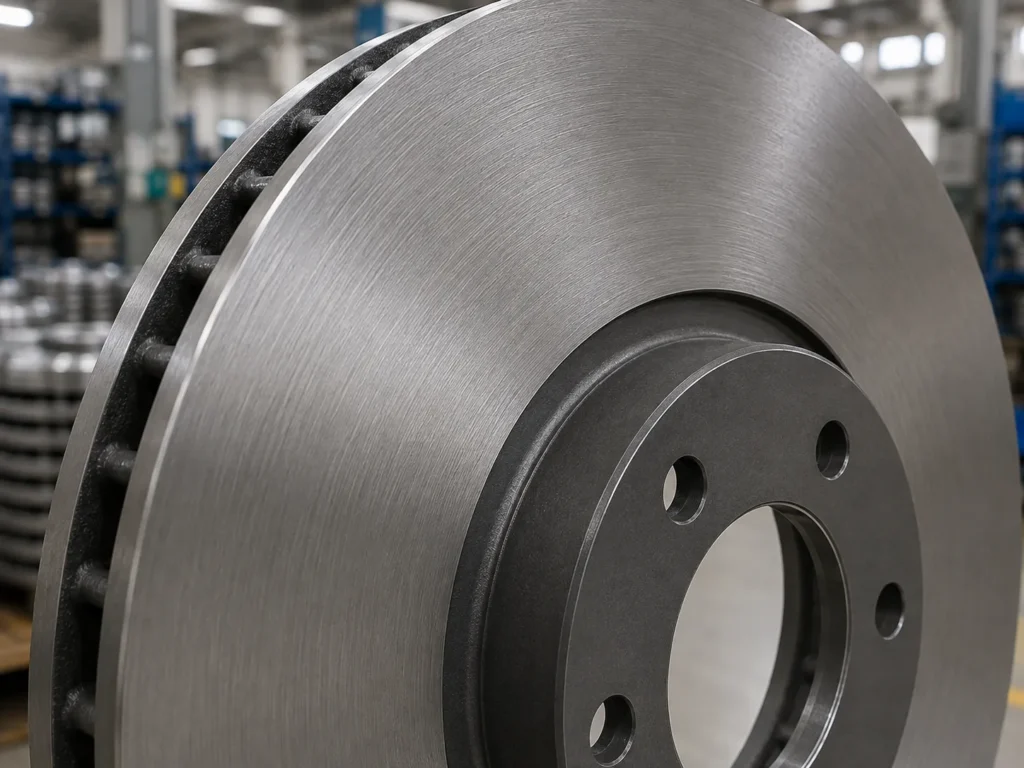
Friction Surface Finishing
The friction surface is finished to provide a consistent braking surface for contact with the brake pad.
Surface quality is visually and dimensionally important.
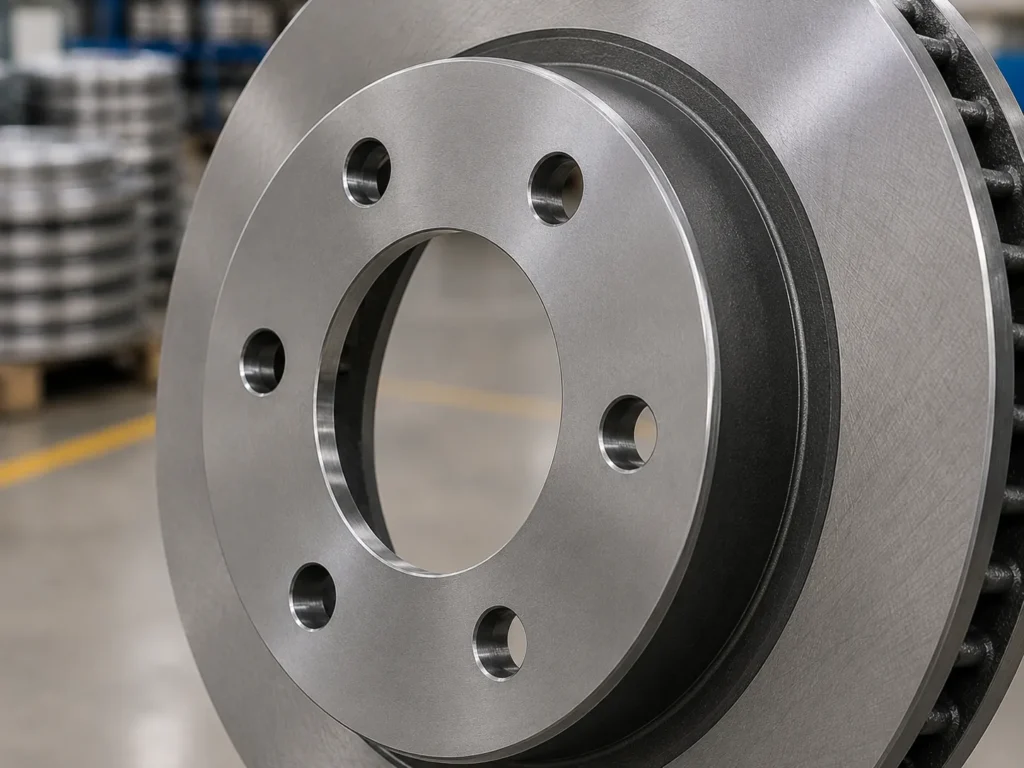
Hub Mounting Face Control
The hub mounting surface determines how the brake rotor sits against the vehicle hub.
Machining consistency in this area is particularly important because mounting errors can contribute to installed runout.
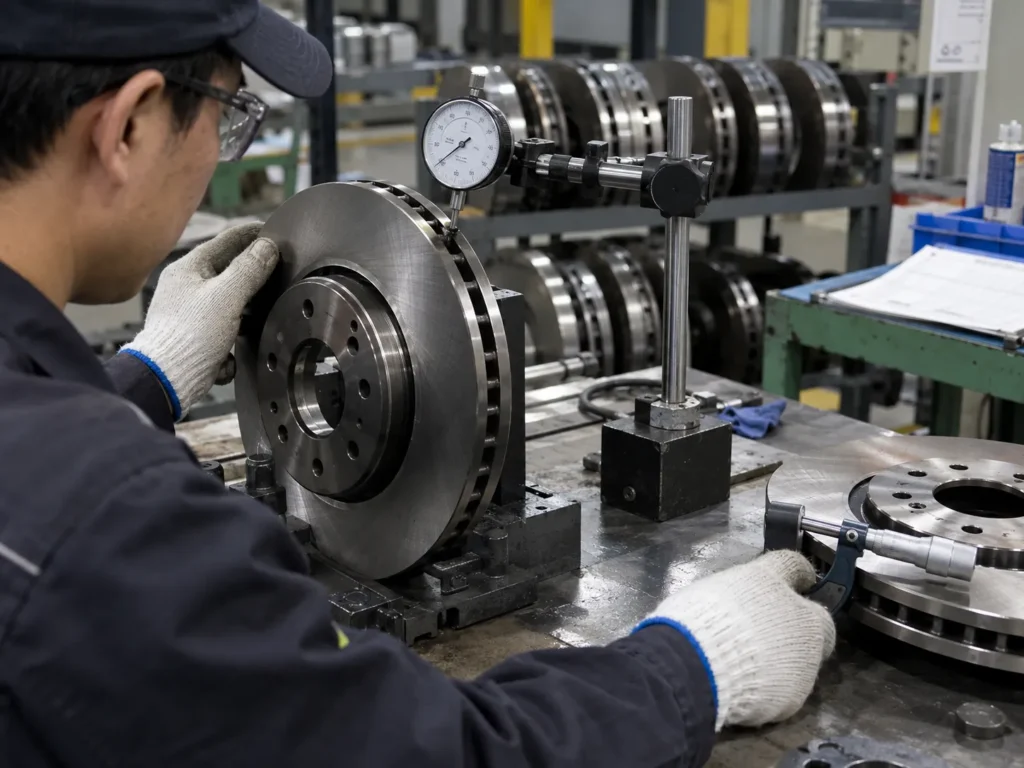
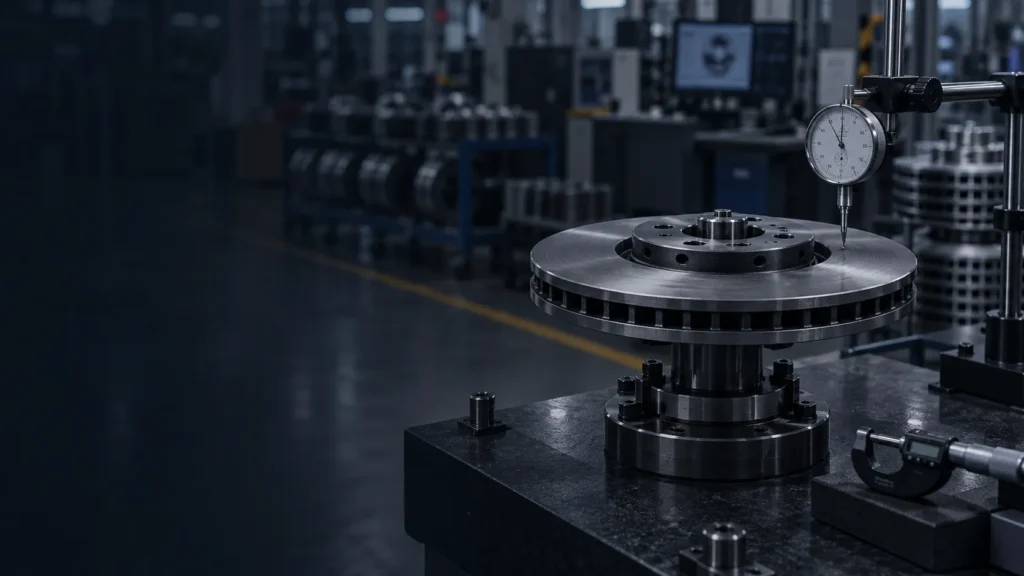
Runout Inspection
Rotor runout is checked to evaluate lateral movement of the friction surfaces.
Excessive runout can contribute to uneven contact, vibration and the later development of thickness variation.
DTV Inspection
Disc Thickness Variation measures differences in rotor thickness around the friction ring.
DTV is checked separately from runout because the two measurements describe different geometric conditions.
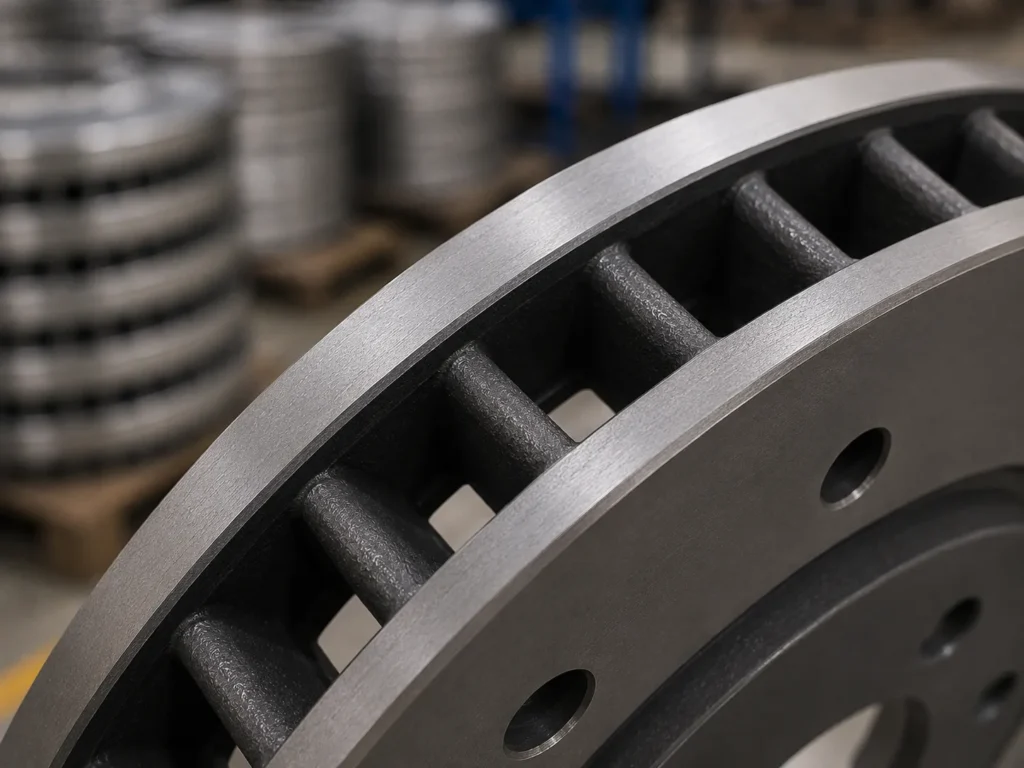
Cooling Vane Inspection
For vented brake rotors, internal cooling vanes are also visually inspected. Inspection can focus on:
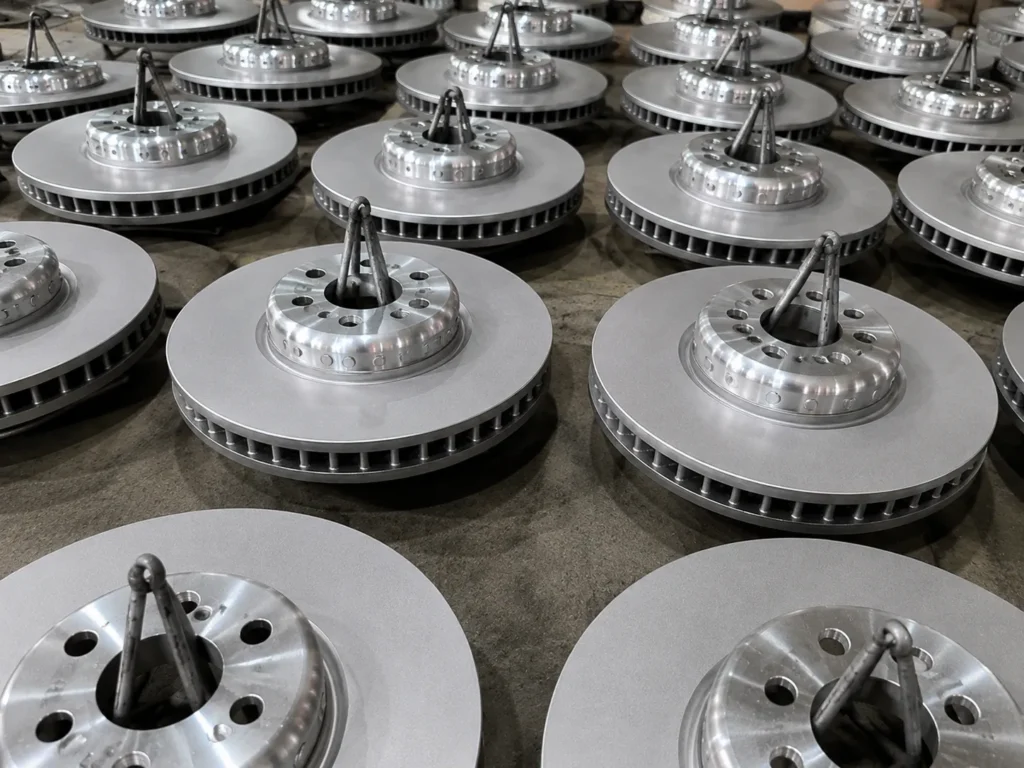
Rust-Preventive Oil & Surface Protection
Finished rotors receive rust-preventive oil on the machined surfaces to improve corrosion resistance during storage and shipment.
Brake shoe production
Brake Shoe Manufacturing With Fitment-Critical Geometry Control
Brake shoes are often judged only by the friction lining, but the steel shoe geometry is equally important.
Two brake shoes can look similar in a photograph while differing in width, curvature, spring-hole locations or lining dimensions.
Our brake shoe manufacturing process and inspection therefore focus on both the friction material and the structure that determines fitment.

STEP 01
Steel Shoe Preparation
The steel shoe body is prepared according to the required shape and product specification.
The shoe provides the structural base for the friction lining.
STEP 02
Surface Preparation
The shoe surface is prepared before lining attachment to support the required manufacturing process.
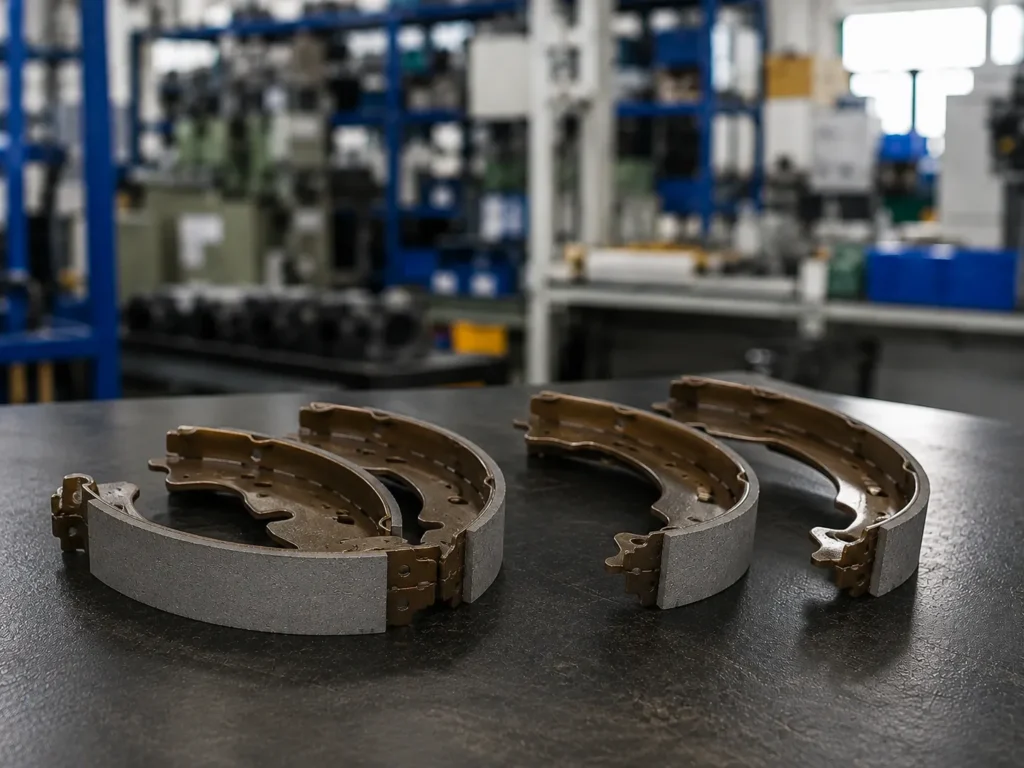
STEP 03
Friction Lining Preparation
The friction lining is processed according to the brake shoe design.
Important characteristics can include
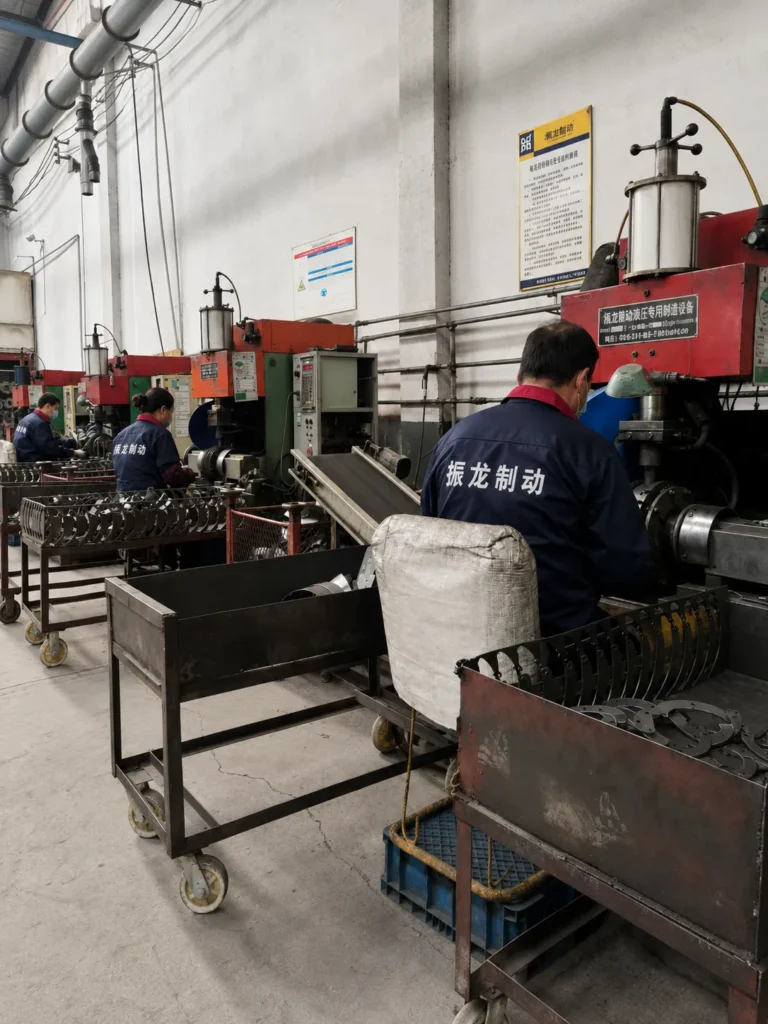
STEP 04
Lining Attachment
The friction lining is attached to the steel shoe body according to the product design and production process.
Attachment stability is an important part of brake shoe quality.
STEP 05
Grinding & Finishing
The finished brake shoe is processed to achieve the required dimensions and surface condition.
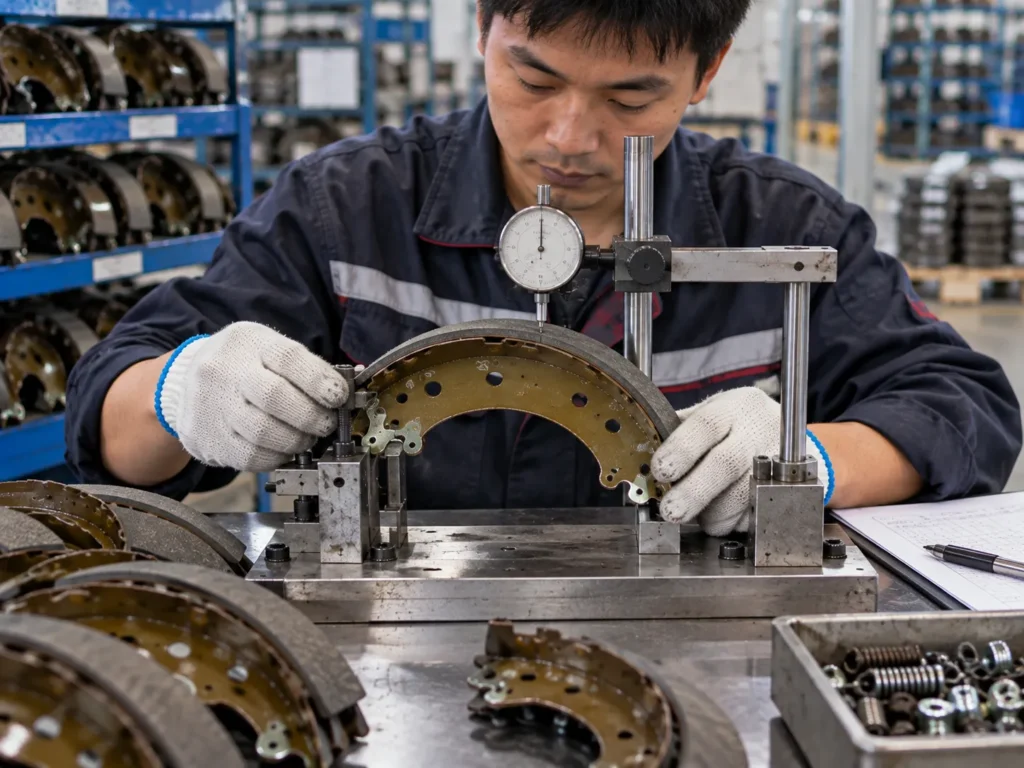
STEP 06
Geometry Inspection
Fitment-related characteristics are checked against the product specification.
Inspection can include
STEP 07
Final Set Verification
Before packing, the correct components and product references are checked to reduce the risk of mixed or incorrectly labeled brake shoe sets. The finished drum brake shoes are listed on the product page.
Production equipment
Production Equipment Behind Our Brake Parts
A machine photograph alone does not explain factory capability.
The more important question is what the equipment helps control in the finished product.
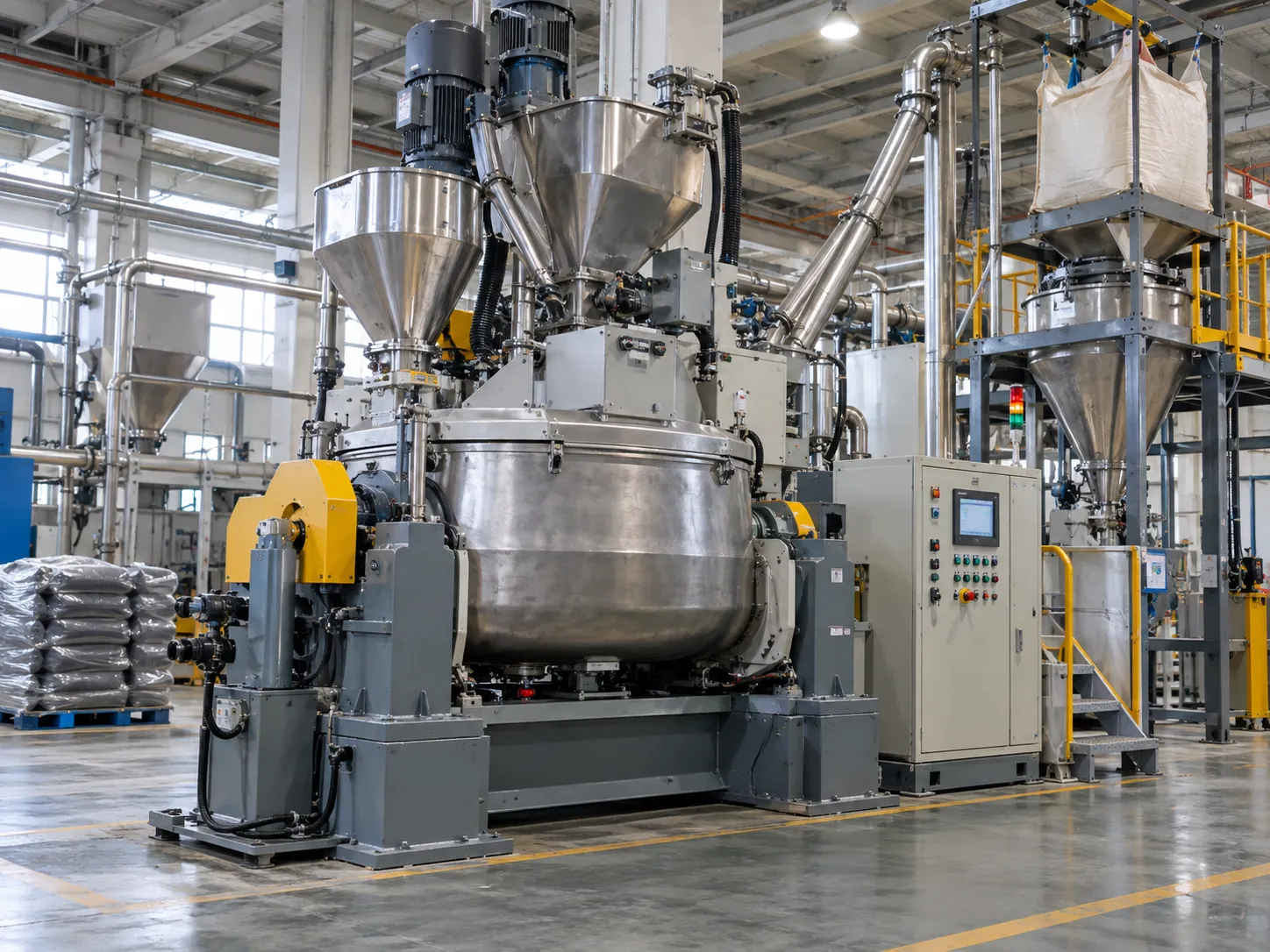
Mixing equipment
EQ-01 · BRAKE PADS
Friction Material Mixing Equipment
Used during brake pad material preparation.
What It SupportsMore consistent material distribution before pressing.
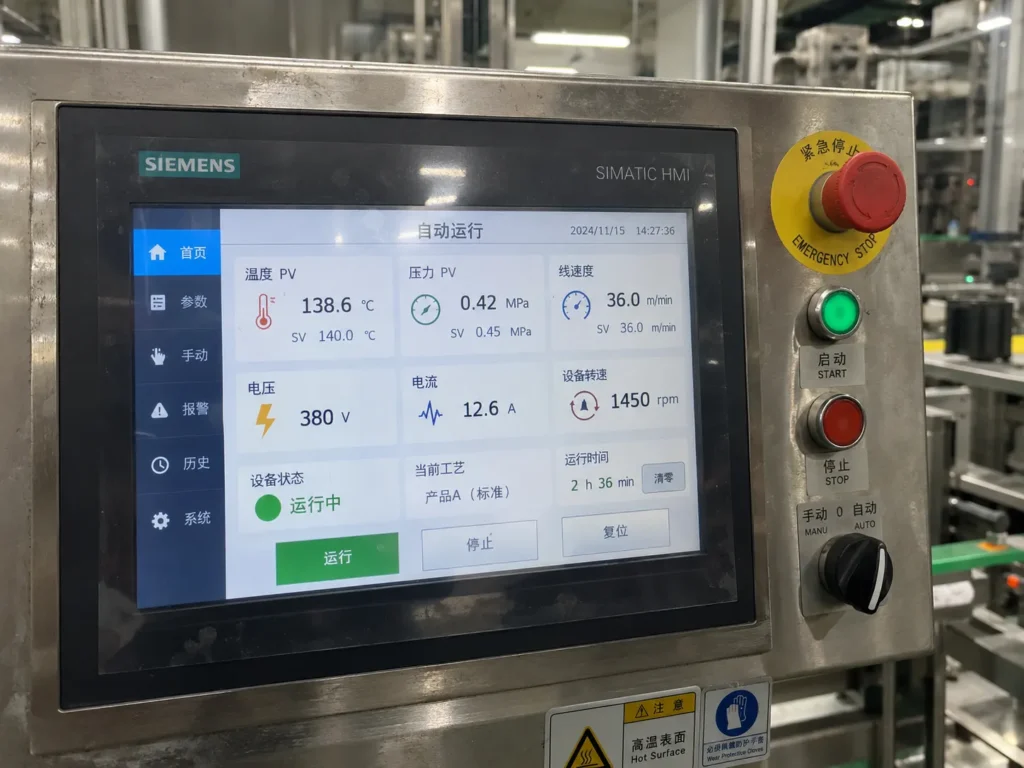
EQ-02 · BRAKE PADS
Brake Pad Hot Press Equipment
Used to form friction material onto the backing plate.
What It SupportsControlled molding pressure, temperature and production conditions.
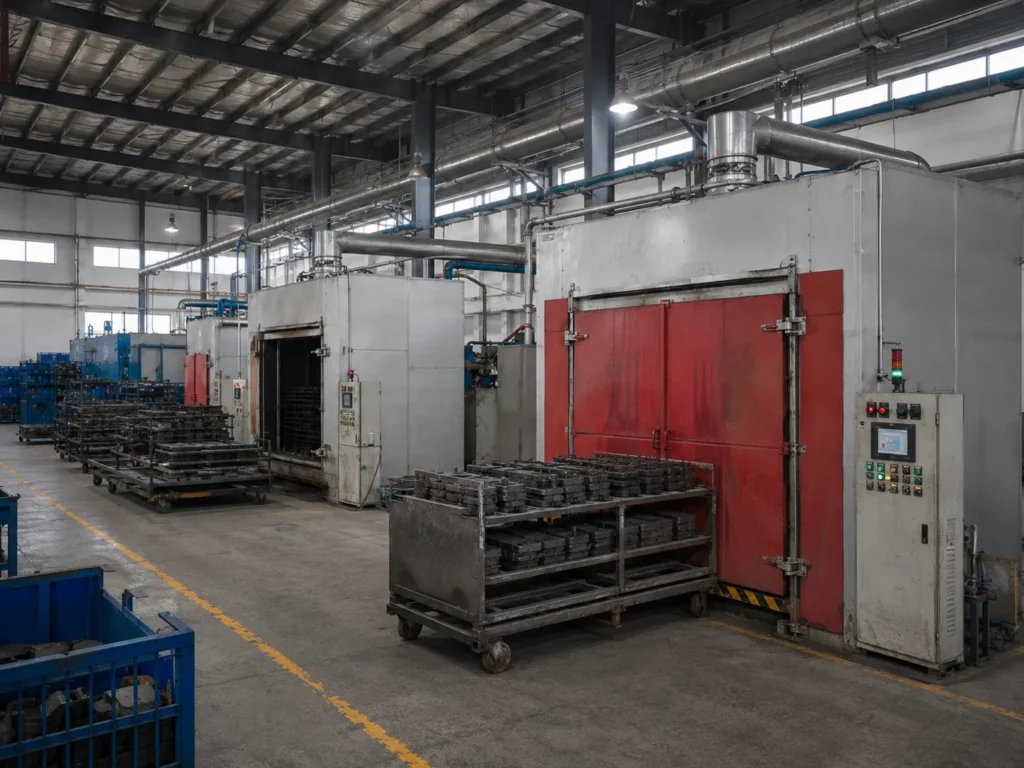
EQ-03 · BRAKE PADS
Heat Treatment Equipment
Used during the curing and stabilization process.
What It SupportsMore consistent thermal treatment across the production batch.
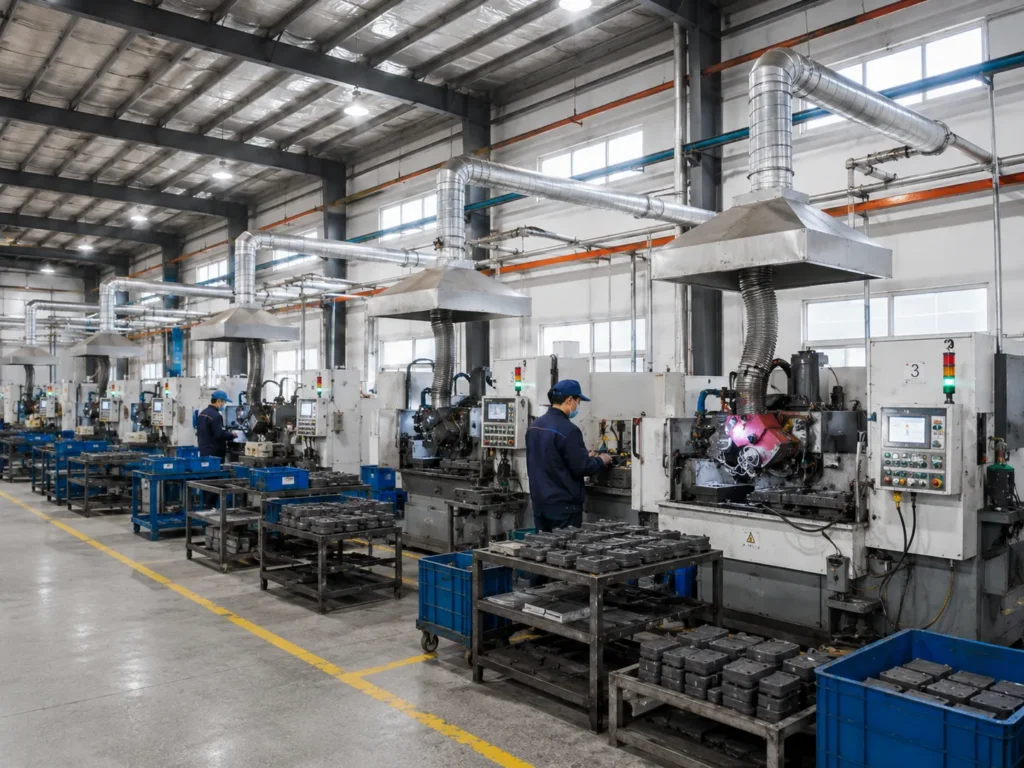
Grinding machine
EQ-04 · BRAKE PADS
Grinding & Finishing Equipment
Used to control final brake pad dimensions and finished surfaces.
What It SupportsThickness and product consistency.
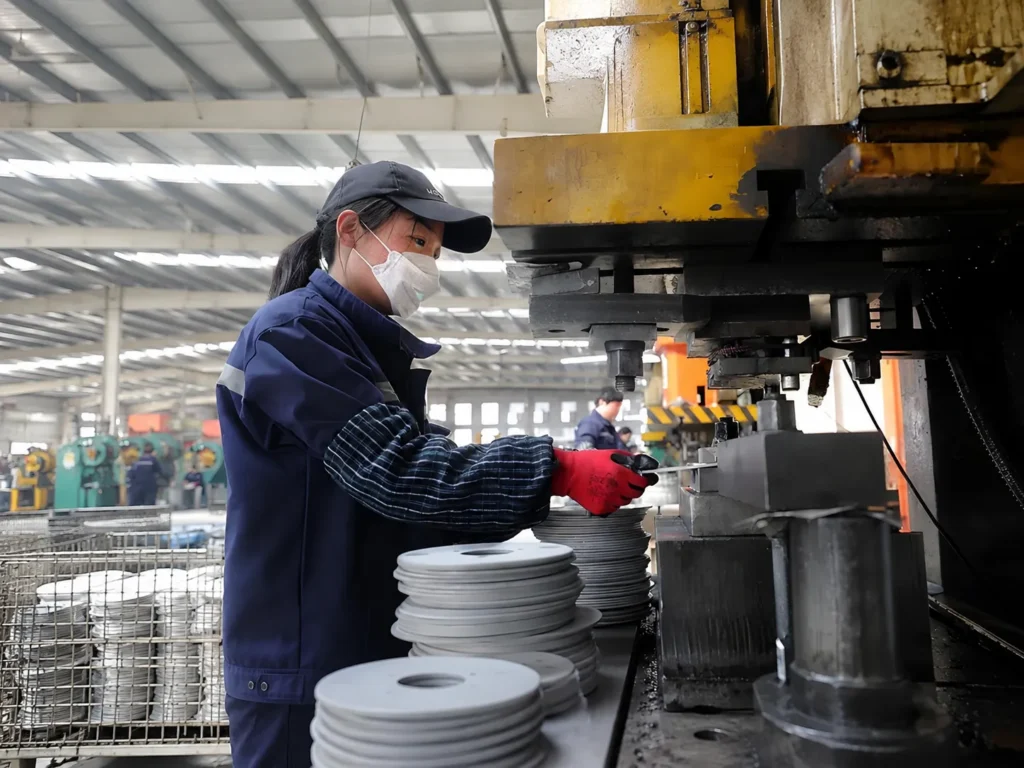
EQ-05 · BRAKE ROTORS
CNC Rotor Machining Equipment
Used to machine the critical geometry of brake rotors.
What It SupportsFriction surfaces, hub face, center bore, thickness and mounting dimensions.
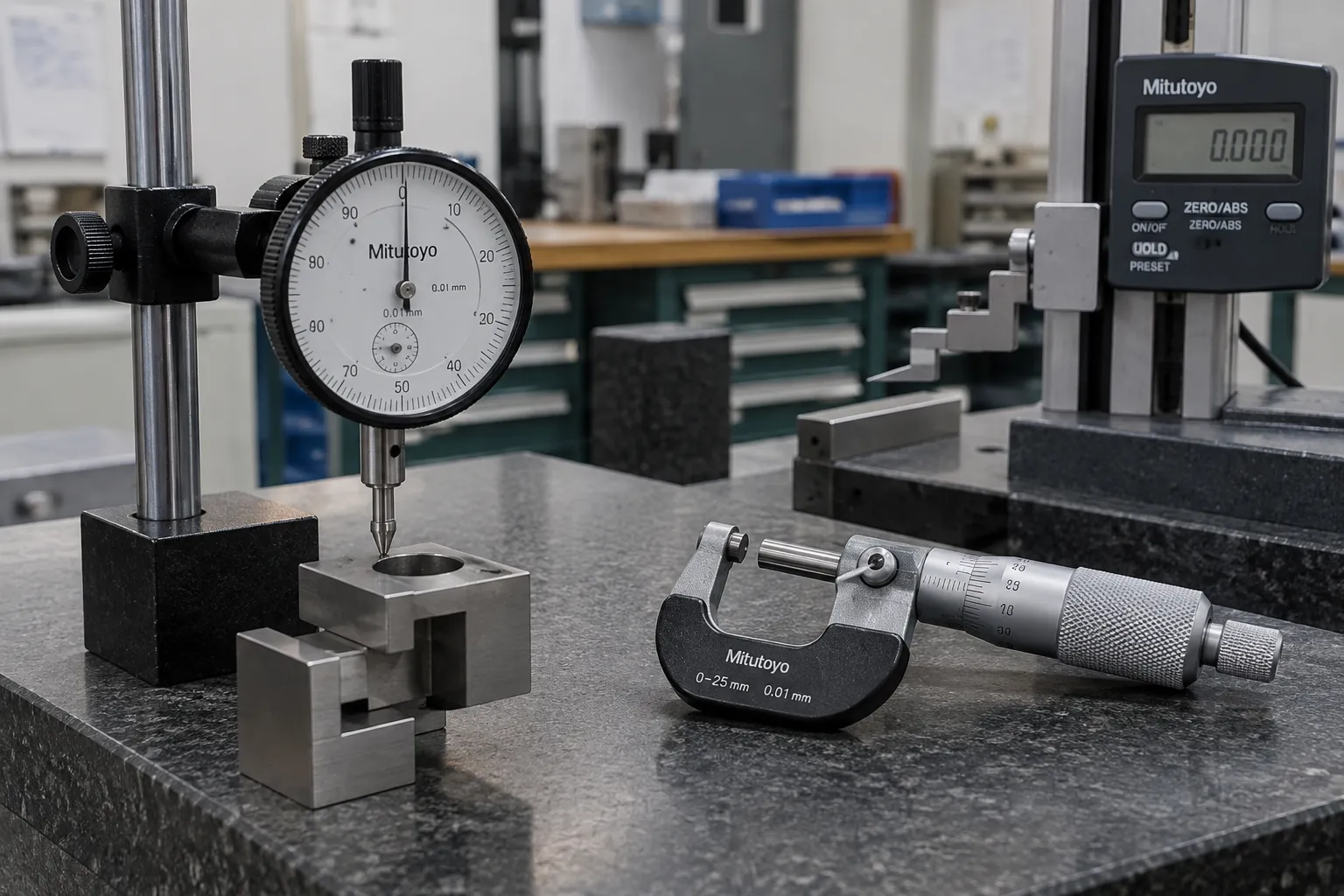
Dial indicator / micrometer / measurement station
EQ-06 · BRAKE ROTORS
Brake Rotor Measurement Equipment
Used to check relevant dimensions, runout and thickness.
What It SupportsVerification of machining results before shipment.
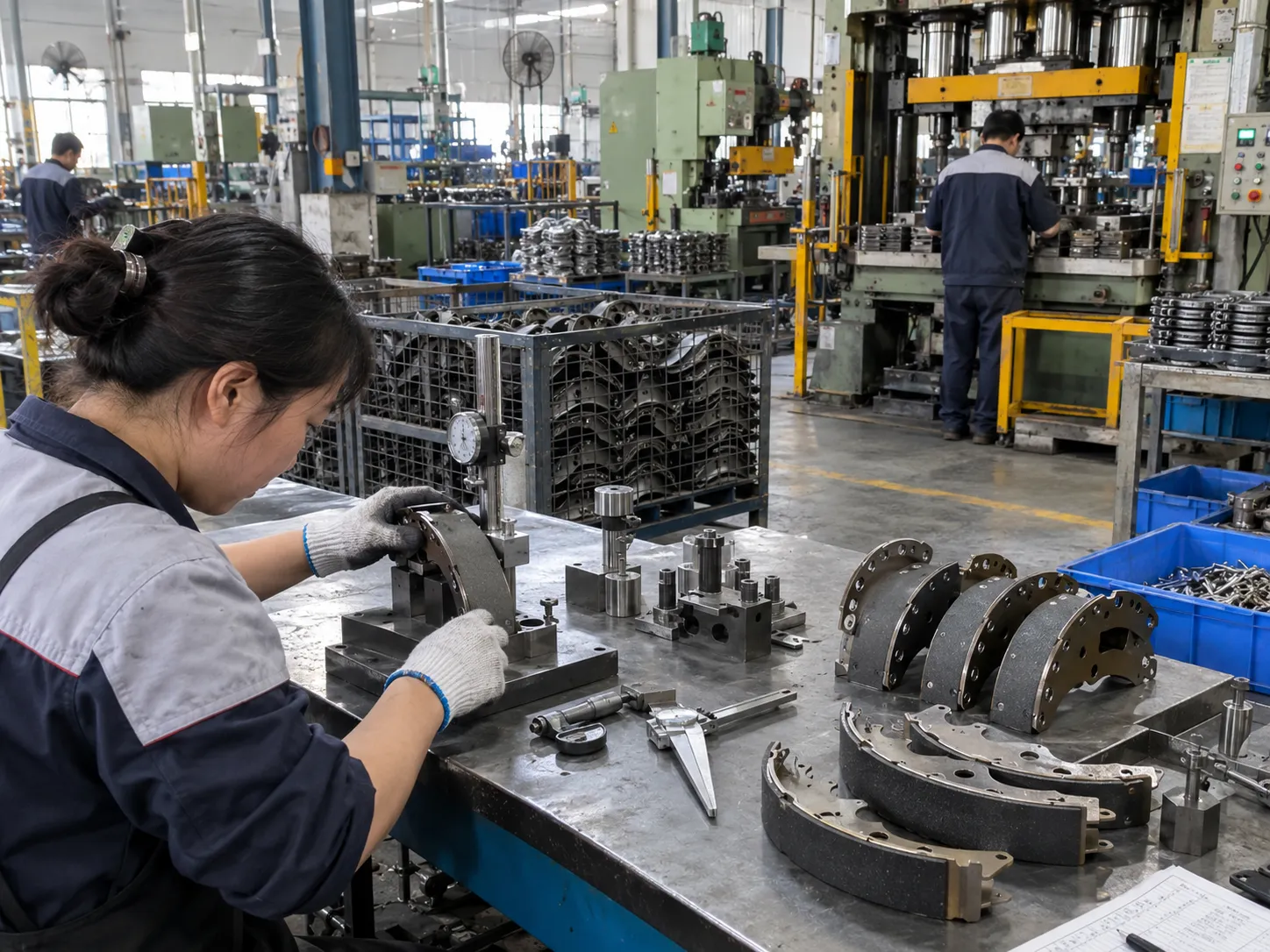
Brake shoe production equipment / inspection fixture
EQ-07 · BRAKE SHOES
Brake Shoe Production & Inspection Fixtures
Used to support brake shoe forming, finishing and dimensional verification.
What It SupportsShoe geometry, lining placement and fitment-related consistency.
Capacity & production planning
Production Capacity Built for Repeat B2B Supply
Large production numbers alone do not tell a B2B buyer whether a factory can manage their order effectively.
Aftermarket brake parts purchasing often involves many different part numbers, packaging requirements and repeat orders.
Production planning therefore needs to balance volume with SKU control.
Daily Output
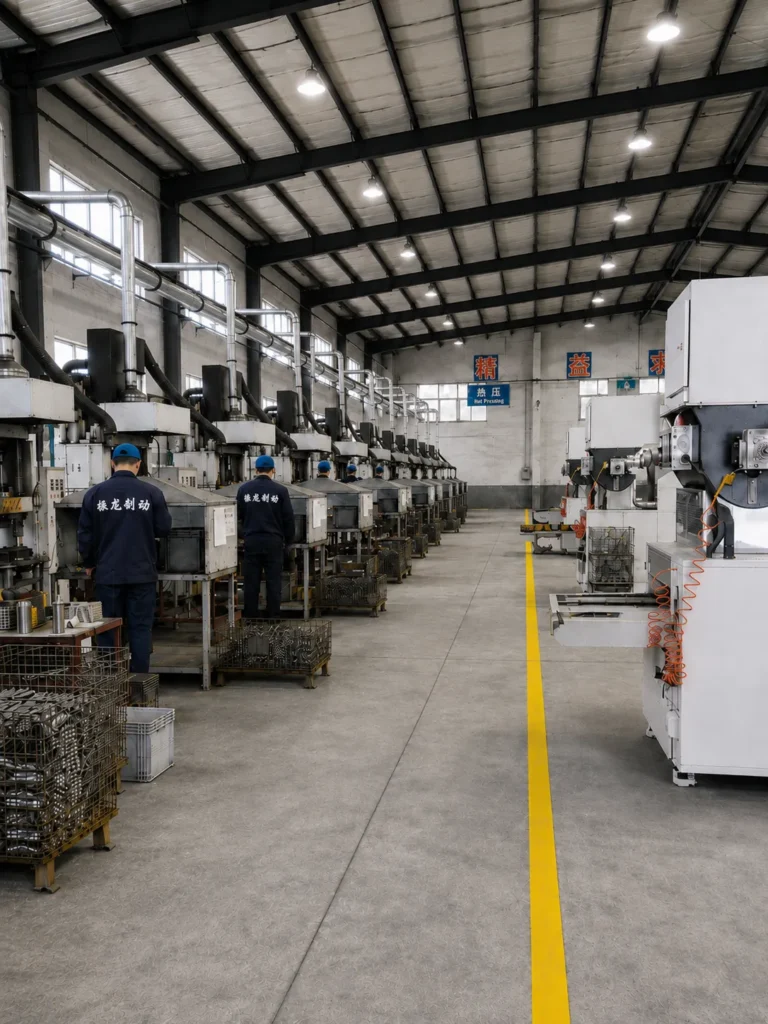
Our brake parts operations support 2,500+ pieces of daily production capacity across our manufacturing activities, depending on the product mix and production schedule.
Actual lead time and output for a specific order are confirmed according to the SKU mix and quantity.
Supporting Regular Wholesale Orders
Our brake parts manufacturing capacity supports regular B2B purchasing programs and ongoing stock replenishment.
Production is planned according to product category, quantity and order requirements.
Batch Planning
Products are organized by production and order information so the relevant batch can be connected with the final shipment where required.
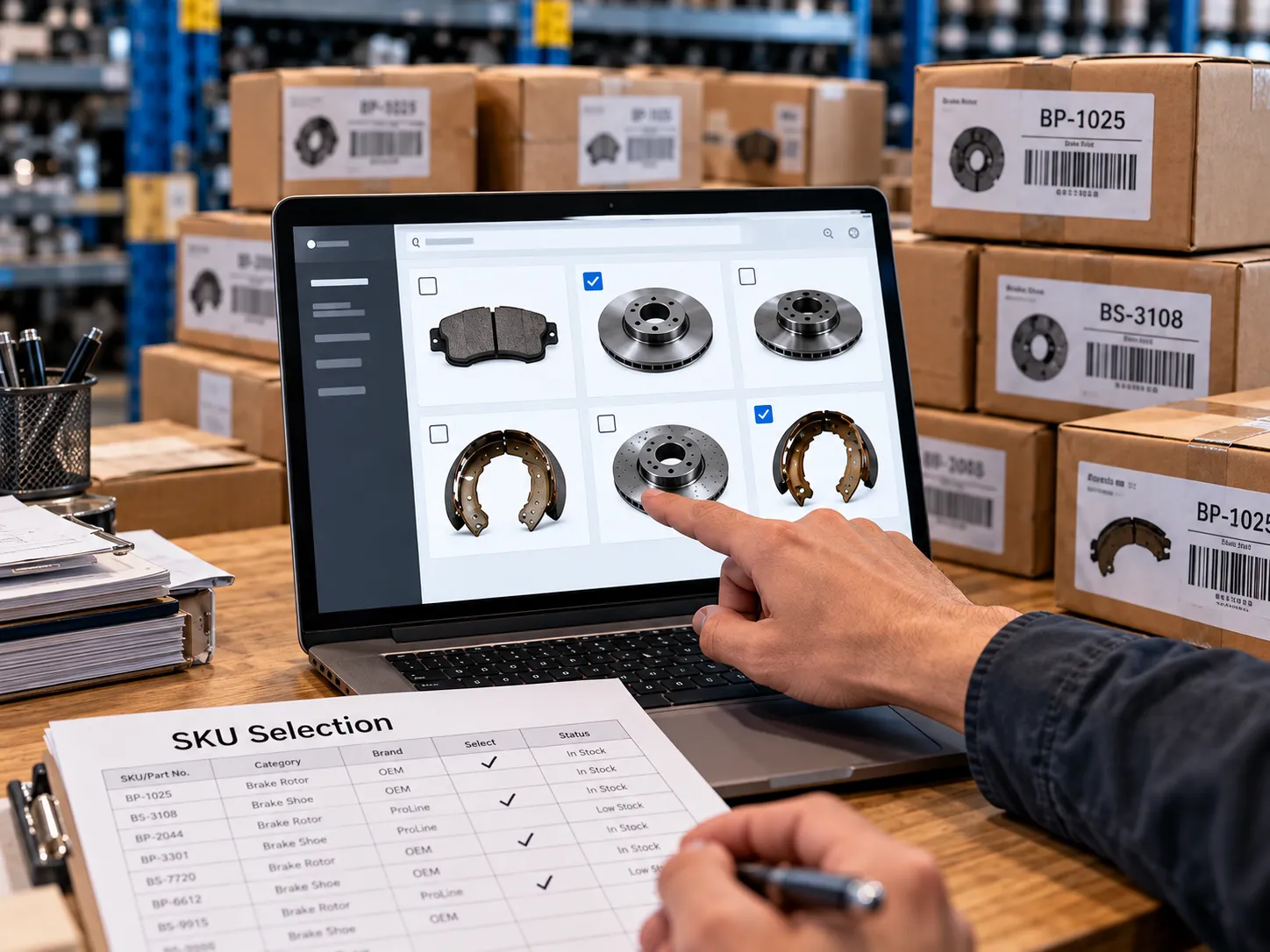
Multi-SKU Order Management
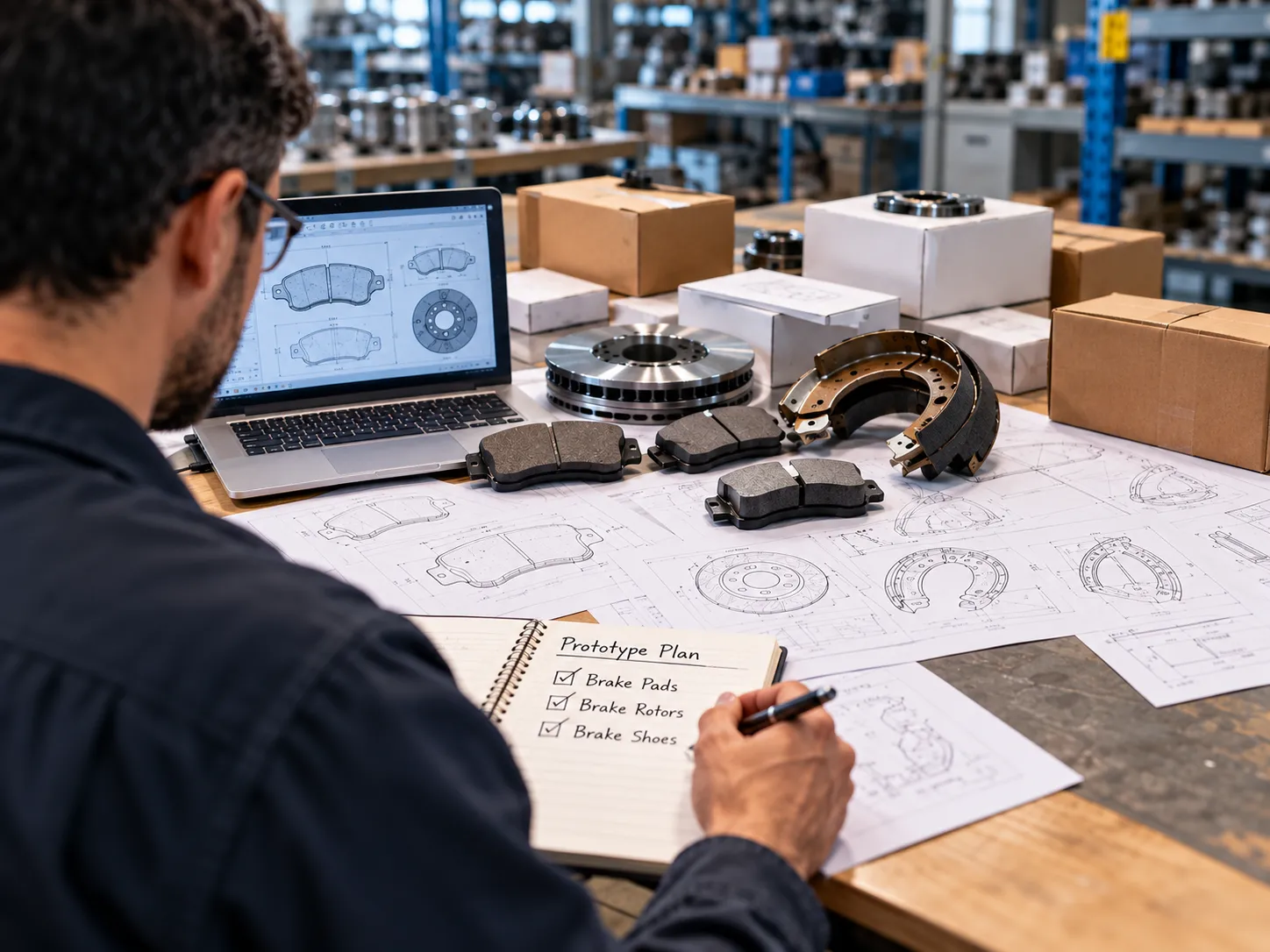
A distributor may order dozens of brake pad, rotor and brake shoe references in the same purchasing cycle.
Each reference needs to remain identifiable throughout
This reduces the risk of correct products being mixed with incorrect labels or cartons.
Repeat Production
Repeat orders should not require the customer to rebuild every product specification from the beginning.
Clear product references and previous order information help support more efficient replenishment.
Mixed-Category Orders
Brake pads, brake rotors and brake shoes in the same purchase order are planned together, so they can be packed and shipped as one consolidated order where schedules allow.
Lead Time Confirmation
Lead time is confirmed per order after the SKU list, quantities and packaging are reviewed — not quoted as a fixed number before the details are known.
What We Need to Plan Your Order
Send the information you already use internally. We plan production and packaging from it.
- Part numbers (OE, FMSI or your own codes)
- Quantity per SKU
- Brand, label and carton requirements
- Target shipping date
- New or repeat references
- Destination market
Factory quality inspection
Quality Control Inside the Factory
Inspection is not one final visual check performed before the carton is closed.
Different products require different quality-control priorities.
Our factory inspection process focuses on the characteristics that can directly affect fitment, product consistency and service performance.
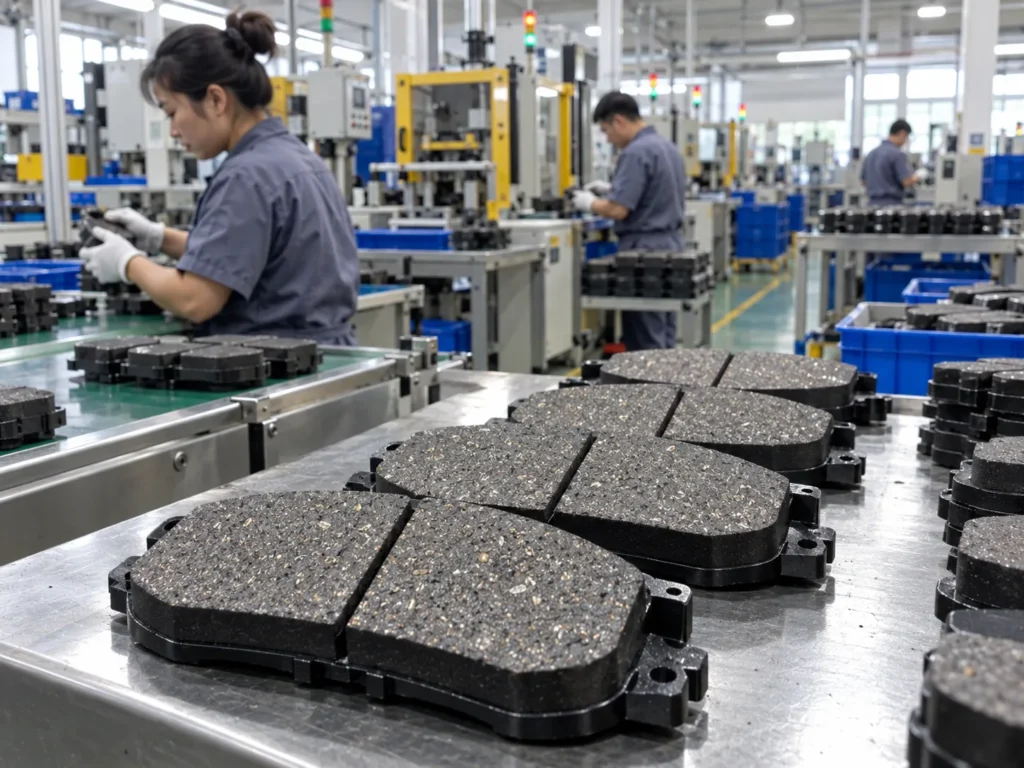
Brake Pad Inspection
Typical inspection areas can include:
- Overall dimensions
- Friction material condition
- Backing plate
- Shim
- Chamfers
- Slots
- Surface condition
- Product marking
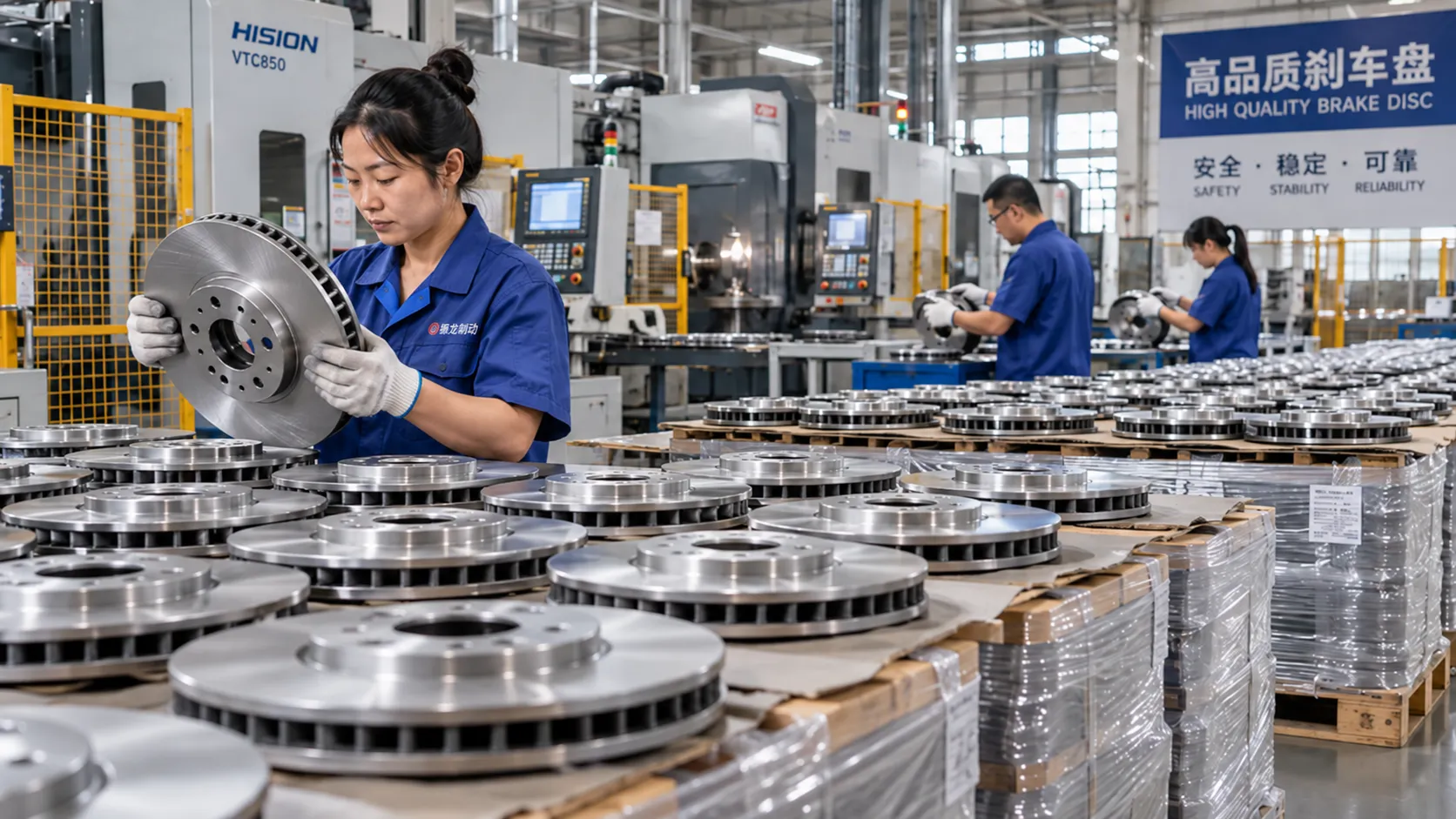
Rotor runout measurement
Brake Rotor Inspection
Typical inspection areas can include:
- Diameter
- Thickness
- Overall height
- Center bore
- Runout
- DTV
- Friction surface
- Hub face
- Cooling vanes
- Rust protection
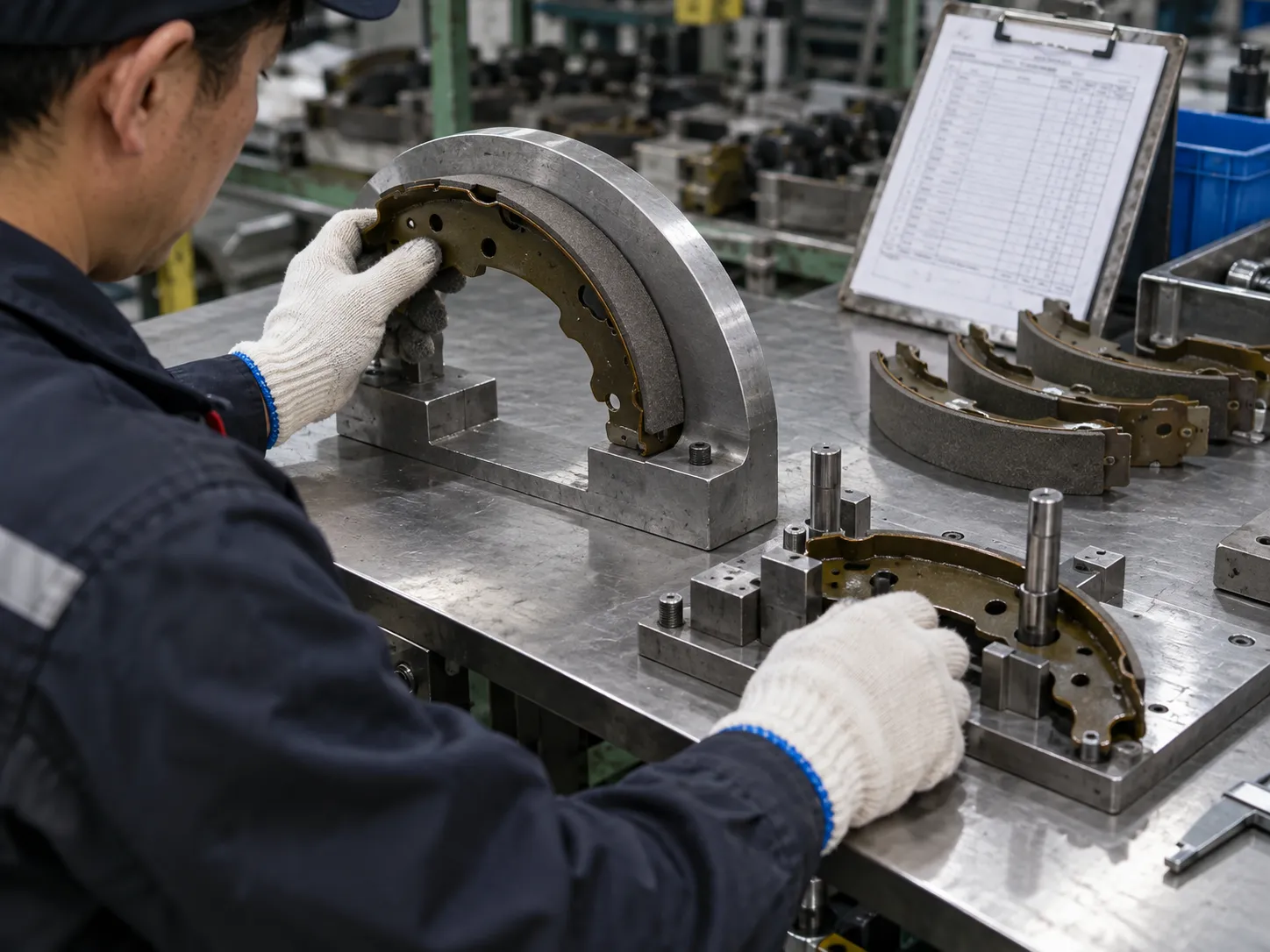
Brake Shoe Inspection
Typical inspection areas can include:
- Shoe width
- Geometry
- Curvature
- Lining dimensions
- Lining placement
- Lining attachment
- Spring-hole positions
- Product-set accuracy
In-process quality control
Quality Is Controlled During Production — Not Only at the End
Final inspection can identify a finished-product problem. It cannot replace good process control.
For that reason, our quality approach includes checks at multiple stages of the production process. Our quality page details the in-process quality control for each product.
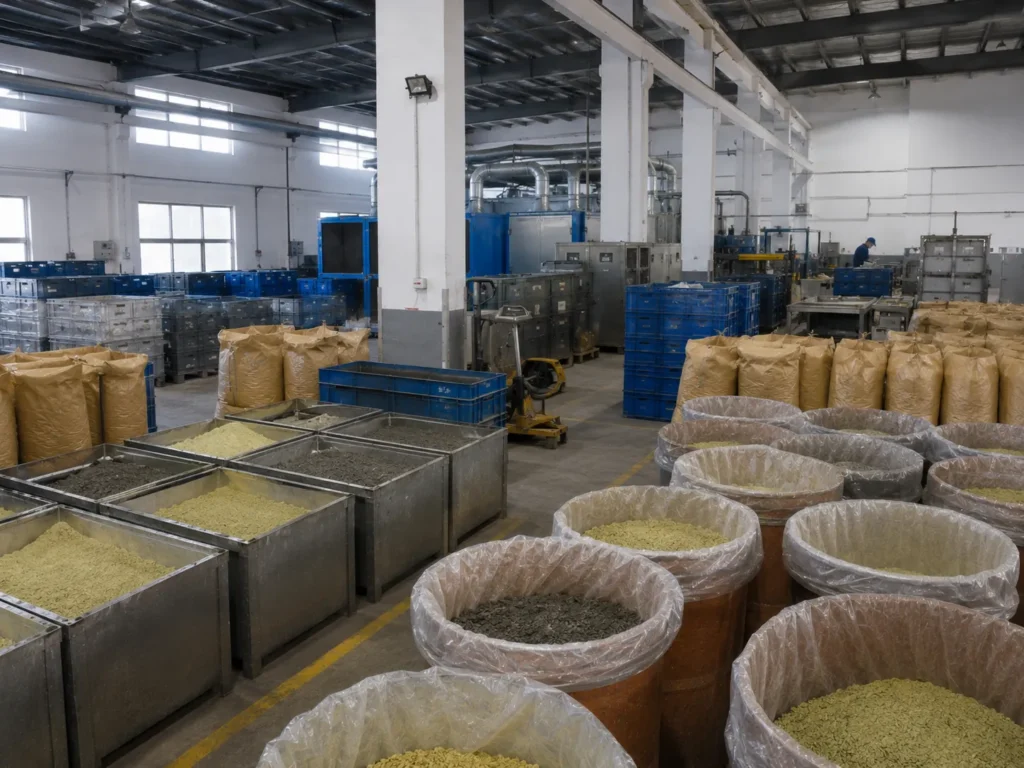
Incoming Material Check
Materials and components are reviewed before entering production.
The objective is to identify obvious material or specification issues before they move further into the manufacturing process.
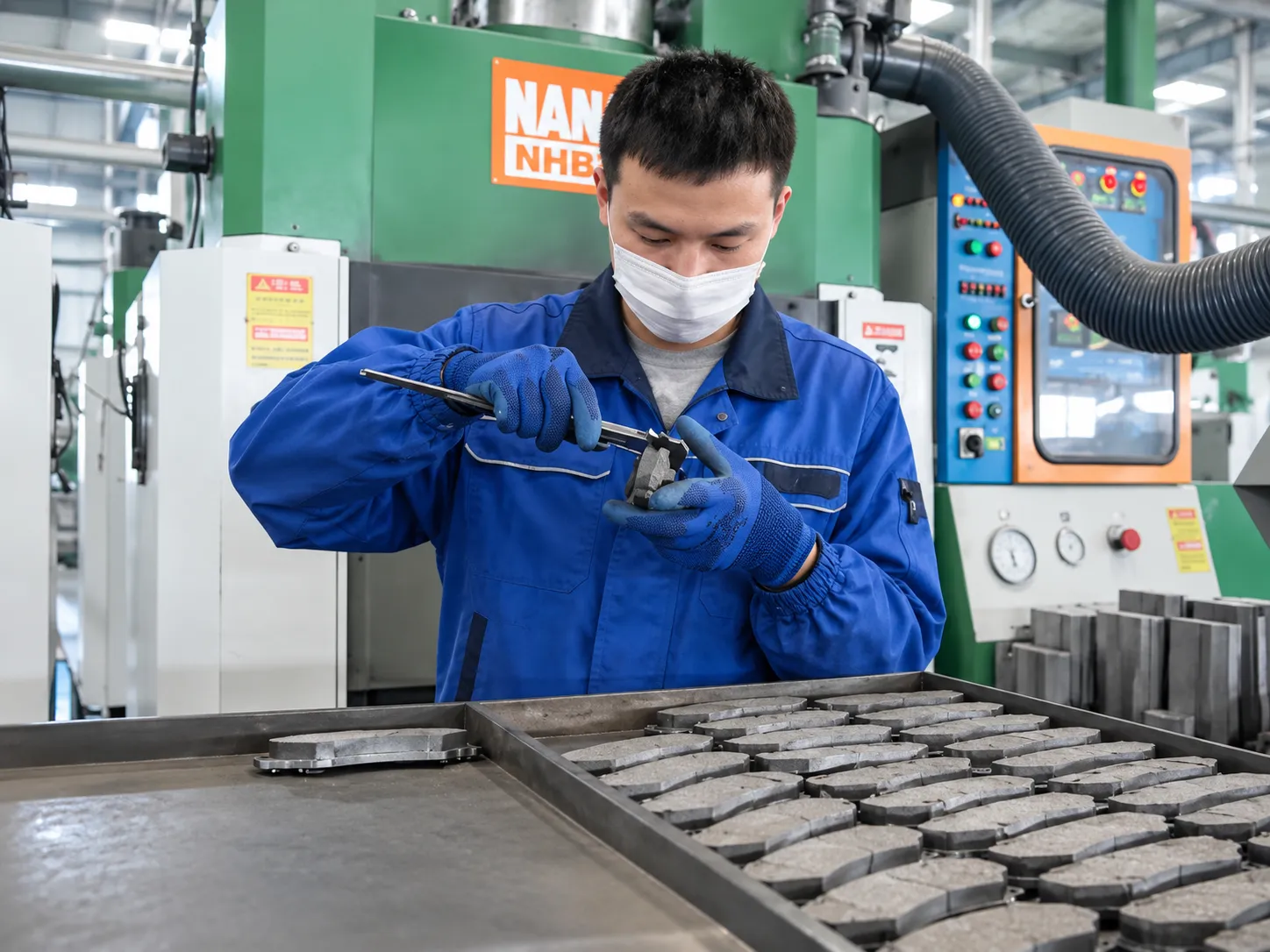
First-Piece Verification
Before a production batch continues, the first completed product can be reviewed against the required dimensions and product specification.
This helps identify setup problems early.
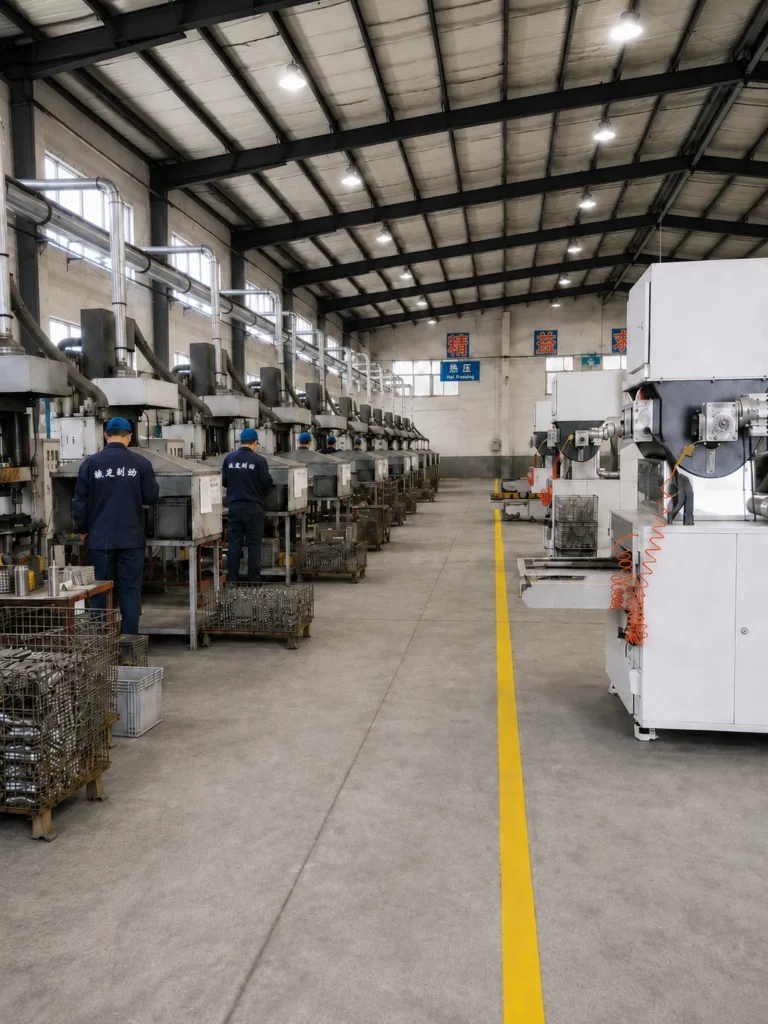
In-Process Inspection
Relevant dimensions or process results are checked during production rather than waiting until the complete batch is finished.
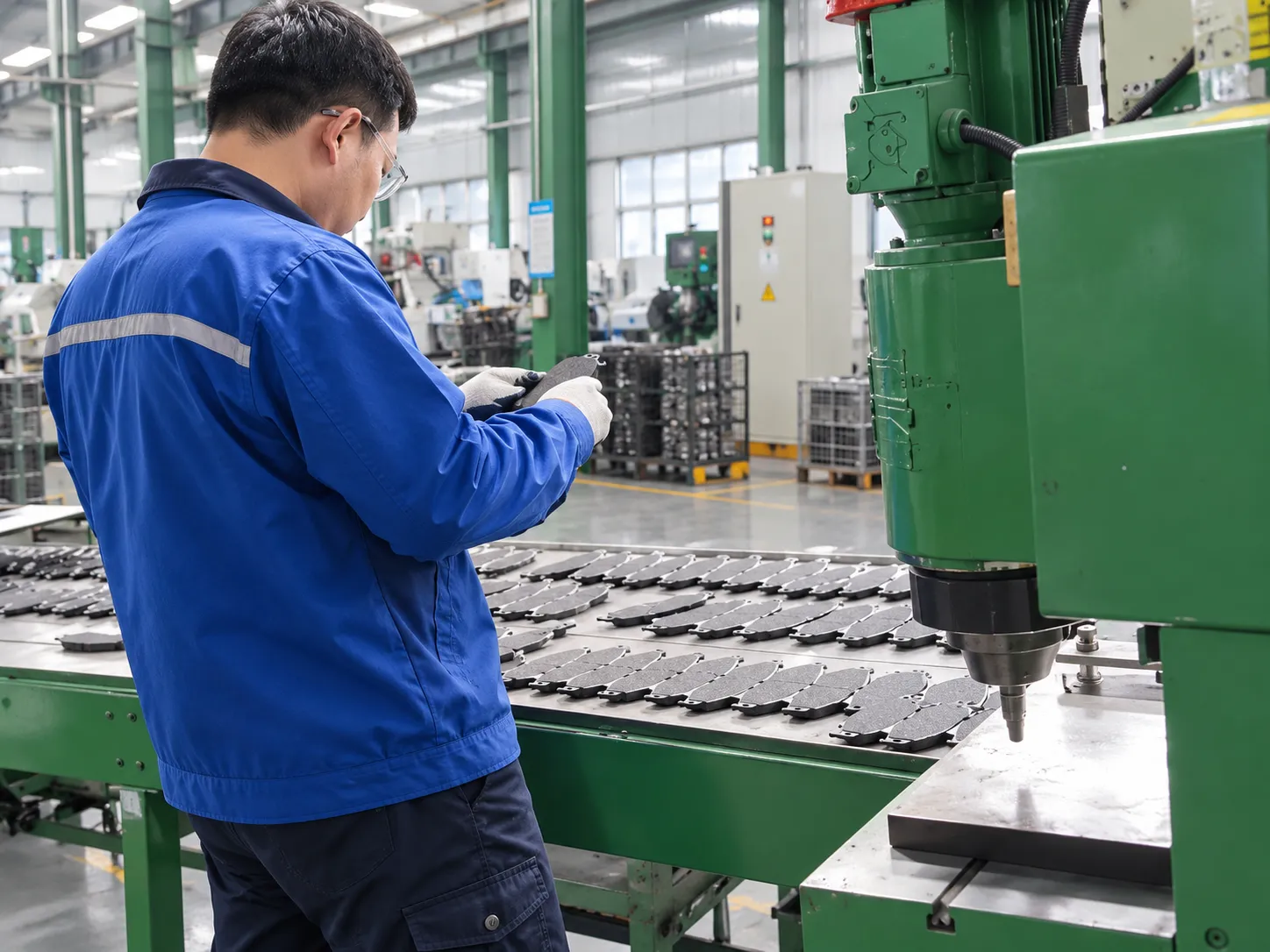
Final Product Inspection
Completed products are inspected before packaging according to the relevant product requirements.
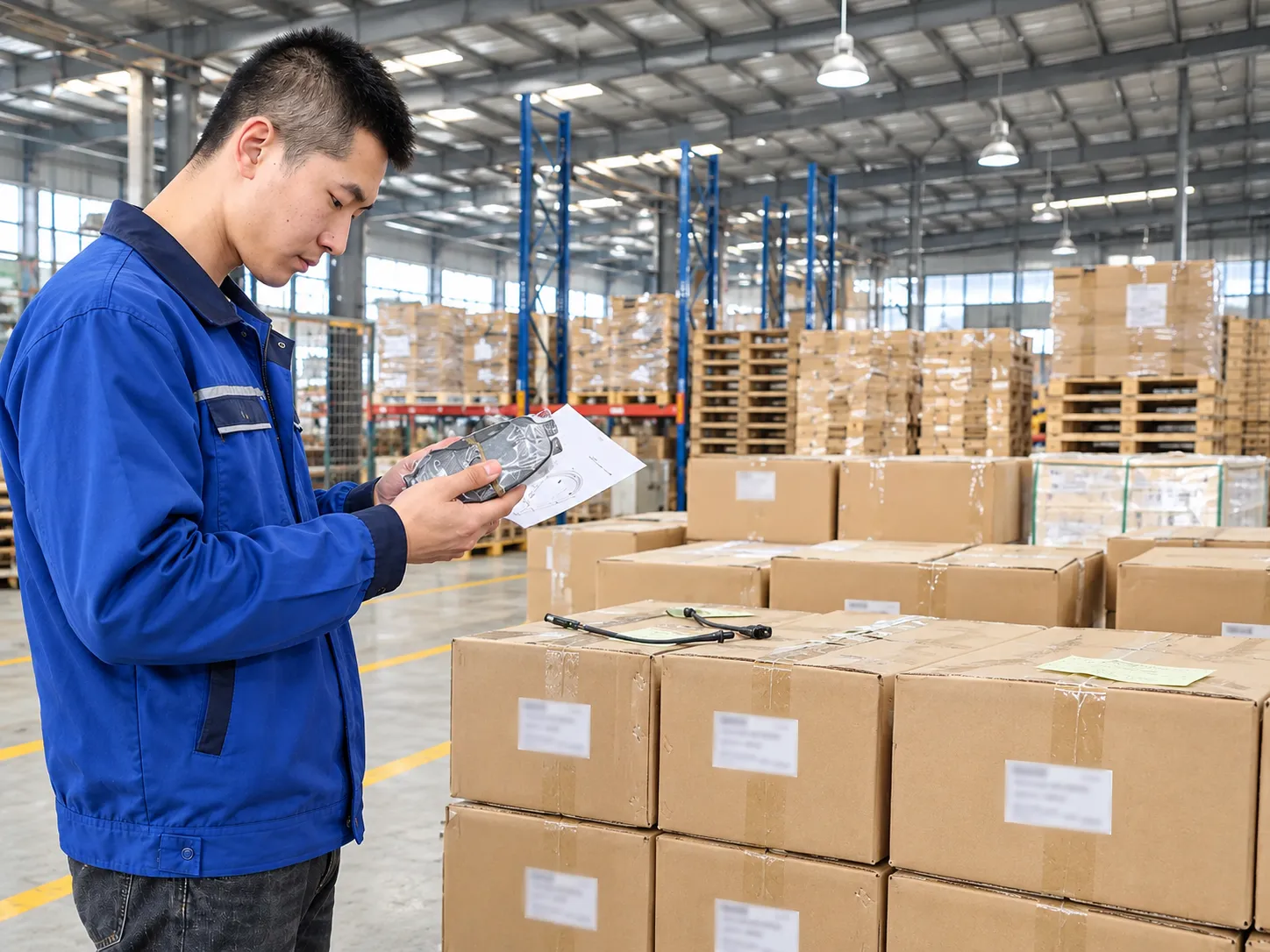
Packaging Verification
The correct product must also be placed into the correct packaging. Final order checks can include:
Certifications, testing & traceability
Certifications, Testing and Product Documentation
Certificates are useful only when buyers understand what they apply to.
Product approval, material compliance, inspection records and batch traceability serve different purposes.
We keep these areas separate so buyers can review documentation according to the actual product and destination-market requirement.
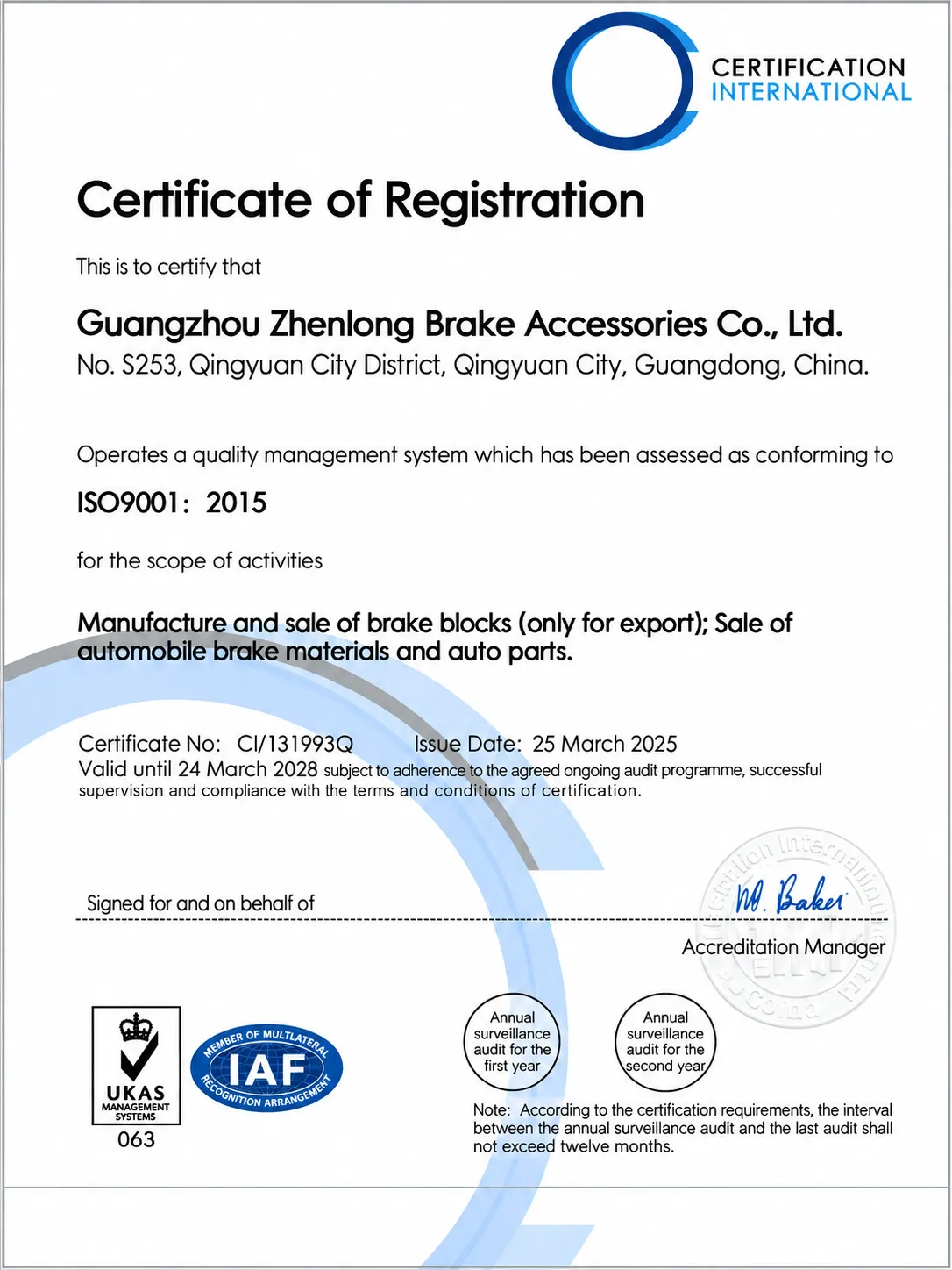
ECE R90 Documentation
Where applicable, relevant brake friction products can be reviewed together with corresponding ECE R90 documentation.
Approval coverage should be checked against the actual product reference rather than assumed to apply to every brake part in the catalog.
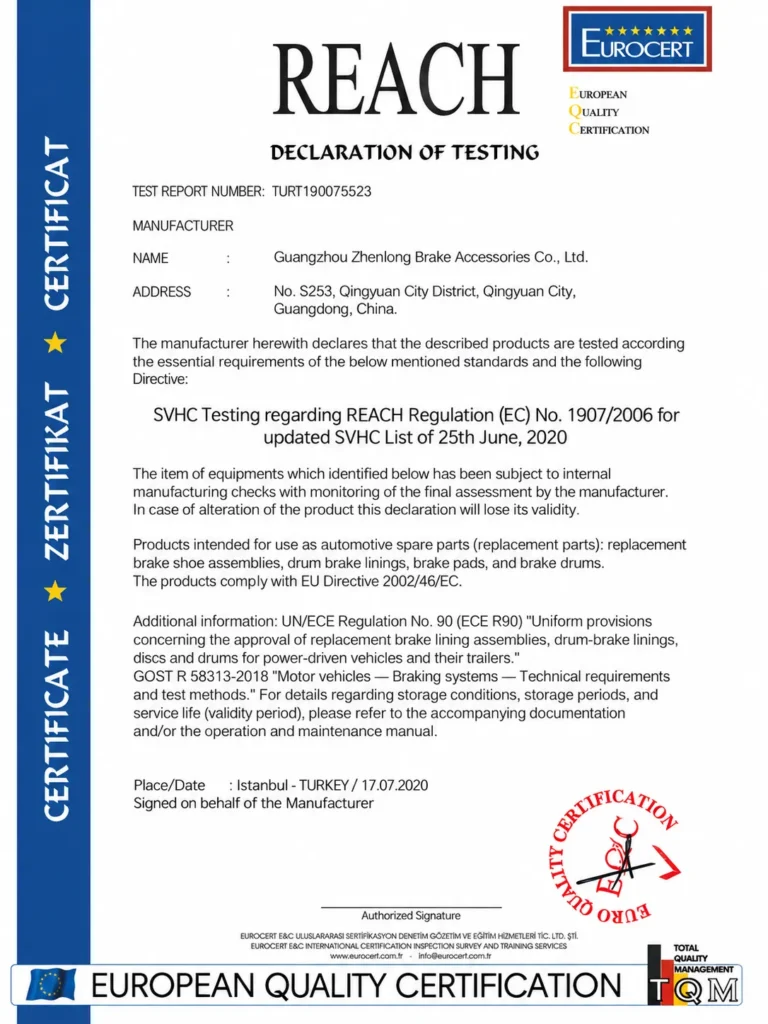
REACH Documentation
REACH-related documentation can support applicable material and chemical-compliance requirements for relevant markets.
It should be treated as material-compliance documentation rather than as a braking-performance certification.
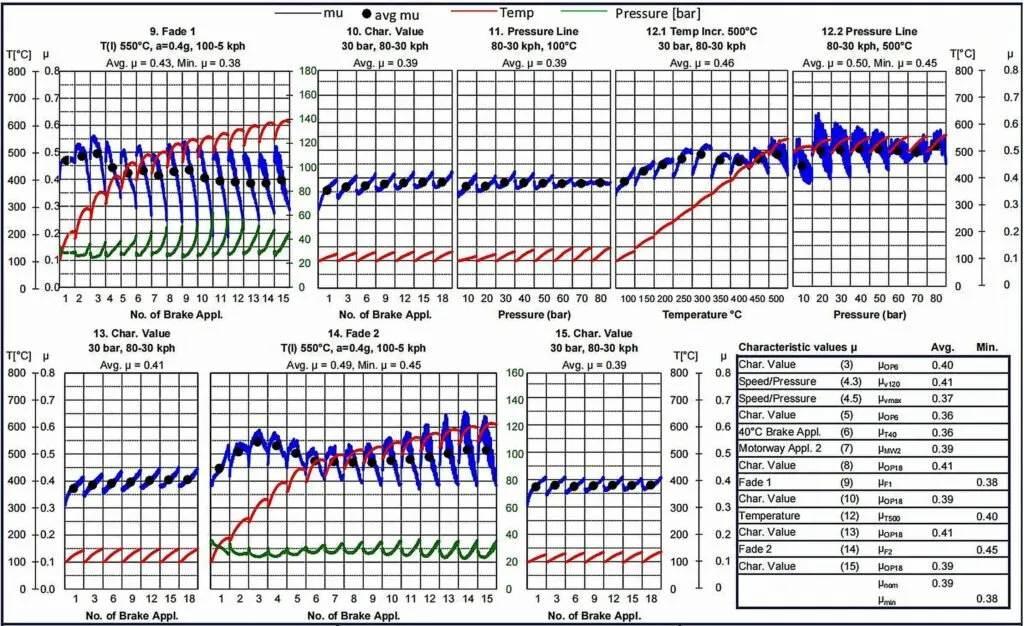
Product Inspection Records
Inspection information can provide practical quality evidence for dimensions and other relevant product characteristics.
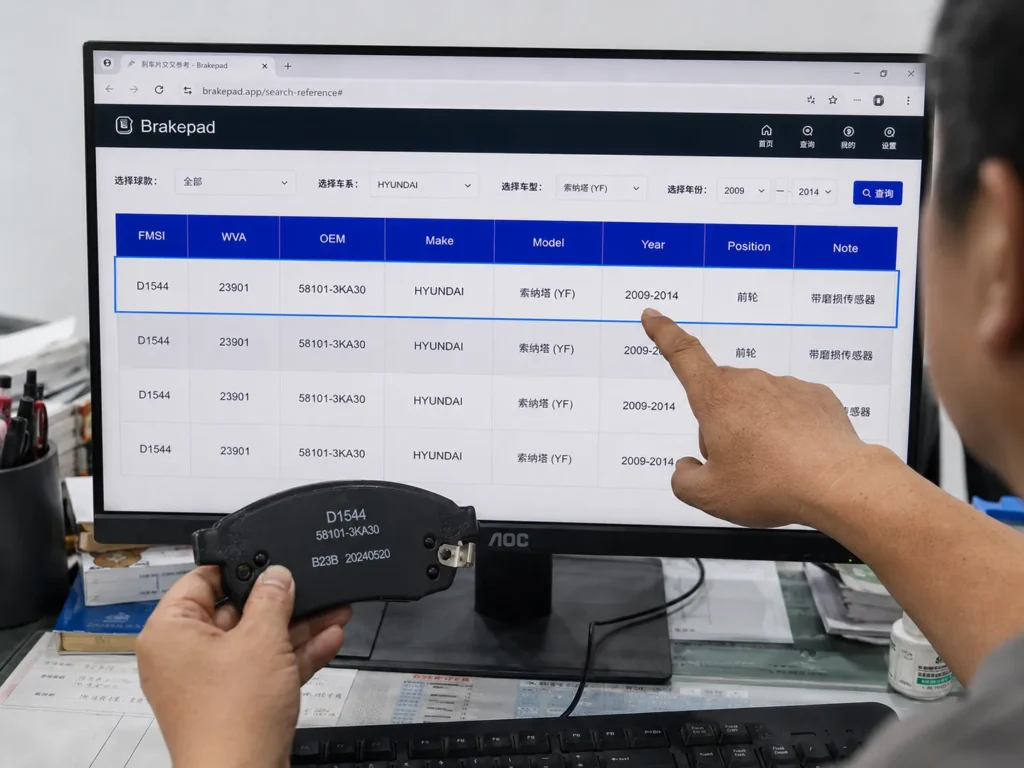
Batch Traceability
Clear production and order information helps connect Product Reference → Batch → Inspection → Order → Shipment.
Batch traceability connects
This becomes particularly useful when a distributor needs to investigate a specific product after delivery.
Review documentation according to the actual product and destination-market requirement.
Warehouse & multi-SKU management
Warehouse Management for Multi-SKU Brake Parts Orders
A B2B brake parts warehouse is not simply a room filled with cartons.
When one customer order contains dozens of different references, product identification and order separation become critical.
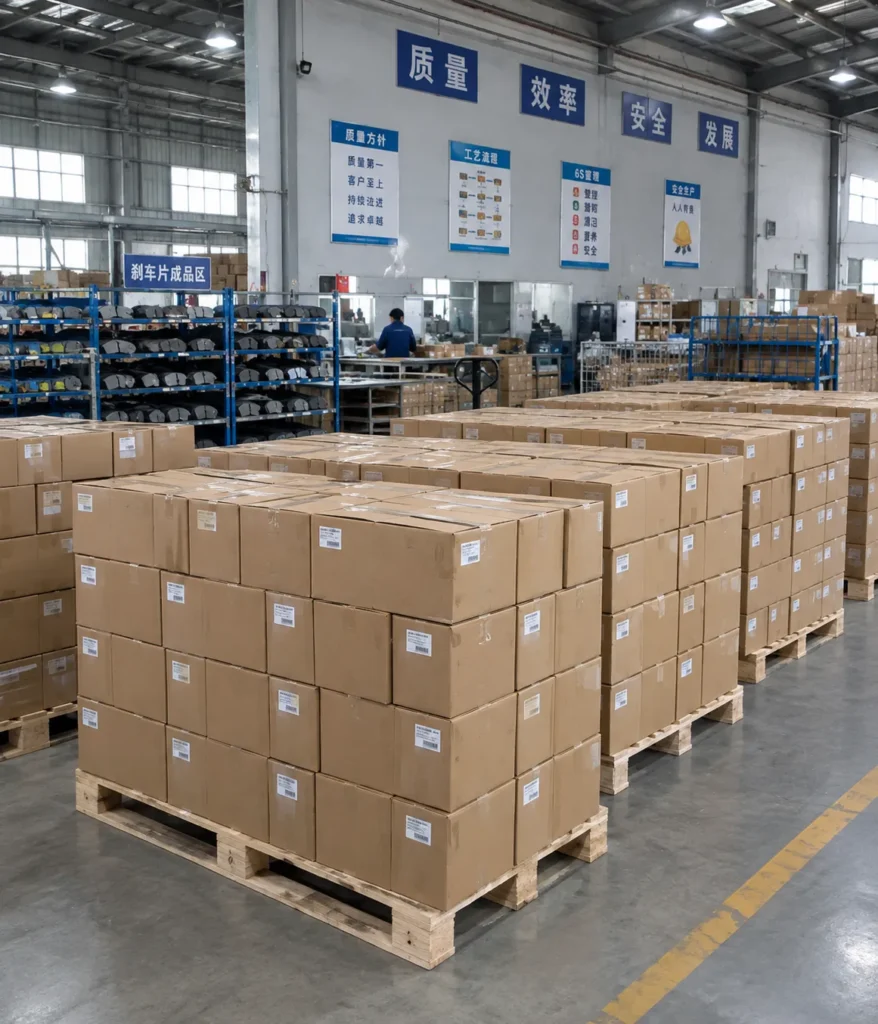
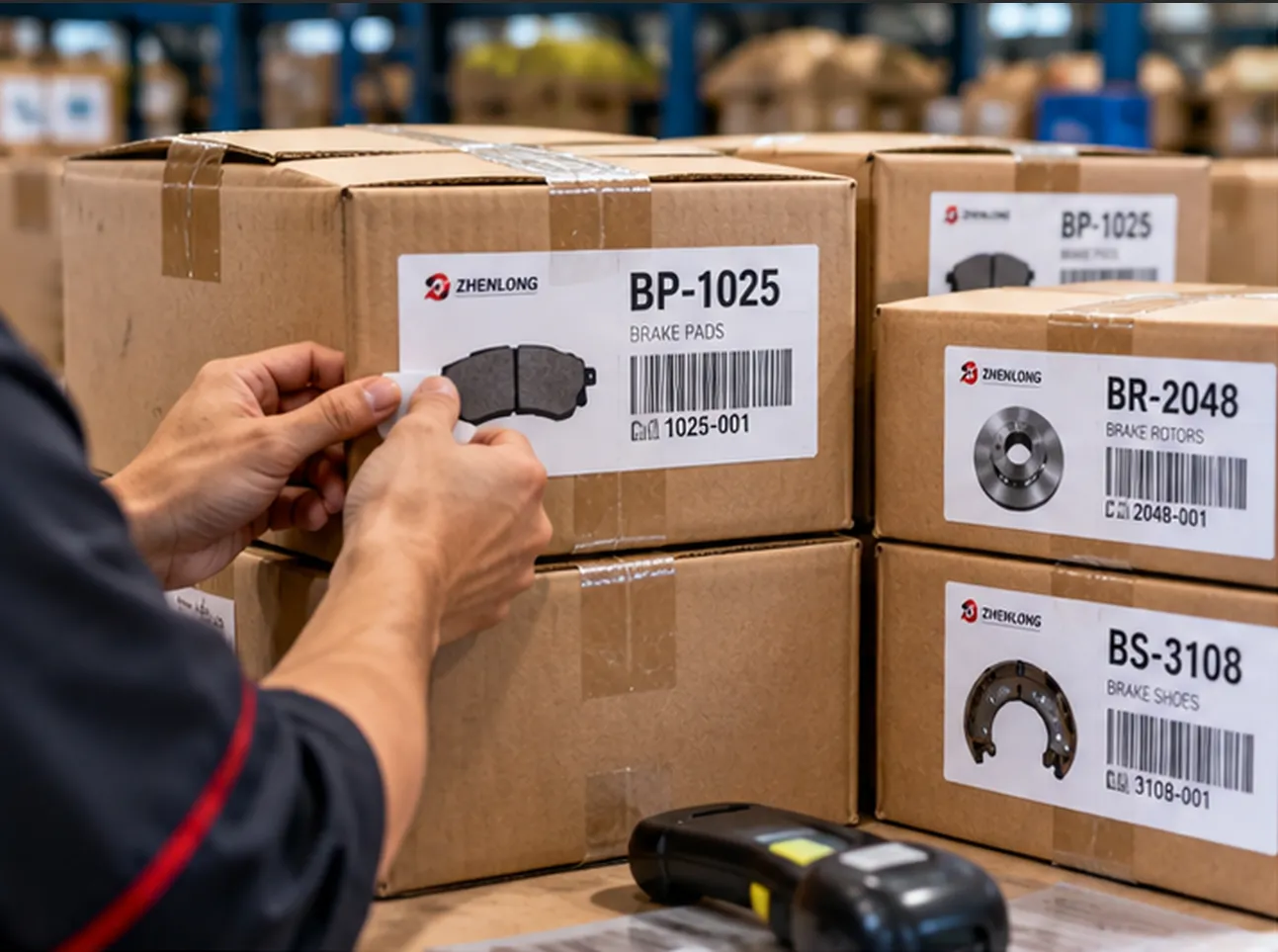
Clear SKU Identification
Finished products and cartons are identified according to the relevant product reference.
Clear identification supports both current shipment preparation and future repeat purchasing.
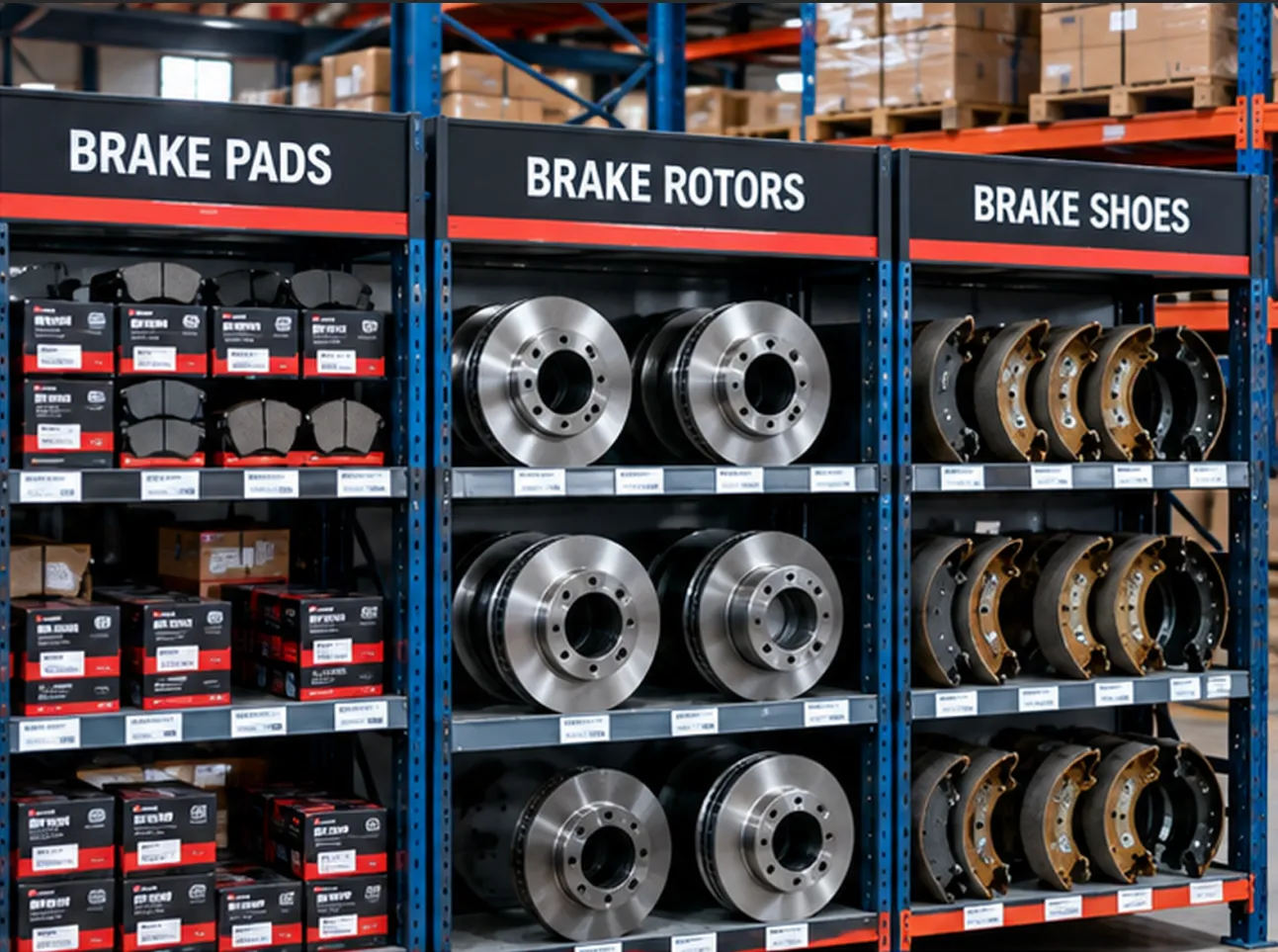
Product Separation
Brake pads, rotors and shoes with different references need to remain separated during warehouse handling.
This helps reduce packing and receiving errors.
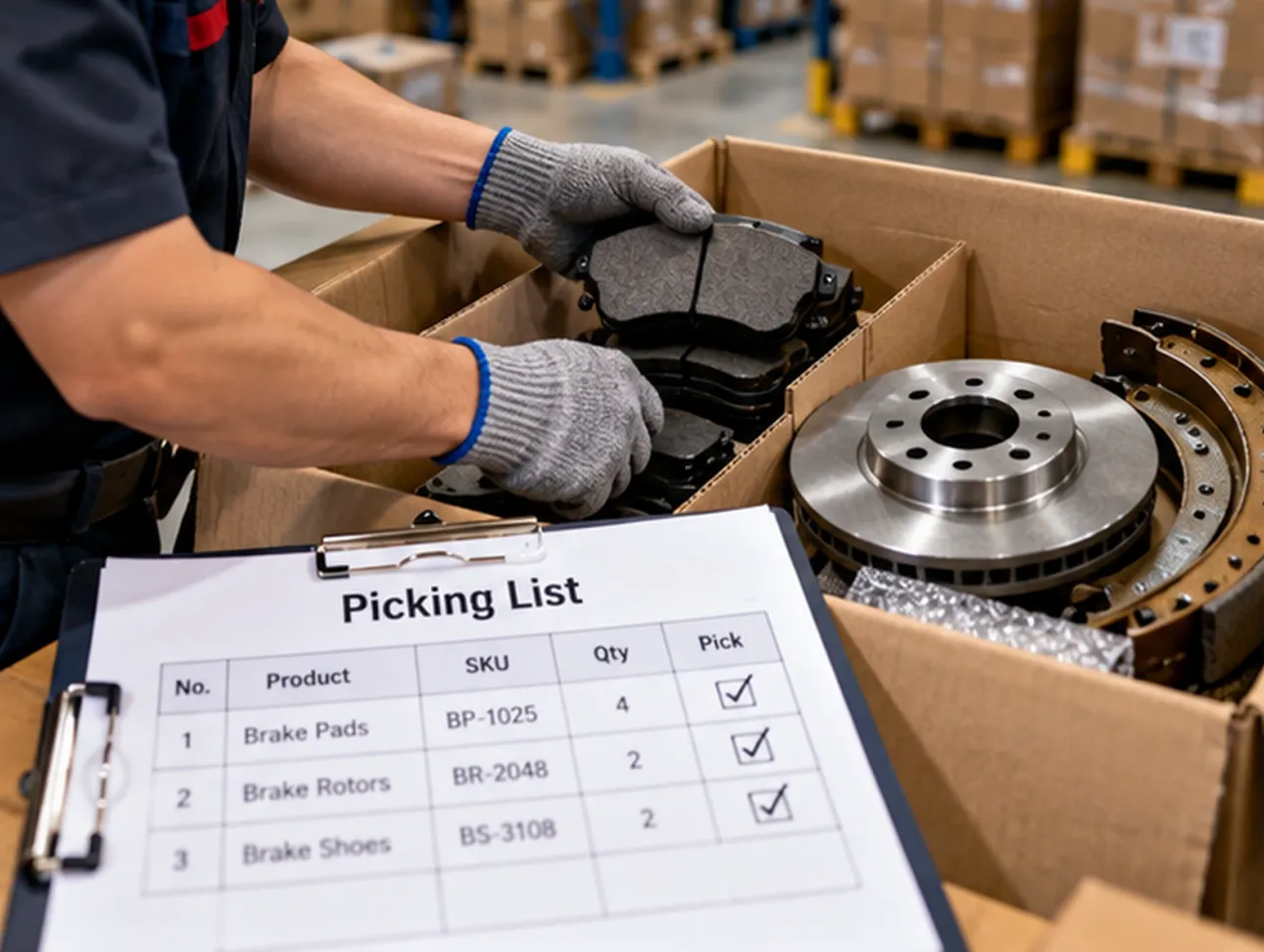
Mixed-Order Preparation
Multi-SKU wholesale orders are prepared against the confirmed purchasing list.
The objective is to ensure the final physical shipment matches the approved order structure.
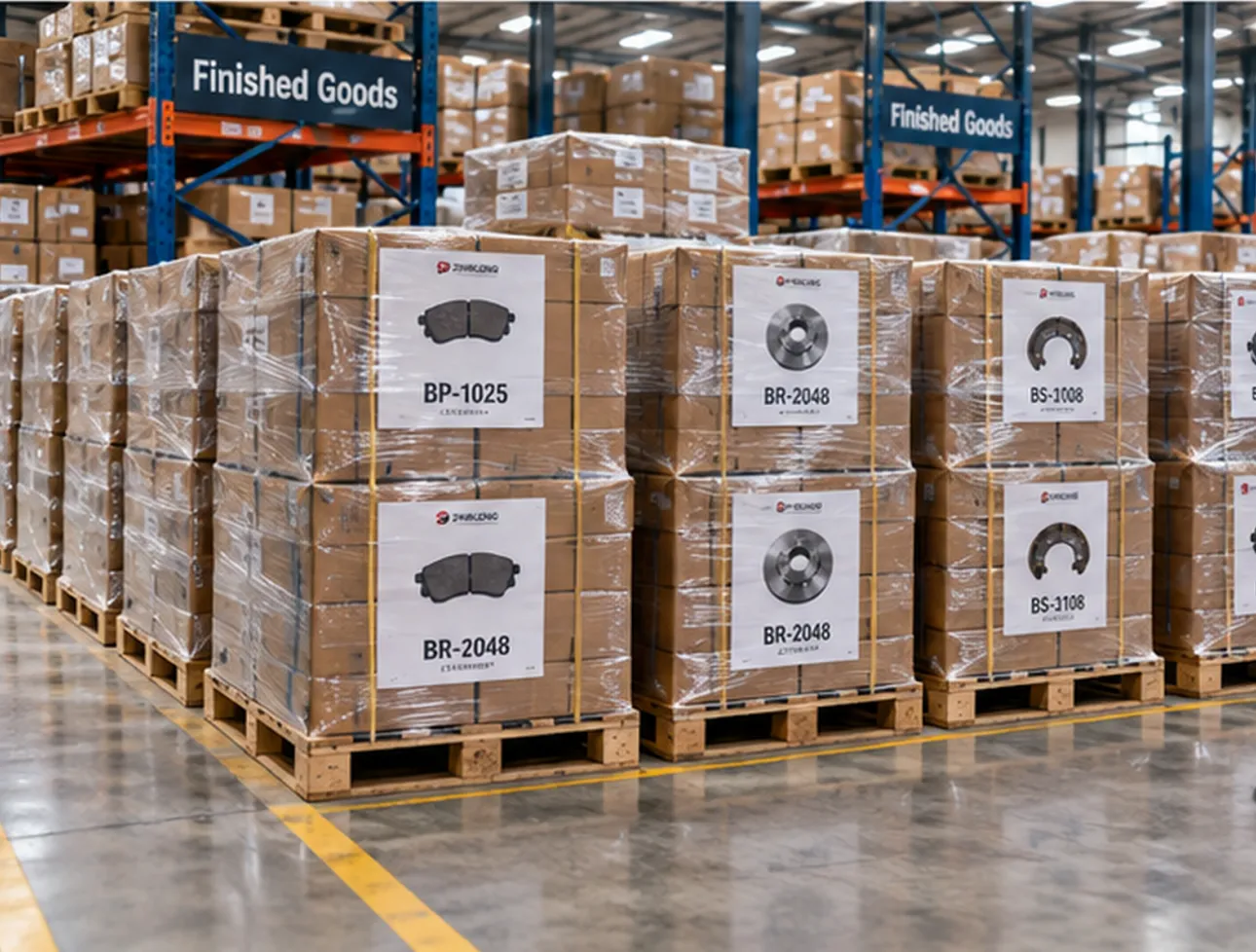
Finished Product Storage
Products are stored in a way that protects packaging and finished surfaces before shipment.
This is especially important for heavy brake rotors and private-label packaging.
Packaging & private label
Packaging Designed for B2B Distribution
Packaging is not just decoration.
For distributors and parts stores, packaging needs to protect the product, identify the SKU and support warehouse management.
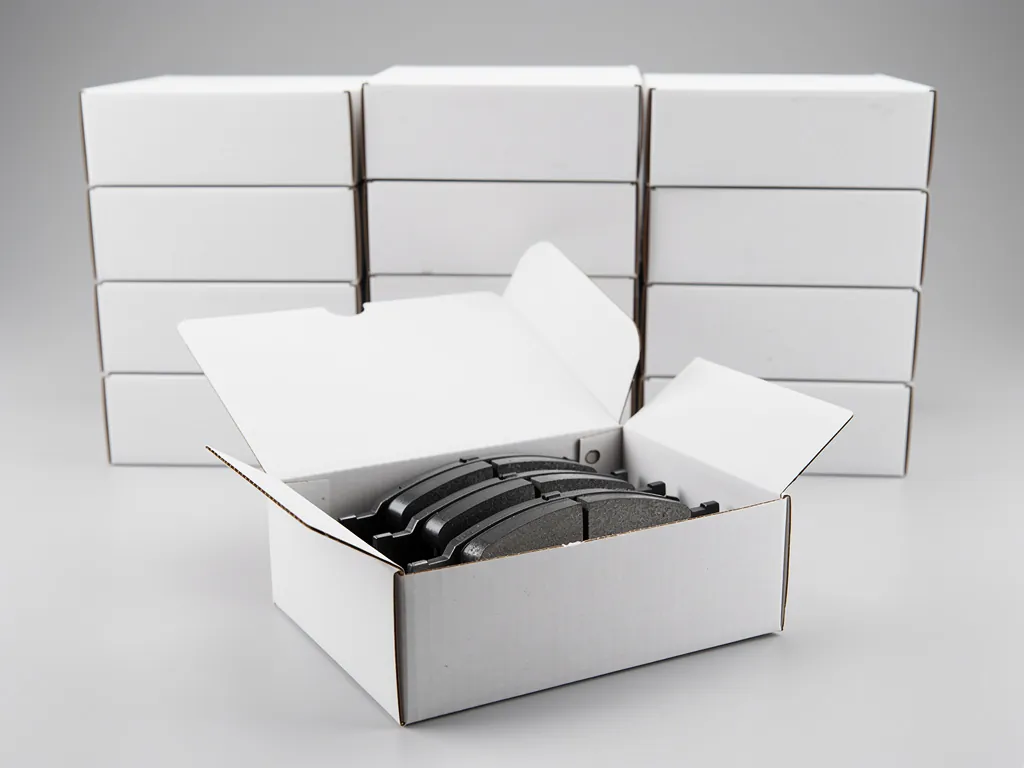
Neutral Packaging
Standard neutral packaging can be used for wholesale programs that do not require a customer brand.
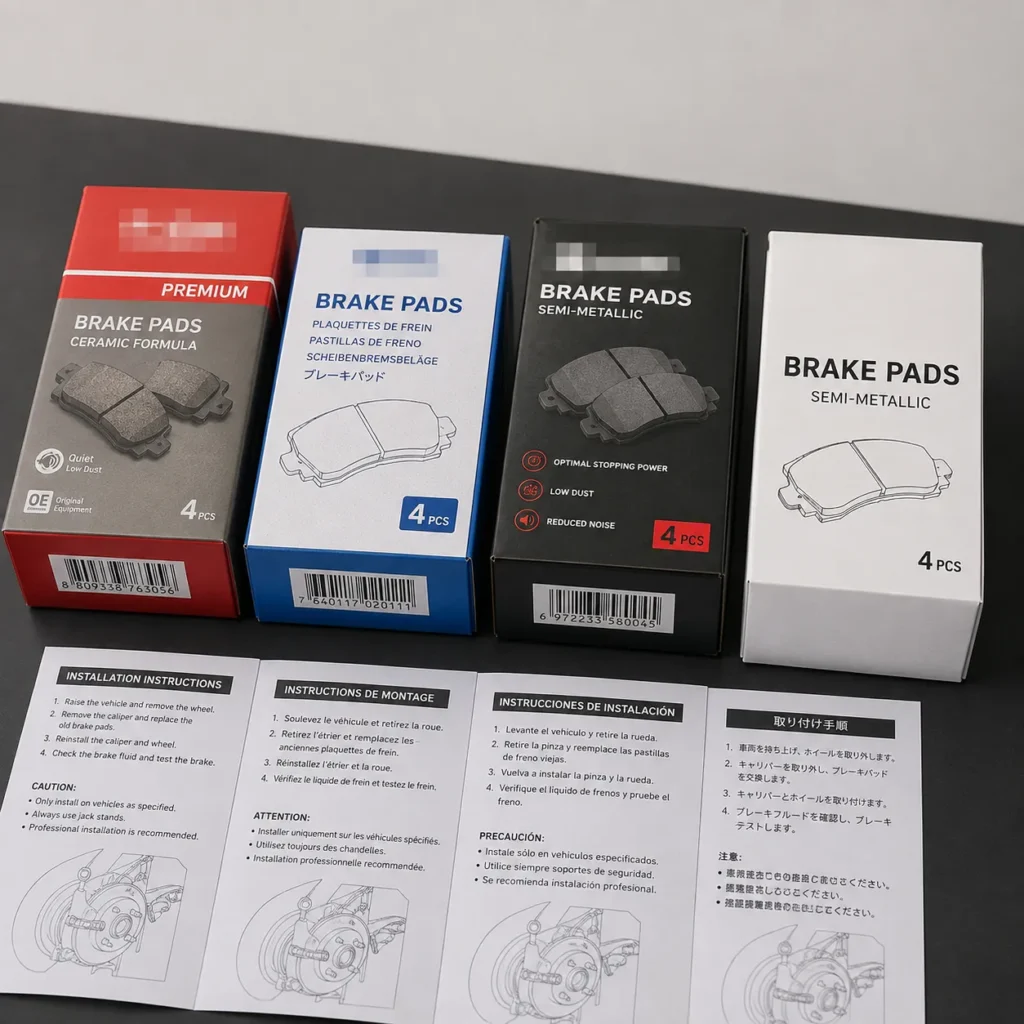
Private Label Packaging
For qualified projects, customer packaging can include:
SKU & Barcode Labels
Labels help customers identify products during:
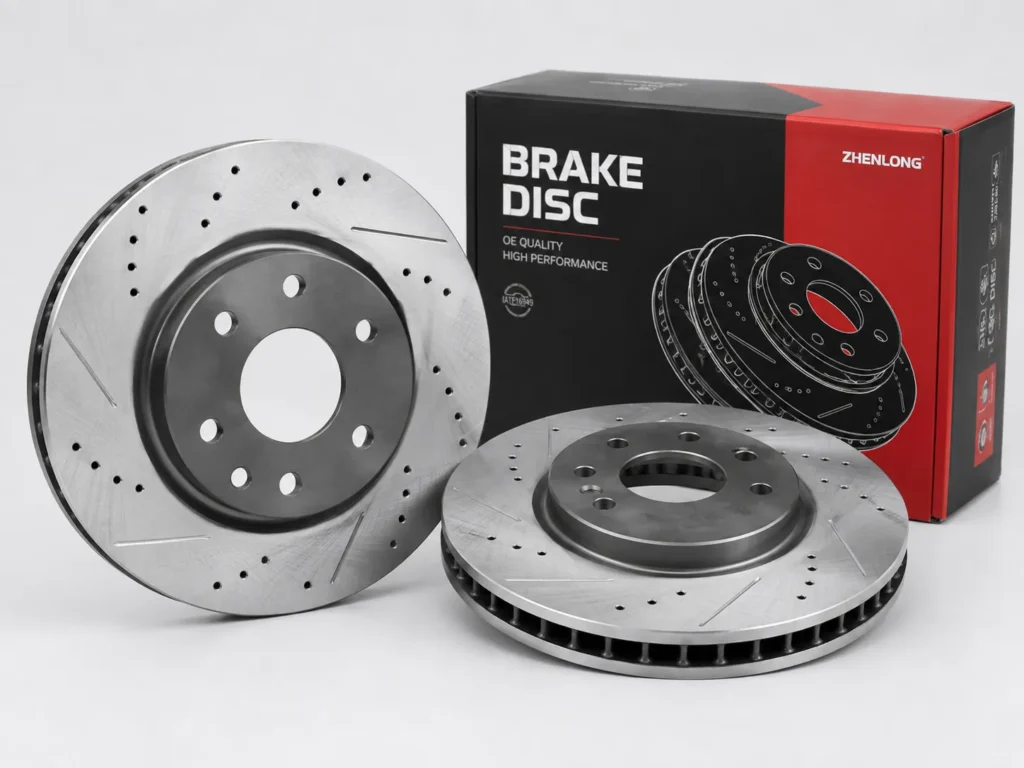
Brake Rotor Packaging
Brake rotors are heavier than many other brake components.
Packaging needs enough strength to reduce movement, crushed cartons and surface damage during long-distance transport.
Packaging Verification
Before shipment, the product reference is checked against the corresponding box and label.
The objective is simple:
Correct Product → Correct Box → Correct Label → Correct Customer
Factory team
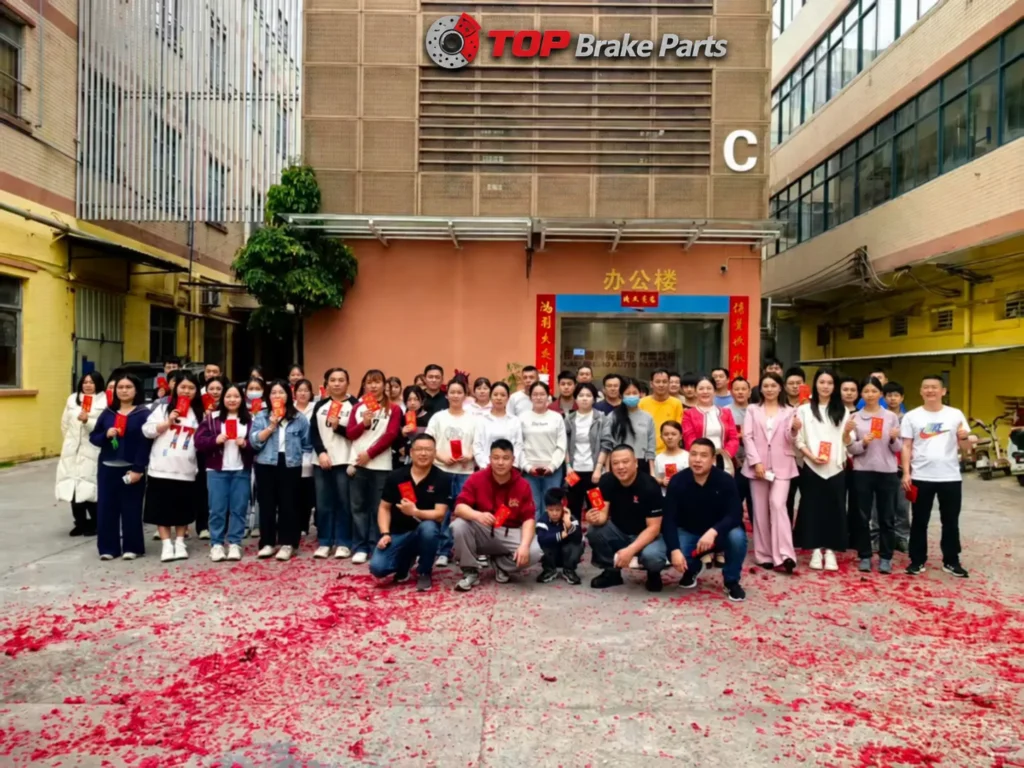
The People Behind the Production Line
Machines produce parts, but people control the process.
Our factory operations depend on teams responsible for production, inspection, equipment, technical support and final order preparation.
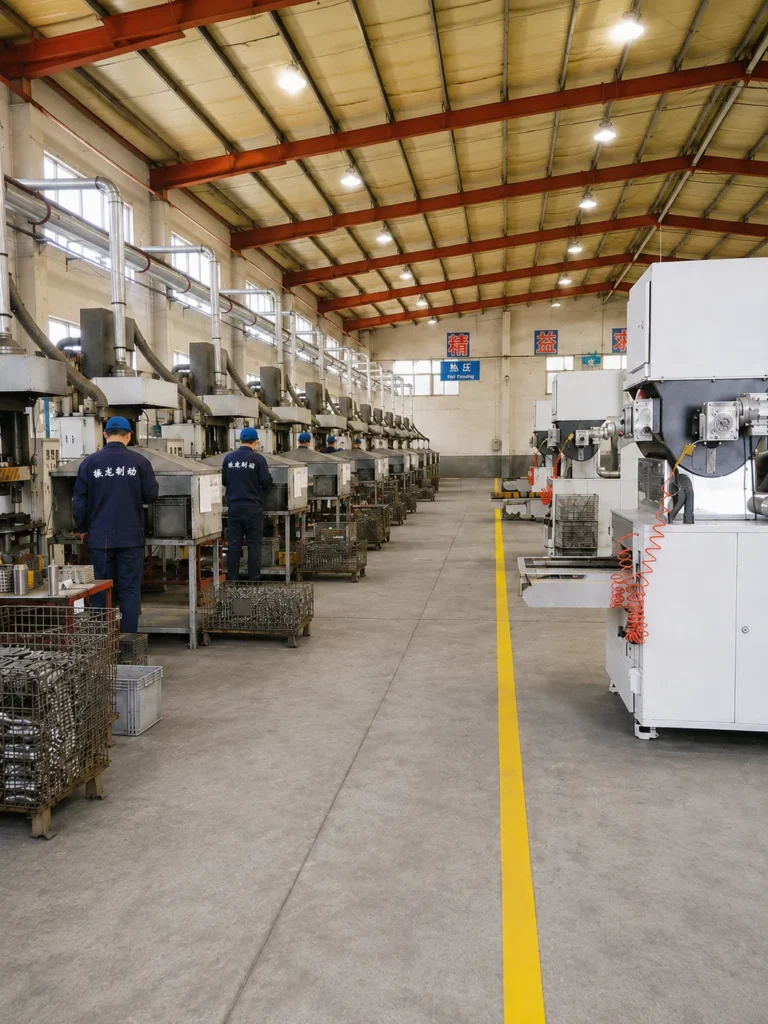
Production Team
The production team operates the manufacturing processes required for brake pads, brake rotors and brake shoes.
Their responsibility is to follow the production requirements and maintain consistency through each manufacturing stage.
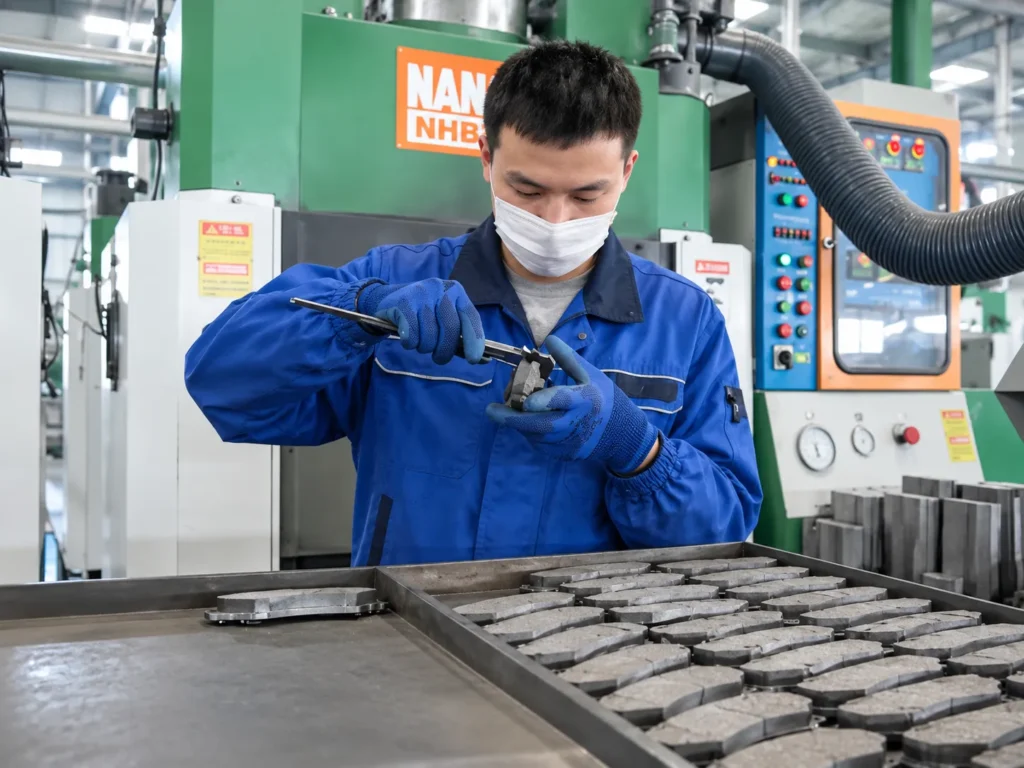
Quality Team
The quality team performs product and process inspections according to the relevant brake-part category.
Their work includes dimensional checks, visual inspection and final shipment verification.
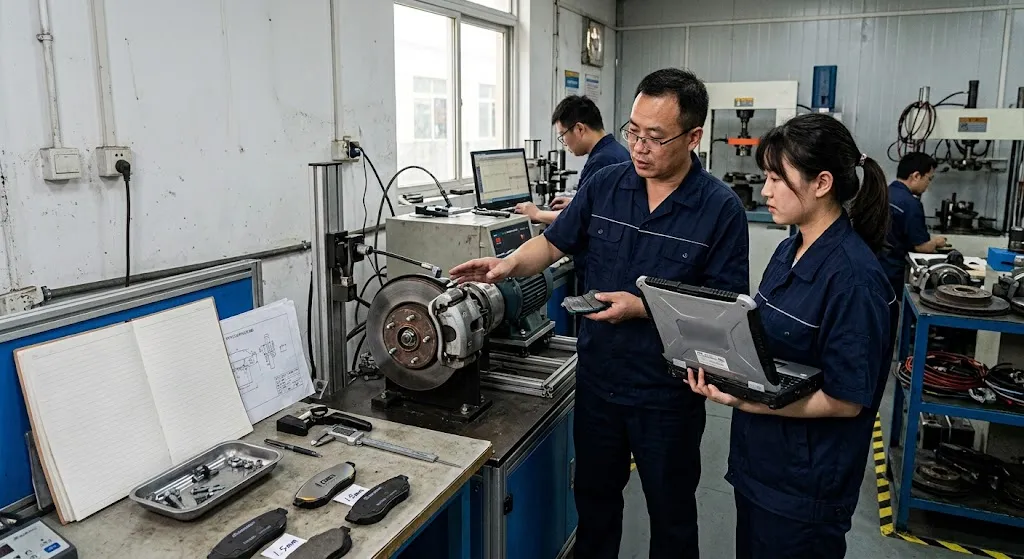
Equipment & Maintenance Team
Stable equipment performance supports stable manufacturing.
Equipment maintenance helps reduce production interruptions and process variation.
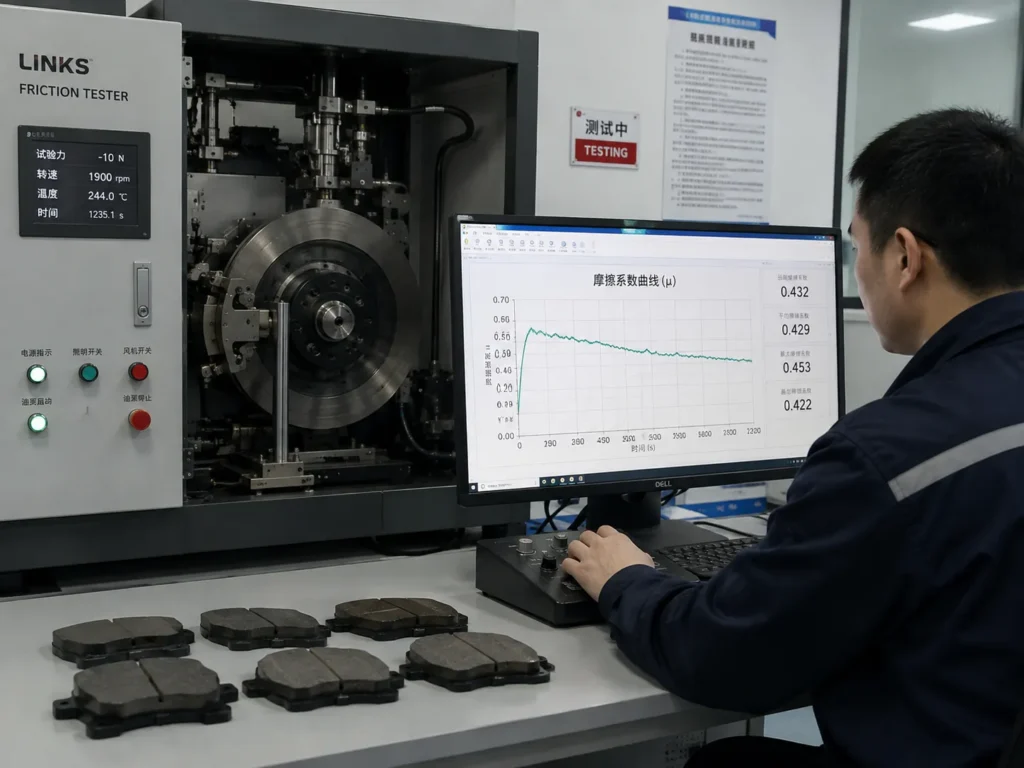
Product & Technical Team
The technical team supports product improvement, manufacturing-process review and investigation of product-related issues.
Warehouse & Packing Team
The final stage of a B2B order requires accurate picking, packaging, labeling and shipment preparation.
Their work helps make sure the correct finished product reaches the correct customer.
Shipment preparation
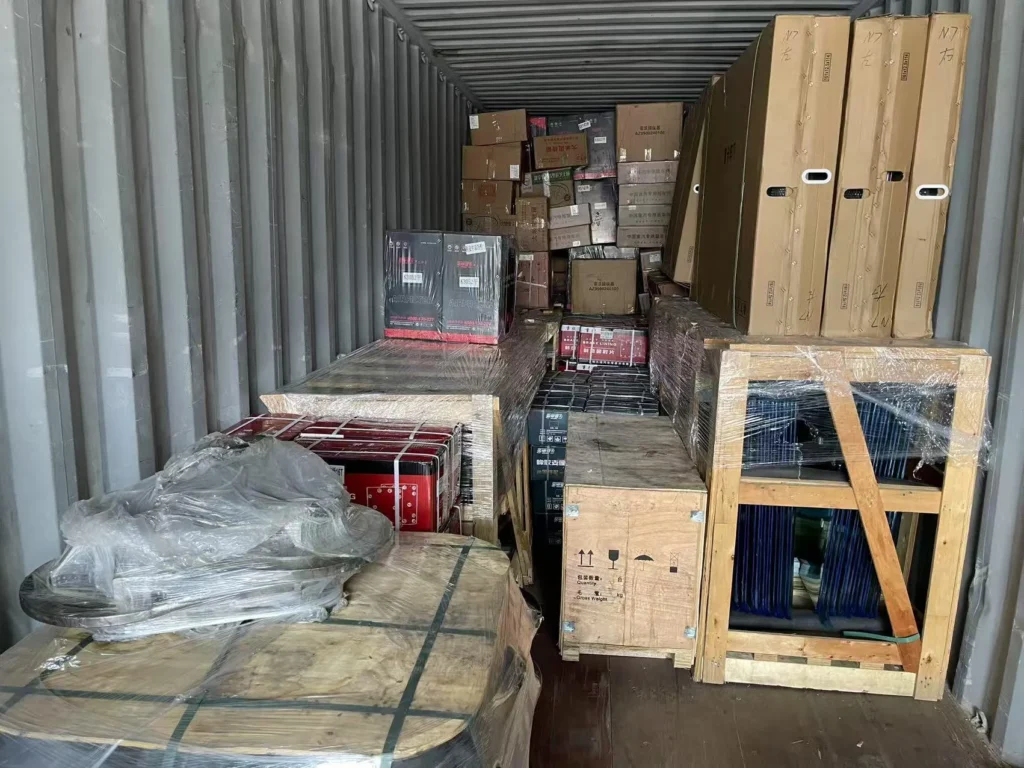
From Finished Brake Parts to Ready-to-Ship Orders
Manufacturing is not finished when the final part leaves the production machine.
The order still needs to be inspected, counted, packed and prepared for transportation.
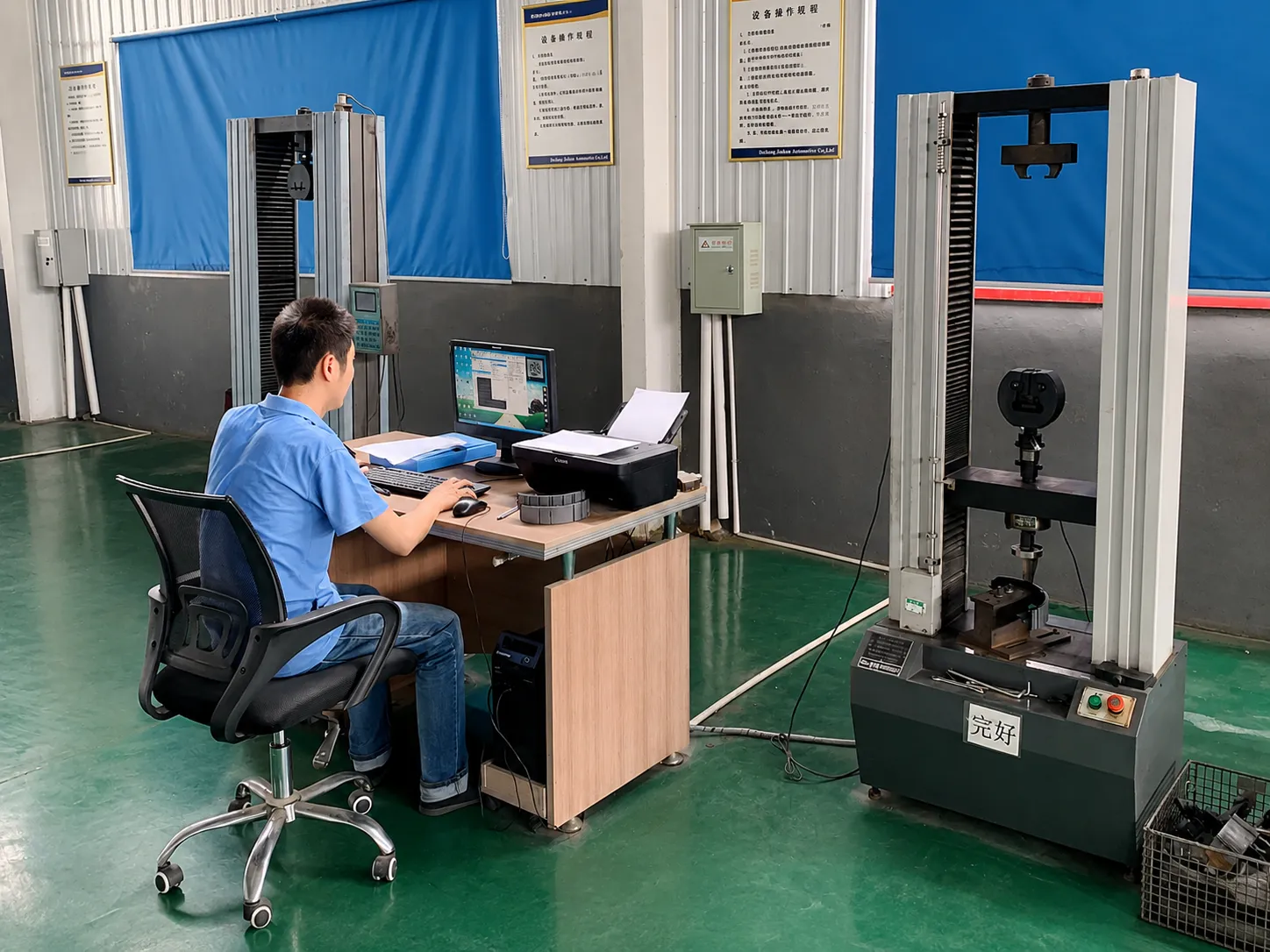
Final Order Check
Before shipment, the final order can be reviewed against the confirmed purchasing information. Checks may include:
- SKU
- Quantity
- Packaging
- Label
- Customer requirement
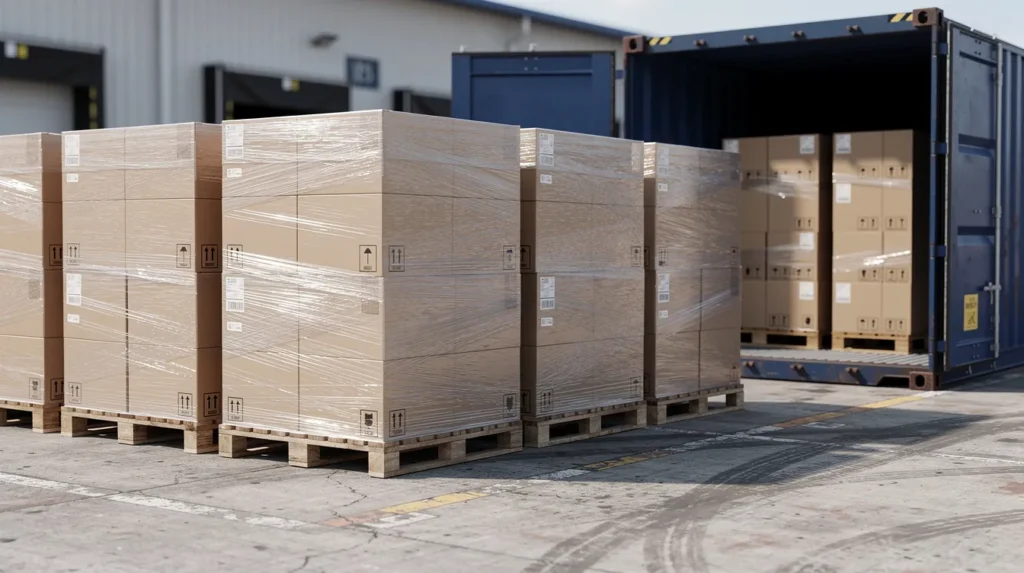
Carton & Pallet Preparation
Products are prepared for handling and transport according to the order and shipping method.
Heavy products such as brake rotors require particular attention to carton strength and load stability.
Shipping Marks & Product Identification
Shipping marks and product information help the customer identify the shipment after arrival.
Loading
Finished orders are moved from the warehouse staging area into the arranged logistics process.
Shipping Documentation
Relevant packing and shipment information is prepared to support receiving and delivery coordination.
Final factory RFQ
Looking for a Brake Parts Factory for Your Next Order?
If your business already purchases brake pads, brake rotors or brake shoes, you do not need to rebuild your product list around our website.
Send Zhenlong the purchasing information your company already uses.
Our team can review your product references, quantities, packaging requirements and order structure before preparing a B2B quotation. You can also book a factory visit before placing the order.
You Can Send Us
Products
Get a Factory Quote
Send your purchasing list and order requirements.
Brake Pads. Brake Rotors. Brake Shoes.
Zhenlong — A Brake Parts Factory Built for Professional Aftermarket Buyers.
topbrakeparts.com