
Brake pad shims are thin layers of steel, rubber or multi-layer composite fitted to the back of a disc brake pad, between the backing plate and the caliper piston or fingers. They look like a minor detail, but they decide a large part of how quietly a brake works. A pad with the right friction material and the wrong shim can still squeal; a pad with a well-designed, well-fitted shim often stays quiet on the same car.
This guide explains what brake shims do, how they control vibration, which shim types and materials are used, what goes wrong when a shim is damaged or missing, and how repair shops and parts buyers should check them. It is written for auto parts stores and repair shops that sell, fit and warranty brake pads every day, so each section ends with practical checks rather than theory alone.
We fit and inspect shims on our own pad lines in Guangdong, and the inspection and test results in this article come from that work.
Brake Pad Shims: Quick Reference
01
What Is a Brake Pad Shim?
What is a brake pad shim in practical terms? It is the thin plate on the back of a disc brake pad that separates the pad from the parts that push on it. When people ask what are brake shims, or what are shims on brake pads, they usually mean this layer—not the shims used in engines, door hinges or drum brakes. And if a customer at the counter asks what are shims for brakes, the one-line answer is: to keep the pad quiet and stable in the caliper.
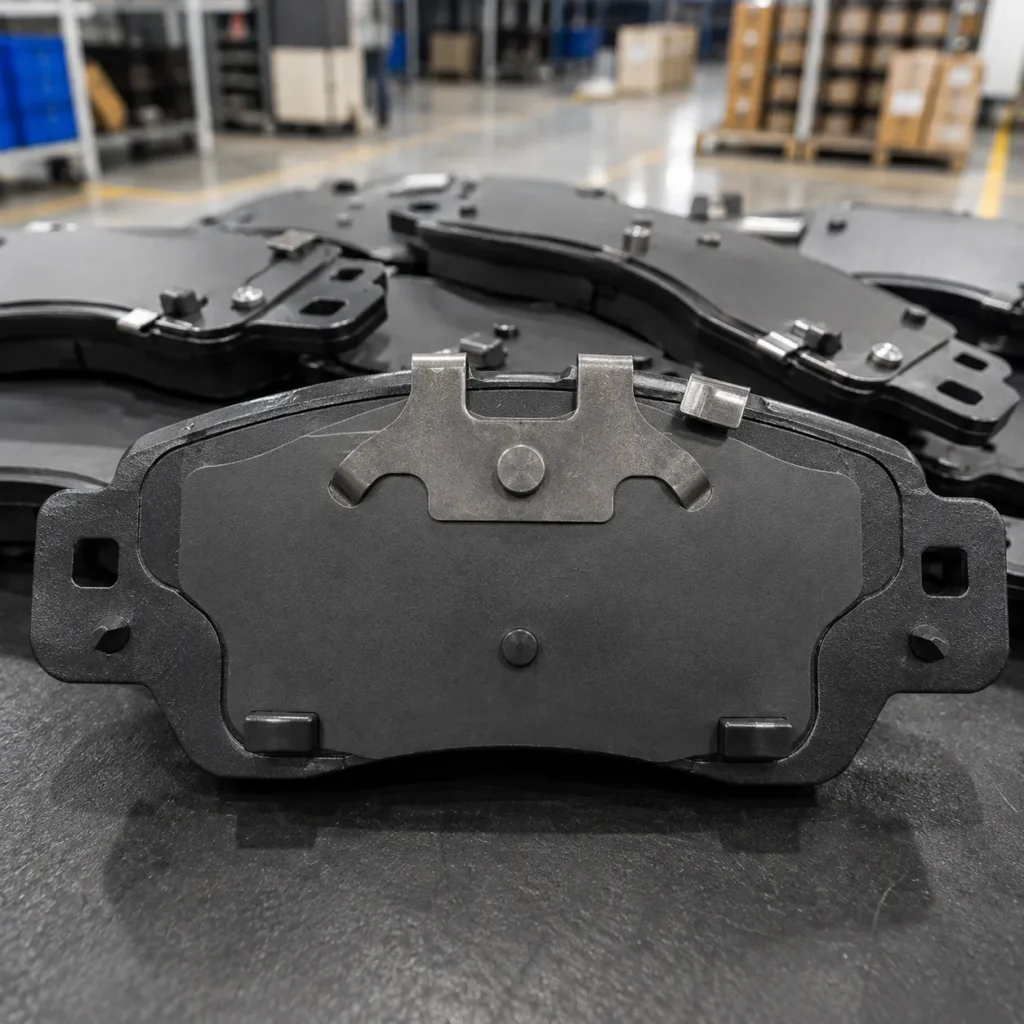
A shim is part of the pad assembly, along with the steel backing plate, the friction block, chamfers and slots, and any wear indicator.
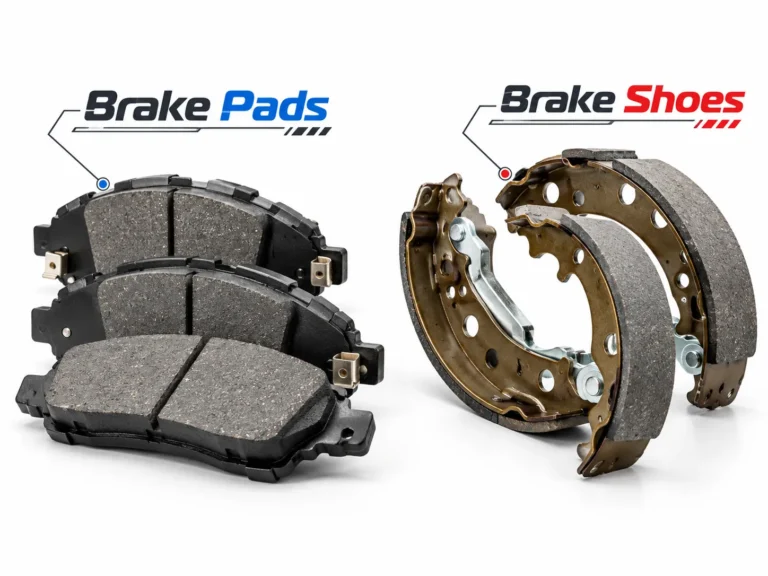
If you need a refresher on how those parts work together, our guide to brake pads covers construction, materials and identification in detail.
Where Is the Shim Located on a Brake Pad?
The shim sits on the back of the backing plate—the side that faces the caliper piston on the inner pad and the caliper fingers or housing on the outer pad. On most pads it covers the central area of the plate where the piston or fingers apply force. It does not extend onto the abutment ears that slide in the caliper bracket, and it must never overhang the plate edges.
On some designs the inner and outer pads carry different shims, because the piston contact area and the finger contact area have different shapes. That is one reason inner and outer pads are not always interchangeable.
What Is the Main Purpose of a Brake Pad Shim?
The main purpose is noise control. Brakes squeal when the pad, rotor and caliper vibrate together at an audible frequency. A shim adds damping and a break in the vibration path, so less energy reaches the caliper and less noise reaches the driver. Secondary jobs include spreading piston load more evenly across the backing plate and slowing heat transfer from the pad into the piston.
Are Brake Pad Shims Part of the Friction Material?
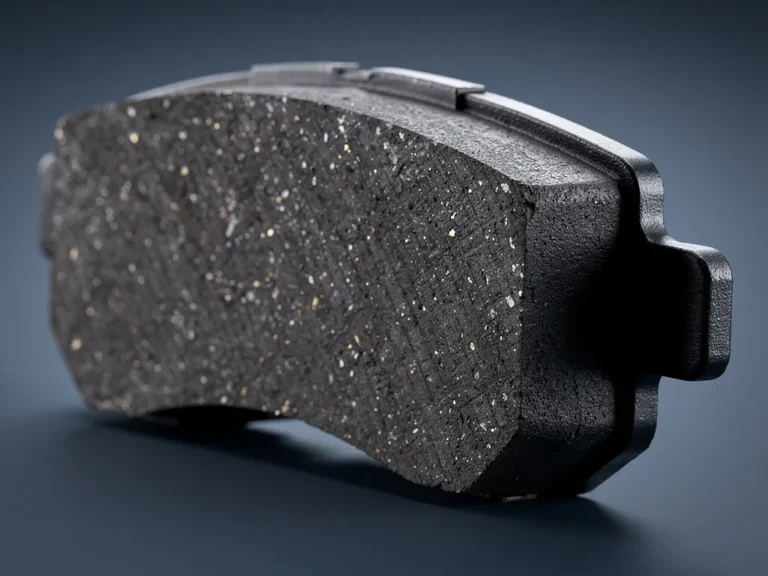
No. The friction material is the working layer that rubs on the rotor. The shim is on the opposite side of the backing plate and never contacts the rotor. That matters when diagnosing noise: a squeal can come from the friction interface, from the shim interface, or from both, and the fixes are different.
02
What Do Brake Pad Shims Actually Do?
Brake pads and shims work as one assembly. The shim does four jobs, and each one affects how the brake feels and sounds.
Reduce Vibration Between the Pad and Caliper
During braking the pad is never perfectly still. Small friction-induced vibrations travel from the rubbing surface through the backing plate. Without a shim, the backing plate sits steel-on-steel against the piston and caliper fingers, and that vibration passes straight into the caliper body, which can act like a speaker. A shim interrupts that path and absorbs part of the energy before it gets there.
Help Control Brake Squeal
Most brake squeal is a high-frequency tone created when pad and rotor vibrations lock together. Anti squeal shims are designed to make that harder to happen: the damping layer reduces the vibration amplitude, and the change in contact stiffness can move the system away from the frequencies where squeal builds. Shims are one of the most effective noise-control parts in the corner, but they work together with the rotor, the pad geometry and the caliper hardware—our guide to the five most common causes of brake squeal explains how those pieces interact.
Improve Contact Between the Pad and Caliper
The piston pushes on a small ring of the backing plate, and the caliper fingers push on two narrow areas. A flat, well-bonded shim helps distribute that force across a wider area of the plate. More even load keeps the friction face in more even contact with the rotor, which helps both noise and wear.
Help Isolate Heat and Vibration
Rubber-coated and multi-layer shims also slow the transfer of heat from the pad into the caliper piston and brake fluid. The effect is modest on everyday driving, but on heavy vehicles and during repeated hard stops it helps keep piston seals and fluid cooler. Performance shims made from titanium or with special insulating layers push this function further.
03
How Do Brake Pad Shims Reduce Brake Noise?
To understand how shims reduce noise, it helps to know how noise is measured.
The 70 dB(A) Threshold Behind Squeal Tests
SAE J2521 defines brake squeal during dynamometer testing as a peak noise level of at least 70 dB(A), typically within 1.25–16 kHz when a full suspension corner or axle assembly is tested.
For brake assemblies tested without the complete suspension corner, the evaluated frequency range is 2–16 kHz.
Source: SAE International, SAE J2521_202210 – Inertia Dynamometer Brake Squeal Noise Test Procedure.
In other words, squeal is a measurable event: a sound above a set loudness inside a defined frequency band. Shim design is judged by how many of those events it removes across a test matrix of pressures, speeds and temperatures—not by whether one stop sounds quiet.
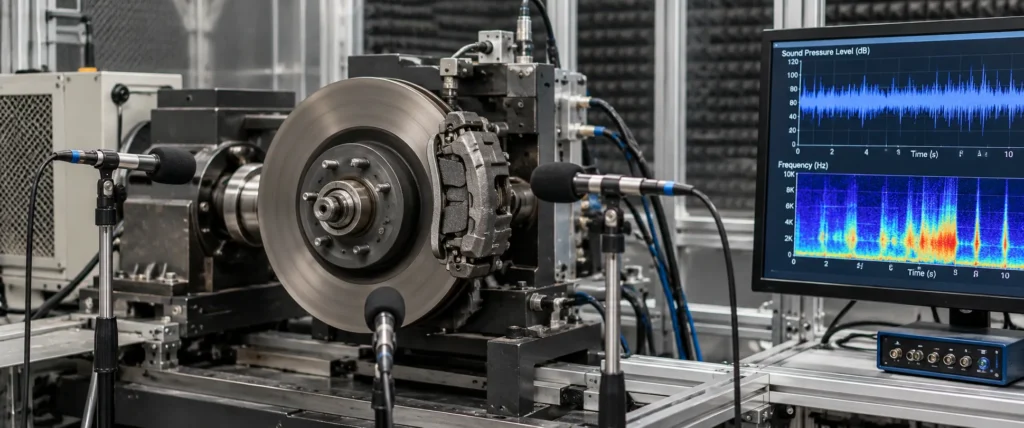
How Brake Vibration Creates Squeal
Three things combine to create squeal
- An excitation source: friction at the pad–rotor interface varies slightly as the rotor turns, especially at low speed and light pressure.
- A resonant structure: the rotor, pad and caliper each have natural frequencies. When friction couples two of them, the vibration can grow instead of fading.
- A radiating surface: the rotor face and caliper body turn the vibration into sound waves.
Remove or weaken any one of the three and the squeal becomes less likely. Friction material and rotor finish work mainly on the first; chamfers and slots on the second; the shim works on the second and third by adding damping and blocking the path into the caliper.
How a Shim Changes Vibration Transmission
A multi-layer shim works like a small damper. Two thin steel layers are separated by a viscoelastic adhesive or rubber layer. When the backing plate vibrates, the steel layers move slightly relative to each other and the middle layer is sheared. That shearing turns vibration energy into a very small amount of heat. A rubber-coated shim works in a similar way, with the elastomer layer providing the damping. Fit matters as much as material: a shim that is loose or only partly bonded cannot shear its damping layer properly and loses much of its effect. One 2024 project put numbers on this: a tighter shim plus a chamfer opened from 1.0 mm to 1.5 mm dropped the squeal rate from 6 stops in 10 to 1 in 10 (full diagnosis).
Why Shim Design Alone Cannot Eliminate All Brake Noise
A shim reduces noise; it does not cancel every cause. A glazed or out-of-runout rotor, contaminated pads, a sticking slide pin or worn abutment clips can all produce noise that no shim will fix. Low-frequency groan, grinding from a worn pad, or the scraping squeal of a mechanical wear indicator are different problems altogether.
The Shim Is One Noise Control, Not the Only One
Treat the shim as one of several noise controls. When a pad squeals, check the shim, then the rotor, then the hardware, then the bedding—rather than swapping shims repeatedly.
04
What Types of Brake Pad Shims Are Commonly Used?
Brake shims fall into five practical types. Some are defined by construction (single or multi-layer), others by how they attach to the pad (bonded or clip-on). Most real shims combine one construction with one attachment method—for example, a multi-layer rubber-coated shim that is bonded to the plate.
Single-Layer Steel Shims
A single, thin steel plate, sometimes with a light coating. It separates the backing plate from the piston and spreads load, but offers limited damping. Single-layer shims are common on low-cost pads and on applications that are not noise-sensitive.
Multi-Layer Steel Shims
Two or more thin steel layers with a damping layer between them, known as constrained-layer damping. They give the best vibration absorption of the common types and are widely used on OE pads for noise-sensitive passenger cars and SUVs.
Rubber-Coated Shims
A steel core coated with rubber or another elastomer on one or both sides. The rubber adds damping and grip, and helps the shim seat evenly against the piston or caliper fingers. Rubber-coated steel is one of the most common aftermarket choices.
Adhesive or Bonded Shims
Shims attached to the backing plate with a pressure-sensitive or heat-cured adhesive. Bonding keeps the shim in close contact across its whole area, which is good for damping. The risk is the bond line: heat cycles, poor surface preparation or the wrong adhesive can lead to peeling or delamination.
Clip-On or Mechanically Attached Shims
Shims held by tabs, fingers or rivets that hook over the backing plate. They resist shear and are less likely to peel under heat, and some designs allow the shim to “float” slightly so the pad can move without tearing the attachment. They depend on correct tab design and plate dimensions; a clip that does not lock firmly can rattle.
05
What Materials Are Brake Pad Shims Made From?
Shim material decides corrosion resistance, damping and heat behavior. Most brake pad shims combine at least two of the materials below.
Steel
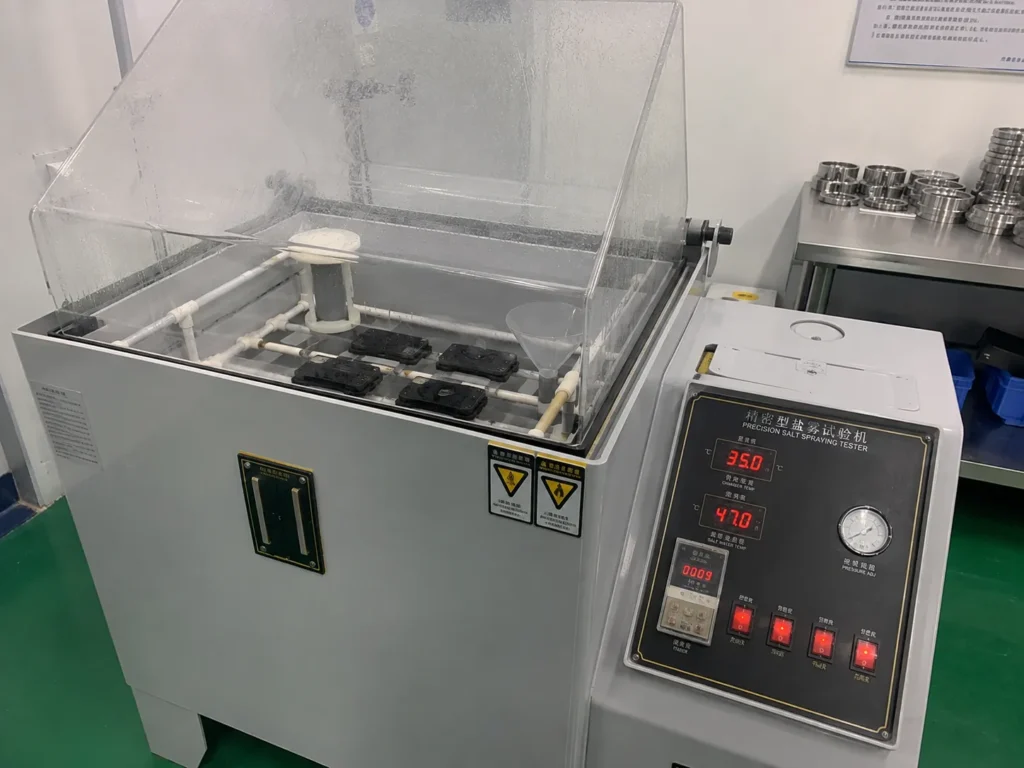
Cold-rolled carbon steel is the base of most shims because it is stiff, thin, easy to stamp and inexpensive. It needs a coating or plating to resist corrosion, especially in markets that use road salt.
Stainless Steel
Stainless steel resists rust without heavy coatings and keeps its surface condition in wet and salty conditions. It is common for shim layers that face the piston and on premium or heavy-duty pads. High-performance and racing pads sometimes use titanium shims for the same reason plus better heat insulation, but titanium is a niche choice because of cost.
Rubber and Elastomer Coatings
Nitrile rubber and other elastomers provide damping and a slightly compliant contact surface. Their key properties are temperature resistance and adhesion to the steel layer; a coating that softens, cracks or separates at high temperature loses its damping function.
Multi-Layer Composite Materials
Composite shims stack steel, stainless steel, rubber and viscoelastic adhesive in a defined order. The layer sequence and thickness are tuned to the frequencies that matter on a given application, which is why an OE multi-layer shim cannot always be replaced by a generic one with the same outline.
Describing a Shim as a Material System
Describe the shim as a material system, not one word. For example: “Two-layer shim: stainless steel outer layer, carbon steel inner layer with rubber coating both sides; total thickness [X] mm ± [Y] mm; coating rated to [Z] °C; salt spray resistance [N] hours.”
06
What Happens When Brake Pad Shims Are Damaged or Incorrectly Fitted?
A shim that is damaged or fitted the wrong way stops doing its job, and in some cases becomes a noise source itself.
Why NUCAP Lets the Shim Float
NUCAP’s technical documentation notes that brake-pad movement can place high shear stress on a shim attachment, with the caliper piston applying up to about 1,000 ft-lb of force in the example described.
Repeated movement can damage the attachment or contribute to shim delamination, which is why attachment design and fit matter in addition to shim material itself.
Source: NUCAP Industries, NU-LOK Independent Floating Shim Technology.
Loose or Misaligned Shims
A shim that has shifted, lifted at one edge or was installed off-center no longer covers the piston and finger contact areas. Damping drops, and the loose edge can buzz or rattle against the caliper. Misalignment is common when clip-on shims are refitted by hand or when a bonded shim slides before its adhesive cures.
Damaged or Delaminated Shim Layers
Heat, shear and corrosion can separate the layers of a multi-layer shim or peel the rubber coating. Signs include bubbling, flaking rubber, a visible gap between layers, or a shim that feels soft or crunchy when pressed. A delaminated shim has lost most of its damping, even if it still looks attached.
Missing Shims
Shims can be missing because the pad was supplied without one, because a loose OE-style shim was left on the bench, or because it fell off during handling. Without the shim, steel contacts steel at the piston and fingers, and noise is much more likely. Heat transfer into the piston also increases.
Incorrect Shim Shape or Thickness
A shim that is too thick can make the pad assembly tight in the caliper or reduce piston retraction clearance, causing drag. A shim that is too thin, too small or the wrong shape leaves part of the contact area uncovered. An outline that overhangs the plate can foul the bracket or caliper.
Contamination Between the Shim and Backing Plate
Oil, rust, paint overspray or dust on the backing plate before bonding prevents the adhesive from wetting the surface. The shim may look fine on a new pad and then peel after the first heat cycles. Brake grease applied under a bonded shim during installation has the same effect. Backing-plate surface preparation and flatness are the foundation of shim adhesion; we plan to cover them in a separate guide to brake pad backing plates.

07
Can Bad Brake Pad Shims Cause Brake Squeal?
Yes. A failed brake pad shim is one of the most common reasons a pad that was quiet when new starts to squeal, and one of the most common reasons a new pad squeals from the first drive.
Common Noise Symptoms Linked to Shim Problems
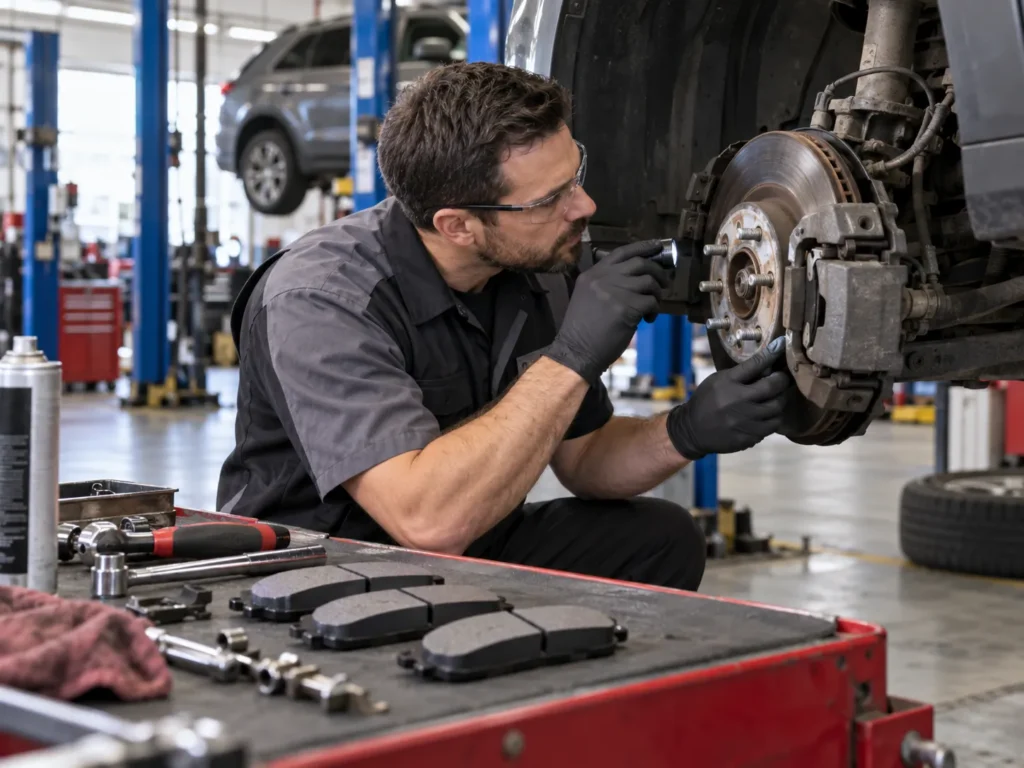
Worn or failed brake shims rarely announce themselves visually while the wheel is on, so the noise pattern is the first clue. Listen for when it happens and from which corner before taking anything apart:
- High-pitched squeal at light pedal pressure and low speed, especially when the shim is lifted, missing or delaminated.
- Squeal that started quiet and developed over weeks, typical of a bond line or coating that is breaking down with heat cycles.
- A buzz or rattle over rough roads, from a loose shim edge or a clip-on shim that is not locked.
- Noise from one pad only, for example the inner pad, where the piston contact is uncovered.
How to Distinguish Shim Noise From Friction Material Noise
On warranty claims, ask the shop to send photos of the back of both pads as well as the friction face. Brake shims that have moved, peeled or lost their coating are visible in a photo, and that one picture often decides whether the claim is a product issue or an installation issue.
The quickest test is often comparison: inspect the shim on the noisy pad against a new pad from stock, then check whether the problem pad’s shim has moved, peeled or changed shape.
Why the Rotor, Caliper and Hardware Must Also Be Checked
A correct shim cannot overcome a rotor with thickness variation, glazing or heavy deposits, and it cannot stop a pad that is bouncing in a worn bracket. Measure rotor thickness and runout, clean or replace glazed rotors, and inspect slide pins and abutment clips on every noise complaint.
Quality brake rotors with controlled runout and thickness variation give the shim and friction material an even surface to work against.
08
Do All Brake Pads Need Shims?
Most passenger-car disc brake pads use a shim or an equivalent noise-control design, but not all. Whether a pad needs one depends on how the original brake system was engineered.
Brake Pads With Integrated Shims
Most modern aftermarket and OE pads arrive with the shim already bonded or clipped to the backing plate. This is the simplest option for the technician and the most consistent, because the shim position is set at the factory.
Brake Pads Using Separate Shims
Some vehicles—many Japanese and some European designs—use loose shims that sit between the pad and the piston or caliper, sometimes in two layers. These may be supplied in the pad box, as a separate brake pad shim kit, or reused from the old pads if they are undamaged and the vehicle maker allows it. Technicians need to fit them in the correct order and orientation.
Applications That Use Different NVH Control Designs
Some designs rely on other noise controls instead of, or in addition to, a conventional shim: underlayers in the friction material, special chamfer and slot patterns, piston insulators, damping springs or caliper-mounted dampers. Performance pads sometimes use thin heat shields rather than damping shims. A pad without a shim is not automatically wrong if the original design did not use one.
Why Shim Design Depends on the Vehicle Application
The same pad outline can fit several caliper versions, each with different piston contact, finger geometry and natural frequencies. The shim that works on one may be wrong on another.
Toyota Bulletin T-SB-0248-12 on Prius Rear Pads
Toyota issued T-SB-0248-12, published through the NHTSA database, for certain 2010–2012 Prius and 2012 Prius PHV vehicles that could develop uneven rear brake pad wear, sometimes accompanied by grinding or scraping noise.
Toyota introduced an updated rear brake pad kit and required replacement anti-squeal shims with the new pads, and warned against getting grease on the friction surfaces. Technicians were also told to inspect the pad support clips and the rear rotor.
The lesson for parts buyers is that the shim is treated as part of the repair, not an optional extra. When an OE maker specifies new shims with a revised pad, aftermarket pads for that application should match that shim configuration.
Match the OE Shim Arrangement
When you add a pad SKU, confirm from the OE part or catalog whether the original used an integrated shim, a separate shim set, two-layer shims or no shim, and make sure the aftermarket pad matches it.
09
Brake Pad Shims vs Anti-Rattle Clips: What Is the Difference?
Shims and clips are often sold together as brake hardware, and they are easy to confuse. They do different jobs, and a quiet brake needs both to be correct.
At the parts counter, brake shims and clips often end up in the same hardware conversation, and customers tend to call everything in the box “the shims.” Being precise helps: when a technician reports a rattle, the clip is the first suspect; when they report a squeal at light pedal pressure, the shim is. Stocking both—and knowing which SKUs ship with which—cuts a lot of back-and-forth on returns.
What Brake Pad Shims Do
Shims sit on the back of the pad and control vibration and heat between the backing plate and the caliper piston or fingers. They are mostly a noise-control part.
What Anti-Rattle Clips Do
A brake pad clip—also called an abutment clip, anti-rattle clip or retaining clip—sits in the caliper bracket where the pad ears slide. It gives the pad a clean stainless sliding surface, holds it with light spring preload so it cannot rattle, and in some designs helps the pad retract from the rotor. Separate anti-rattle springs on the caliper or pad do a similar preloading job.
Why Both Components Matter for NVH and Fitment
A perfect shim cannot stop a pad that is loose in a worn clip, and a new clip cannot damp vibration that a delaminated shim lets through. Worn clips also cause uneven pad wear, drag and clunks when changing direction. Are brake pad retaining clips necessary? On designs that use them, yes—replace them whenever the pads are replaced unless the vehicle maker says otherwise.
10
How Should Repair Shops Inspect Brake Pad Shims?
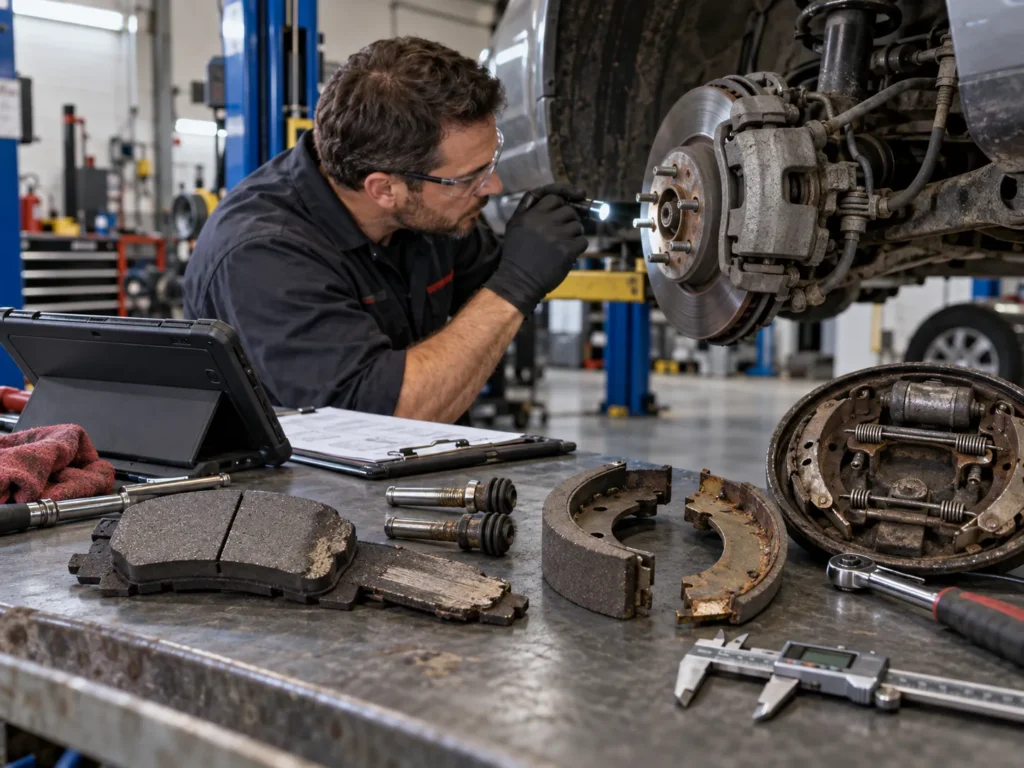
A short, consistent shim inspection prevents most shim-related comebacks. It takes a few minutes per axle and fits into a normal pad job.
Check Shim Condition and Position
- Compare old and new pads side by side before fitting. Note whether the old pad had a single, multi-layer, clip-on or loose shim.
- Confirm the new pad has the same shim type and the same coverage of the piston and finger contact areas.
- Check that the shim is centered and does not overhang any edge of the backing plate.
Inspect Bonding and Coating
- Press the shim surface with a thumb. It should feel solid, with no soft spots or crunch.
- Try to lift one corner with a fingernail. A bonded shim should not peel.
- Look for bubbling, flaking rubber or separated layers. Any of these means the pad set should not be fitted.
Check Pad-to-Caliper Fit
- Dry-fit the pads in the bracket. They should slide in with light resistance, without forcing.
- Check piston clearance. With the piston fully retracted, the caliper should fit over the pads without binding.
- Confirm inner and outer positions, including the wear indicator location and any piston clip.
Inspect Clips, Hardware and Contact Points
- Fit new abutment clips and check that they snap fully into the bracket.
- Check anti-rattle springs for correct position and tension.
- Lubricate only where the pad or vehicle maker specifies. Many bonded shims are designed to be fitted dry; some separate multi-shim designs specify a thin layer of approved grease between shim layers. Never put grease on the friction face, and do not grease under a bonded shim.
- Service the slide pins so the caliper applies both pads evenly.
Road-Test After Installation
- Bed in the pads with a series of moderate stops from about 35 mph (55 km/h) down to about 5 mph, then a few firmer stops, without holding the brake on hot rotors.
- Test at low speed and light pressure, where shim-related squeal is most likely.
- Record the result and the pad batch code on the repair order.
If your workshop wants a standard checklist and faster support on noise comebacks, our repair shop brake service program covers part matching, hardware recommendations and complaint review.
11
What Should Distributors Check When Buying Brake Pads With Shims?
For auto parts stores and distributors, the shim is one of the easiest quality points to overlook in a quotation and one of the most visible in returns. These checks belong in the sample approval and the purchase order.
Correct Shim Design for Each Application
Each SKU should carry the shim type that matches the OE design for that application: single or multi-layer, rubber-coated or not, bonded or clip-on, and inner/outer differences. A supplier that uses one generic shim across a whole range is saving cost at your expense.
Consistent Shim Thickness and Fit
Shim thickness and outline affect pad fit in the caliper and piston clearance. Ask for the total shim thickness and tolerance on the drawing, and check several samples with a micrometer. Outline should match the drawing with no overhang.
Bonding Quality
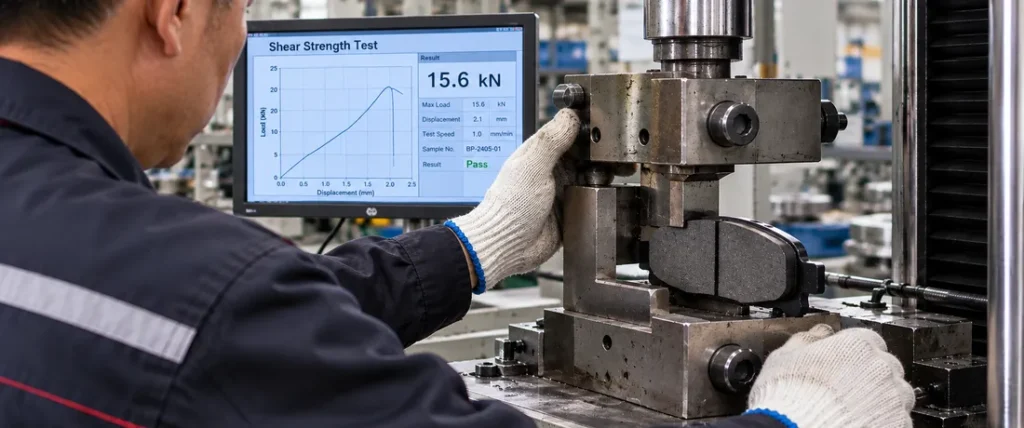
The bond between shim and backing plate should be tested by the supplier, typically with a peel or shear test on samples from each batch, and after heat exposure where the application is demanding. Ask how the backing plate is cleaned before bonding and how the adhesive is cured.
Coating and Corrosion Resistance
In salt-belt markets, corrosion under or around the shim can lift it from the plate. Ask for the plate coating and shim coating specification and for salt spray test results on the finished pad, not only on raw materials.
Batch Consistency and Traceability
A good sample means little if the next batch uses a different shim source. Each pad and carton should carry a batch code that links the shim lot, the backing-plate lot and the assembly records.
Shim, Plate and Assembly in One Complaint File
For shim-equipped pads, the shim, backing plate and final assembly cannot be treated as unrelated components when a quality complaint is investigated. Our certified quality system holds incoming-material records, production batches and finished-pad inspection results in one chain, so a shim can be followed back to the batch it came from.
One Line That Locks the Shim Spec
A single line such as “multilayer shim, bonded, per OE design; no change of shim supplier or adhesive without written approval” prevents most shim-related surprises between the approved sample and the first container.
Our wholesale brake pads are supplied with application-matched shims and hardware options, and we can prepare a shim specification list for your SKU range.
12
How Are Brake Pad Shims Checked During Manufacturing?
In the factory, a shim is not inspected on its own. It is checked as part of the finished pad assembly.
Shim Checks Inside Pad Assembly
Running the shim and assembly stations through 2026 made one thing plain: shim inspection cannot be separated from pad assembly inspection.
We check shim position, bonding, backing-plate fit and finished pad dimensions together before packaging. Even a correctly made shim can create an NVH problem if its fit or attachment is inconsistent with the pad design.
Dimensional Inspection
- Check incoming shims for thickness, outline and flatness against the drawing.
- Check the backing plate for flatness and surface preparation before bonding.
- Measure the finished pad’s total thickness including the shim at several points.
- Record results with the batch code.
Bonding Inspection
- Visually inspect every pad for lifted corners, bubbles and misalignment after bonding.
- Pull samples from each batch for peel or shear testing.
- Test some samples after heat exposure where the application calls for it.
- Quarantine the batch if any sample fails, until the cause is found.
Fitment Inspection
- Fit sample pads into a caliper bracket or gauge for the application.
- Check for free movement without excessive play.
- Confirm piston clearance with the shim fitted.
NVH Evaluation
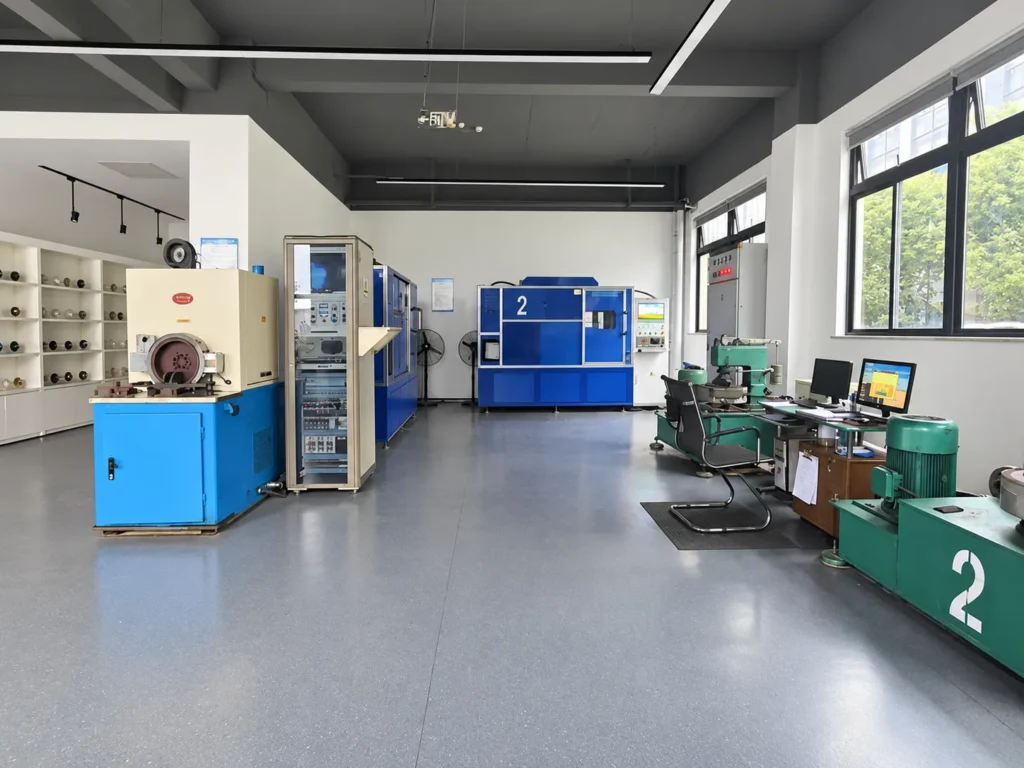
NVH testing is done on a brake dynamometer with the application’s caliper and rotor, running a matrix of speeds, pressures and temperatures and counting squeal events. It is used when a new pad design or shim type is introduced, or when a noise complaint needs to be investigated, rather than on every batch. The test must use the production shim and chamfer; results from a different shim do not apply.
Final Assembly Inspection
- Check shim presence and type on every pad against the SKU specification.
- Check hardware and wear indicators included in the set.
- Check markings and batch codes on pads and cartons.
- Pack pads so shims are protected from scratches and bending during shipping.
You can see how these checks fit into our wider quality inspection process, from incoming materials to final packaging.
13
Frequently Asked Questions About Brake Pad Shims
Do Brake Pad Shims Stop Squeaking?
They reduce it significantly but cannot stop every squeak. Anti squeal shims damp vibration and block its path into the caliper; noise caused by a glazed rotor, contamination or worn hardware needs its own fix.
Can You Reuse Old Brake Pad Shims?
Only if they are undamaged and the vehicle maker allows it. Separate OE shims that are flat, clean and intact can sometimes be reused; bonded shims come with the pad, and bent, rusted or delaminated shims should always be replaced.
What Happens if Brake Pad Shims Are Missing?
The pad usually still stops the car, but noise becomes much more likely and more heat reaches the piston. Missing shims are a common cause of new-pad squeal and should be corrected before the vehicle is returned.
Should Brake Pad Shims Be Lubricated?
Follow the pad or vehicle maker’s instruction. Many bonded shims are designed to be fitted dry, while some separate multi-shim designs call for a thin layer of approved brake grease between layers; never grease the friction face or under a bonded shim.
Can Incorrect Shims Cause Uneven Pad Wear?
They can contribute. A shim that is too thick, the wrong shape or poorly bonded can change how evenly piston force reaches the pad, but most uneven wear comes from sticking slide pins, worn clips or caliper problems.
Are Multi-Layer Shims Better Than Single-Layer Shims?
For noise control, usually yes, because the damping layer absorbs more vibration. The best choice is still the one that matches the OE design, since a multi-layer shim that does not fit correctly can perform worse than the right single-layer shim.
Do All Brake Pads Come With Shims?
Most do, either bonded to the pad or supplied in the box. Some applications use separate shims or a brake pad shim kit, and a few designs use no conventional shim at all.
Can You Drive Without Brake Pad Shims?
You can, but you should not if the brake was designed with them. Expect more noise and heat at the piston, and fit the correct shims at the next opportunity.
Are Brake Pad Retaining Clips Necessary?
Yes, on designs that use them. Retaining and anti-rattle clips locate the pad, prevent rattle and give it a clean sliding surface, so worn clips should be replaced with the pads.
If you are reviewing shim specifications for a pad range, or need help with a noise comeback, send us the part numbers and photos through our repair shop brake service team, or ask for samples of our wholesale brake pads with application-matched shims.